Welcome Back to Wall Power. I’m Marion Maneker.
I won’t say tonight’s coverage of the “most important pop artist you’ve never heard of,” as Pace’s Marc Glimcher describes Robert Indiana, is a refuge from Puck’s flood-the-zone coverage of David Zaslav and the Warner Bros. Discovery divorce. (I’m riveted. Subscribe, if you haven’t yet, to read all about it). But I do think you’ll enjoy Julie Davich’s preview of the upcoming jewelry sales at Sotheby’s, among others, and the story behind Indiana’s emergence as one of the most interesting artists of the 1960s and beyond.
You should also subscribe (here’s that link again) if you’re getting this newsletter forwarded by a friend. While we’re on the subject, feel free to hit reply to this newsletter if you have a question, idea, tip, or complaint. I really do appreciate the dialogue. Drop us a line—or text/WhatsApp/Signal me at 917.825.1391, and I’ll text you back.
Mentioned in this issue: Agnes Martin, Robert Indiana, Prudence Peiffer, Mark McDonald, Jean Schlumberger, James Zemaitis, Roy Lichtenstein, Oliver Shultz, Marc Glimcher, Andy Warhol, George Nakashima, Robert Rauschenberg, Emily Vanderbilt Wade, and many more …
|
|
|
|
A MESSAGE FROM OUR SPONSOR
|
Introducing FRAME Sotheby's—A first-of-it's-kind collaboration that brings together two cultural forces through craft, heritage, and timeless style. Discover the full collection now at FRAME.
|
|
|
 |
Julie Brener Davich |
|
That Zemaitis Design Library Sale
|
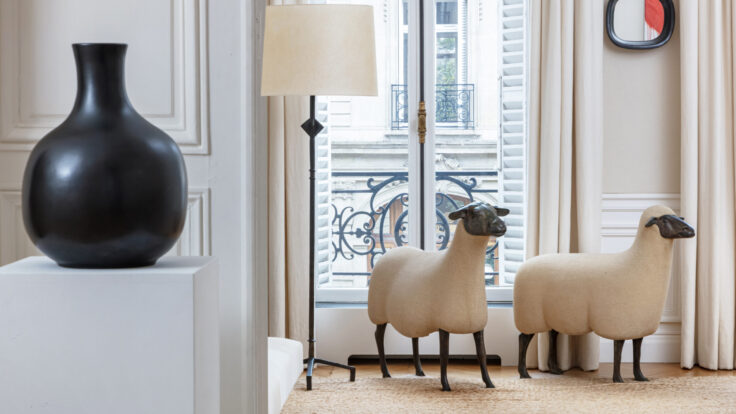
Late last week, Wright auctions sold a little more than $215,000 worth of design objects and books collected by James Zemaitis. The library was divided into about 60 lots, each containing books on a single theme. Four of those lots sold for prices above $9,000.
Zemaitis contacted me yesterday and explained the precedent. In January 2022, Wright sold the design collection and library of Mark McDonald, an influential, longtime dealer of midcentury design. Included in that sale was a lot comprising nine Neutra monographs, estimated at $200, that sold for $17,500. Six Ponti monographs, estimated at $400, sold for $16,250. “I studied Mark’s library and knew what was in demand,” Zemaitis emailed. The most sought-after books were about French designers, like Prouvé, Perriand, and Royére, but also select designers from Italy, namely Ponti and Mollino.
Zemaitis said the buyers for these types of rare books are either people looking to round out their design collections, or enthusiasts who can’t afford six-figure design pieces but can spend a few thousand dollars on something rare pertaining to their favorite designer. In Zemaitis’s sale, the bundle of 17 French art deco books made $14,000; 16 books on Italian design made $9,000; 19 tomes on French style came in at $12,000; and the bundle of 11 George Nakashima books clocked in at nearly $18,000. That’s about the price of a Nakashima chair that Wright’s sister company, Rago, sold in May.
|
When Jack Gave Louisa a $2 Million Diamond
|
Have you ever wanted to feel the weight of a $2 million diamond on your hand? Last week, I tried on the 35-carat emerald-cut Graff diamond ring, the top lot from Sotheby’s forthcoming high jewelry sale, part of the Joie de Vivre collection, representing purchases made by a husband, identified by Sotheby’s as “Jack,” for his wife, “Louisa,” over their six decades of marriage. There are pieces by David Webb, and several more by Graff, including a pair of earclips featuring more than 100 carats of emeralds and diamonds, estimated at $800,000. There’s also a bangle, estimated at $40,000, with an emerald-cut aquamarine so large that Sotheby’s Frank Everett calls it a “pool jewel.”
The collection is being offered in Sotheby’s live auction on Friday; there’s also a concurrent online sale that runs through Monday. “Periods of volatility are good for the jewelry market,” Quig Bruning, head of jewelry at Sotheby’s, told me. He may have been sanguine, or talking his book a bit (it happens), but he contended that demand is outstripping supply, and there’s been more activity from private buyers.
Four items are coming to the same auction at Sotheby’s from the collection of Jeptha H. Wade III and Emily Vanderbilt Wade, who died last year and was the great-granddaughter of Cornelius Vanderbilt. “They represent the pinnacle of early 20th century jewelry design,” said Bruning. There’s a Marcus & Co. sautoir (a long necklace that suspends a tassel or other ornament) with a 9.6-carat cushion-cut ruby, circa 1915, estimated at $1 million, and a peak example of a Cartier art deco diamond bracelet, circa 1930, estimated at $60,000.
But the piece that aficionados are most interested in is the emerald, ruby, and pearl lariat from around 1900 that combines Renaissance Revival and Mughal elements. It’s very much in the style of Paulding Farnham, who designed jewelry for Tiffany & Co. at the turn of the century, but attribution cannot be confirmed, so it has the look of his designs without the price: It’s estimated at just $40,000.
|
|
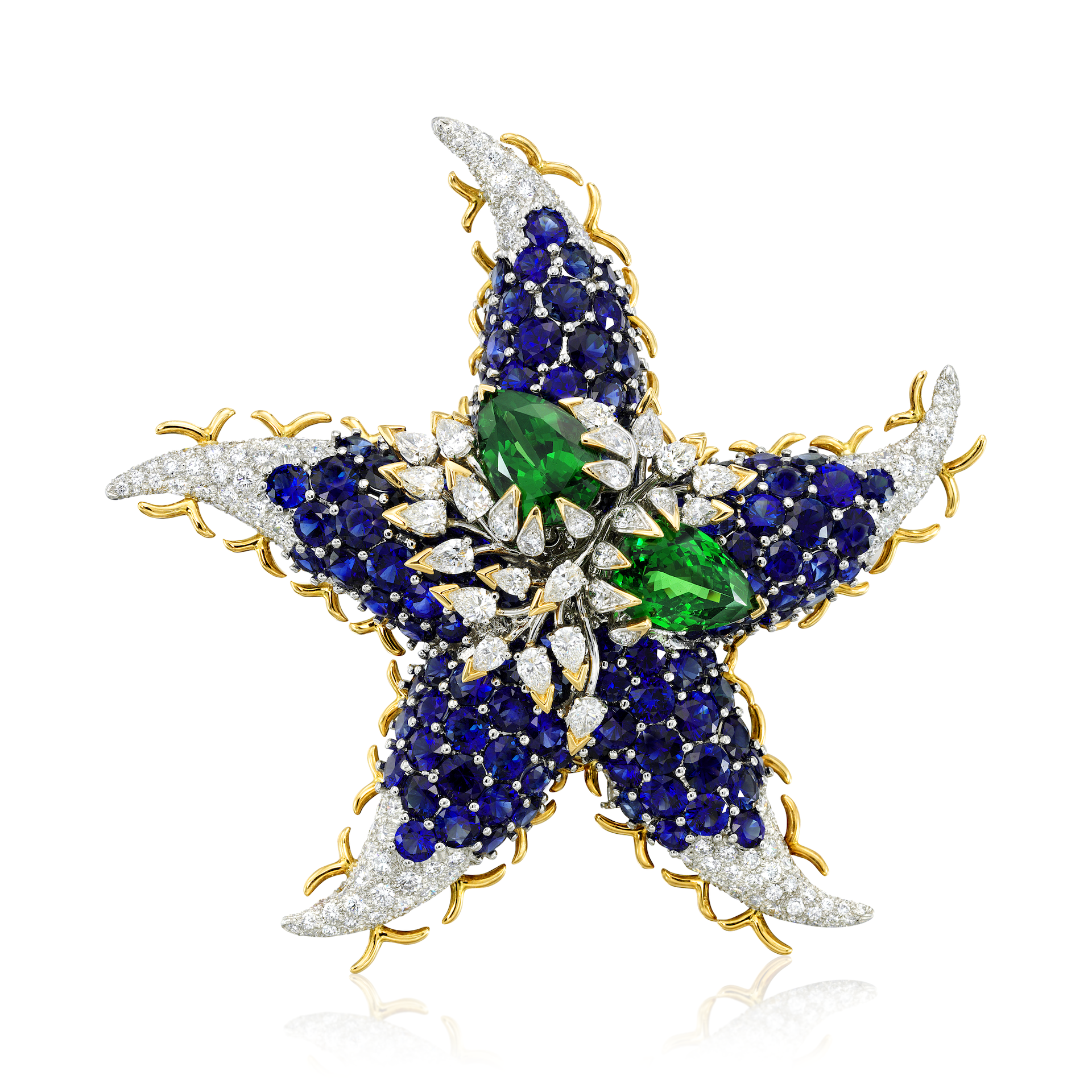
Schlumberger for Tiffany & Co., Etoile de Mer brooch. Photo: Courtesy of Phillips
|
Schlumberger by Tiffany & Co., Bruning also pointed out, is a big name at the moment, partly because the legacy brand—named for the French jewelry designer Jean Schlumberger, who died in 1987—is being heavily promoted by Tiffany. Sotheby’s has six items by the designer, including a rare Tiffany Blue enamel bangle, but the most expensive Schlumberger this season is being sold on Thursday by Phillips: a sapphire, tsavorite, and diamond brooch designed to look like a starfish, estimated at $80,000.
Bonhams’ jewelry sales in New York also take place this week, starting with a single-owner sale on Wednesday, followed by a various-owners sale on Thursday. The top lot is a heart-shaped fancy light blue diamond ring estimated at $2 million. The collection sale has 177 lots, including 31 watches, almost all by Cartier, but also items by Bulgari and Chopard as well as a gold Patek Philippe, circa 1985, estimated at $3,000.
|
|
|
|
Now, let’s get to the main event…
|
|
|
|
As pop art experiences a slow-motion return to the popular imagination, Robert Indiana has been borne along with it. A show at Pace Gallery highlights the artist’s preoccupation with the American dream, far beyond his most famous work, ‘LOVE.’
|
|
|
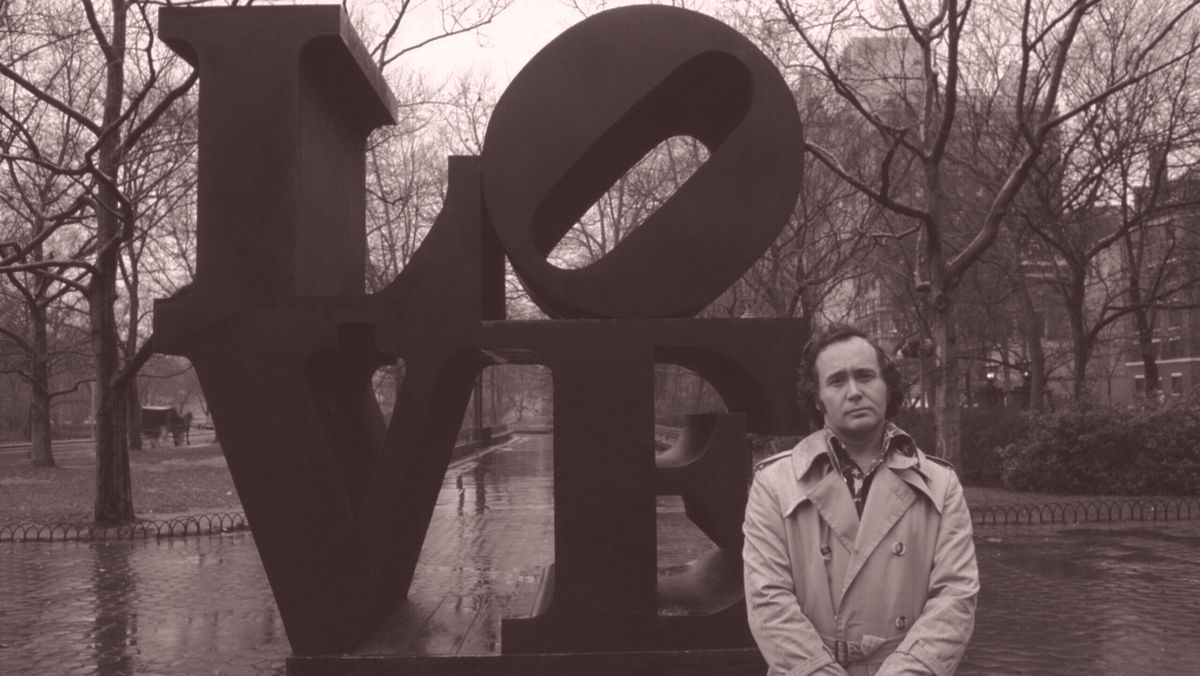
I’ve been trying to figure out how to write about Pace Gallery’s Robert Indiana show, The American Dream, ever since I saw it a few weeks ago. It’s not that Indiana’s art has been forgotten, even with much of it overshadowed by his most famous work—the stacked letters spelling out L-O-V-E, ubiquitous on MoMA postcards, 450 million stamps, and countless riffs and rip-offs. A major retrospective of his work at the Whitney a dozen years ago, Beyond Love, tried to correct that, pointing out the breadth of themes in the pop artist’s work, including “American identity, racial injustice, … death, sin, and forgiveness.” Heavy stuff.
Indiana reappeared in the popular imagination just after his death in 2018, though that was less about his art than the fight over his legacy, about which The New York Times ran nine stories in three years. The legal battle between his caretakers, who also controlled his estate, and a legal entity, Morgan Art Foundation, that had rights to produce his artworks, involved accusations of elder abuse, art forgery, and the suggestion that Indiana had become bitter and disillusioned in Vinalhaven, the island off the coast of Maine where he’d spent his final four-plus decades. Four years ago, the parties seemed to recognize that the legal battles were doing nothing for the artist’s reputation, settled, and agreed to stay in their respective lanes.
|
|
|
|
A MESSAGE FROM OUR SPONSOR
|
Introducing FRAME Sotheby's—A first-of-it's-kind collaboration that brings together two cultural forces through craft, heritage, and timeless style. Discover the full collection now at FRAME.
|
|
|
Indiana’s actual work and life is being showcased again in a recent book about Coenties Slip (now South Street Seaport), once a bohemian refuge for the likes of Robert Rauschenberg, Cy Twombly, and Jasper Johns. The Slip, by Prudence Peiffer, focuses on a group of artists who lived there a bit later— Lenore Tawney, Agnes Martin, Ellsworth Kelly, Jack Youngerman, James Rosenquist, and Indiana—all of them on top of each other, in former sailmaker’s lofts under the shadow of the Brooklyn Bridge.
On the surface, little connects these artists otherwise. Tawney was a ground-breaking weaver aspiring to make art out of craft. Martin was a pioneering minimalist who would eventually remove herself to New Mexico, as one does. Kelly lived a long and successful life as a hard-edged abstract painter. Youngerman was, at the time, among the most successful of the group; now he is all but forgotten. Rosenquist went on to become one of the defining figures of the pop art movement, though he, too, is now more mentioned in art history textbooks than discussed by collectors.
Their common thread is Indiana, himself, who plays a surprise role in the book, incorporating elements of each of the others’ work—and remaking himself in the crucible of the slip. Born an orphan in 1928, Indiana was adopted by parents, surnamed Clark, who were devastated by the economic depression and eventually divorced. He knew he wanted to be an artist from childhood, joined the military to get himself an education, and eventually enrolled in the School of the Art Institute of Chicago, then traveled in Europe before moving to New York in the mid-1950s. A chance encounter with Ellsworth Kelly evolved into a brief romance, which led him to the Coenties Slip, where he forged his own identity, rechristening himself from Clark to Indiana, his state of origin, in a final declaration of independence.
|
|
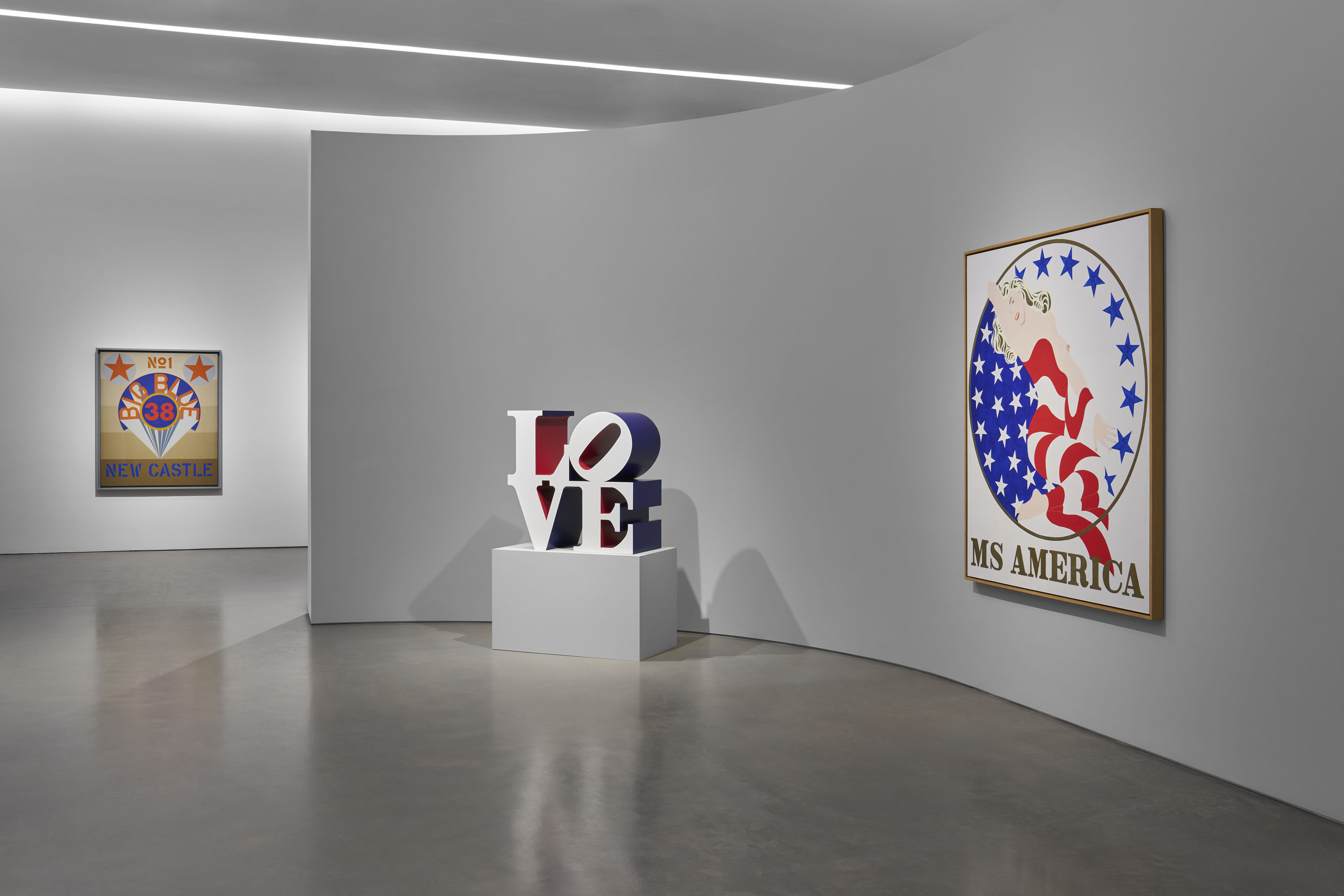
Installation view of Robert Indiana: The American Dream, Pace Gallery, New York. Photo: Courtesy of Pace Gallery
|
|
The “nascent scene” at the slip was “much more queer than the Abstract Expressionist crew,” Matthew Lyons wrote in the catalogue for The Sweet Mystery, the recent show of Indiana’s work held in Venice during the last Biennale. “The slip’s odd location allowed this new generation of artists some psychic space from the already sanctioned art world uptown.” Unwilling to suppress his sexuality, Indiana combined the influence of Kelly, his interest and facility with language, and an innate sense of graphic design into a style of art infused with signs and codings.
“His work is a signpost in the history of queer art,” Pace’s Marc Glimcher told me. “How do you get at the weight and presence of an artist encoded in the work?” Or, to put it differently, what secrets are hidden in Indiana’s art?
|
What’s LOVE Got to Do With It?
|
|
To be honest, this is not the way I had previously thought of Robert Indiana, and Pace’s show offered a chance to start over. I’d seen the herms with their wheels, and stenciled numbers and letters at MoMA and AKG in Buffalo. I’d seen the oversize number sculptures—there’s a set of the small One Through 0 (The Ten Numbers), which were conceived in 1980 and fabricated in 2003, on the terrace of the East Building of the National Gallery in Washington. At Pace, on the outdoor terrace, you get the human-sized version of the series, made of cor-ten steel with a light dusting of rust. (If you can’t make it to Chelsea, a big, single 8 sits in front of an office building on Madison Avenue in the high 30s.)
|
|
|
|
All of which is to say that I’ve seen plenty of Indiana’s work—including images of work Pace showed in Hong Kong in the lead-up to bringing this show to New York—and yet I was still surprised by what I saw, and learned, from Pace’s exhibition. “The show is all about rescuing Indiana from the success of the LOVE imagery,” Pace curator Oliver Shultz explained, “which eclipsed the broader project.” According to Shultz, the American dream, an idea inflected less with financial success than the struggle to find a balance between competing claims, was the enduring theme of Indiana’s career. “His personal history becomes a frame for understanding what it means to be an American.”
Thus, Indiana’s work is highly political. In the Pace show, we see works referencing indigenous tribes, the civil rights movement, slavery, and the Confederacy, alongside celebrations of basic human needs. Many of Indiana’s works bear slogans like EAT, DIE, HUG, and ERR. These are the human needs that also drive political and social conflict. And by the way, Indiana intended LOVE to be a one-word poem, a noun and a verb, something elemental to an individual’s needs and a social goal not easily achieved—it is not, per Shultz, a celebratory thing.
|
|
Robert Indiana, The Demuth Five (1963). Photo: The Robert Indiana Legacy Initiative/Courtesy of Pace Gallery
|
|
There are also paintings that try to address the double-edged sword of fame, like The Black Marilyn, from 1967, with its references to another self-made figure with whom Indiana clearly identified. Indiana’s portraits—both of himself and others—are coded with symbols, as summed up in The Demuth Five, from 1963. The work appropriates Charles Demuth’s imagery from a famous painting done as homage to—and portrait of—the poet William Carlos Williams (Indiana himself made a serious effort to be a poet early in his career), to which Indiana adds his four-word motto (EAT, DIE, HUG, ERR), plus the universal signifier USA.
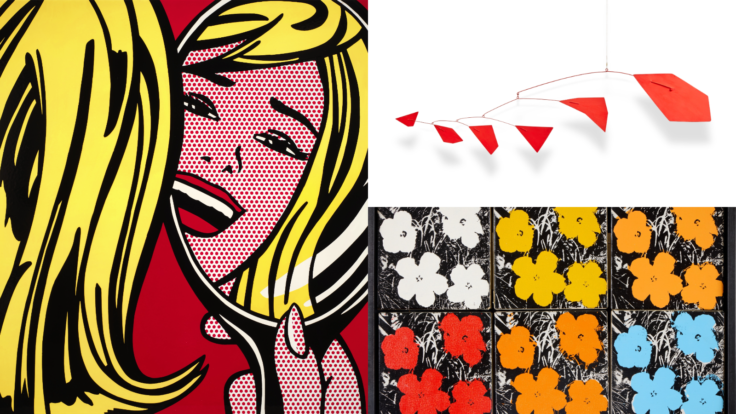
We’re in the midst of a slow-motion return of attention to pop art: The Roy Lichtenstein retrospective at the Whitney is coming next year; the Warhol market is showing signs of life after years of stagnation. Signs and symbols remain important aspects of our social and cultural lives. Pace’s Glimcher rehearsed his pitch for me, that Indiana is the cheapest pop artist by a factor of two—his two highest non-LOVE auction prices are both just around $2 million, achieved years ago. That’s a fraction of what you would pay for the best work of his peers. All of that helps explain why Pace is working with the Robert Indiana Legacy Initiative, an organization run by the Salama-Caro family—who own a great deal of Indiana’s art, and some of the rights to his images—to rebuild Indiana’s presence in art history and the market.
|
If you have not had enough of Robert Indiana—and you don’t want to read Peiffer’s book (or if you’ve read her book and still want more)—you can go right now to gallery 516 in the Museum of Modern Art to see a selection of works by the artists of Coenties Slip. Peiffer is director of content at MoMA and helped curate the installation.
That should do it for today. See you back here tomorrow for the Inner Circle, where we’re going to talk with Christie’s Sara Friedlander and Paula Cooper’s Steve Henry about how auction houses and primary galleries work together behind the scenes. If you’re not a member of the Inner Circle, sign up here so you can read the conversation.
See you there,
M
|
|
|
|
The ultimate fashion industry bible, offering incisive reportage on all aspects of the business and its biggest players. Anchored by preeminent fashion journalist Lauren Sherman, Line Sheet also features veteran reporter Rachel Strugatz, who delivers unparalleled intel on what’s happening in the beauty industry, and Sarah Shapiro, a longtime retail strategist who writes about e-commerce, brick-and-mortar, D.T.C., and more.
|
|
|
|
Finally, a media podcast about what’s actually happening in the media—not the oversanitized, legal-and-standards-approved version you read online. Join Dylan Byers, Puck’s veteran media reporter, as he sits down with TV personalities, moguls, pundits, and industry executives for raw, honest, sometimes salacious conversations about the business of media and its biggest egos. New episodes publish every Tuesday and Friday.
|
|
|
Need help? Review our FAQ page or contact us for assistance. For brand partnerships, email ads@puck.news.
You received this email because you signed up to receive emails from Puck, or as part of your Puck account associated with . To stop receiving this newsletter and/or manage all your email preferences, click here.
|
|
Puck is published by Heat Media LLC. 107 Greenwich St, New York, NY 10006
|
|
|
|




_01JXDDJ8628NPTEBVV16781GSS.jpg "Frame")

_01JXDDJ7WY0X81Z8G6ZTRJF9D7.jpg "Frame")