 |
|
Good evening. Mrs. Wall Power and I are on the road home from Buffalo this Sunday night. We’re listening to every cover of Little Feat’s classic trucker-anthem-slash-life-motto “Willin’.” (If you give me weed, whites, and wine/ And you show me a sign/ I’ll be willin’… to be movin’.) Steve Earle and Linda Ronstadt get honorable mention, but nothing tops Little Feat’s original (well, the second version).
We are on our way back from a quick trip to see the seminal Marisol show, which may mark an important turning point in the revival of Pop art. (Marisol, Tom Wesselmann, and Roy Lichtenstein are all going to be the focus of major museum shows during the next two years.) I’m going to deal with Marisol and all of that in Tuesday’s email. Right now, I want to focus on the transformation of the Albright-Knox Gallery into the Buffalo AKG.
But first…
|
| And now, let’s go to Buffalo… |
 |
| A Rust Belt Retrospective |
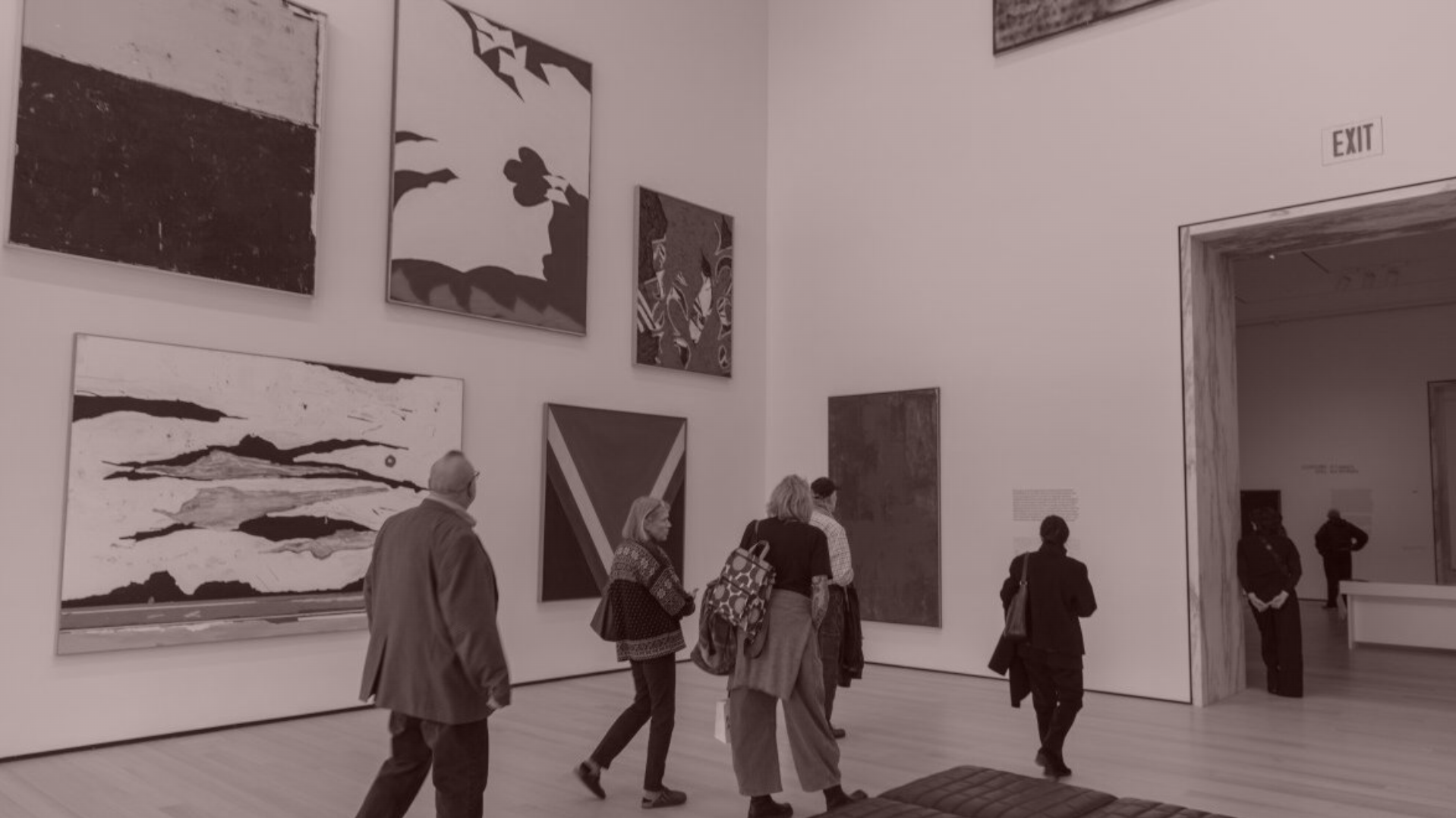
| A $230 million expansion of Buffalo’s groundbreaking fine art museum has anchored the city’s revival—offering a blueprint for other once-great American hubs looking to overlay a cosmopolitan future on a broad-shouldered past. |
|
|
|
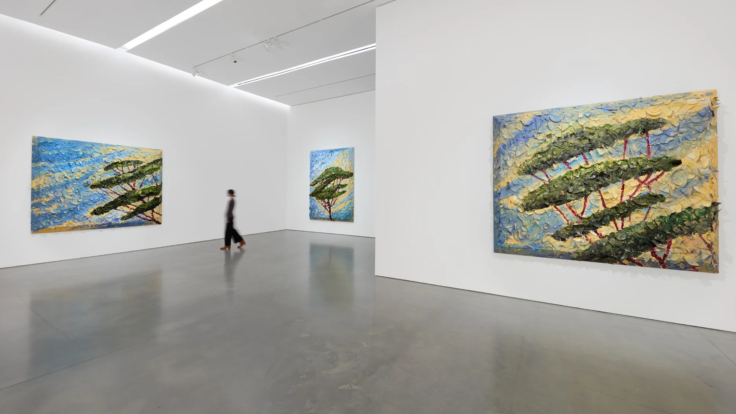
| You don’t have to buy the idea of Buffalo as a tourist center—or even a creative haven for young people—to be intrigued by the story of the Buffalo AKG. The city’s world-class art museum has now completed a $230 million expansion designed by a Japanese architect, which has been substantially funded by a Los Angeles “bond king” and overseen by a Finnish director, who just happens to be the great-grandson of that nation’s most famous artist. Meanwhile, the Buffalo AKG is opening a retrospective of Marisol, a Venezuelan Pop artist who was once as famous as Andy Warhol before she fell into obscurity and eventually bequeathed her entire estate to the museum upon her death in 2016.
Director Janne Siren was hired in 2013 to execute a strategic plan for the museum that had actually been drawn up a decade earlier, not long after the Buffalo AKG had lines around the block for a major exhibition of Monets from the Musée Marmottan, in Paris. Back then, Siren precociously argued for his institution’s place in the city’s cultural life, as supported by the city’s elite but deeply engaged in the community. It didn’t hurt that Buffalo AKG was already home to seminal works of art by Frida Kahlo, Helen Frankenthaler, Arshile Gorky, Jackson Pollock, Clyfford Still, Adolph Gottlieb, Jasper Johns, Larry Poons, and Robert Motherwell. The museum was essential, Siren said, because “we live in the most visual of centuries.”
Since its last expansion in 1962, the Albright-Knox Gallery had acquired 5,500 works of art with no more space to show them and little room for the kinds of special exhibitions that would make Buffalo feel like a sophisticated metropolitan center. The average annual attendance at the museum from 2013 to 2019, before the museum was closed for the pandemic and construction, was 135,000 visitors. In the last year, since the expanded Buffalo AKG has reopened, attendance grew to 325,000—helped along by a major retrospective of Stanley Whitney’s art.
Buffalo at the turn of the 21st century hardly seemed a likely place to invest money into, of all things, an art museum, especially one more oriented to the interests and status needs of Buffalo’s oligarchs. Twenty years ago, when the Albright-Knox Gallery drew up a strategic plan for its expansion, the city was mired in every possible rust-belt social problem: declining population, obsolete heavy industry, and unsustainable civic finances. But
Buffalo, or at least the trustees of the Albright Knox Gallery, had already identified investing in art as a linchpin in their effort to attract new people—especially young people—to Buffalo. All Janne Siren had to do was find an architect, raise nearly a quarter of a billion dollars, and execute on the board’s vision. |
|
|
| Founded as the Buffalo Fine Arts Academy, in 1862, the Buffalo AKG has continually been a focal point for the city’s wealth and boosterism. Buffalo first rose to prominence as an entrepôt after the opening of the Erie Canal in 1825. Commodities from Ohio and the Midwest were shipped along the Great Lakes to Buffalo, then loaded onto barges to make the 350-mile trip through the canal to the Hudson river. A few decades later, railroads connected Buffalo to New York, leaving the city second only to Chicago as a commodities capital.
Commodities and cheap energy (from hydroelectric power generated at nearby Niagara Falls) are the essential inputs of industrial capitalism. They spurred the city’s growth in heavy industries, including steel manufacturing and the automobile industry. In 1901, Buffalo was home to more millionaires per capita than any other American city. It grew like a city of millionaires, too, with architects like Louis Sullivan building skyscrapers downtown. At the time, the businessman Darwin Martin tapped a young draftsman working for Sullivan named Frank Lloyd Wright to build a headquarters for the Larkin Company, which had become a hugely successful catalog business like Sears, Roebuck & Co. The project went so well that Martin had Wright build him a radically innovative home, too. Two of his fellow executives followed suit. All three houses are still standing in Buffalo. Martin’s house is now a museum. (When you go to Buffalo, everyone will ask you if you’ve been to the Martin house.)
After the Civil War, Buffalo’s grandees had hired Frederick Law Olmsted and Calvert Vaux—already famous for New York’s Central Park and Prospect Park, respectively—to design an extensive network of green spaces and parkways. It was in one of these parks that John J. Albright, a man who embodied all of Buffalo’s economic triumphs in railroads, commodities, and the building of the Lackawanna Steel town, gave the money for a permanent home for the museum. Although the building was intended for Buffalo’s Pan-American Exposition in 1901 (where an anarchist assassinated President McKinley), it wasn’t finished until 1905, when it became the Albright Gallery.
A. Conger Goodyear was born into a prominent Buffalo family whose wealth came from timber and railroads. (The Goodyear tire company was named for the unrelated inventor of vulcanized rubber, Charles Goodyear.) In 1912, he took his father’s place on the board of the Albright Gallery. Enraptured by Modern art, Goodyear would spend the next 16 years acquiring works for his own collection and the museum. He also established an unrestricted acquisitions fund for the museum and helped bring one of Marcel Duchamp’s exhibitions to Buffalo, in 1927, which resulted in the museum buying a Brancusi. Using those unrestricted funds in 1928, Goodyear bought a Picasso nude. The board thought he had gone too far and voted him out.
Don’t worry about Goodyear. He landed on his feet as one of the founders of the Museum of Modern Art and served as president for its first decade before being replaced by Nelson Rockefeller just as the museum moved to its current location. Goodyear wasn’t bitter. In 1939, he would return to the now-receptive Albright board as an honorary member and donate a total of 300 works to the museum.
Goodyear’s role was only surpassed by Seymour Knox Jr.’s, also a scion of Buffalo wealth, who would team up with director Gordon Smith from the late 1950s to the early 1970s to acquire seminal works by a who’s who of Post-war art stars: Pollock, Kline, de Kooning, Rothko, Frankenthaler, Hartigan, Mitchell, Motherwell, Still, Andy Warhol, and Marisol.
In 1962, Knox also shouldered the lion’s share of funding for an expansion of the museum designed by Gordon Bunshaft, himself Buffalo born, and the board graciously renamed the museum the Albright-Knox in recognition. |
|
|
| Although they did not know it at the time, Buffalo’s economic power and prestige had already peaked. In 1959, the St. Lawrence Seaway opened, displacing Buffalo’s position as the focal point of the Great Lakes cargo infrastructure. America’s broader rust-belt decay during the second half of the 20th century would play out more slowly, and deeply, in Buffalo. The metro area’s population peaked in 1970 at 1.08 million. It fell for 20 years before stabilizing in the ’90s. Then came another 20-year slide where the region lost an additional 9 percent of its population.
But the city’s wealth had not disappeared and Buffalo remained intensely proud of its architectural and cultural history. Former congressman Brian Higgins dates the start of Buffalo’s revival to 2005, when, helped by his efforts in Washington, the city unlocked tax credits for investments in its historic buildings. This helped resolve regional infrastructure conflicts and eventually overhaul the waterfront, as well as create a major medical center that now employs as many people as the steel mills once did. The population has started to grow again, particularly among young people.
Higgins believes you can measure Buffalo’s economic growth against its rise in art and culture. Since leaving Congress this year, Higgins has put his own efforts into building Buffalo’s cultural credibility as the president of the Shea’s Performing Arts Center, a campus of three theaters downtown. There are fewer than a million people in the Buffalo metropolitan area, but Higgins sees Southern Ontario, where a third of Canada’s 37 million citizens live, as a well of potential customers only a few hours’ drive away. He points out that Buffalo has attracted more than $2 billion in tourism spending over the past decade, with more than 10 percent of that money going to arts and culture. The Buffalo AKG is drawing from that pool of potential visitors. (And it may not be an accident that Toronto’s Art Gallery of Ontario, less than 100 miles away, has also embarked upon its own massive expansion.)
When Siren embarked upon the decade-long project to expand the museum, he knew that he had to start by building ties to the community. He launched the first dedicated public art department in an American museum. The Public Art Initiative has its own board committee and has commissioned more than 60 projects by international and local artists alike to create a series of murals, installations, and sculptures.
Siren also looked for an architect who would participate in a design process that incorporated the community through town hall meetings, focus groups and releasing designs along the way. He found one in Shohei Shigematsu at OMA. Siren estimates that this process delayed completion by a year or more, but was worth the time and effort not to treat the project like a top-down design competition.
Siren also had to navigate Buffalo’s strong preservationist community. Gordon Bunshaft’s design included a courtyard that made little sense in a region that experiences strong lake effect snow—the meteorological phenomenon that results in exceptionally heavy snowfalls during the winter. Siren’s clever workaround was to commission Olafur Eliasson and Sebastian Behmann to create a sculpture that would envelop the courtyard, preserving Bunshaft’s original building within a new work that also allowed Siren to designate a portion of the museum that is always free to visitors. Many of the museum’s standout works are on rotating display in the free space.
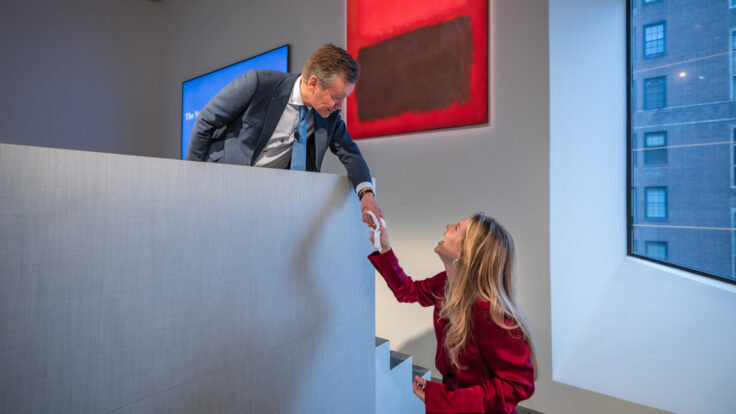
To pay for the $195 million in construction costs and the $35 million in additional endowment to operate the expanded museum, Siren was able to enlist DoubleLine Capital founder Jeffrey Gundlach, who grew up in Buffalo and has since become a serious art collector, to provide a series of matching grants that totalled $65 million. In return for his generosity, they named the new building for the so-called bond king and added his initial to the museum’s new name, Buffalo AKG. (Imagine Steve Schwarzman accepting that.)
At a conference earlier this year, Glenn Lowry, the director of the Museum of Modern Art, perhaps best encapsulated the modern shift in museums. He described trophy acquisitions as “so 20th century.” Building and serving local constituencies, he said, is the new challenge for museums. Siren’s decade-long project would have been a triumph for most directors. But it seems that all of that work was only preparation for what the Buffalo AKG really aspires to do. |
|
|
| That’s it for today. The quick trip we made to Buffalo was a remarkable eye-opener. It completely changed my understanding of the city and the region. (And I am not unfamiliar with Western New York at all.)
Upstate and Western New York is a summer wonderland of beautiful rolling farmland dotted with majestic wind turbines and the occasional Amish or Mennonite buggy. The Finger Lakes offer cool refuges and a decent wine country. There are natural wonders in Letchworth State Park, the Grand Canyon of the East and another gift from a Buffalo industrialist—and, of course, Niagara Falls, where the waters of Lake Erie flow at an astonishing pace up toward Lake Ontario.
In the brief time we were there, we ate well at Southern Junction, a Texas-style barbecue joint with South Asian accents, and The Little Club Bar, a small-plates restaurant and wine bar that focuses on local food and independent wineries. To be like locals, we grabbed lunch at Charlie the Butcher’s Carvery, just to say we had a beef on weck. (Don’t ask me about wings; that’s not in my food lexicon.)
Nobody likes ice cream more than Mrs. Wall Power. She got her fix at Lake Effect Ice Cream, a Lockport ice cream shop with an outpost in Buffalo. I had a scoop each of the Pure Coconut and Meyer Lemon, which was better than any creamsicle I’d ever had.
I’ll be back on Tuesday to really get into Marisol.
Marion |
|
|
|
| FOUR STORIES WE’RE TALKING ABOUT |
 |
|
 |
|
 |
|
 |
| Hillbilly Blues |
| Plus, documenting how Trump is modulating to Kamala Harris. |
| TARA PALMERI |
|
|
|
|
|
 |
|
|
|
Need help? Review our FAQs
page or contact
us for assistance. For brand partnerships, email ads@puck.news.
|
|
You received this email because you signed up to receive emails from Puck, or as part of your Puck account associated with . To stop receiving this newsletter and/or manage all your email preferences, click here.
|
|
Puck is published by Heat Media LLC. 227 W 17th St New York, NY 10011.
|
|
|
|