 |
 |
|
Welcome back to Dry Powder. I’m Bill Cohan.
|
|
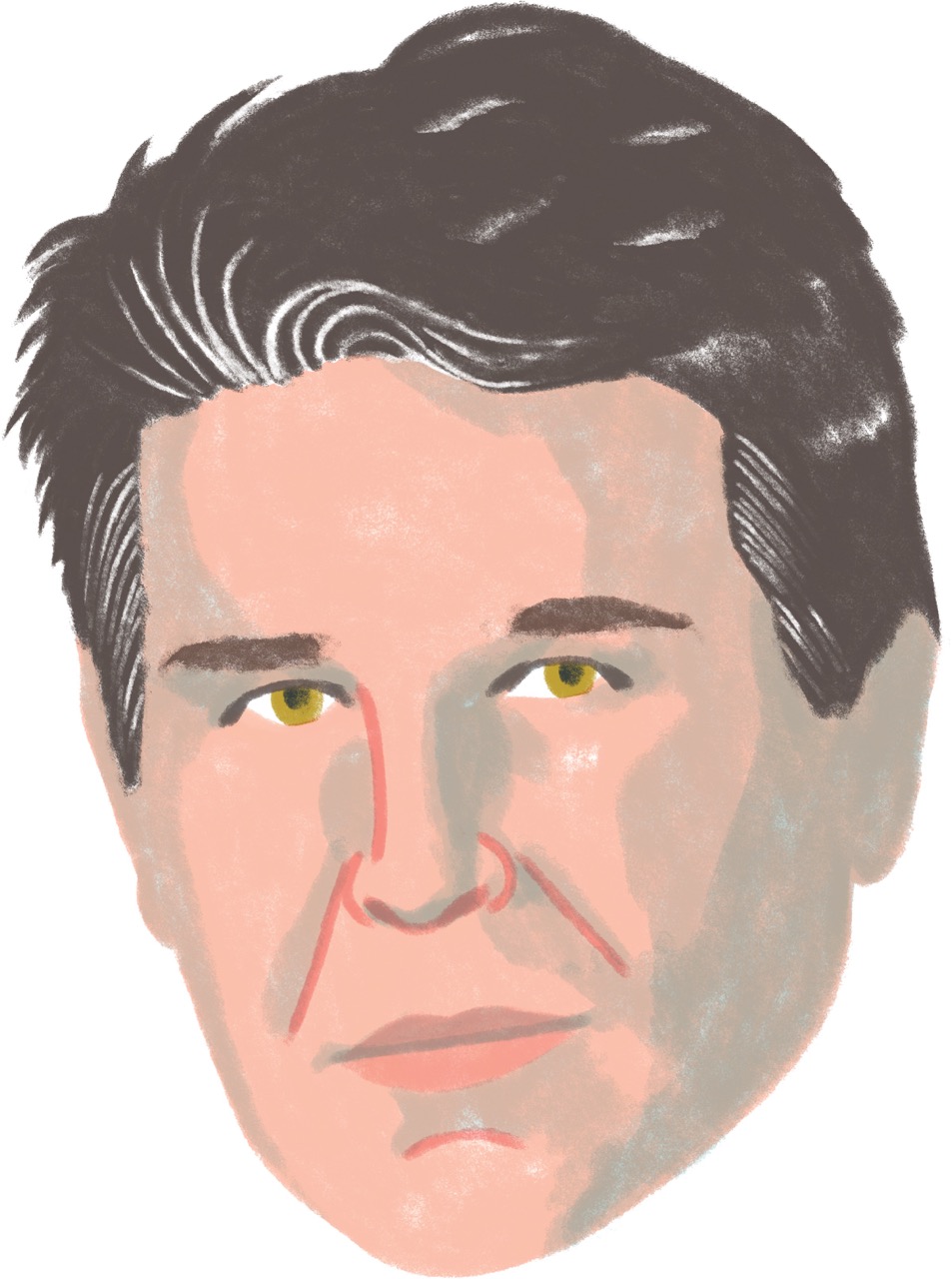
The billionaire investor Bill Ackman has been on a tear on Twitter/X lately, calling for the removal of the elite university presidents who were grilled before congress about antisemitism on their campuses while veering into broader critiques of “the D.E.I. movement” and admissions processes. However, close observers know that Ackman has been playing this tune for a long time. In today’s issue, a few illuminating excerpts from his ’88 undergraduate thesis at Harvard and some thoughts on the efficacy of his pressure campaign.
But first…
|
| A Couple Sunday Ruminations |
|
- More Disney Crocodile Tears: There’s little question that Disney forces are trying to belittle on-and-off-and-on-again antagonist Nelson Peltz’s latest proxy battle gambit: his decree seeking to nominate both himself and his new activist buddy, former Disney C.F.O. and Iger player hater Jay Rasulo, to the company’s board of directors. But although Peltz has sent notice to Disney that he and Rasulo would like board seats, I’m not yet convinced that he is going to actually file the proxy statement in advance of April’s annual shareholder meeting, as he did nearly a year ago before walking away from that fight and declaring victory, of sorts.
First of all, proxy fights are expensive—$25 million and up—and time-consuming, even for pissed-off older guys with scores to settle. They are also very revealing. Does the Smiling Crocodile really want to once again share all the back and forth that he and Ike Perlmutter have gone through in the past year with Iger to try to get the board seats he’s now demanding? Nelson will also have to decide which two current Disney board members to go up against in his proxy fight. For his two candidates to succeed, they have to get more votes than the two existing Disney board members that they want to replace. That’s going to be tough, I suspect.
They certainly are not going to go up against James Gorman, the former C.E.O. of Morgan Stanley and succession expert, whom Iger just added to the board. It would probably not make much sense, either, to go up against Jeremy Darroch, the former C.E.O. of U.K. broadcaster Sky. He clearly knows more about media assets than does Nelson. In truth, even though the Disney board does not own much stock in the company—its true Achilles heel in this fight—it is still a fairly impressive bunch of people, or at least impressive enough to win a proxy fight with Peltz and Rasulo.
Not only did Iger outfox Peltz by adding Gorman and Darroch to the board, he also reinstated the dividend, one of Peltz’s other demands. What’s more, the Disney stock is up 10 percent since Peltz announced in October that he had joined forces with Perlmutter and would be considering another proxy fight. Is Iger’s lowkey defanging of the Croc the beginning of his methodical turnaround at the company? That’s the hope. (This is not investment advice.)
- More Adventures of Shari & Gerry: David Ellison and Gerry Cardinale’s play for Shari Redstone’s National Amusements Inc., first reported by my partner Matt Belloni, remains such a fascinating yet enigmatic potential deal. In this case, you have a financial buyer taking out the controlling shareholder in Paramount Global by buying the rickety holding company that Shari controls. I still can’t figure out why very smart guys like Ellison, son of Larry and the founder of Skydance Media, and Cardinale, founder of RedBird Capital, formerly of Goldman Sachs, would be taking this approach.
Through NAI, Shari owns nearly 80 percent of the voting stock of Paramount Global but only 10 percent of the economic stock. They must be thinking that they can pay Shari some kind of premium for her 10 percent stake in Paramount, worth around $1.1 billion, and get the voting control at the same time, without having to buy the public Paramount Global entity, which is a $25 billion nugget at the moment, including both equity value and the Paramount debt at par. But, as I’ve noted before, coming in at the parentco level also exposes them to plenty of headaches (NAI’s forlorn movie theater chain, at least $1 billion in debt, and a preferred equity investment from Byron Trott’s BDT & MSD Partners, etcetera), plus all the nightmares at Paramount (a subscale streamer, potential M&A tax burdens, etcetera etcetera) as its controlling shareholder.
Notably, if Ellison and Cardinale end up with Shari’s voting control of the company, they are pretty much putting themselves in the position of being a fiduciary for the other non-Redstone Paramount Global shareholders, among which the two largest are Warren Buffett and the long-suffering Mario Gabelli, the esteemed money manager. I can’t believe that either of these men will be happy with Ellison and Cardinale scooping up control of Paramount Global, by buying NAI, without somehow also paying a premium for their stock.
Could Trott, a longtime banker to Buffett, be keeping him informed of the situation, even perhaps encouraging him to make a bid to displace Ellison and Cardinale? The problem for Buffett is that, from all accounts, this was a position that Warren’s underlings put in place, not him. He doesn’t even particularly like the company, as he has intimated publicly, and certainly wouldn’t want to increase his stake in it, or buy it—even if he’s probably lost 50 percent of his investment in Paramount Global.
Predictably, this deal is generating a lot of buzz within elite investment banking circles, and my phone is ringing off the hook with informed speculation—which I love to hear, of course. My sense from my Wall Street sources is that there is no deal with anyone just yet, just the same old kicking of the Paramount Global/NAI tires that has been more or less ongoing for a while. Nevertheless, I am hearing from people: Could Gabelli be infuriated enough to do something? Is Tyler Korff, Shari’s son and an independent thinker, going to fall in line? Could Walmart, which has a meaningful distribution partnership with Paramount Global, factor into this, perhaps by buying Paramount’s linear TV assets?
These are the sorts of musings that are inevitable in the middle of deal heat, and seldom turn into anything concrete. But I admit that Walmart’s content partnership with Paramount always interested me, if for no reason other than it has helped the company compete with Amazon Prime. Will Walmart step up and take CBS off Ellison/Cardinale’s hands? (Walmart did not respond to a request for comment.)
As for the potential Korff dissension? As someone who wrestled control of her heirloom from her own father, Shari presumably knows a thing or two about how to manage family politics. I suspect, in the end, Tyler will do what the family wants him to do. (Tyler declined to comment to me on the record.)
|
 |
| Ackman’s Harvard Admissions |
| Wall Street’s most voluble hedge fund macher is very publicly denouncing university presidents for their inability to police (and outright condemn) antisemitism on their campuses, while also supporting and investing in Elon Musk’s media company. Is this a contradiction, or just Ackman’s unique logic? |
|
|
|
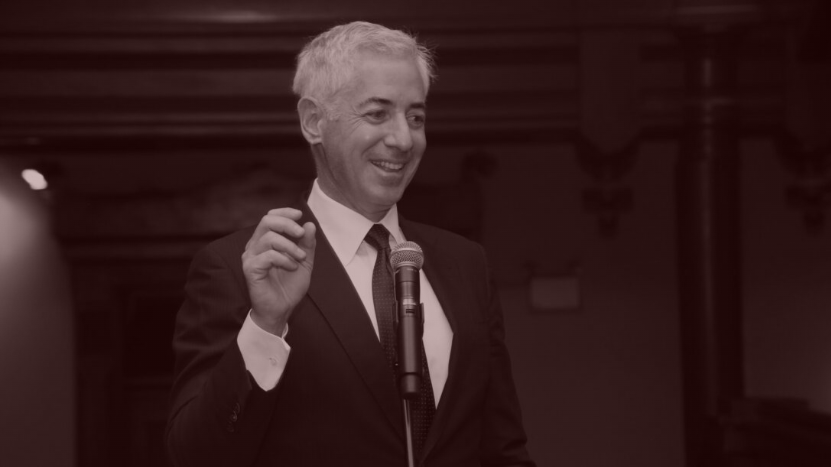
| Unless you’ve been living under a rock, you’ve likely noticed that billionaire hedge fund manager Bill Ackman has been on some sort of jihad against the three women who run (or ran) Harvard, his alma mater, M.I.T., and UPenn. His Twitter/X feed lately has been a nearly endless diatribe against what he perceives as the antisemitism and wokism that has invaded our elite college campuses.
Ackman loves being the center of attention, of course, and not necessarily in a bad way. I have known Bill a long time and have written so many stories about him I can barely keep track—through the Herbalife (or)deal, his feuds with Carl Icahn and Dan Loeb, the disastrous Valeant long bet, and then his brilliant early Covid C.D.S. play in which he turned $27 million into $3.6 billion virtually overnight. He also made some $200 million shorting 30-year Treasuries, a position he announced with great fanfare in August and covered in October. So Ackman is back, feeling his oats, making money for himself and his investors.
Does that help explain why we are putting up with his diatribes on Twitter/X, in which his foundation has a $10 million investment? It’s plenty ironic, I think, that Ackman has been an extreme supporter of Musk’s X, which has been a virtual font of antisemitic rhetoric. Ackman has also not been shy about raising money from various Mideast countries, not particularly known for their hospitality toward Jews. For instance, the Qatar Investment Authority invested $141 million in the 2014 I.P.O. of Ackman’s Pershing Square Holdings and still owned 4.56 percent of Pershing Square Holdings in 2017, according to a regulatory filing. (I’m told the Qataris maintain their stake in Pershing Square Holdings but are not investors in Ackman’s private hedge fund.) And Ackman had lunch with the Qatari prime minister at the GM building in New York City earlier this month, along with other hedgies and Robert Kraft, the owner of the New England Patriots—an event organized by who else? Jared Kushner. (Ackman declined to comment on the Qataris, but he did confirm he attended the luncheon with the Qatari prime minister.)
I don’t know, but the people I talk to on Wall Street seem to think that Ackman is overplaying his hand, and taking things too far, at this point. They prefer the subtler approach taken by Marc Rowan, the C.E.O. of Apollo Global Management, who early on took up the cudgel against the president of Penn but didn’t get all nuts about it. He made his point, worked behind the scenes to achieve what he wanted, and hasn’t gloated, at least not publicly. (Rowan was also at the lunch with the Qatari PM.) Ackman, on the other hand, tweeted “One down” after Liz Magill resigned from Penn on December 9.
Now that it looks like both Harvard’s Claudine Gay and M.I.T.’s Sally Kornbluth will be sticking around for the foreseeable future, Ackman seems to have set down his rifle and taken up a sawed-off shotgun. He’s retweeting the blithering of Alan Dershowitz, the long-discredited Harvard Law professor. He’s been amplifying the idea that Gay plagiarized some of her research. When the news broke that Harvard College’s early admission applications had fallen 17 percent from last year, he tweeted, “It takes 400 years to build a reputation and only a few months to destroy it.” He then went on to cite the leadership of early 20th century Harvard president Lawrence Lowell, who “set quotas” for the admission of Jews to Harvard, as a cautionary tale, writing that while he is “supportive” of the “broad array of factors” that are considered in admissions offices these days, “we have likely gone too far away from merit based selection” and the “pendulum has swung too far” the other way because of “the DEI movement.” The diatribe went on from there. |
|
A MESSAGE FROM OUR SPONSOR
|
 |
| Your health insurance company and their pharmacy benefit manager (PBM) can decide which medicines you can get at the pharmacy – regardless of what you and your doctor think is best. Why do they do that? So they make more money for themselves. See why middlemen should work for you, not against you. |
|
|
|
|
| Ackman has been fighting this battle since he was an undergraduate at Harvard. In his 1988 undergraduate thesis, Scaling the Ivy Wall: The Jewish and Asian Experience in Harvard Admissions, Ackman draws parallels between the experience of Jews trying to gain admission to Harvard in the 1920s with the experience of applicants from Asia during the 1980s. “As one of the oldest and perhaps the most notable of this country’s academic institutions, Harvard represents the gateway to elite status and to ‘making it’ in modern day American society,” he wrote. “One need only look at the disproportionate numbers of Presidents, Nobel Laureates, and chairmen of Fortune 500 companies who have graduated from Harvard to understand the power of the Harvard degree. As a result, admission to Harvard has become the target of groups seeking upward mobility.”
After writing a somewhat pedantic theoretical framework for his essay, as he called it, Ackman then traced the sordid history of Harvard’s admissions process, as it moved from a school that catered almost exclusively to the children of Boston Brahmin to a far more diverse student body. In 1860, Ackman wrote, “more than 50 percent” of Harvard “sons” were from the Boston Brahmin, making it the single most important institution for maintaining the status quo at that time. That would change. “The arrival of a substantial influx of Jews threatened to subvert the status of the institution, for no upright member of the Brahmin class would want to attend a ‘Jewish University,’” Ackman wrote. “The important question became whether Harvard was to be simply a training ground for the traditional business elite, or as the Jews purported, a gateway to elite status. There were very few Jews at Harvard when President Charles W. Eliot was inaugurated at Harvard in 1869. Three or four of the 563 Harvard undergraduates were Jewish. But, by 1922, twenty-two percent of Harvard undergraduates were Jewish and the University would have its ‘Jewish problem.’” Ackman continued later in his essay, “As more Jews entered Harvard, the Protestant establishment began to resent the influx of these newly immigrated, socially unadjusted Jews,” by which he meant Jews that had come to this country from Eastern Europe, especially Russia, as opposed to those who had come earlier from Germany and who had more easily assimilated.
According to Ackman, Lowell was keen to keep Harvard at the top of the nation’s elite universities and decided that, to do so, he had to limit the number of Jews admitted. “Lowell feared that if the Jews were admitted in large numbers they would ‘cling’ together, resist assimilation, and threaten the maintenance of purity of the Brahmin status group,” he wrote. According to Ackman, new admissions requirements were instituted to preclude those ‘unassimilable’ Jews from gaining entrée to Harvard. And, “unlike other institutions which were experiencing a similar ‘Jewish Problem,’ Harvard made its intentions public.”
Ackman then quoted from a letter Lowell wrote to a non-Jewish Harvard alumnus, explaining the university president’s perverse logic for reducing antisemitism by reducing the number of Jews: “There is, most unfortunately, a rapidly growing anti-Semitic feeling in this country, causing—and no doubt in part caused by—a strong race feeling on the part of the Jews themselves. … All this seems to me fraught with very great evils for the Jews, and very real perils for the community. … The question for those of us who deplore such a state of things is how it can be combatted, and especially for those of us who are connected with colleges, how it can be combatted there—how we [can] cause the Jews to feel and be regarded as an integral part of the student body. The anti-Semitic feeling among the students is increasing, and it grows in proportion to the increase in the number of Jews. If the number should become 40 percent of the student body, the race feeling would become intense. When, on the other hand, the number of Jews was small, the race antagonism was small also. If every college in the country would take a limited proportion of Jews, I suspect we should go a long way toward eliminating race feeling among the students.”
Added Ackman, “Lowell’s candor about the Jewish question may at first seems [sic] surprising, certainly from a modern perspective. Yet, such ideas were consistent with his social circles and the xenophobic attitudes of the ‘tribal twenties.’” Ackman concluded that, in Lowell’s view, “the image of the ‘Harvard man’ would be tarnished by the entrance of too many Jews.” |
|
|
|
|
| Ackman seems to have been as critical of Harvard’s admissions policies when he was an undergraduate as he is today as a billionaire tweeter. “One might question the earnestness of Harvard’s desire to admit minority students,” Ackman wrote back then, gearing up to a conclusion. “Why does Harvard feel compelled to admit minorities? It appears that Harvard is more concerned with the campus mosaic than with what the colors of the campus spectrum actually represent. Considering the original intentions of Affirmative Action and other such programs to admit the societally disadvantaged, Harvard’s policies do not seem to be directed to confirm the spirit of such legislation. Many of the minorities on campus are not disadvantaged, coming from affluent and educated families, yet (with the exception of Asian Americans) receive special treatment or ‘tips’ in admissions. If Harvard were truly concerned with the disadvantaged student, rather than with its desire to maintain a positive public image for the media, we would see recruitment of more students from disadvantaged backgrounds regardless of their color. Why is there no recruitment for disadvantaged Poles, Italians, and underprivileged Jews for that matter? Whose definition of diversity is Harvard applying?”
Ackman concludes his senior thesis with a bit of cynicism about what motivates the Harvard admissions office. “Harvard admits alumni/ae children because the Admissions Committee’s research suggests that second generation Harvard alumni/ae give greater sums to their alma mater,” he wrote. “Harvard admits athletes because doing so keeps the alumni happy. Harvard admits minorities because it has been pressured to do so by government legislation, campus demonstrations, public sentiment, and the media. Further evidence of Harvard’s ‘self-interested’ morality is the fact that blacks and other minorities were not part of the University’s definition of diversity until 1968. In a parallel situation, the Admissions Office only became concerned with Asian American admissions when outside pressures forced them to do so.”
Change at Harvard all comes down to pressure, according to Ackman, which perhaps explains why he has taken to Twitter with a vengeance with the hope that his 1 million social media followers will amplify the call for change that he seeks. In his lengthy December 10 letter to the Harvard governing boards, he wrote about Gay, “In her short tenure as President, Claudine Gay has done more damage to the reputation of Harvard University than any individual in our nearly 500-year history.” He then noted that his letter had been viewed more than 106 million times. But still not enough pressure to achieve her departure, apparently, which has been his aim. Where he takes things from here is anyone’s guess.
I had a lovely conversation with Bill about all of this earlier today. Unfortunately, at his request, it was all off the record. But it seems clear to me, he’s not abandoning his fight, even if the battle against Claudine Gay has been lost, at least for the moment. Perhaps he will turn his gaze upon the shenanigans of Mark Gorenberg, the San Francisco venture capitalist and new chairman of the board at M.I.T. |
|
|
|
| FOUR STORIES WE’RE TALKING ABOUT |
 |
| Times Flies |
| Notes on James Bennet’s screed against the Gray Lady. |
| DYLAN BYERS |
|
 |
|
 |
|
 |
|
|
|
|
|
 |
|
|
|
Need help? Review our FAQs
page or contact
us for assistance. For brand partnerships, email ads@puck.news.
|
|
You received this email because you signed up to receive emails from Puck, or as part of your Puck account associated with . To stop receiving this newsletter and/or manage all your email preferences, click here.
|
|
Puck is published by Heat Media LLC. 227 W 17th St New York, NY 10011.
|
|
|
|