{{ 'now' | timezone: 'America/New_York' | date: '%b %d, %Y' }} |
|
|
Welcome to The Hidden Layer. I’m Ian Krietzberg.
In today’s issue, my chat
with two startup founders looking to use A.I. to treat mild forms of dementia—a surprisingly promising idea that’s more complex than it seems. I also have updates on a few noteworthy developments at Spotify, OpenAI, and Anthropic. And yes, I saw that California’s most high-profile podcaster, Gavin Newsom, just signed SB 53—a first-of-its-kind state law to regulate the A.I. industry. We’ll dig into that on Thursday.
Also discussed today: Ed
Newton-Rex, William Alsup, Andrea Bartz, Eriq Gardner, David Cahn, Edward Lee, NewDays, Babak Parviz, Daniel Kelly, and many more…
Let’s get into it… |
-
Spotify’s sorta A.I. crackdown: Last week, Spotify tried to thread a particularly narrow needle by laying out a few steps to ostensibly strengthen A.I. protections for musicians on the platform—placating nervous artists while keeping the lucrative A.I.-slop gates at least partially ajar. “At its best, A.I. is unlocking incredible new ways for artists to create music and for listeners to discover it. At its worst, A.I. can be used by bad actors … [to] interfere with authentic artists working to build their careers,” the company said in the announcement. “That kind of harmful A.I. content degrades the user experience for listeners and often attempts to divert royalties to bad actors.”
Fair enough. So what’s the
plan? First, the company will implement measures to prevent “bad actors” from using A.I. to impersonate other artists, like that viral Bad Bunny deepfake last year. Second, the streamer plans to strengthen its spam filter to prevent mass uploads, duplicates, and other forms of slop. (Although this has less to do with generative A.I.) Third, and perhaps most
importantly, Spotify says it’ll work with DDEX, the industry standards-setting organization, to develop a new benchmark for A.I. disclosures in song credits.
Critically, though, those disclosures will be voluntary. That means Spotify can continue recommending partially or fully A.I.-generated music to listeners without labeling it as such. The platform defended this policy, writing that “the industry needs a nuanced approach to A.I. transparency, not to be forced to classify
every song as either is A.I. or not A.I.” Given the upside in hiding the provenance of a certain song, Ed Newton-Rex, the founder of Fairly Trained and a fierce advocate for the A.I. industry to license its training data, called the announcement “spin.” - A $1.5 billion precedent: On
Thursday, Judge William Alsup issued preliminary approval for the single largest settlement in U.S. copyright history: Anthropic has agreed to pay a class of authors $1.5 billion for allegedly training its model on about 500,000 pirated books, with authors to receive $3,000 per infringed work. Indeed, as my partner Eriq Gardner recently noted,
the accrued interest alone—roughly $126 million—exceeds most prior copyright settlements. Frankly, $1.5 billion is a steal: If the case had gone forward, a jury could have awarded damages of up to $150,000 per work. Andrea Bartz, one of the lead plaintiffs in the lawsuit, was thrilled with Alsup’s approval anyway, writing: “We’re one step closer to accountability and
letting A.I. companies know: You’re not above the law.” In a post, Santa Clara Law professor Edward Lee noted that the settlement could set a benchmark for the long list of existing A.I. copyright cases (51, by Lee’s
last count), which could foreshadow significant expenses for the industry.
- Leapfroggin’: Yesterday, Anthropic released Claude Sonnet 4.5, an upgraded version of Claude Sonnet 4,
which was released only four months ago as an improvement on Sonnet 3.5. The company claims the new model transcends its predecessor in just about every way, and beats out OpenAI’s GPT-5 across a range of benchmarks. In the announcement, Anthropic called Sonnet 4.5 “the best coding model in the world,” as well as “the strongest model for building complex agents” and “the best model at using computers.”
Most impressively, Sonnet 4.5 can apparently code autonomously for around 30 hours
straight; Opus 4, a previous model, capped out at around seven hours. Not to be overshadowed, OpenAI unveiled a new product on Monday called “instant checkout,” which allows users to complete purchases agentically without ever leaving their chat. Brace for the onset of A.I.-generated, in-chat advertising, so subtle you can hardly notice it influencing your purchasing behavior. The future is nigh.
|
|
|
A MESSAGE FROM OUR SPONSOR |
Meet Rovo, your new AI teammate
Rovo is the AI-powered teammate connected to your organization's knowledge. With Rovo, you can streamline your workflow and power up your team's productivity. Find what you need in a snap with Rovo Search. From brainstorming to complex requests, Rovo Chat delivers insights in the context of your work. Team up with out-of-the-box Rovo Agents – or build the perfect
agent for your project. Rovo is powered by Atlassian and included in Jira, Confluence, or Jira Service Management Enterprise or Premium Cloud subscriptions. Know when AI turns from tool to teammate? If you Rovo, you know. Discover Rovo |
|
|
Number of the Week: $800 Billion
|
In a 2023
blog post, Sequoia Capital’s David Cahn famously questioned the A.I. industry’s ability to generate the $200 billion required to pay back its upfront infrastructure costs. One year later, he returned with a piece on A.I.’s $600
billion question—the new number required to close the gap between lifetime revenue expectations and build-out costs.
Since then, of course, the gap has become a chasm. Bain & Company recently took up Cahn’s mantle, writing in a report that
the world will need to generate an extra $800 billion from A.I. by the end of the decade to merely break even on all those data center costs—and that’s including any second-order savings from productivity gains. Good luck to all!
And now for the main event… |
|
|
A newish startup hopes to leverage generative A.I. to treat millions of people with
cognitive issues. But like most shiny new industry objects, the next step is gathering robust evidence to prove that the system actually works. |
|
|
Shortly after Frank Poulsen was diagnosed with mild cognitive impairment, he began to
self-isolate. That’s not uncommon: It’s difficult to engage socially when you have trouble remembering what you did that morning. Anger, he told me, was quick to follow. But the former wildland firefighter, a member of the elite hotshot crew, found a patient audience in Sunny, a new A.I. model that allows him to gather his thoughts before speaking. Their sessions have eased his anger and, according to his wife, Cheryl, made him noticeably happier. “It sparks memory,” Frank told
me.
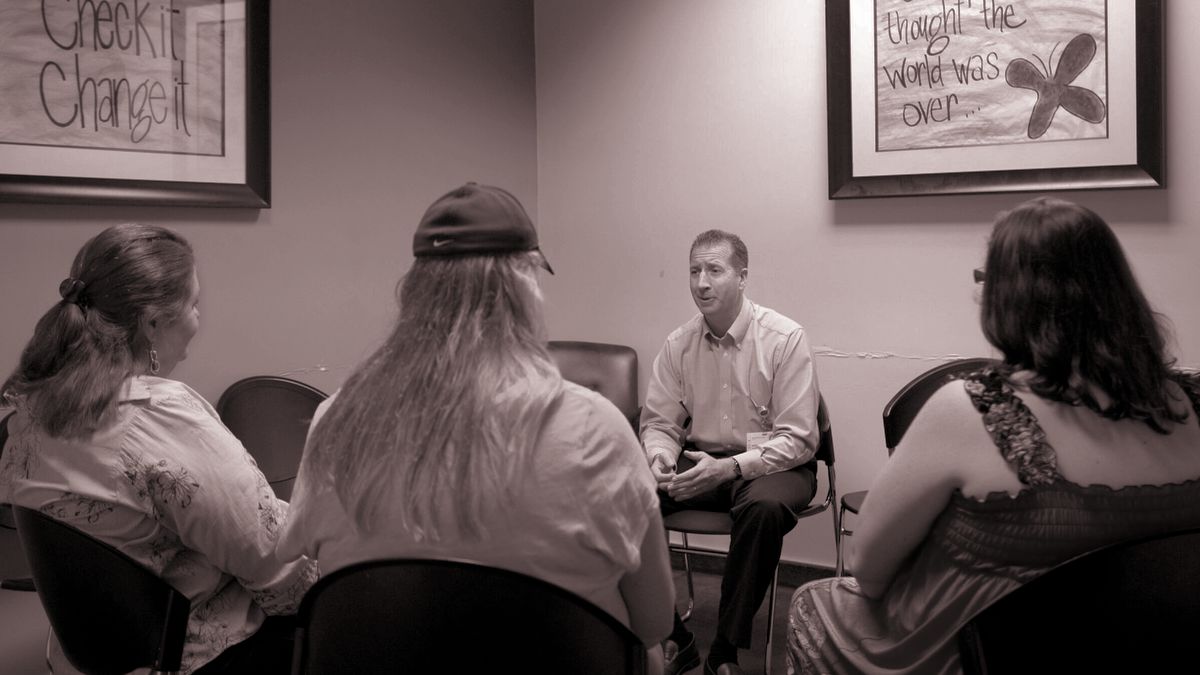
Sunny is an early offering from NewDays, a startup that hopes to leverage generative A.I. to treat millions of people with cognitive issues simultaneously. Frank has been a beta tester from nearly the beginning. NewDays patients see a human clinician—a crucial component of their approach—about every two weeks, and in the interim, interact with Sunny on a near-daily basis, engaging in long-form conversational exercises intended to boost memory and assuage loneliness. The idea builds on
Dr. Hiroko Dodge’s I-CONECT study, which found that regular telehealth calls with trained staff can reduce cognitive decline in patients over the age of 75. (Dodge, a professor of neurology at Harvard, also sits on the company’s advisory board.)
NewDays was founded by longtime technologists Babak Parviz and Daniel Kelly. In various roles across
Big Tech, Parviz has been responsible for a number of accessibility-focused product innovations, from Google Glass to surgical robotic tech. More recently, he helped lead Amazon’s push into healthcare. Kelly, meanwhile, has led engineering teams at Amazon and Google X. Earlier this month, NewDays announced the closure of a $7 million seed round for their effort to end the
“old days” of cognitive care (hence the name). Since the launch, Parviz told me, there’s been a “lot of inbound” interest for additional funding as well—hardly a surprise given where we are in the investment cycle. |
Like many A.I. chatbots, Sunny is not a single model but rather more of a system, comprising
multiple L.L.M.s and agents alongside NewDays’ own custom-trained model. Parviz declined to offer more specific details, but said that Sunny had been designed to handle longer conversations (a normal session lasts 45 minutes), and to communicate verbally with older users. “It’s very different from having a conversation with an L.L.M. where it’s just a few turns and it ends,” Parviz said.
Dr. Daniel Fenton, the head of NewDays’ neuropsychological services, told me that
Sunny sends detailed reports about patient interactions to the company’s clinical team, which allows them to use that information to tailor subsequent in-person sessions and tune the model on a patient-by-patient basis. “If I’m working with someone who has concentration problems, I might choose to have the A.I. reinforce that, and so I will instruct the A.I. to implement more selective attention cognitive training exercises or more sustained auditory attention cognitive training exercises,”
Fenton told me. “So we’re able to sort of tune the dials behind the scenes.” |
|
|
A MESSAGE FROM OUR SPONSOR |
Meet Rovo, your new AI teammate
Rovo is the AI-powered teammate connected to your organization's knowledge. With Rovo, you can streamline your workflow and power up your team's productivity. Find what you need in a snap with Rovo Search. From brainstorming to complex requests, Rovo Chat delivers insights in the context of your work. Team up with out-of-the-box Rovo Agents – or build the perfect
agent for your project. Rovo is powered by Atlassian and included in Jira, Confluence, or Jira Service Management Enterprise or Premium Cloud subscriptions. Know when AI turns from tool to teammate? If you Rovo, you know. Discover Rovo |
|
|
For his part, Kelly likened the service to physical therapy for the brain, just with more complicated tools.
Sunny’s conversations are designed to target cognitive functions like memory by engaging the patient on their favorite topics—gardening, classic cars, etcetera. “We know past events that have happened to you, and the more we can incorporate those into the tool, then the better the tool is at … engaging your cognition,” he said. After all, as Parviz noted, it’s simply not as effective to force a patient to talk about something they’re not interested in.
Yes, the kind of sycophantic errors
(hallucinations) that are endemic to artificial neural networks are similarly present here. Kelly expressed concern that Sunny might veer off topic, or venture into areas that are emotionally triggering for a patient. To mitigate the risks, he said his team is constantly stress-testing the system, and recently established preset conversation topics for each session, making it easier to identify whether the system goes off the rails in some way. Cheryl told me that the “glitches” Frank encounters
most often have to do with response time, but added that there hasn’t been any significant errors, at least so far. |
While NewDays has referred to its pilots in California, Washington, and Florida as “successful”—its website
claims that 100 percent of members feel better after using its service—there’s little public data to evaluate those assertions. The company told me it doesn’t plan to share the results of the pilot phase, but will conduct a clinical trial sometime in 2026. Despite this, NewDays describes itself as a “science-backed solution,” seemingly in reference to Dodge’s study, which was funded by N.I.H. and
published last year. Parviz offered a slightly different spin, describing NewDays as providing “access to clinically proven methods through the use of modern A.I. stack.”
Of course, Sunny has yet to be clinically validated, itself. “I think it’s very dangerous to sell people something that, conceptually, is very
exciting,” said Dr. Michal Schnaider Beeri, a professor of neurology at Robert Wood Johnson Medical School in New Jersey, and the director of the Herbert and Jacqueline Krieger Klein Alzheimer’s Research Center at Rutgers. “They have not published. I would not recommend it to [my mom] until they publish data [showing] that it works.” She also warned against patients viewing A.I. therapy as some kind of silver bullet, when there are numerous dimensions and risk
factors involved in cognitive impairment. “People need to know that even if it works, it doesn’t take away the need to take your meds, to exercise, to do all the other things,” Beeri said. “Because to make a real change, you really need to put all of it together.”
Nevertheless, Beeri said she found NewDays’ concept exciting, given
that it combines two different methods of improving cognition: conversations tuned to activate memory, and the push to combat loneliness. She pointed to literature that suggests engaging the brain in these ways may slow the rate of cognitive decline, which will be difficult to prove in any clinical trials, and noted that Sunny’s personalization element also carried a lot of
potential. She says the company just has to “show that it works in a well-controlled and rigorous way.”
Regardless of whether NewDays can do that, Beeri believes the technology “is going to change completely the way we care for Alzheimer’s patients.” She was especially bullish on the possibility of L.L.M.s speeding up the diagnosis process by applying pattern-matching technology to blood tests and C.T. scans, for example. Moreover, she envisioned A.I. models predicting how patients might
respond to certain drugs, and then monitoring their progress. Taken together, she said, “we highly likely will have better answers than the naked eye of a very good clinician—which we’ll always need, by the way, because there are so many behaviors and nuances that will be so hard for A.I. alone to grasp.”
At this point, no company has emerged with a model or system that can reliably carry out these tasks. The next step, Beeri said, would require gathering robust evidence that
proves such approaches like NewDays’ actually work. That’s the difference between something that sounds “cool,” as Beeri put it, and a therapy that is actually life-changing. |
That’s all for today. I’ll see you Thursday.
Ian |
|
|
Join Emmy Award-winning journalist Peter Hamby, along with the team of expert journalists at Puck, as they let you in on the
conversations insiders are having across the four corners of power in America: Wall Street, Washington, Silicon Valley, and Hollywood. Presented in partnership with Audacy, new episodes publish daily, Monday through Friday. |
|
|
A professional-grade rundown on the business of sports from John Ourand, the industry’s preeminent journalist, covering the
leagues, players, agencies, media deals, and the egos fueling it all. |
|
|
Need help? Review our FAQ page or contact us for assistance. For brand partnerships, email ads@puck.news. You received this email because you signed up to receive emails from Puck, or as part of your Puck account associated with {{customer.email}}. To stop receiving this newsletter and/or manage all your email preferences, click here. |
Puck is published by Heat Media LLC. 107 Greenwich St, New York, NY 10006 |
|
|
|