Welcome back to The Best & The Brightest. I’m Peter Hamby, coming to you from Los
Angeles, where we are sick of your tiresome conspiracy theories about the mayor’s race, thank you very much.
Tonight, with Donald Trump gearing up for his audacious version of America’s 250th birthday, I was able to get a sense of how everyday Americans are really thinking about the semiquincentennial at this divisive moment in U.S. history. A series of focus groups, provided exclusively to Puck, reveal that voters are still hopeful about the country and its
values—and patriotic!—even if they aren’t thrilled about the July Fourth theatrics that Trump is planning in Washington.
Plus, up top: Leigh Ann has the latest on the partisanship splitting the House Bipartisan Women’s Caucus (and the problems roiling the Problem Solvers Caucus). And Marianna takes an inside look at the Adriano Espaillat/Darializa Avila Chevalier proxy war that’s dividing Democrats.
Also
mentioned in this issue: Zohran Mamdani, A.O.C., Hussein Mahrouq, Greg Abbott, Dana White, Ari Emanuel, Jared Huffman, Martina McBride, Young M.C., Bill Maher, Kamala Harris,
Margie Omero, Melissa Toufanian, Emilia Sykes, Monica De La Cruz, Nicole Malliotakis, Kat Cammack, and more. |
|
|
|
Regenerative agriculture propels progress, helping farmers grow more food sustainably. Access to modern agricultural technology gives farmers more choices and strengthens their yields. That’s why Bayer is investing in innovative solutions that help growers boost yields and improve soil health so they can keep quality, affordable food on the table for Americans. At Bayer, we succeed when farmers succeed.
Learn more. |
|
|
|

| Leigh Ann Caldwell
|
|
- The bipartisan problem
starters caucus: An annual ceremony honoring female veterans at Arlington National Cemetery, originally scheduled for Wednesday, has been canceled after three branches of the military declined to participate—a first in the program’s 28-year history. The Air Force and the Space Force said that the ceremony violated President Trump’s executive order ending “radical and wasteful government D.E.I. programs and preferencing.” Defense Secretary Pete Hegseth has
vowed to eliminate diversity, equity, and inclusion programs from the military, and has fired or refused to promote women or people of color. Meanwhile, the Army cited a conflict with the branch’s anniversary on June 14. (The military branches didn’t respond to a request for comment by deadline.)
So much for the unifying nature of the event,
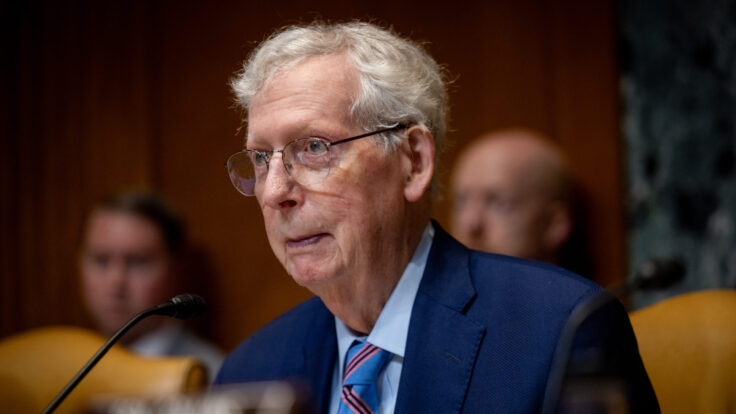
which is hosted by the House Bipartisan Women’s Caucus. Rep. Emilia Sykes of Ohio, the group’s Democratic co-chair, told me the decision was “disappointing.” Her Republican counterpart, Rep. Monica De La Cruz of Texas, didn’t provide an on-the-record comment.
In many ways, the breakup was a long time coming. Last year, Republicans didn’t attend the women veterans’ wreath-laying ceremony. And last month, Democratic women whipped against G.O.P. Rep.
Nicole Malliotakis’s bill to authorize the creation of a Smithsonian American Women’s History Museum, since Republicans had demanded that only biological women be honored there. “The common thread is President Trump,” Sykes told me. (Malliotakis, who served as vice chair of the bipartisan Problem Solvers Caucus, subsequently quit the group in protest.)
Nevertheless, members of the Bipartisan Women’s Caucus are working together on at least one issue: sexual harassment on
the Hill. Rep. Kat Cammack, the Republican leader of the working group, told me they held their first meeting on the problem last week. “That’s the first time that the Republican and Democrat caucuses have come together, and it was a really incredible conversation,” she said.
|
|
|
|

| Marianna Sotomayor
|
|
- Espaillat goes negative:
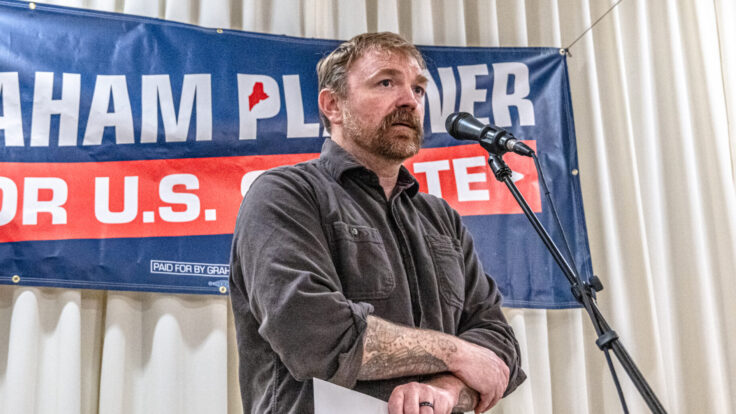
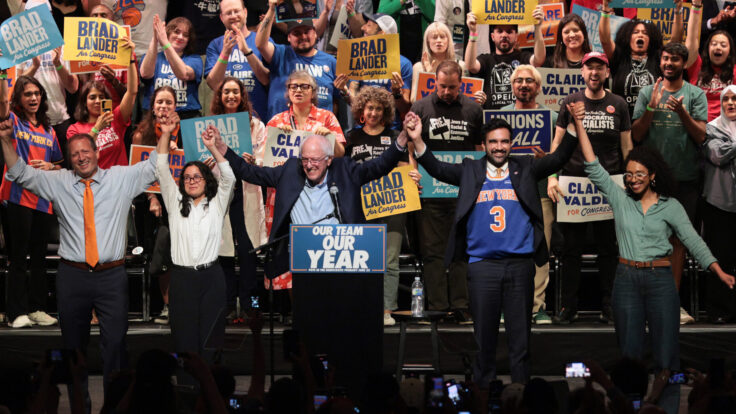
In the latest escalation of Democratic hostilities over New York’s 13th district, Rep. Adriano Espaillat and his opponent, democratic socialist Darializa Avila Chevalier, have spent several days shooting spitballs over who is donating to the other’s campaign. Naturally, outside spending has ticked up since New York City Mayor Zohran Mamdani endorsed Avila Chevalier against the almost 10-year incumbent late last month, and Espaillat’s allies have begun hitting back.
Avila Chevalier has long railed against Espaillat accepting contributions from AIPAC, the pro-Israel super PAC that successfully boxed out two far-left incumbents last cycle. Those propping up her campaign have also accused AIPAC of funneling money to other groups contributing to Espaillat, like BOLD America, which is
spending $1.3 million to defend him.
Espaillat, for his part, has hit back by pointing out that Avila Chevalier’s campaign accepted over $500,000 from American Priorities, a super PAC funded by anti-Israel megadonor and Texas businessman Hussein Mahrouq. Jewish Insider reported that Mahrouq has donated to numerous Republicans, including Texas Gov. Greg Abbott—who, as Espaillat noted, launched Operation Lone Star, which bused thousands of migrants
in Texas to major U.S. cities (including New York) in 2024. The group has also cut ads against Espaillat claiming he “is cooperating with ICE,” despite his leading efforts to halt ICE detentions earlier this year.
Now Espaillat has launched his first negative campaign ad this cycle, in which a narrator combs through some of Avila Chevalier’s more controversial deleted tweets—including statements disparaging the American flag. The ad also claims that she “stands with dividing us by race.”
Going negative this early is often a signal of a campaign in distress: While some strategists have said Espaillat should have gone on offense earlier, many say it’s the right time to go on the airwaves as voters start to take notice of the candidates two weeks before the primary.
|
|
|
|
The nation is feeling queasy about celebrating its birthday in the Trump era—but the
national political narrative feels distinct from how regular Americans actually view their country, at least according to some fascinating focus groups. |
|
|
|
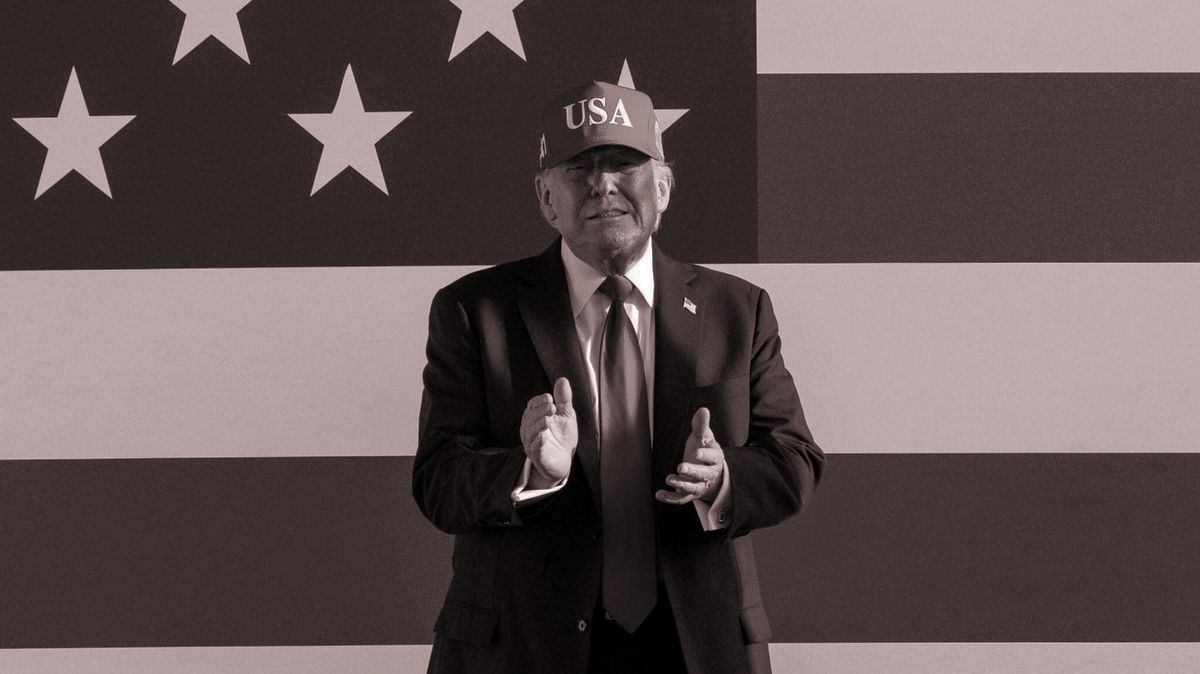
The opening stanza of America’s 250th birthday—Donald Trump’s idea of it, at least—is set
for this weekend on the South Lawn of the White House. Yes, UFC Freedom 250 is nigh, a “once-in-a-generation celebration of the American fighting spirit,” as the White House describes it. Construction on the 600-ton, steel-framed octagon arena is nearing completion, and the structure will seat thousands of military members descending on Washington to watch the MMA fights—along with whichever V.I.P.s are invited by Trump, UFC president Dana White, and TKO
executive chairman Ari Emanuel, of course.
Trump haters are rooting for a vintage D.C. thunderstorm on Sunday, while public interest groups have sued to stop the event from being held on government property. Earlier this year, California Rep. Jared Huffman accused the president of trying to “hijack the country’s 250th anniversary and sell access, hide his donors, and rewrite history” with Freedom 250, Trump’s privately
funded outfit, which is planning a range of MAGA-coded celebrations for the semiquincentennial. |
|
|
|
Investment in agriculture fuels farmers' ability to grow healthy, abundant food. Bayer is working with farmers across the country to advance regenerative agriculture that will help increase their yields. With innovations in plant breeding, soil health, and digital technology, US farmers are set up for success. At Bayer, we succeed when farmers succeed. Learn more. |
|
|
|
In recent days, Dems have giggled with schadenfreude as various musical acts—Martina
McBride, Young M.C., the Commodores—bailed on performing at “The Great American State Fair,” a rolling festival on the National Mall starting later this month. “I was presented with the opportunity to perform at a nonpartisan event, but that turned out to be misleading,” McBride said after withdrawing. Over on HBO, Bill Maher criticized liberals who are rooting for Trump’s events to fail. “It looks like you are just what people
say about you—you don’t really love America,” Maher said.
The back-and-forth speaks to the nation’s queasy feelings about celebrating its birthday in the Trump era, with the populace feeling hopelessly divided and tribal—perhaps even more than it did 50 years ago, during the bicentennial, in the aftermath of Vietnam and Watergate. But the national political narrative feels distinct from how regular Americans actually view their country and their fellow citizens as we approach our
250th anniversary, at least according to some fascinating focus groups I was given access to this week. |
In June, Navigator Research, the left-leaning polling outfit, interviewed three groups of swing
voters—first-generation Americans, religious voters, and veterans—and found a common theme. The voters agreed that the country is off-track, but they also expressed hope that certain core values can survive the current climate. Stephanie, a 43-year-old white woman from Mississippi who voted for Kamala Harris and attends church weekly, was one of them. “I have high hopes that America will be great again,” she said. (The focus group participants
declined to share their last names.) “I think we have to hit rock bottom, pick ourselves up, and get better. And I have hopes that better days are coming.”
Meanwhile, James, a 58-year-old Army vet in Georgia who identifies as an independent, said he didn’t even realize the anniversary was happening until a recent visit to Walmart, when he saw a patriotic T-shirt that read, “Happy 250th.” James said it stirred something in him, even though he was more patriotic back in
1976. “The flag will always represent freedom and those that fought for it,” he said. Still, James told his group of fellow veterans, Americans don’t need to wear their patriotism or political stripes to celebrate. “I don’t think you have to tell everybody every day that you’re American or how proud you are,” he said. “You can just live it.”
Those were some notes of optimism. But Margie Omero and Melissa Toufanian, who
spearheaded the project for Navigator, told me that their interview subjects also expressed various notes of pessimism, which generally clustered into three categories: They were concerned about political division, rights and values being threatened, and a growing sense that the country is too expensive for people to get ahead. But their concerns also sprang from a belief in American exceptionalism—that freedom of expression and upward mobility are possible in the United States and almost
nowhere else. “The thing we heard across the groups, and what people are most proud of, are different ways that those rights and freedoms manifest, and that they’re able to have them because they are Americans,” Toufanian told me.
She continued: “At the same time, people had this feeling that their freedoms, particularly freedom of speech, were under attack. They are worried about this current moment and their ability to realize those freedoms that they feel so strongly are core elements
of being American.”
Omero pointed to a 65-year-old Texan named Shelley in the group of veterans, who told a story about having P.T.S.D. from her time in the Marine Corps, following a sexual assault in bootcamp. Shelley, a Trump 2024 voter, also shared that her sons-in-law have P.T.S.D. from their tours in Iraq and Afghanistan. But none of it, she said, scuffed her national pride. “I thought it was just an example of how people were balancing tough stories that happened to
them, very tough experiences, while also saying, This is still a country that I love,” Omero said.
If there was a common complaint across all the groups, it was the rising cost of living in the country, with many participants blaming a political class that was too cozy with corporations. Andrew, a 22-year-old Trump voter in Pennsylvania, said that his parents immigrated to the United States from Romania in 1997 “with a suitcase and a couple hundred bucks” and
saved enough to buy a home within a decade. “Nowadays, owning a home is damn near impossible unless you just make so much money,” he said. “The average person that’s not a crazy high earner can’t really do that. If you don’t have your parents to help you with school, with college, and just living expenses in this time when you can’t earn anything, I don’t really understand how you can ever become financially free and live the American dream if you’re just trapped in a credit
cycle.”
Another first-generation voter, Varsha, a 44-year-old independent from Michigan, said that America is “so beautiful.” But in the next breath, she said that the American dream is increasingly out of reach. “The American middle class was this picture of perfection—the picket fence, the beautiful house, the great backyards, the whole nine yards,” Varsha said. “But that dream is slowly declining.” Reginald, a 61-year-old Latino independent in Texas,
blamed corporations for hoarding wealth. “I don’t like greed, and there’s too much greed going on by corporations. And to me, that’s un-American.” |
And then there was Trump. Some people liked him, some didn’t. But most agreed that the president, more than
any person or symbol, will be remembered as the controversial and divisive face of this moment in history. The groups were asked what they think Americans in the future will say when they look back on this era. “Trump’s going to be the whole history chapter for the kids in the future,” said Andrew, the 22-year-old from Pennsylvania. “It’s all going to be Trump, Trump’s America, MAGA. It’s definitely a polarizing event in this country’s history.” Areeb, a 33-year-old
first-generation American living in Texas, pointed to Trump’s personal crusade to oust Kentucky Rep. Thomas Massie, simply because Massie is a political critic of the president. “That really makes you question where exactly our country is going,” Areeb said. |
|
|
|
Omero asked the group what they would put in a time capsule for future Americans hoping to learn about the
year 2026. “A $200 bill with Trump’s face on it,” said one participant, a 31-year-old Asian independent from Nevada, who didn’t want to be named. “He’s such a polarizing topic in these times—both left and right love to talk about him, regardless of whether it’s positive.”
Sean, a 57-year-old Latino Army veteran in Texas, said Trump’s ICE raids and immigration enforcement actions make him feel like a stranger in his own country. “We’ve got a big ICE presence down here,” he
said. “I see it on a daily basis here on some of our social media platforms. People are saying, “Hey, my husband just got pulled over by ICE. He’s been taken. What can I do?” … My wife is a German national. She’s not an American citizen, so she’s got her green card, but just talking to her, she doesn’t even feel safe here because of everything that’s going on right now.” Zac, another Army veteran in Michigan, said that future Americans will probably remember Trump for
trying to hold on to power after losing the 2020 election. “Trump trying to overthrow that election is a dagger in the heart of our democracy,” he said. Still, Zac added, “Trump is my president. I don’t like it, but he’s my president.”
As for celebrating the 250th, most people preferred to keep politics out of it. “It’s not about politics. It’s about our country and our founding fathers, and that’s all I am going to say,” said Reginald. Unlike with the bicentennial, the voters said, they
were mostly hoping for a moment of calm, rather than a bonanza of consumerism and spectacle. Almost everyone said they were planning small gatherings with family and friends in their communities—cookouts, concerts, games, all the trappings of a typical Fourth of July celebration. To a person, everyone said they expected to feel at least a tingle of patriotism this summer, with most saying they planned to fly an American flag, even as politicians attempt to claim it as their own.
But their
patriotism, as they explained it, was about tradition and the bonds in their communities. Politics, the national news cycle, Trump, Democrats—none of it will be on the July Fourth menu. “We have to remember, at least, how we got here, and how as a country we used to be up to the 250 years,” said Mary, a 57-year-old mother and independent voter in North Carolina. “We’re being divided, perhaps, on purpose. It would really be nice to see people come together, but I don’t think
that’s going to happen. So personally, we are just doing our own little thing here. I’m also from Texas, and I miss a barbecue. So, I’ll probably do that and some fireworks.” |
|
|
|
Unique and privileged insight into the private conversations taking place inside boardrooms and corner offices up and down Wall
Street, relayed by best-selling author, journalist, and former M&A senior banker William D. Cohan. |
|
|
|
Need help? Review our
FAQ page or contact us for assistance. For brand partnerships, email ads@puck.news.
You received this email because you signed up to receive emails from Puck, or as part of your Puck account associated with {{customer.email}}. To stop receiving this newsletter and/or manage all your email preferences, click here.
|
Puck is published by Heat Media LLC. 107 Greenwich St., New York, NY 10006 |
|
|
|
|