{{ 'now' | timezone: 'America/New_York' | date: '%b %d, %Y' }} |
|
|
|
Welcome to The Hidden Layer. I’m Ian Krietzberg. Last week, U.N.
Secretary-General António Guterres said “killer robots” ought to be “banned by international law.” Two days later, NATO members got together in Ankara and affirmed that they are “developing an interoperable transatlantic warfighting cloud and adopting powerful A.I. models.” Wonder what James
Cameron is thinking right now…
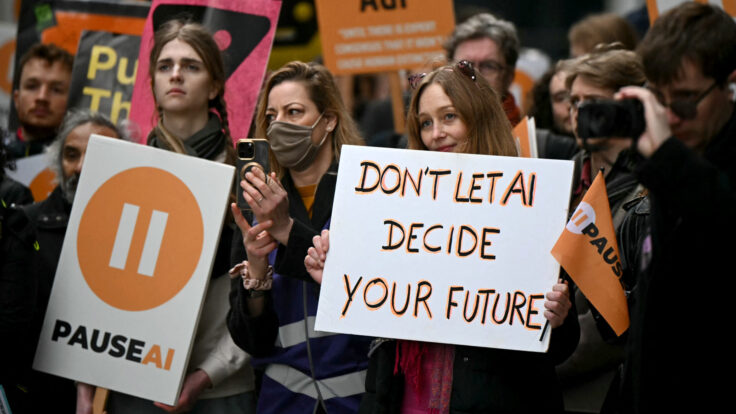
In today’s issue, more on whether A.I. will become the defining story of the 2028 presidential race. As one source recently told me, policy people and the media clearly love talking up A.I. as a political issue, but it might still be too early for normal folks. Is the techlash actually moving votes in 2026? I talked to a bunch of pollsters and strategists who think they know the answer.
Plus, the latest on OpenAI’s legal imbroglios—including
a fresh, spicy lawsuit from Apple—and a look at Marc Andreessen’s growing influence in Washington.
Also mentioned in this issue: John Della Volpe, Jesse Stinebring, William Lawrence, Jony Ive, Tang Tan, Chad Maisel, Chang Liu, Drew Pusateri, Mark Kelly, Kathy Hochul, Chris
Lehane, Abdul El-Sayed, Clayton Allen, Colin Bortner, and more. |
Three Things You Should Know…
|
- Andreessen’s
D.C. spiderweb: Marc Andreessen, one half of the ubiquitous Silicon Valley venture firm Andreessen Horowitz, has been a busy man lately. A few weeks ago, Andreessen was appointed to the D.O.D.’s Defense Policy Board, and a few months before that, he was
appointed to President Trump’s Council of Advisors on Science and Technology. (Andreessen, of course, has deployed tens of millions of dollars over the past several election cycles to get Trump elected, knock out anti-crypto candidates, and fuel the pro-A.I. super PAC Leading
the Future.)
Now, Andreessen has also been appointed to a leadership post on one of five new task forces announced by the Federal Reserve to “examine areas central to the broad conduct of monetary policy.” His task force is intended to assess the economic impact of new technologies—namely, artificial intelligence. Fed chair Kevin
Warsh also appointed Stanford economist Charles Jones and Xbox C.E.O. Asha Sharma to co-lead the task force with Andreessen. Congrats to all involved… - Apple v. Altman: Late last week, Apple filed a blockbuster lawsuit accusing OpenAI of pilfering its intellectual
property—presumably with the intention of creating some kind of competitive A.I. device. “This much is clear,” the complaint alleges. “At every level, from members of its Technical Staff to its Chief Hardware Officer, and in coordination with business partners, OpenAI has been stealing Apple’s trade secrets and confidential information.” As a result, it continues, “OpenAI’s nascent hardware business now rests on the shakiest of foundations, rotten to its core by its illegal reliance on
misappropriated trade secrets.” Heavy stuff.
The lawsuit, the result of a monthslong investigation by Apple, claims to have identified a “pattern of theft” wherein former Apple employees hired by OpenAI would steal trade secrets on their way out the door. In particular, the lawsuit names IO Products—the startup founded by former Apple designer Jony Ive, which OpenAI acquired last year for $6.4 billion—as well as Chang Liu, a former engineer, and
Tang Tan, a former vice president, as defendants. The lawsuit goes on to allege that OpenAI and Tan, now OpenAI’s chief hardware officer, asked Apple employees to bring prototype devices to job interviews, and instructed them on how to evade Apple’s security measures to continue accessing confidential information. Apple is seeking injunctive relief, damages, and a legal order that would prevent OpenAI from using the purloined information.
The lawsuit certainly explains
the less-than-warm relationship Apple has seemingly had with OpenAI since first announcing a partnership in 2024. What the lawsuit means for that partnership is still unclear, although it feels safe to assume it’s dying, if not dead. “We have no interest in other companies’ trade secrets,” OpenAI spokesperson Drew Pusateri told me. “We remain focused on building innovative technology that empowers people everywhere.” - And it gets
worse…: Meanwhile, The New York Times and other news organizations currently suing OpenAI for infringement requested that the judge in that case impose “serious sanctions” on OpenAI, accusing the company of engaging in a two-year effort to hide evidence.
According to the complaint, OpenAI repeatedly said that it
couldn’t search its training data or output logs for evidence that it had copied plaintiffs’ data, something the plaintiffs are now alleging was simply not true. The complaint further alleges that OpenAI deleted evidence that was relevant to the trial, and continued to do so after the court ordered the company not to. “OpenAI … withheld highly relevant evidence, prolonged discovery, inflated expenses, and burdened the Court,” according to the filing. When it rains, it pours, I
guess.
Pusateri, the OpenAI spokesman, tried to flip the script. “As the Times’s case weakens and they’ve been forced to drop claims against us, they’re persisting with their efforts to invade the privacy of people who have nothing to do with this case, including by making these blatantly false allegations,” he told me. “We’ll continue defending our users’ privacy and the long-established principles of fair use.”
|
Quote of the Week: The
Big Tech Battle
|
“A dialogue is necessary, and my bottom line right now is that the power imbalance is such
that there is no dialogue. There’s only a power play by Silicon Valley and Wall Street to push these data centers, regardless of the public sentiment or the cost.” —Michigan congressional candidate William Lawrence, chatting with me last week about his new anti–data center ad.
And speaking of data center politics… |
|
|
|
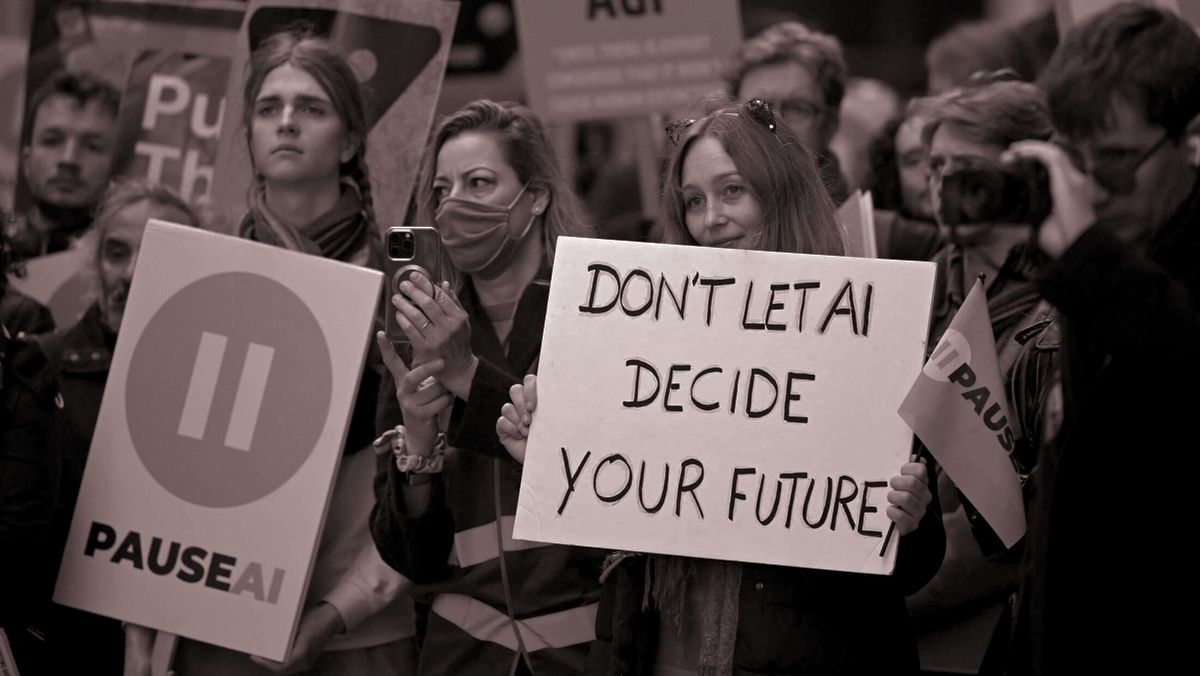
The polling says artificial intelligence isn’t a top-tier issue for voters… yet. But beneath
the affordability crisis, Washington’s top political strategists are picking up early signals of an anti-tech populist revolt. |
|
|
|
Over the past year, I’ve spoken to dozens of politicians and political operatives—Arizona Sen.
Mark Kelly, New York Gov. Kathy Hochul, OpenAI’s Chris
Lehane, Michigan Senate candidate Abdul El-Sayed, and many more—about the coming war to
regulate artificial intelligence, and their own plans to get ahead of what everyone in Washington expects to be one of the defining issues of the decade. Just this week, I hopped on the phone with William Lawrence, a Bernie-endorsed congressional candidate who is running a fierce anti-tech campaign in Michigan. “It wasn’t something I
expected to be talking about when I got into the race,” he told me. But that was before his district received proposals to build four giant data centers. “I’ve seen people packing township halls and high-school auditoriums on a weekly basis since last fall on this issue,” he continued. “People are incensed.”
Of course, there’s no question that data center construction is a salient issue at the local level—as ever, NIMBYism is one of the most powerful forces in American politics, across
party lines. But the extent to which A.I. itself is top of mind for voters is a lot less clear. On the one hand, plenty of surveys have found that Americans are generally anxious about a potentially job-killing technology. According to a new poll from the Artificial Intelligence Policy Institute, large majorities support more regulation and safety guardrails, while
Blue Rose Research found that nearly eight in 10 Americans worry the government doesn’t have a plan for potential job displacement. In late June, Athena Insights found that 66 percent of Americans are concerned
about A.I., up nearly 10 points from earlier that same month.
But when you ask Americans to rank their top political issues, A.I. isn’t one of them: A recent Emerson College survey identified the economy as the number one issue for voters, followed by threats to democracy, immigration, healthcare, crime, and housing affordability. When
Harvard and Yale polled young voters earlier this year, respondents overwhelmingly mentioned rising prices and other cost-of-living issues as their most urgent concerns.
And yet, among the most plugged-in political observers, there’s a feeling that
Americans’ current economic anxiety is a leading indicator that A.I. is likely to cause a political earthquake in the coming months and years—even if it’s too early for many voters to connect their feelings of precarity to the technological shock waves that Dario Amodei says are headed their way. “I don’t think we’re picking up the right signals,” said John Della Volpe, the director of polling at Harvard’s Institute of Politics. The surface-level summary of
recent polling, he acknowledged, is that voters are focused on affordability. But “the real issue is that people just want to have some sense of stability in their lives.” And A.I., according to recent focus groups he’s conducted, has the potential to impact that sense of stability enormously. |
“The Most Underpriced Issue in
Politics”
|
Della Volpe, who advised Joe Biden’s 2020 presidential campaign, believes there’s an obvious
thread between A.I. and general aversion toward the billionaires at the center of it, and that the most-successful politicians will be those who anticipate the backlash before it fully arrives. “Candidates win—movements win—when you find the signals for the things that aren’t the top issue,” he told me. Lawrence, the progressive candidate running for Congress in Michigan, agreed that A.I. is perhaps most potent as a political metaphor. “It’s really about who decides,” he told me. “It’s
about control.”
The challenge for these politicians, as Della Volpe pointed out, is that A.I. seems likely to have economic benefits as well as harms. Forthcoming data from Athena Insights shows that half of voters expect that A.I. will “likely” lead to both existential challenges, like the proliferation of weapons of mass destruction, and important medical and scientific breakthroughs over the next two decades. At the same time, none of the most utopian or dystopian
predictions have yet come to pass, leaving voters somewhat confused. A whopping 70 percent told Athena that they feel no sense of agency either way, agreeing that “A.I. is coming into our lives whether we want it or not.” Still, only 38 percent ranked A.I. as a top priority—the same share as those who prioritized climate change.
I asked Jesse Stinebring, the C.E.O. of Blue Rose, what to make of this apparent divergence. “I think that the most important fact about public
opinion around A.I. has nothing to do with A.I.,” he told me. “And that fact is we’re in the most populist economic moment in recent American political memory.” Under Biden, Stinebring noted, voters felt like their concerns over affordability weren’t “taken seriously.” So they took a chance on Trump to shake things up, economically speaking (something he certainly accomplished, for better or worse). “A year and a half in, they feel like that was an abject failure,” Stinebring
said. “And increasingly, they feel as if their experience in the economy is a reflection of a system that is rigged for the elite. So that is the lens through which you should view everything as it relates to A.I.”
Americans, Stinebring continued, do perceive the potential of the technology. But they’re worried about what it might mean for their jobs and society at large. “They assume this thing that is coming fast—that they don’t fully understand and that they don’t know the implications
of—will be used to leave them behind,” he added.
According to Clayton Allen, the head of the Eurasia Group’s U.S. practice, A.I. will matter for 2026… just not as a stand-alone issue. “The only thing that really matters in U.S. elections is, and always will be, the economy,” he told me. As a background issue, Allen continued, A.I. will shape “people’s perceptions of affordability, and so it becomes a necessary talking point.”
For his part,
Della Volpe hypothesized that, in the near term, A.I. “may not be an issue that is meaningful enough to enough people.” In the context of the midterms, he continued, “I don’t see this as a dominant issue. The reason is that there’s no clear victim, or hero, or enemy yet.” That’s not the case at the local level, where voters on both sides of the aisle mostly agree that they don’t want hulking data centers driving up electricity prices in their backyards. But it’s an open question whether
anti-A.I. activism manifests as a major issue nationally. As Athena research lead Colin Bortner put it, “Is this NIMBYism? And if it’s not NIMBYism, what is it?”
Nevertheless, most everyone I spoke to was united in the impression that A.I. will likely become a central political topic in 2028. “This will be a story that will unfold over many years,” said Chad Maisel, a senior fellow at the Center for American Progress. “There’s at least some chance that in
2027, 2028, there’s an acute reckoning, and a moment that will bring lots more eyes to the issue, and people will have some expectation for what those running for president, for example, will offer to solve the problem.” According to Allen, the impetus for such a reckoning could be twofold: Either the technology fails to deliver “all of the benefit it was supposed to,” or it has a materially negative impact on jobs. In the meantime, Stinebring told me, A.I. remains “probably the most underpriced
issue in politics today.” |
That’s all for today. I’ll see you on Thursday.
Ian |
|
|
|
Unique and privileged insight into the private conversations taking place inside boardrooms and corner offices up and down Wall
Street, relayed by best-selling author, journalist, and former M&A senior banker William D. Cohan. |
|
|
|
Join Puck’s chief political columnist, John Heilemann, as he roams the corridors of power and influence in America on this
twice-weekly interview show, taking you beyond the headlines with the people who shape our culture: icons and up-and-comers, incumbents and insurgents, moguls and machers in the overlapping worlds of politics, entertainment, tech, business, sports, media, and beyond. The conversations are rich and revealing, unrehearsed and unexpected… and reliably impolitic. A Puck-Audacy joint, new episodes drop every Wednesday and Friday. |
|
|
|
Need help? Review our
FAQ page or contact us for assistance. For brand partnerships, email ads@puck.news.
You received this email because you signed up to receive emails from Puck, or as part of your Puck account associated with {{customer.email}}. To stop receiving this newsletter and/or manage all your email preferences, click here. |
Puck is published by Heat Media LLC. 107 Greenwich St., New York, NY 10006 |
|
|
|
|