Welcome back to Wall Power’s Inner Circle. I’m Marion Maneker.
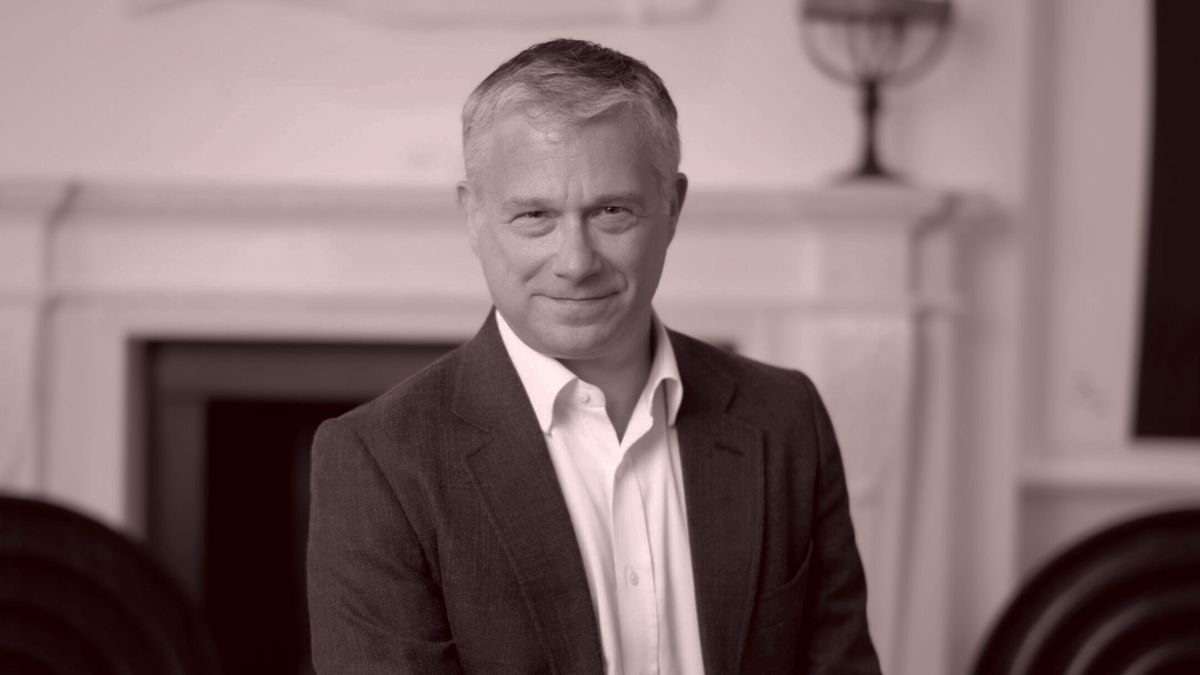
Tonight, we’re going to get the perspective of Beowolff Capital’s Andrew Wolff on the future for Artnet and Artsy, two companies in which he now holds a controlling interest. Wolff laid out his vision of the future in a phone call with me late last week, and I share the highlights below. In the meantime, Sotheby’s is holding a single-lot pop culture sale of Ferris Bueller’s sweater vest. The online sale inaugurates Ralph DeLuca’s new role at the auction house running pop culture. Julie Davich has the details.
If you’re not a member of the Inner Circle, you can upgrade your subscription here.
But first…
|
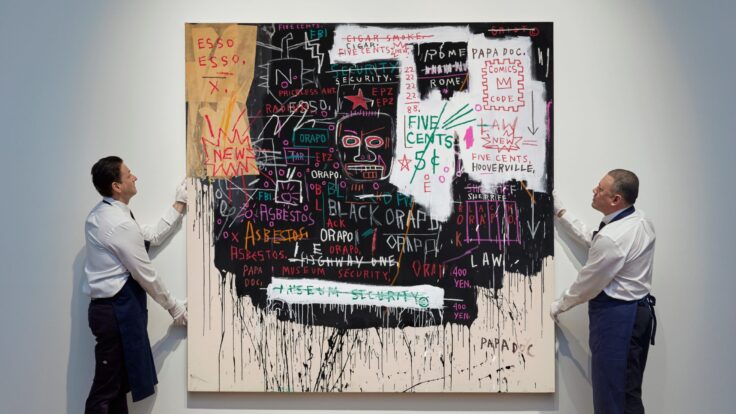
- The long arm of Inigo Philbrick: It’s been six years since the eruption of Inigo Philbrick’s scheme of selling multiple interests in artworks, and then using the same works as collateral for loans. Now, Judd Grossman’s art litigation firm has won two different cases related to the plot. The bigger case pertained to the dispute between collector Alexander Pesko’s Satfinance Investment Limited and Athena Art Finance over who holds the title to Jean-Michel Basquiat’s Humidity, from 1982. Pesko had bought the painting with Philbrick, but retained title to the work. Even though Philbrick had pledged the painting as collateral at an $18 million valuation, as part of a $10 million credit facility from Athena, a federal judge decided last week that Satfinance had “full legal title to the painting.”That’s got to be a relief for Pesko, and a bummer for Athena. But it raises an interesting question about what will become of the painting. Will Pesko sell it now that the title has been cleared? Currently, the private market for Basquiat works has a deep bench of buyers, but a limited supply of high-quality work.
The federal ruling seems to have helped unblock a similar case in New York State involving a 10-foot-tall untitled Christopher Wool painting. That painting was owned by four different parties, including Philbrick (who owns 20 percent) and Andre Sakhai. In this case, the judge has denied Athena’s attempt to stop a lawsuit that will inevitably be influenced by the federal ruling in the Humidity case. Stripping out the legalese: Philbrick ripped off Athena Art Finance, but his former partners in these artworks are not going to suffer because of it.
|
|
|
|
A MESSAGE FROM OUR SPONSOR
|
ALWAYS CONTEMPORARY
With a bold silhouette that conveys movement even at standstill, the Range Rover Sport is striking from every angle.
EXPLORE
|
|
|
 |
Julie Brener Davich |
|
“It’s His Fault He Didn’t Lock the Garage”
|
|
Tomorrow, for all who celebrate, is Ferris Bueller’s Day Off. Film sleuths have pegged June 5, 1985, as the day that Ferris, Cameron, and Sloane ditched school in the cult movie and became film icons in the process. To celebrate the 40th anniversary of that moment in pop culture history, Sotheby’s is offering the sweater vest worn by the titular character, played by Matthew Broderick, in a dedicated online sale, going live tomorrow through June 24.
The Bueller vest, estimated at $300,000, is being consigned by Darren Rovell, a former ESPN reporter and analyst who bought it at Heritage Auctions in 2022 for $143,750 against an estimate of $60,000. (The consignor had acquired it directly from the film’s director, John Hughes.) Rovell, who buys and sells memorabilia, launched a media company for the collectibles market last year. He also advises teams, brands, and leagues about how to create limited-edition collectibles around milestone events.
Anyway, the Ferris Bueller sale is the first under the leadership of Sotheby’s new vice chairman of popular culture, Ralph DeLuca, a longtime collector in the category, who joined the New York office in March to help shape global strategy for collectibles—one of the industry’s fast-growing sectors. DeLuca will be overseeing biannual sales in April and October, spanning film, music, television, and comic art.
Sotheby’s worked with costume designer Marilyn Vance to confirm the vest’s authenticity. She had the idea to put Broderick’s character in a sweater vest to showcase his quirky nonchalance, but then couldn’t find one in all of Chicago, where filming took place. She ended up getting a cardigan at Marshall Field’s and ripping off the sleeves. Since the movie takes place in one day, Broderick is wearing the vest in almost every scene, including the iconic “Twist and Shout” parade and Wrigley Field sequence. “People like to collect items from their nostalgia,” DeLuca told me. “Everyone’s got a movie, or song, or comic book character they love.” Any bidders out there for the vest? Bueller? Bueller?
|
|
|
|
After ousting the founding Neuendorf family from Artnet, former Goldman partner Andrew Wolff talks about why he’s taking the digital art market platform and database company private, despite it having no profits, no growth, and a shrinking talent pool.
|
|
|
|
The long battle for Artnet seems to have finally ended with Rüdiger Weng’s decision to sell his nearly 30 percent stake in the company to Andrew Wolff’s Beowolff Capital. The deal, which Weng claims gave him 150 percent profit on his stake, allows Wolff to begin the process of taking Artnet private. At the same time, Wolff announced that he had gained majority control of Artsy, a quite different digital company in the art space. Neither company is new. So it’s fair to wonder what Wolff sees in these companies that the financial markets do not.
I’ve been asked a number of times since the announcement what I thought of the potential alliance between Artnet and Artsy, often by people with fairly specific knowledge of art data, art media, or digital platforms. In each instance, the subtext has been whether Wolff understands what he might be in for. One person who has built a number of digital properties explained that integrating systems is much more difficult than it seems. Someone who deals with art data explained that, despite technology advances, the data issue is one of painstaking, detailed work.
|
|
|
|
A MESSAGE FROM OUR SPONSOR
|
ALWAYS CONTEMPORARY
With a bold silhouette that conveys movement even at standstill, the Range Rover Sport is striking from every angle.
EXPLORE
|
|
|
|
Hanging over all of that is the financial question: The takeover of Artnet values the company at nearly €65 million, or almost $75 million. That’s a lot for a company with no profits and stagnant growth. But that’s just the buy-in. Artsy had raised more than $100 million over its lifespan, a lot of it debt. Wolff negotiated with the debt holders and some of the friendlier equity holders. But it was a competitive situation, so Wolff’s position definitely didn’t come in a fire sale.
No one thinks a new alliance between Artnet and Artsy will be achieved without significant investment in both businesses, which Wolff will have to keep afloat during the transition, however long that takes. Then he’ll need to invest in new technology, more staff, new leadership. The list goes on. There are also going to be significant closing costs and operational expenses—some anticipated, others not—if he ends up merging these firms. Wolff and his partners will have to figure out a way to grow revenue and EBITDA to support a $100 million valuation. Then they’ll have to figure out a way to expand enough to create a valuation that gives Wolff—and his investors—a meaningful return.
|
|
I spoke to Wolff last week to find out whether he knows what he’s in for, and how he plans to pull it off. “It’s definitely a challenge,” he admitted to me on a WhatsApp call from his base in London. “This is not a simple one, but the reward will fit the challenge. I think there’s a lot to play for here.”
Wolff first got involved with Artnet in 2020, when Hans Neuendorf publicly expressed the need for capital. Wolff had been an Artnet user, buying works on the platform and using the database, so he bought a small stake in the company. Then he patiently waited until the company came into play earlier this year. At that point, Wolff built a coalition to oust the Neuendorfs from the board, then acquired enough shares to take the company private. That process has begun.
It’s also likely that Wolff is looking for a new C.E.O., as the contract for the current C.E.O., Jacob Pabst, runs through the summer. But Wolff demurred when I asked whether he planned to take the role, himself. He has a young family, so he’s looking for a reason to get out of the house, but he doesn’t want to manage direct reports, with all the performance reviews and company off-sites that entails. He does, however, want to be involved in the big-picture stuff, in a role like executive chairman—setting strategy, thinking through new product development, and the broader digital ecosystem for art. Of course, there’s also talent—finding it and acquiring it.
Talent is a particularly thorny issue here. Finding people capable of running a digital media and data enterprise, who might also have digital retail or brokerage experience, as well as an understanding of how the art market works and why it works that way, is not going to be easy. There are no obvious competitors to hire from, and few obvious well-versed consultants who might have a C.E.O.-in-waiting queued up with the right combination of experience to assume the role.
|
|
|
|
Then there’s the question of where to focus the businesses. What’s the opportunity for Artsy and Artnet with a single controlling shareholder? Wolff sees four to five areas where the two companies could gain traction. First, he thinks the new company could simply improve its three business lines: the art marketplace; art data; and art media. On top of that, Wolff sees an opportunity for a combined company to get into software-as-a-service for the art world, a space neither company currently occupies. And, finally, Wolff thinks there’s an opportunity in financial services because, well, of course he does.
In particular, Wolff correctly believes that Artnet’s approach to data over the past 30 years has been far too narrow. Auction prices were important in driving market transparency, but they’re hardly the only data points that add value in the ecosystem. Moreover, as artificial intelligence makes it exponentially easier to deal with mountains of nonstructured data, Wolff believes Artnet and Artsy have a real advantage.
Both companies are sitting on top of mostly untapped datasets of their users’ actions, interests, and intentions. “My thesis,” Wolff told me, “is that in an A.I. world, those with their own proprietary data are at an advantage.” If Artnet can enrich its data stack and combine its resources with Artsy’s user data, the company can run its own large language model on that dataset in ways that other companies cannot.
Here’s the other advantage that Artnet and Artsy bring: Right now, both companies have top-of-funnel distribution—they are very popular destinations for anyone looking to keep up with or delve deeper into the art world. Artnet has had as many as 67 million unique visitors to the site in a year, Wolff told me; Artsy has 3.5 million registered users.
This is what lies at the heart of Wolff’s gamble. He’s making a nine-figure bet that he can build a new-look art company further down the funnel from Artsy and Artnet’s traffic—no small thing in a world where search traffic is rapidly disappearing. Customer acquisition was relatively cheap at the dawn of the internet era. Now it’s getting very expensive. Scaling, even more so than tech, is the real challenge for any business. And for Wolff, that’s where the value lies in these two brands.
It’s no secret that I’ve been a skeptic, but I found Wolff’s vision refreshing. He told me he didn’t see this as a huge financial arbitrage. He’s not looking for a quick flip. In raising additional capital, he wants to find people who have more than just money to contribute. That means expertise or relationships of some sort that will be valuable to the combined company. “I’m not trying to do something easy,” he said. “Making art more accessible to people isn’t a small thing.”
|
|
There you have it. Whatever change is coming to the two companies, don’t look for it to happen at lightning speed. There’s a lot that needs to be done over the next few months, before they can start in earnest. I’ll try to keep you posted where and when I can.
Until then, see you on Friday,
M
|
|
|
|
The ultimate fashion industry bible, offering incisive reportage on all aspects of the business and its biggest players. Anchored by preeminent fashion journalist Lauren Sherman, Line Sheet also features veteran reporter Rachel Strugatz, who delivers unparalleled intel on what’s happening in the beauty industry, and Sarah Shapiro, a longtime retail strategist who writes about e-commerce, brick-and-mortar, D.T.C., and more.
|
|
|
|
Finally, a media podcast about what’s actually happening in the media—not the oversanitized, legal-and-standards-approved version you read online. Join Dylan Byers, Puck’s veteran media reporter, as he sits down with TV personalities, moguls, pundits, and industry executives for raw, honest, sometimes salacious conversations about the business of media and its biggest egos. New episodes publish every Tuesday and Friday.
|
|
|
Need help? Review our FAQ page or contact us for assistance. For brand partnerships, email ads@puck.news.
You received this email because you signed up to receive emails from Puck, or as part of your Puck account associated with . To stop receiving this newsletter and/or manage all your email preferences, click here.
|
|
Puck is published by Heat Media LLC. 107 Greenwich St, New York, NY 10006
|
|
|
|