
• Washington
  • Wall Street
  • A.I.
  • Hollywood
  • Media
  • Fashion
  • Sports
  • Art
  • Join Puck Newsletters What is puck? Authors Podcasts Gift Puck Careers Events
  • Join Puck

    Directly Supporting Authors

    A new economic model in which writers are also partners in the business.

    Personalized Subscriptions

    Customize your settings to receive the newsletters you want from the authors you follow.

    Stay in the Know

    Connect directly with Puck talent through email and exclusive events.

  • What is puck? Newsletters Authors Podcasts Events Gift Puck Careers
This is Wall Power, my private email that tells you everything you’ve ever wanted to know (but were afraid to ask) about the art world. Tonight, I’m sharing the market observations of Jacob King, a leading art advisor who recently outlined his views on the current market doldrums in a letter to clients. It isn’t higher interest rates, the interminable presidential race, the tough real estate market, the struggling Asian economy, or the political tensions caused by the two wars in Ukraine and Gaza.
 ‌ ‌ ‌ ‌ ‌ ‌ ‌ ‌ ‌ ‌ ‌ ‌ ‌ ‌ ‌ ‌ ‌ ‌ ‌  ‌ ‌ ‌ ‌ ‌ ‌ ‌ ‌ ‌ ‌ ‌ ‌ ‌ ‌ ‌ ‌ ‌ ‌ ‌  ‌ ‌ ‌ ‌ ‌ ‌ ‌ ‌ ‌ ‌ ‌ ‌ ‌ ‌ ‌ ‌ ‌ ‌ ‌  ‌ ‌ ‌ ‌ ‌ ‌ ‌ ‌ ‌ ‌ ‌ ‌ ‌ ‌ ‌ ‌ ‌ ‌ ‌  ‌ ‌ ‌ ‌ ‌ ‌ ‌ ‌ ‌ ‌ ‌ ‌ ‌ ‌ ‌ ‌ ‌ ‌ ‌  ‌ ‌ ‌ ‌ ‌ ‌ ‌ ‌ ‌ ‌ ‌ ‌ ‌ ‌ ‌ ‌ ‌ ‌ ‌  ‌ ‌ ‌ ‌ ‌ ‌ ‌ ‌ ‌ ‌ ‌ ‌ ‌ ‌ ‌ ‌ ‌ ‌ ‌  ‌ ‌ ‌ ‌ ‌ ‌ ‌ ‌ ‌ ‌ ‌ ‌ ‌ ‌ ‌ ‌ ‌ ‌ ‌  ‌ ‌ ‌ ‌ ‌ ‌ ‌ ‌ ‌ ‌ ‌ ‌ ‌ ‌ ‌ ‌ ‌ ‌ ‌  ‌ ‌ ‌ ‌ ‌ ‌ ‌ ‌ ‌ ‌ ‌ ‌ ‌ ‌ ‌ ‌ ‌ ‌ ‌ 
Wall Power
Wall Power

Happy pre-Independence Day. I’m Marion Maneker and this is Wall Power, my private email that tells you everything you’ve ever wanted to know (but were afraid to ask) about the art world.

Tonight, I’m sharing the market observations of Jacob King, a leading art advisor who recently outlined his views on the current market doldrums in a letter to clients. It isn’t higher interest rates, the interminable presidential race, the tough real estate market, the struggling Asian economy, or the political tensions caused by the two wars in Ukraine and Gaza. To me, the implications are, well, a bit frightening. But I’m a worrier.

Before we get to that, let’s lighten the mood with dogs…

A MESSAGE FROM OUR SPONSOR
$(ad4_title)

The 100% electric BMW i7 is all luxury, all of the time. Learn more at BMWUSA.com.

  • The dog days of summer: It’s time once again for Bonhams’ sale of art depicting dogs. The July 24 sale takes place in Edinburgh, but the appeal of dogs in art is damn near universal. Many of the 261 lots will strike the viewer as mawkish, bordering on kitsch, but the combination of sentimentality and low prices makes this sale very popular. The top lot is an early 19th century portrait of Colonel Newport Charlett’s Favourite Greyhounds by William Henry Davis. The large 6 x 4-foot painting is estimated at £50,000. Edmund Bristow’s A Newfoundland Off the English Coast is a bit cheaper, at £10,000.
Edmund Bristow, A Newfoundland Off the English Coast, estimated at £10,000
Okay, now let’s confront the unpleasantness…
The Art Market Bank Run Theory
Art advisor Jacob King offers a thesis that absolutely no one wants to hear: After a decade of collectors entering the market with an “investment mindset,” the inevitable high prices that have resulted seem to have choked off the market. So what happens if everyone decides to head for the exits all at once?
MARION MANEKER MARION MANEKER
It’s not a secret that the art market has been struggling over the past year. Go to any fair and you’ll hear smart collectors and art advisors tell you that primary prices—the fee a gallery will charge a collector for work straight from the artist’s studio—are way too high, especially because paintings by the same artists are often available on the secondary market for much lower (and falling) prices. As a result, much of the art that was most in demand over the last several years is now contributing to a glut of unsold inventory. “The general feeling at the moment,” wrote art advisor Jacob King in his letter to clients capturing the current market dynamic, “is that there are more sellers than buyers and many galleries are struggling to sell works by artists who only recently were in great demand, with long waitlists and frenzied bidding.”

King, who shared his letter with me—he’ll send you a copy, too, if you contact him here—connects the current malaise to the dynamics of the last decade, when buyers came into the art market with what he calls an “investment mindset.” Instead of viewing art as a cultural object to be prized and collected for its meaning, these new collectors—and many older collectors—began to view the art they bought as a transactional asset class, one expected to appreciate over time, and to be sold for a profit.

Of course, this investment mindset created very different market behaviors. In King’s view, the approach provoked “various feedback loops that caused prices for art to spiral higher, while propelling an ever greater supply of material onto the market.” As King points out emphatically, this gave rise to a bizarre ecosystem that confused value with marketability—that ignored the distinction between an artist’s career and their market value. “This shibboleth assigns far too much importance to the current market as an arbiter of judgment,” King wrote, “and it’s a symptom of how thoroughly the ‘investment mindset’ has confused what is essentially a short-term momentum trade with a long-term collecting strategy.”

A MESSAGE FROM OUR SPONSOR
$(ad4_title)

The 100% electric BMW i7 is all luxury, all of the time. Learn more at BMWUSA.com.

The Zombies
About a decade ago, the quixotic idea seems to have set in among new collectors that the art market would behave like real estate: Assets would only appreciate over the long term. You can forgive collectors for this misconception. They were reading in the press that art was selling for big, impressive prices and skipping the finer point that most art loses its value after it is bought from the gallery. Dealers try to manage their artists’ markets, but most artists don’t end up having long and meaningful careers. That doesn’t mean they’re not worth collecting. They’re just not assets.

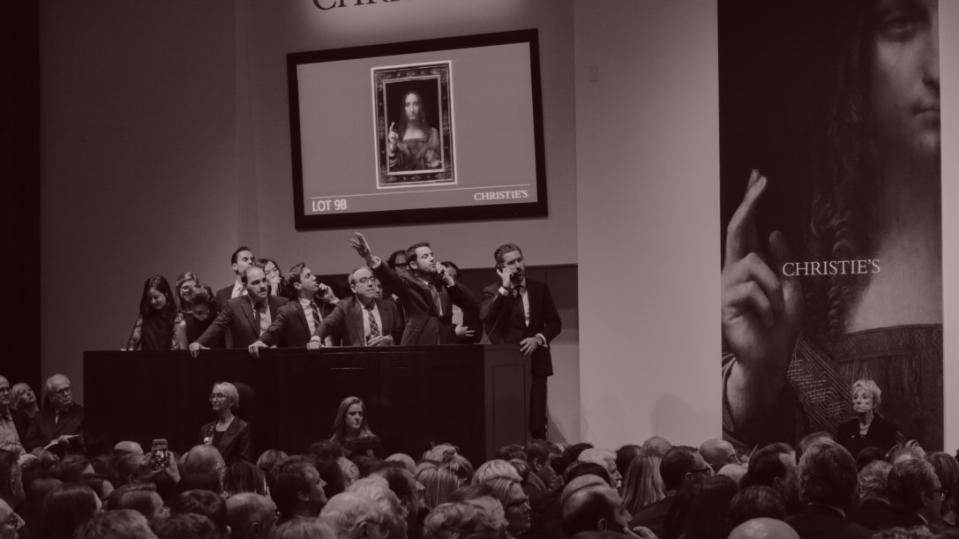
Another detail that misled these new collector-investors: In 2009, everyone thought the art market would experience a prolonged slowdown similar to the aftermath of the Japanese financial crisis. Instead, Christie’s held the record-breaking Yves Saint Laurent-Pierre Bergé sale. In 2010, Lily Safra paid $103 million for a Giacometti statue; by 2011, many contemporary works were again trading at prices near their 2007 peaks, and collectors who had bought at that time rushed for the exits. In 2013, there was so much demand that everything went to auction to determine a fair price. In 2014 and 2015, we reached the peak of the so-called masterpiece market, where buyers paid top dollar for extraordinary examples of art. The apex moment of that mindset was reached in 2017, when a Leonardo sold for $450 million to Saudi Crown Prince Mohammed bin Salman.

At the same time, the art market was growing infatuated with young artists making process-oriented abstract art works. A wag dubbed this type of art “zombie formalism” and the name stuck. No one buys or sells many—or even any—of the zombie formalists’ works these days, but that point didn’t quite sink in once the pandemic hit and everyone was stuck at home with more money than they expected and little to do. They started buying art by young artists not realizing that these works had little chance of becoming masterpieces or real assets—or, frankly, that most art loses value after it’s sold.

The art market, particularly the market for new talent, was inevitably going to become a victim of its own success. For the past five or six years, collectors have been enraptured by the discovery of new painters. Demand spurred competition, which drove higher prices. “The higher the prices get, the more the investment mindset dominates,” King noted, “and the more the investment mindset dominates, the higher prices get.”

All of this buying, especially of new talent, had a series of cascading effects on the gallery world, according to King. The first is that, despite the pervasive fears that the art world would be dominated by a handful of mega-galleries, the last five years has seen an efflorescence of small galleries representing new artists. Now everyone—from global giants to midsized to emerging galleries—has more and larger spaces, sometimes with multiple locations in the same cities. Many artists have multiple dealers, too, ostensibly with exclusive geographical rights, competing for work from the studio. Indeed, all of this has led to a kind of “tragedy of the commons” for art, where the common good is degraded by the pursuit of individual advantage. In this scenario, competition among dealers to make money from their artists while they could is, in King’s view, central to how we got to multiple spaces, high primary market prices, and the inevitable overproduction the market is dealing with now.

Amid this milieu, collectors succumbed to the “investment mindset.” Buyers, especially new buyers, studied what was selling well at auction to determine what they wanted to buy. Rather than taking risks by acquiring art that was meaningful to them, many chose instead to just pile into the artists everyone else was buying. (King provided an extensive analysis of German painter Albert Oehlen’s market to evince his point.) When you’re buying an asset, you have to think about resale more than your own taste or interest. “The pervasiveness of this view makes it hard,” King noted, “to tell dealers and collectors apart.”

$(ad3_title)
Buying With Their Ears
The surge in spending in the art market doesn’t seem to have been much different from a similar easy-money wave that we saw in the luxury and fashion businesses. My Puck partner Lauren Sherman has been chronicling how those businesses are trying to cope as they chart a path along a downward slope. Our colleague Matt Belloni tracks something similar in the entertainment business, where Netflix kicked off an unsustainable wave of production that is now coming to a halt, too.

Even in the best of times, the art market is a bit of a pyramid scheme. The value of art is highly dependent upon new and larger groups of collectors coming in behind the first wave of buyers. If there were more collectors of zombie formalism today than there were in 2014, we would see high prices and active trading. But right now, works by those artists sit on collectors’ walls or in crates in warehouses. King predicts that much of the overproduction we’ve seen from the current crop of artists will wind up in warehouses, too.

In one sense, none of this really matters. So what if a few artists created too many paintings that sit in crates and may forever? If a collector bought their work because they thought it was an asset, and found out it was not an investment-grade work of art, who cares? Isn’t that their own fault for “buying with their ears and not with their eyes,” as the art world maxim goes?

The real harm to the art market is that we’re likely to see a generation of collectors sour on the whole project. (The artists, themselves, will always create art, whether they’re getting paid like bankers or not.) Furthermore, the investment mindset doesn’t seem to have helped the art market. In 2014, the year the art market peaked, according to Clare McAndrew’s annual report, there was $68.2 billion in public and private sales. The next time the total came anywhere close to that sum was 2022, with $67.8 billion in sales. But adjusted for inflation, that $68.2 billion from 2014 had the same buying power as $86.2 billion in 2022.

In other words, the art market contracted by more than 20 percent while collectors were treating art like an asset. It’s almost as if the best way to lose money in art is to try to make money in art.

FOUR STORIES WE’RE TALKING ABOUT
Bidenworld’s Darkest Hour
What the Obamas and Clintons are thinking about the Biden debate.
JOHN HEILEMANN
A Hollywood Free Agency
Considering the future for Despicable Me’s Chris Meledandri.
MATTHEW BELLONI
Pinault Holds Barred
Investigating the Kering C.E.O.’s emerging succession plan.
LAUREN SHERMAN
NFL’s $15B Reckoning
Trading notes on the NFL Sunday Ticket verdict.
JOHN OURAND & ERIQ GARDNER
Puck
Facebook Twitter Instagram LinkedIn

Need help? Review our FAQs
page
or contact
us
for assistance. For brand partnerships, email ads@puck.news.

You received this email because you signed up to receive emails from Puck, or as part of your Puck account associated with . To stop receiving this newsletter and/or manage all your email preferences, click here.

Puck is published by Heat Media LLC. 227 W 17th St New York, NY 10011.

SEE THE ARCHIVES

SHARE
Try Puck for free

Sign up today to join the inside conversation at the nexus of Wall Street, Washington, A.I., Hollywood, and more.

Already a member? Log In


  • Daily articles and breaking news
  • Personal emails directly from our authors
  • Gift subscriber-only stories to friends & family
  • Unlimited access to archives

  • Exclusive bonus days of select newsletters
  • Exclusive access to Puck merch
  • Early bird access to new editorial and product features
  • Invitations to private conference calls with Puck authors

Exclusive to Inner Circle only


Latest Articles from Art

Minjae Kim
Glenn Adamson • July 2, 2024
Hot Hand: Minjae Kim
The Korean-born furniture designer transcends sticky definitional debates about art and design to create some of the most memorable furniture you’ve ever seen.
claude monet Nympheas sothebys
Marion Maneker • July 2, 2024
A Tale of Two Auction Houses
This season, in London, Sotheby’s has most of the high-value, historical works—everything from Freud and Klimt to Monet and Rothko. Meanwhile, Christie’s is leaning into what’s hot: Rashid Johnson, Kaws, Richard Prince, Yoshitomo Nara, and more.
Yü-Ge Wang at Christie's
Marion Maneker • July 2, 2024
The Middle Market’s Big Shift
While the big money has returned, auction houses are reducing estimates for cheaper works to entice buyers and minimize their losses. Now, the latest data reveals a big shift is taking place in the middle market, too.


Willem De Kooning
Marion Maneker • July 2, 2024
De Kooning’s $75 Million May
Even after the robust volume of sales in New York, there are clearly still plenty of serious buyers looking for de Koonings—and that wasn’t always a given.
Arthur Jafa
Dan Duray • July 2, 2024
King Arthur Holds Court
With a joint exhibit in Venice with his artistic hero, Richard Prince, Arthur Jafa sounds off on the power of scarcity, why we’re still chewing on Duchamp, and his loyalty to Kanye.
Art Basel
Marion Maneker • July 2, 2024
The Basel Squeeze
It’s still an honor for smaller galleries to show at Art Basel, but global expansion is putting pressure on them to bring exclusive works to the fair without publicizing their packing lists in advance. Now, some galleries are asking themselves whether they can even afford to participate.


Cybele Maylone - The Aldrich Museum
Marion Maneker • July 2, 2024
Condition Report: Cybele Maylone, The Aldrich Museum
The director of Ridgefield’s overachieving contemporary art museum is turning her institution’s gaze to Connecticut artists, making a case for the Constitution State as something more than the land of finance bros and old WASPs.


Get access to this story

Enter your email for a free preview of Puck’s full offering, including exclusive articles, private emails from authors, and more.

Verify your email and sign in by clicking the link we just sent.

Already a member? Log In


Start 14 Day Free Trial for Unlimited Access Instead →


Latest Articles from Art

Nissan Skyline R34 GT-R
Jamie Lincoln Kitman • July 2, 2024
The Nissan Skyline R34 Named Desire
The collectible car market is finally moving past its beloved Boomer classics as a younger, Nintendo-raised generation chases high-performance Japanese rarities never meant for the American market. $2 million for a 20-year-old Nissan? That’s just the beginning.
De Bayser Sotheby's
Marion Maneker • July 2, 2024
Sotheby’s Object Lessons
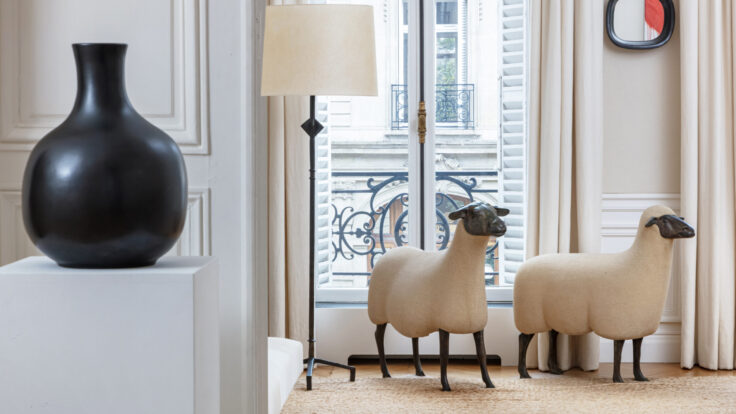
The latest design sales commingle art and design objects in a way that offers everyone a teachable moment: They educate art collectors on the potential value of design objects, while giving the design people a greater appreciation for high-dollar contemporary artworks.
Francis Picabia
Marion Maneker • July 2, 2024
Picabia’s Final Frontier
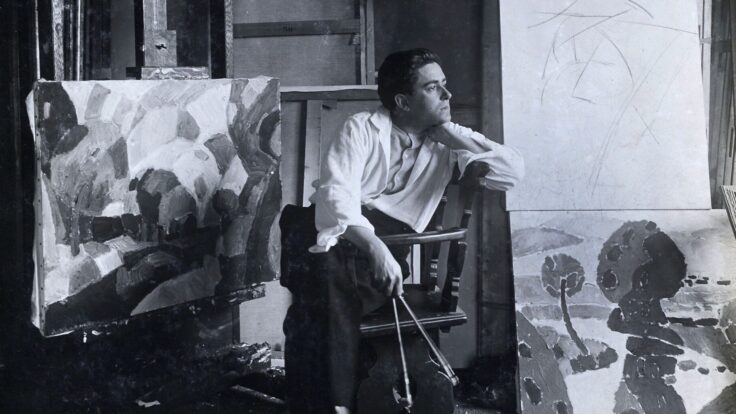
The yacht-owning, sports car–loving artist Francis Picabia defied the odds in nearly all aspects of his life and career—and only now are his striking pinup works being taken seriously.


Sotheby's Art Auction
Marion Maneker • July 2, 2024
May Auction Report: Rational Exuberance
Lured by the optimistic tailwinds from last fall’s Lauder auction, high-value supply came back to the art market in May, with sales totaling $2.5 billion. But the comeback may not be quite as roaring as it appears: Unimpressive hammer ratios reveal buyers’ willingness to pay, but not more than they have to.
Ab-Anbar Art Gallery, London
Marion Maneker • July 2, 2024
Lifting the Fog on London’s Gallery Scene
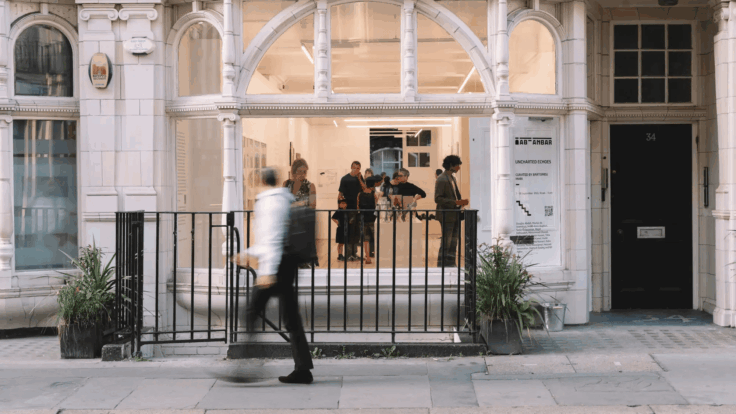
In its sixth year, London Gallery Weekend isn’t just supporting nascent galleries and luring 50,000 art enthusiasts to town. It’s fortifying London’s place as a major art city.
Sotheby's auction bikes
George Nelson • July 2, 2024
Blazing Saddles
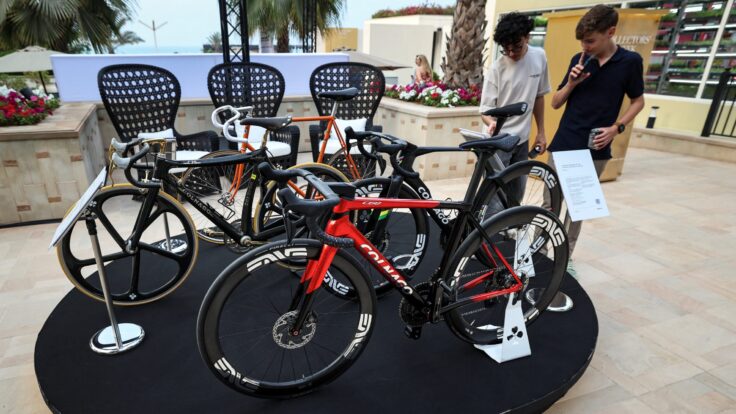
Through sales of ultra-rare bicycles and insider access to the Tour de France, Sotheby’s is recruiting a new class of clients from elite cycling’s swelling ranks of C-suite executives, collectors, and family-office principals.


Julian Schnabel Pace Gallery
Marion Maneker • July 2, 2024
A Separate Pace
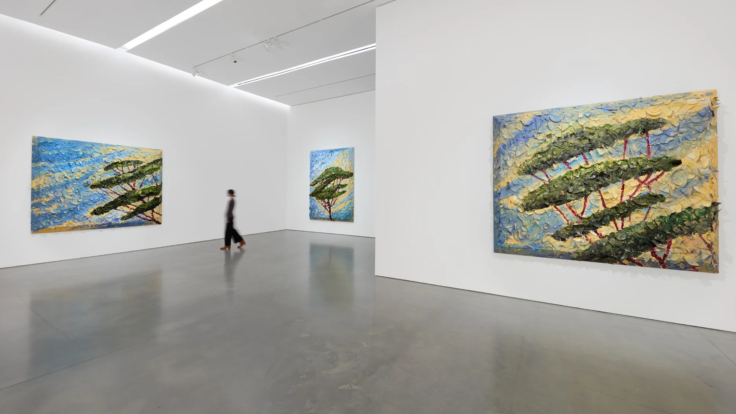
The global gallery represents a wide range of artists, but there is something different about the four shows currently on view in New York.
Get access to this story

Enter your email to get access to one article and free previews of our private emails from Puck authors and editors.

OR

Already a Member? Sign in


Latest Articles from Art

Caroline Seabolt, Ashkan Baghestani
Marion Maneker • July 2, 2024
Condition Report: Sotheby’s Caroline Seabolt & Ashkan Baghestani
A joint interview with the heads of Sotheby’s day sales on the depth of last week’s sales, the importance of estates in driving them, and the enduring thrill of selling another Hopper.
Patrick Bongoy
Glenn Adamson • July 2, 2024
Hot Hand: Patrick Bongoy
Patrick Bongoy weaves, stretches, and manipulates the discarded rubber that afflicts Africa, transmuting waste not only to evoke environmental exploitation or his homeland’s painful colonial past, but to express the power of creative rebirth.
sotheby's auction painting Gerhard Richter
Marion Maneker • July 2, 2024
Closing Time
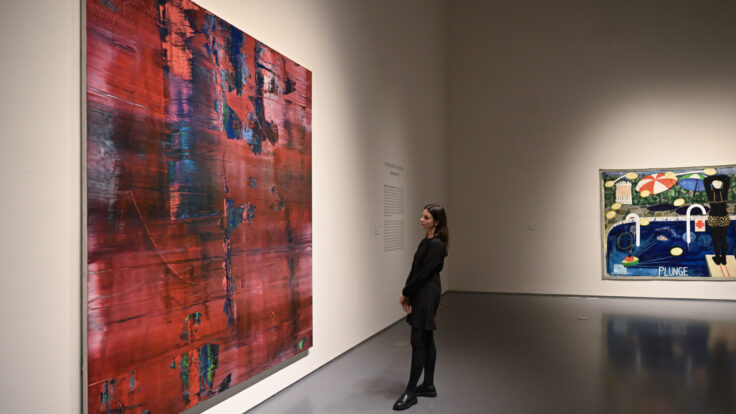
A timely look at the market themes, top lots, and various peculiarities of a short, buoyant New York auction cycle that still seemed unusually long.


sotheby's Andy Warhol Sixteen Jackies
Marion Maneker • July 2, 2024
The Art Market’s Cut-Your-Loss Bounce
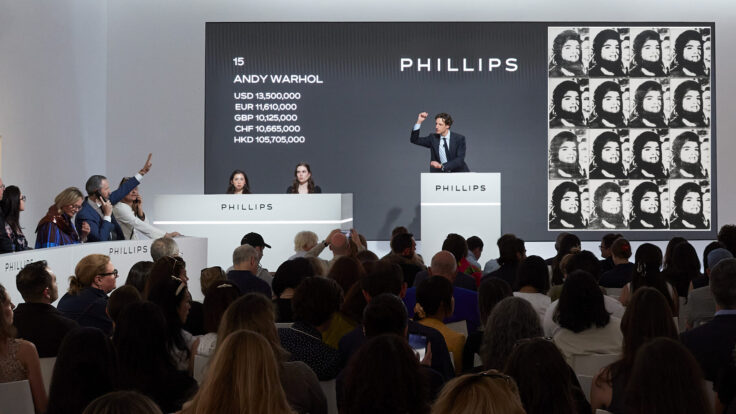
Beyond the billion-dollar single-night bonanzas and the movie-star promo spots, smaller sales are revealing a less sexy dynamic in the market: Collectors are exercising the freedom to sell without taking too big a loss—and their willingness to move on is creating liquidity that will fuel future growth.
Christie's art auction
Marion Maneker • July 2, 2024
Christie’s Manic Monday
The May auctions continued in thrilling fashion at Christie’s last night, as feverish bidding pushed new records for the mainstays of modernism—Pollock, Brancusi, Miró, Rothko—and the art-hoovering skylords of finance dropped the G.D.P. of a small country on the Si Newhouse collection. So can we call that an art market triumph? Not so fast…
Sotheby's
Marion Maneker • July 2, 2024
Sotheby’s Day Sales Smoke Signals
News and notes on the revealing trends surrounding Sotheby’s latest round of day sales, in which 93 percent of the 350 lots found buyers. Is this another sign of a market boom?


Sotheby's Art Auction
Marion Maneker • July 2, 2024
Sotheby’s $433 Million Pep Talk
The numbers from Sotheby’s last night were very strong—the Mnuchin sale totaled $166 million, and the various owners’ sale made nearly $267 million—but the market still hasn’t rebuilt the confidence necessary to see real momentum pick up again.


  • Terms
  • Privacy
  • Contact
  • FAQ
  • Careers
© 2026 Heat Media All rights reserved.
Create an account

Already a member? Log In

CREATE AN ACCOUNT with Google
OR YOUR EMAIL

OR

Use Email & Password Instead

USE EMAIL & PASSWORD
Password strength:

OR

Use Another Sign-Up Method

Become a member

All of the insider knowledge from our top tier authors, in your inbox.

Create an account

Already a member? Log In

Verify your email!

You should receive a link to log in at .

I DID NOT RECEIVE A LINK

Didn't get an email? Check your spam folder and confirm the spelling of your email, and try again. If you continue to have trouble, reach out to fritz@puck.news.

CREATE AN ACCOUNT with Google
CREATE AN ACCOUNT with Apple
OR USE EMAIL & PASSWORD
Password strength:

OR
Log In

Not a member yet? Sign up today

Log in with Google
Log in with Google
Log in with Apple
Log in with Apple
OR USE EMAIL & PASSWORD
Don't have a password or need to reset it?

OR
Verify Account

Verify your email!

You should receive a link to log in at .

I DID NOT RECEIVE A LINK

Didn't get an email? Check your spam folder and confirm the spelling of your email, and try again. If you continue to have trouble, reach out to fritz@puck.news.

YOUR EMAIL

Use a different sign in option instead

Member Exclusive

Get access to this story

Create a free account to preview Puck’s full offering, including exclusive articles, private emails from authors, and more.

Already a member? Sign in

Free article unlocked!

You are logged into a free account as unknown@example.com

ENJOY 1 FREE ARTICLE EACH MONTH

Subscribe today to join the inside conversation at the nexus of Wall Street, Washington, A.I., Hollywood, and more.

START 14-DAY FREE TRIAL

  • Daily articles and breaking news
  • Personal emails directly from our authors
  • Gift subscriber-only stories to friends & family
  • Unlimited access to archives
  • Bookmark articles to create a Reading List
  • Quarterly calls with industry experts from the power corners we cover