{{ 'now' | timezone: 'America/New_York' | date: '%b %d, %Y' }} |
|
|
Greetings from Los Angeles, and welcome back to In the Room.
Late-breaking news: Barry Diller is interested in acquiring CNN. The Wall Street Journal reports that the media mogul approached David Zaslav about it last year, and “remains interested,” even though a WBD spokesperson says the cable network “was
not and is not for sale.”
In tonight’s edition, news and notes on Bari Weiss’s latest attempt to win the hearts and minds of restive CBS News veterans. In a familiar media rite of passage, Bari is pleading with intractable staffers to embrace change and get on board with her vision—calling to mind the previous efforts of The Washington Post’s Will Lewis and CNN’s Mark Thompson. Of course, as their
respective tenures have shown, it takes more than admonitions to lead a legacy news outlet into the future. Does Bari have what it takes?
🍸 Plus, on the latest episode of The Grill Room, former Barstool Sports C.E.O. Erika Ayers Badan reflected on navigating the bankruptcy proceedings at her latest gig, Food52, the former high-flying media startup that tried to become a modern, Brooklyn-inflected Williams Sonoma. Erika talked about the dangers of
undisciplined growth, and why diversified revenue streams matter more than ever. She also discussed what industry peers can learn from Food52’s downturn, her take on the state of media, and more. Follow The Grill Room on Apple, Spotify, or
wherever you prefer to listen.
A highlight: At one point, Erika warned that Food52’s bankruptcy was “a cautionary tale” for many other digital media startups: “The houses are gonna crumble,” she said. “If you look in the media business, everyone is for sale. All these business models are challenged. Nobody has the search traffic.” She also encouraged founders and management teams to sell to the first credible buyer: “When we sold Barstool to Penn Entertainment, everyone was like, No, wait, just wait, you could have a billion-dollar valuation! When I look at all these companies in the media business, the people that waited, it doesn’t go well. So the first thing is like, if somebody comes and wants to buy you, like, take the deal.”
Also mentioned in this issue: Jeff Zucker, Emma Tucker, Tony Dokoupil, Gayle King, Walter Cronkite, Erika Kirk, Chris Licht, Kim Godwin, and many more.
|
-
The Post cataclysm: As you know, Washington Post C.E.O. Will Lewis is on the cusp of implementing another round of mass layoffs. The cuts could affect as many as 300 employees, according to my sources, all of which has inspired considerable fear and anxiety—and public protest—at the constantly beleaguered paper. Lewis intends to frame the layoffs as part of a broader restructuring that will focus editorial investment on a few core coverage
areas—national security, politics, etcetera—while all but abandoning full-time coverage of topics where the paper doesn’t see adequate demand. That includes sports, as my partner John Ourand and I reported earlier this week.
This is all both tragic and unsurprising, and, as I note in tonight’s main item, this nightmare is a
reflection of Will’s own strategic inconsistency and managerial incompetence in the two years since he took the helm. Yes, the Post needs to be profitable, or at least break even, but presumably there’s a path to sustainability that doesn’t require an annual mass slaughter. Meanwhile, isn’t a Post focused on politics and national security just another version of… Politico? At this point, it seems like this story is in danger of writing itself: After years of fractious
infighting, the boss is laying off virtually everyone in order to save himself. This never ends well. - And…: Congrats to NBC News chairman Cesar Conde, who has joined the board of directors at Ralph Lauren, as first reported by
Breaker. As you know, Cesar already sits on the board of Walmart and Pepsi; this is a slightly more refined assignment. I’m old enough to remember a time when NBC
insiders chafed at these conflicts of interest. In 2026, caring about such things suddenly seems quaint. Congrats, Cesar. Who cares what anyone else thinks.
|
|
|
No one said that turning around a legacy news institution in the age of inexorable
decline, shattered attention spans, and staff revolts was supposed to be easy. But as Mark Thompson, Will Lewis, and Bari Weiss are proving, you can’t move forward without taking the lead. |
|
|
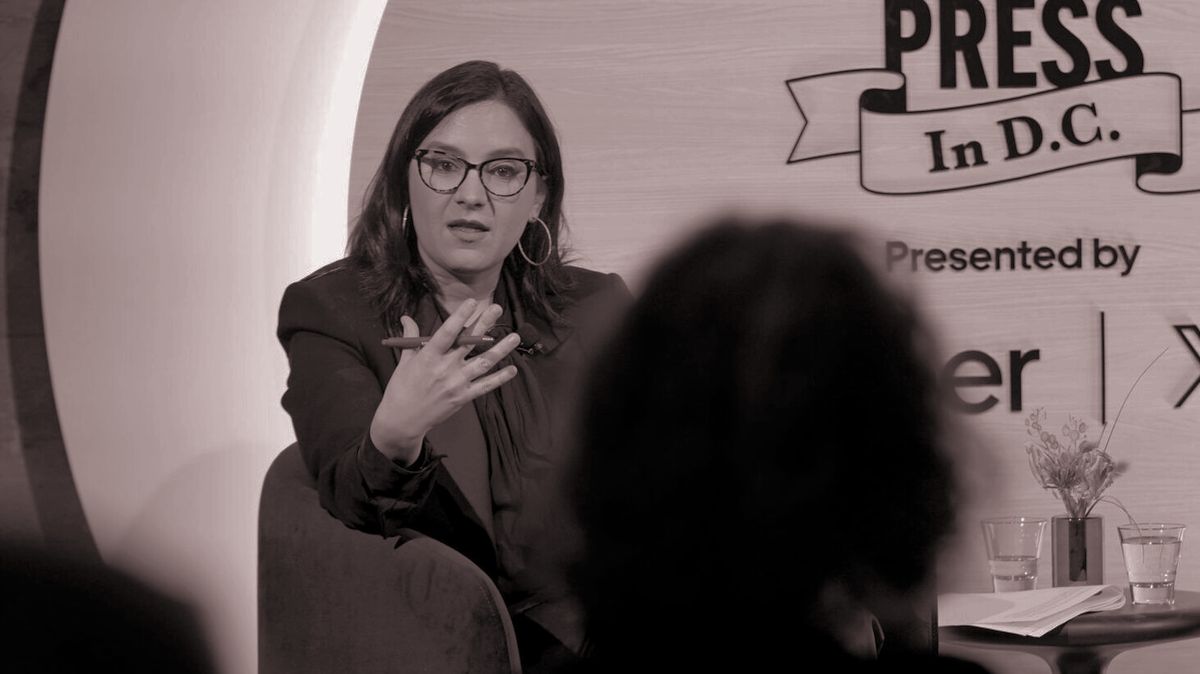
On Tuesday, Bari Weiss, the embattled and overexposed CBS News chief,
made a formal plea to her staff to ignore the mishegas surrounding her early missteps, embrace change, and get on board with making the network “fit for purpose in the twenty-first century.” Pursuing that mission would first require admitting that CBS News had failed to adapt to consumer demand. “We have to start by looking honestly at ourselves,” she said in a network-wide town hall. “We are not producing a product that enough people want.”
Bari’s cold but clear-eyed
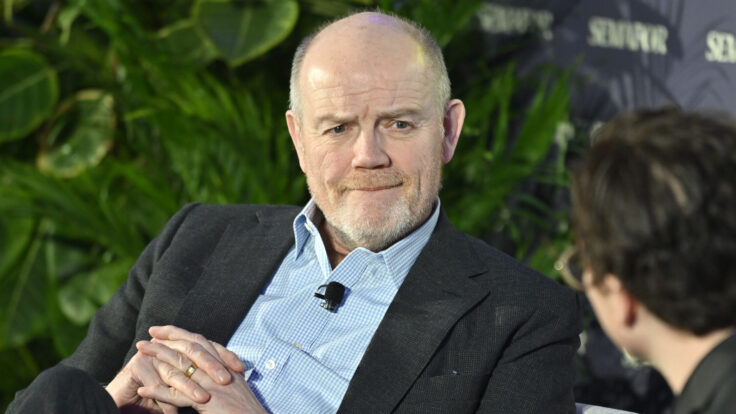
assessment echoed a diagnosis that Will Lewis had memorably conveyed to Washington Post staff in 2024 upon becoming the paper’s publisher and chief executive. “People are not reading your stuff,” he told them, citing audience churn and severe financial losses. “I can’t sugarcoat it anymore.” Months before that, CNN C.E.O. Mark Thompson had sought to impart a similar, if more delicately put, message to his staff when he said that “CNN’s linear services
and even its website can sometimes have an old-fashioned and unadventurous feel, as if the world has changed and they haven’t.”
These diagnoses may have stung, but they were also unassailable, long overdue, and delivered a necessary shock to legacy media’s calcified neural wiring. The existential rub was what came next: determining the right course of intervention and executing a successful rehabilitation—which, as Hippocrates warned, is where the shit often hits the wood
chipper.
In the years since Will implored his charges to come to terms with economic reality, he has compounded the Post’s problems through strategic incoherence and managerial incompetence: a “third newsroom” that never materialized, a misguided A.I. initiative, an editorial pivot that inspired hundreds of journalists and hundreds of thousands of subscribers to auto-defenestrate. Now, as I’ve reported, the Post is preparing a deep round of layoffs—as
many as 300, I’m told—and could shutter entire sections of the paper.
Will intends to frame these cuts as part of an effort to reorient the Post around core coverage areas like politics and national security, which would seemingly make it less differentiated from Politico, Axios, and its myriad other competitors. But, in the spirit of not sugarcoating it, what the layoffs really signal is that, after 800 days on the job, Will almost certainly isn’t hitting his numbers, and he wants to save his own hide.
At CNN, Mark has presided over a quieter deterioration of the business. His prescription for the network’s “old-fashioned and unadventurous” linear and digital product has been therapeutic nonintervention. Today’s CNN broadcast division is an anemic derivative of the network that Jeff Zucker revived more than a decade ago, populated by soporific incarnations of all the usual suspects who now command an even smaller audience. The digital product is a
sprawl of poorly curated headlines and banner ads that evokes the Netscape era. A subscription product has launched, but without a coherent value proposition or any evidence of significant adoption (in his own town hall this week, Mark said CNN had exceeded its subscription goals for 2025, but gave no numbers). Meanwhile, the network’s annual profits have shrunk by hundreds of millions. The problem, as is now clear, is that Thompson couldn’t replicate the Times plan without the
Times itself.
Will Bari’s journey be different? Her stated strategy for CBS News included much of the familiar pablum about meeting audiences where they are, the need to be multifaceted and multiplatform—a plea to stop treating shows as fiefdoms and instead focus on the story and its distribution across multiple channels. “Our strategy has been to cling to broadcast,” she said. “If we stick to that strategy, we’re toast.”
This is all
directionally right, of course. But it does make you wonder why she spent her first 100 days meddling with 60 Minutes—a product millions of people actually do want—and quixotically trying to turn Tony Dokoupil into a sexier second coming of Cronkite. |
None of this is easy—and in a decade, we may even conclude that it was completely impossible. The
challenge before Bari and everyone else in this unenviable position is to manage a steadily declining core asset while simultaneously incubating new, supposedly lucrative ones faster or at least as fast as they are populating on other platforms. But for all the emphasis on that brave new world—“the vast universe of podcasts and YouTube and Twitch and newsletters,” as Bari put it—the economic models are not even remotely the same. YouTube advertising is not a panacea, podcast
brand deals are episodic and fickle, and Instagram and TikTok pay squat. One reason for the atrophy across the industry is that even a shitty TV news business is still much better than most digital ones.
In her remarks, Bari called CBS News “the best-capitalized media startup in the world,” but of course that is facile, misleading, and unhelpful. Psychologically, it remains a century-old, TV-first institution staffed by people with acute nostalgia and entrenched muscle memory—millionaires
with agents and town cars and second homes and Oliver Darcy’s cellphone number. Furthermore, startups often trade on future revenue and expectations while public companies are tied to EBITDA and fixed cost structures. And that’s before even contemplating the byzantine bureaucracy. The admonitions from Bari and Will and Mark barely veil an impatience with employees who don’t seem to understand that media is a business, economic models change, stasis equals
death—and, frankly, that they need to work a little harder. But most staffers would argue that they’re not nearly so intractable, and they just reject mediocre leaders. Many don’t have much incentive to change, and the contempt doesn’t persuade them any further.
In any event, the leaders who try to embark on this journey amid internal strife almost always run aground, overwhelmed by insubordination that manifests in leaks. Some leaders bitch about it, which tends to compound the problem.
Others ignore it. A few choose to recognize that being a leader requires leadership—which, in part, means finessing the organization into alignment. This entails cultivating the loyalty of additive personnel, consciously uncoupling people who aren’t on board, and then incentivizing everyone to trust and respect your authority—a blend of art (pumping egos) and science (exiting underperformers while tucking in culture carriers) that can only be achieved over time, in one-on-one
relationships, and almost never in memos and town halls. Bari seems to have at least achieved this with Gayle King, who, amid contract negotiations, has suddenly become a passionate Bari advocate. Another lesson of the business: Everyone has a price.
More than anything, however, success in this business requires, well, success. Around the time Will and Mark were taking the helm of their respective organizations, newly installed
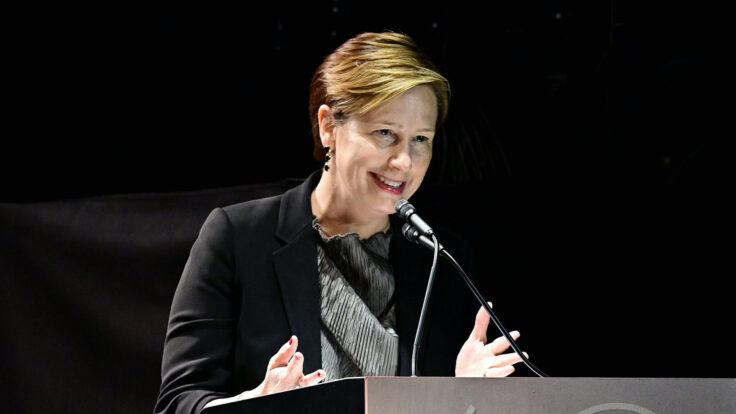
Wall Street Journal editor Emma Tucker was watching restive staffers protest her restructuring efforts by enumerating their discontent via Post-It notes on her office window. The revolt, which had been inspired by strategic and targeted layoffs, was quickly subsumed by a broader appreciation for the fact that Emma was making the paper better and more relevant—especially in the sections where the layoffs had taken place.
In his early years, Zucker also
had detractors, who pushed the narrative that he was an ill-suited savior for the network. The narrative soon ran into the reality of record-high ratings and revenues and the celebrification of network talent. When Zucker was abruptly ousted, in 2022, the stars he’d made publicly protested that decision, and grieved for weeks. The lesson is clear: It’s easier to change the culture after you’ve started to do the job.
Mark and Will have probably already written their
legacies at their respective organizations, and it’s fair to assume neither man’s departure will inspire Zucker levels of grieving. Indeed, in light of the impending layoffs, one imagines Will’s departure would elicit Licht- or Godwin-level Liberation Day energy, while Mark’s might inspire the same collective shrug that CNNers feel about his leadership today. Bari is just getting started, albeit from a deficit brought on by her 60 Minutes
CECOT tampering, a misguided Erika Kirk townhall, and the rushed Dokoupil rollout. She has put a big premium on winning: not just by growing ratings, but by “making things that people can’t live without.” Obviously, it’ll be hard to get there from a product that not enough people want, with employees who still aren’t sure they want her. Good luck to all. |
|
|
A professional-grade rundown on the business of sports from John Ourand, the industry’s preeminent journalist,
covering the leagues, players, agencies, media deals, and the egos fueling it all. |
|
|
Join Emmy Award-winning journalist Peter Hamby, along with the team of expert journalists at Puck, as they let you in
on the conversations insiders are having across the four corners of power in America: Wall Street, Washington, Silicon Valley, and Hollywood. Presented in partnership with Audacy, new episodes publish daily, Monday through Friday. |
|
|
Need help? Review our FAQ page or contact us for assistance. For brand partnerships, email ads@puck.news. You received this email because you
signed up to receive emails from Puck, or as part of your Puck account associated with {{customer.email}}. To stop receiving this newsletter and/or manage all your email preferences, click here. |
Puck is published by Heat Media LLC. 107 Greenwich St., New York, NY 10006 |
|
|
|