{{ 'now' | timezone: 'America/New_York' | date: '%b %d, %Y' }} |
|
|
Greetings from Los Angeles, and welcome back to In the Room. We’re in the home stretch
of the holiday season, and I trust your media diets are turning away from Squawk Box and Scott Galloway and toward White Christmas and Vince Guaraldi. I’ll be off next Wednesday in observance, back in your inboxes on Friday, December 26 (despite Trump’s latest declaration). On the podcast front,
Julia Alexander and I will maintain The Grill Room’s regularly scheduled programming on Tuesday and Friday. Happy Holidays, everyone. May your days be merry and bright.
In tonight’s issue, I’m pleased to share highlights from the discussion I had with Puck founder Jon Kelly and Orchestra C.E.O. Jonathan Rosen during our Puck Private
Conversation event this week at the Hotel Chelsea. The thought-provoking conversation drew on the latest findings from our exclusive survey of media executives and insiders, and included some guest
analysis from Semafor’s Ben Smith and Feed Me’s Emily Sundberg, who just happened to be in the audience.
🍸 Plus, for those who would like to listen to the conversation in full, today’s episode of The Grill Room features a recording of the event. Listen to that episode here, and follow The Grill Room on
Apple, Spotify, or wherever you prefer to listen.
Mentioned in this issue: Bari Weiss, Mathias
Döpfner, Ben Smith, Emily Sundberg, Kara Swisher, Scott Galloway, Nick Pacilio, J.D. Vance, Wes Moore, Sam Altman, Ross Douthat, Steven Pinker, David Ellison, Liz Hoffman, Andrew Ross Sorkin, and more…
Let’s get started… |
-
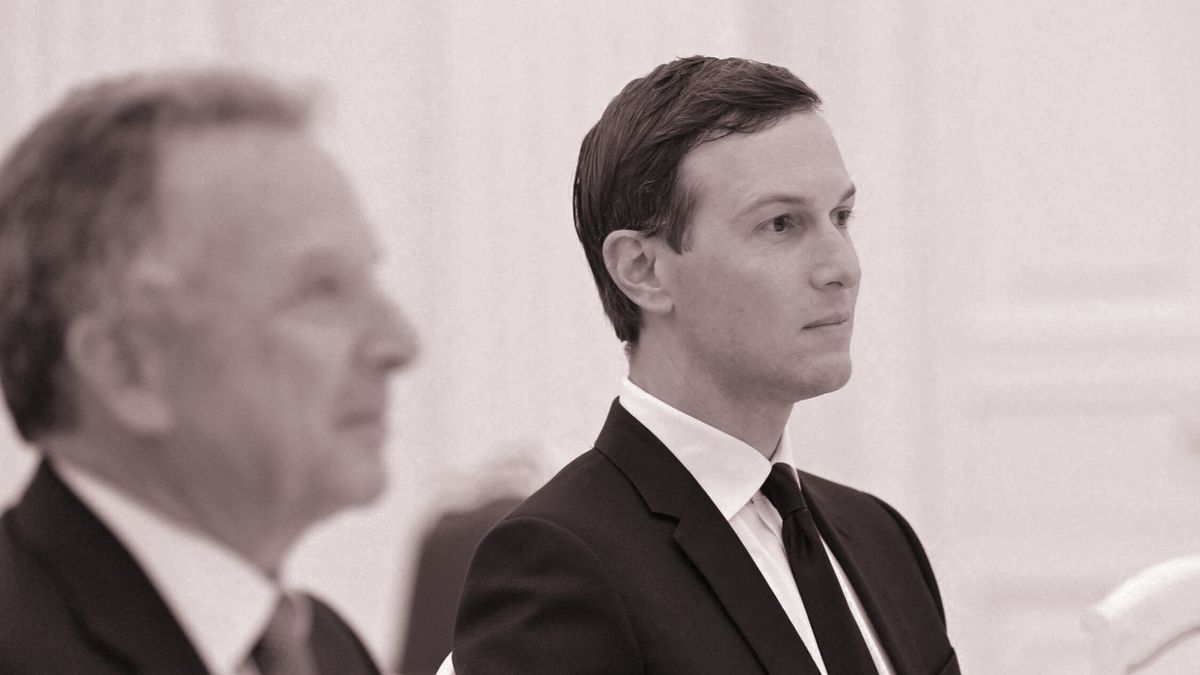
Mathias in the market: Axel Springer chief Mathias Döpfner says he’s currently hunting for acquisition opportunities in U.S. media but struggling to find compelling targets. In an interview with the Journal, the statuesque German executive said he
had M&A staffers at work in New York and Berlin—and money to spend. The Journal claims Mathias has previously eyed TED Conferences, TechCrunch, the 1440 newsletter, and a podcast network, and that he’s spoken with Kara Swisher and Scott Galloway. Cool ideas, but not exactly transformative. Past targets have been more ambitious: Mathias nearly bought the FT before being outmaneuvered by Nikkei, and he’s long telegraphed a desire to transform Springer into the
leading news empire of the Western world.
What else might he be considering? With Warner Bros. likely being sold to Netflix—where Mathias sits on the board—it’s tempting to wonder whether he’d make a play for CNN, which will probably be orphaned along with the rest of the Discovery channels. Axel Springer comms chief Nick Pacilio told me he is “not interested in buying CNN,” and that his true focus is digital media rather than legacy print and broadcast.
We’ll see. Remember when Netflix co-C.E.O. Greg Peters shrugged off interest in WBD? - The Bari report: Back at CBS, Bari Weiss has formally unveiled her next slate of town hall guests: Vice President J.D. Vance (as I previewed in my last email), Maryland Governor Wes Moore, and OpenAI chief Sam Altman. She’s also teased a series of primetime debates around subjects like
capitalism, feminism, and God (the last of which features the Times’s Ross Douthat in conversation with Steven Pinker—God help us all, please). All of these are part of a new series, “Things That Matter,” which is notably being presented by both CBS News and The Free Press—merely the latest sign that the Ellisons are giving Bari the latitude to shake things up.
Will any of these move the needle for CBS, after the
Erika Kirk town hall flopped? These are better gets, sure, but Vance, Moore, Altman, and the debate participants are all very available personalities who appear with relative frequency across platforms. The value of these events will therefore depend on how they’re structured and moderated—which depends on Bari,
since she’s likely to keep herself center stage. Of course, David Ellison bought her business because he wanted her in this sort of player-coach role. But it’s also a reminder that she’s actually got two steep learning curves in the new job: programming and anchoring, neither of which is necessarily her forte.
Tangentially, one of the great hazards to innovation for the television news industry has been, well, its maniacal insistence on
television. Other mediums innovated by conceding that the consumption was occurring elsewhere: Books moved to e-readers, music moved to platforms like Napster and then Spotify, entertainment moved to streaming, newspapers and magazines moved to digital and social. TV news, however, has still relied on the familiar tropes of time slots, windows, anchors, sets, etcetera. And while Bari’s “Things That Matter” series doesn’t seem like any sort of revelation, it’s at least a cycle-breaking
attempt to create eventized programming that seems germane to Instagram and YouTube, and just happens to be on TV. The more she can pivot her producers and executives to the smaller screen, the longer she’ll enjoy the Ellisons’ affection.
|
|
|
The inherent tension of the journalist-as-brand model, the continued erosion of
institutional authority, the potential for an A.I. newsroom: Industry leaders weighed in on all this and more at a panel this week to unveil the results of our latest Puck–Orchestra survey. |
|
|
On Wednesday, over breakfast in the piano room of the Hotel Chelsea, Puck founder Jon Kelly
and I joined Jonathan Rosen, the esteemed C.E.O. of the strategic communications and marketing company Orchestra, as well as a few dozen other media swells, to unpack the
findings from our latest Puck Private Conversation survey. The data, based on responses from executives, entrepreneurs, and other high-level operators across the industry, provided telling insights into the current state and imminent future of the media business, touching on the rise of talent-led franchises, the strength of recurring-revenue subscription bundles, the impending impact of A.I., and much more.
Today, I’m delighted to bring you the highlights of this
thought-provoking discussion, which also included some on-the-spot input from folks gathered in the room that morning, including Semafor editor and co-founder Ben Smith and Substack pioneer Emily Sundberg. As always, the transcript has been lightly edited for clarity and concision. If you would prefer to listen to the conversation in full, we’ve posted it here on my podcast, The Grill Room. |
Dylan Byers: In one of our first findings, we asked those whom we
surveyed what they see as the biggest revenue drivers in the years ahead. Thirty-four percent expect subscriptions and memberships to be their largest revenue stream, compared to 27 percent for advertising. Generally speaking, there’s the idea that we’re moving toward subscription and away from dependence on advertising. But, of course, it can be more nuanced than that.
Jonathan Rosen: I think we’re seeing two big trends. Individuals now have more authority in media than
institutions. And how you balance that becomes really, really critical. What that’s done in regards to subscriptions versus advertising is, people want the parasocial relationships. That’s so much of the modern internet right now. This flip side, though, is that most advertisers want qualified, engaged audiences. We’re post the era of mass, and more about how you can actually reach engaged people in a world with too much information. That’s what our clients care about.
So I think the best
subscription platforms are also going to have the best ad models, because you’re actually buying a hyper-engaged audience. Subscription almost proves qualification, it proves interest, it proves intent—and intent is what you need in a world where you can scroll by an ad in a second and a half. You’re going to see more and more top-of-the-funnel ad sales go toward heavily subscription-based businesses. |
On that note, 43 percent of respondents said they’re pursuing niche subscription
strategies. Is scale a liability?
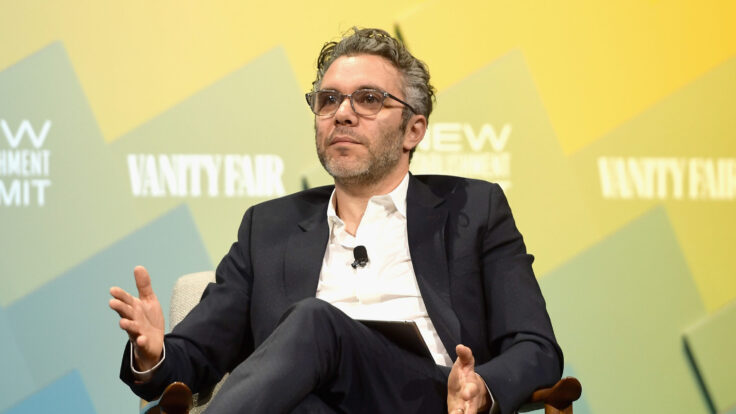
Jon Kelly: Actually, I don’t think so. The pendulum does swing, but what we’re seeing more broadly is a bifurcation of media environments. Jonathan is completely right that high-intent audiences are the coin of the realm. And we’re seeing the re-creating of affinity-based media right before our eyes. Simultaneously, one of the things that’s lost in this conversation is the propulsion of free FAST services at the streaming level. As we
talk about the media dichotomy in American culture, you see it playing out at this media level, too. There are highly engaged audiences that are probably higher H.H.I., more coastal, etcetera—and absolutely the preferred targets of many endemic advertising partners. Then there’s a much larger, free, porous ecosystem. That’s probably where you’re going to find C.P.G., auto, etcetera. Maybe this is a DNA strand where they cross again, but I think they’re going to get pretty far apart before they
do that.
Rosen: I think that’s right. What we’re seeing from our clients is that they’re looking at bottom-of-the-funnel across free and freemium—whether that’s search, whether it’s the FAST channels—but there is this hyper-segmentation and hyper-fragmentation for high-intent people. So I think the subscription-based models are really going to dominate.
Ben, I’ll put you on the spot. On one hand we’re talking about franchise journalists you can build affinity
around—and you’ve got talents like Liz Hoffman and Max Tani. On the other hand, you have this big ambition to be a global media company. How do you think about the balance between scale and targeted, niche subscription strategy?
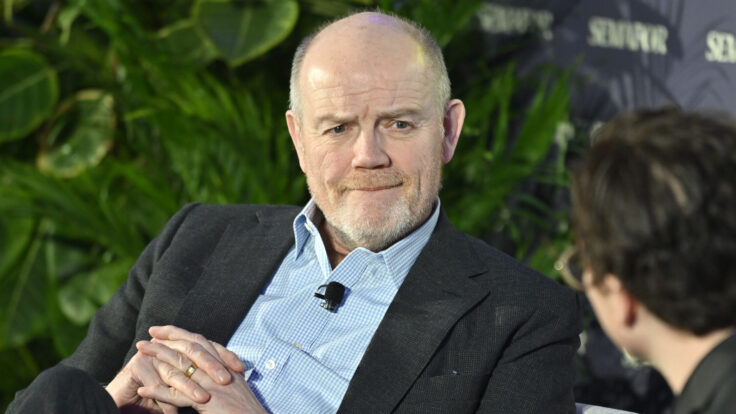
Ben Smith: I think about, when I recruit, all the really good journalists want all the good stuff that comes with Substack: the direct connection to the audience and the skin in the game. They want that because that’s what the audience wants.
Then conversely, for the kind of journalist who breaks news and sometimes gets into real fights with people, you need some structure around them. You may not always be telling your audience particularly what they want to hear; you might be telling them the opposite, which is a challenge for subscription businesses.
When you’re thinking about building around talent and stars, a lot of what you’re trying to do is create the perfect environment for them, which is also then the perfect
environment for the audience. Niche audiences versus influential audiences is another axis. It’s totally about who you’re reaching in a hand-to-hand way—and are they engaged? Subscription is obviously one good way to tell. |
Rosen: You’re also seeing legacy media trying to make stars out of existing people who
weren’t talent. The Wall Street Journal just announced a new talent development desk, where the description is training existing reporters on their social media presence on direct-to-camera video. It’s a really intentional effort to build franchises around people. The New York Times has proved that out. Individuals and franchise stars matter a ton, but I also think institutions can build those people.
Kelly: The absolute trend line has been the financial
sophistication and market sophistication of creative people over the last half-decade, and understanding how their salaries are financed, and how they need to orient their careers to be successful. I think that was a late-breaking development in a lot of media. Now, it’s front and center. |
The
Times Talent Equation
|
I had Andrew Ross Sorkin on The Grill Room this
week and I asked him, Why don’t you go at it alone? The business you could build around Andrew Ross Sorkin would potentially be even more lucrative than what he has today. But despite the fact that someone like Emily Sundberg can go out and build this incredible thing that she’s built on her own, some people still want the infrastructure of the Times.
Rosen: The media of the
Times is sui generis from product, to UX, to even how they’re thinking about video. They’re really thinking about their product as a product in every sense. And that platform creates value for talent. When you have a platform that is truly a global brand, staying there has a ton of value. And it’s possible it goes the other way, too, where people build up their careers at the Times [and then venture into entrepreneurship]. But I think at the end of the day, the Times
has the reach. They have the ability to keep investing and innovating. And that creates value if you’re talent.
Kelly: The Times has done well and is probably the exception in many ways. We’re in a very premature inning in this saga, however. I think the race to Substack has sort of paused. There was a sort of threshold drug element to this a number of years ago, and I think this market is saturated right now. New options will present themselves, and there will be a
second run at it. Sorkin didn’t answer this on The Grill Room, but the answer was self-evident: He’s already wealthy enough that he’s not incentivized to take a risk. There are many people, however, who have not achieved his level of success of wealth, and you hope that they can operate within their window to be able to do that.
Emily, you’re the rare model of a true Substack success. And I think some people would still like to acquire your business and
put you into a part of a bundle. What do you think about how you’re growing your business and where it goes from here?
Emily Sundberg: You guys ask why somebody would leave The New York Times ecosystem to go out on their own. I applied for jobs at the Times. I didn’t get them. I applied for jobs at other places, and nobody wanted to hire me then. So when I started writing on Substack, it wasn’t in pursuit of starting a media business. In 2022, I started
writing a daily paywalled newsletter. I was sitting at my desk at Meta, and was just like, What would happen if I put some content from my various group texts behind a paywall?
I didn’t know how this business worked; I just liked playing on the internet. So I don’t know if that mindset would even translate well into one of these larger organizations. The product doesn’t work if I can’t say exactly what I want, when I want, and that’s not how newsrooms work. My edge is my
timeliness. And yes, I do have a legal team. Yes, I do have an editor. What I’m doing is not unsafe, and it works right now.
In terms of the size of my audience, I’m not necessarily striving to double my audience right now. My business works really well. In terms of looking for investments, I don’t even know what I would do with that cash. I’m really happy with what the business is right now in regards to subscribers and advertisers. And then in terms of scaling with other voices, I would
say I’m mid-experiment on that. I have a few contributors. I have a small team. I made one of my contributors a podcast, which is going pretty well, and it’s been fun to learn how to make a show. |
I want to touch on A.I. We asked people what they’re most preoccupied with when it comes to
A.I.: Thirty-nine percent are most worried about declining content quality, 33 percent say misinformation, and 20 percent say job loss. Do you think A.I. threatens quality more than employment?
Rosen: One of the things that the rise of OpenAI and Claude and other chatbots have done is make owned content for our clients really, really important. When people ask questions about our clients reputationally or for discovery, it’s really clear that ChatGPT and Claude are
looking at owned content and putting high authority behind that. There’s no contest between the engagement of A.I.-generated content and human-generated content. For the high-intent reader, you see the time on page just tank when the writing quality [is bad]. On the jobs point: I don’t think anyone’s jobs are in jeopardy any time soon. I think the things that people could want out of A.I. are pretty interesting and generative—but I feel like in regards to A.I. actually servicing what people are
coming for, that feels hard to me. |
Kelly: I think a lot of the last decade has been defined by human-generated slop. And I
think A.I. replacing that will be largely beneficial for many people. There’s often a delta of years between when a new technology is introduced and when the culture gets terrified about it. In the voices and concerns and optimism of the C.E.O.s and senior executives that took this survey, I think you hear that they’re incredibly psyched about many opportunities. And they’re cognizant of the challenges they’re going to face, and they’re going to have to manage them simultaneously, as we all
do.
|
|
|
A professional-grade rundown on the business of sports from John Ourand, the industry’s preeminent journalist,
covering the leagues, players, agencies, media deals, and the egos fueling it all. |
|
|
Puck founding partner Matt Belloni takes you inside the business of Hollywood, using exclusive reporting and insight
to explain the backstories on everything from Marvel movies to the streaming wars. |
|
|
Need help? Review our FAQ page or contact us for assistance. For brand partnerships, email ads@puck.news. You received this email because you
signed up to receive emails from Puck, or as part of your Puck account associated with {{customer.email}}. To stop receiving this newsletter and/or manage all your email preferences, click here. |
Puck is published by Heat Media LLC. 107 Greenwich St., New York, NY 10006 |
|
|
|



_01KCW89N1YHTP3QT99TB4T3E66.jpg)
_01KCW89M9Q659K6D3MSWG2464P.jpg)
_01KCW89MPZ1EDS3XAS38Y4X6PK.jpg)