Hello, and welcome to The Best & The Brightest. I’m Peter
Hamby, coming to you on a Wednesday to recap yesterday’s primary results in Colorado, which ratified one truth about Democratic voters this year: Only fighters need apply. Whether they were D.S.A., normie Dems, or soldiers in the anti-Trump resistance, all Tuesday’s winners represented a bold break from the party establishment. And the results defied the emerging narrative on the left that only a new generation of socialists have the secret sauce…
More on all that below the fold. Up top, Leigh Ann Caldwell has a very interesting scoop on Jon Ossoff’s donor targeting in presidential primary states…
Also mentioned in this issue: Michael Bennet, Joe Neguse, Jason Crow, Jena Griswold, Manny Rutinel, Gabe Evans,
Shannon Bird, Amanda Litman, James Talarico, Diana DeGette, Phil Weiser, Edythe Broad, Steve Mandel, Kyle Clark, Melat Kiros, Zohran Mamdani, Hakeem Jeffries, Darializa Avila Chevalier, John Hickenlooper, and more.
|
|
|
|

| Leigh Ann Caldwell
|
|
- Ossoff’s army: It hasn’t
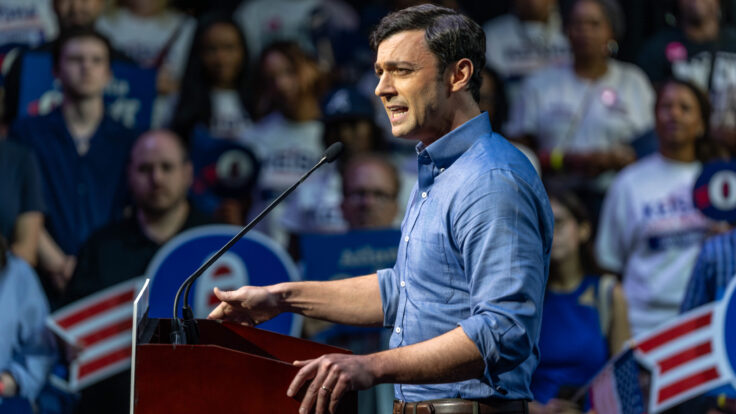
escaped notice in Washington that Georgia Sen. Jon Ossoff has been building a national network of small-dollar donors for his reelection bid, which would obviously be beneficial for a White House run in 2028 or beyond. Ossoff’s Senate campaign has bought nearly $4.2 million worth of Google Ads, according to company data, to solicit donations. And some $3.8 million was spent outside Georgia.
Those ads are reaching relevant voters in key states. A
search of the Google Ads database suggested that $20,000 worth of ads appeared in Iowa, $23,000 in New Hampshire, $43,000 in South Carolina, and $30,000 in Nevada—all traditional early presidential primary states, though that’s likely to shift this cycle. Ossoff’s ads also ran in key presidential swing states: $113,000 in North Carolina, $134,000 in Pennsylvania, and $95,000 in Michigan. More than $654,000 worth of Google Ads ran in California, a blue state full of Democratic donors. He also
spent $800,000 in digital, streaming, and TV ads in New York.
The Ossoff campaign isn’t geofencing specific states for their donor ads, and why wouldn’t Ossoff want to reach voters across the country? After all, he’s become even more of a national figure this cycle with his studied Obama-like cadence and laser-cut messaging. And he’s running one of the highest-profile Senate races of the cycle. It’s notable, however, that other campaigns haven’t adopted the same
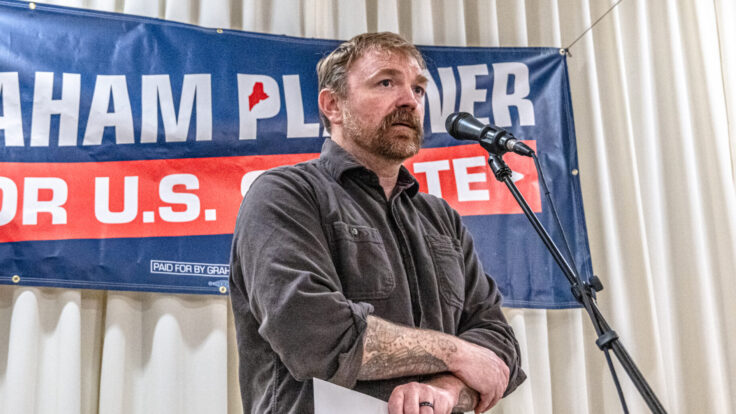
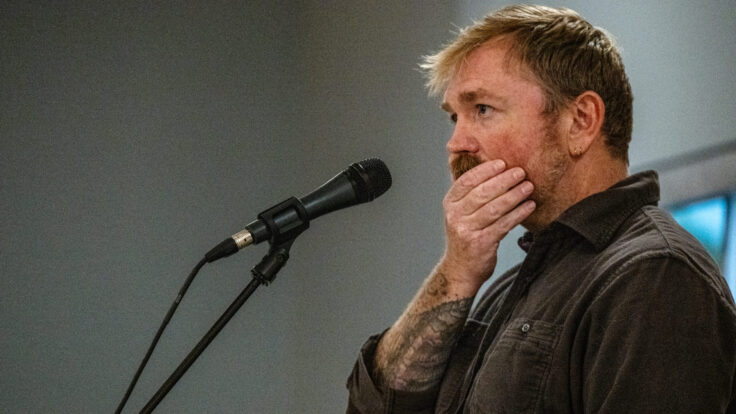
strategy: Graham Platner is advertising only in Maine, and North Carolina’s Roy Cooper and Ohio’s Sherrod Brown are also keeping ad targeting close to home. All three states are top Democratic pickup opportunities. Only Texas’s James Talarico is raising money from Google-targeted donors across the country.
Ossoff continues to deny that he’s considering a presidential run. “I am not running for
president in 2028. I have no interest in running for president in 2028. I am laser-focused on the Senate race in Georgia,” he told CNN’s Manu Raju this week. But lots of people wish he would. The New York Times’s Michelle Goldberg wrote a piece titled “Why Everyone Wants Jon Ossoff to Run for President,” and Ezra Klein, the Democratic establishment’s go-to pundit/thought leader, called him a “cross-ideological 2028 dark horse.” Even
far-left podcaster Hasan Piker has called him one of his top picks. If or when Ossoff changes his mind, the donor base that he’s cultivating will come in handy.
|
- Boulder-dash:
Sen. Michael Bennet’s loss in Colorado’s Democratic gubernatorial primary is having major ripple effects on the Hill. After all, if Bennet had won his primary, and the subsequent general election, he would’ve been able to appoint someone to fill his vacant Senate seat. And there had been a lot of chatter over the past several months that Reps. Joe Neguse, a member of Democratic leadership, and Jason Crow, who holds a leadership position
at the D.C.C.C., were quietly vying for the job.
It’s a very real possibility that Bennet won’t seek reelection in 2028. He has become increasingly frustrated with the ineffectiveness and performative nature of Congress. Plus, he’s severely weakened after Tuesday’s loss. If there is an open Senate seat, Crow and Neguse are obvious potential candidates. Regardless, both have options: Neguse is well-liked in the conference and could run for a more prominent leadership position, and Crow,
who has taken on a lot of party fundraising responsibilities, could be a candidate for D-trip chair. Stay tuned.
|
|
|
|
And now, a little more on Bennet and the socialist reshuffling in Colorado… |
|
|
|
Michael Bennet, Diana DeGette, and the Democratic old guard all learned the same painful
lesson on Tuesday: Voters want fighters, and they’re ready to punish any incumbent exhibiting a whiff of complacency. |
|
|
|
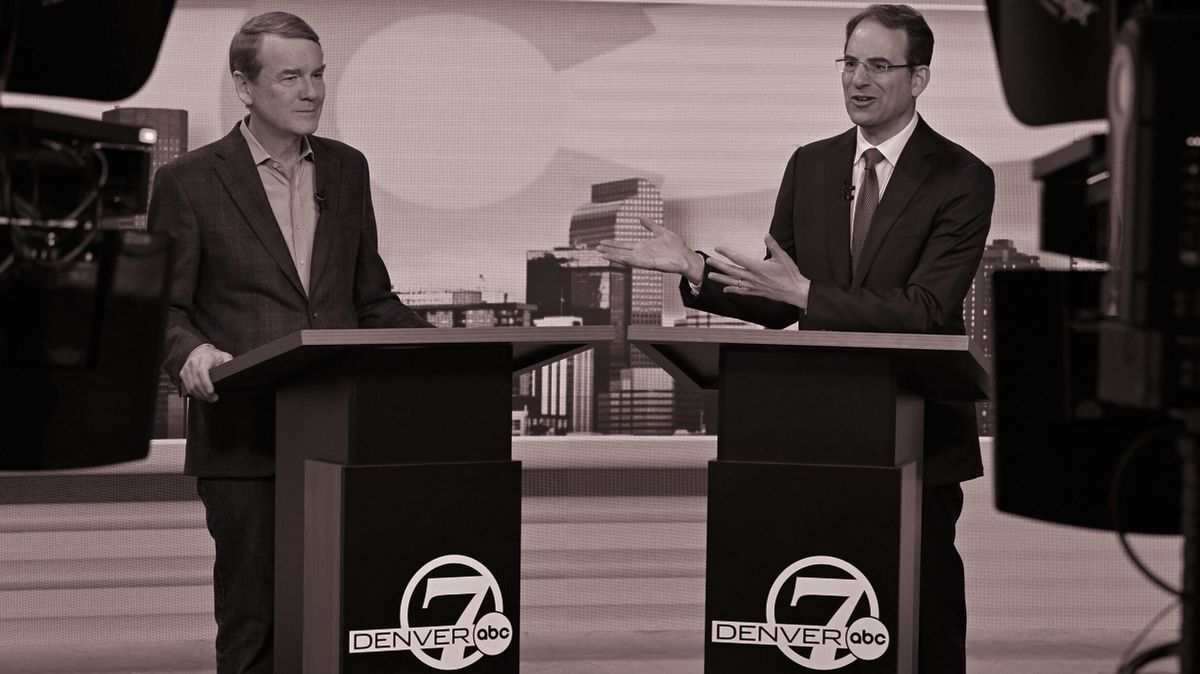
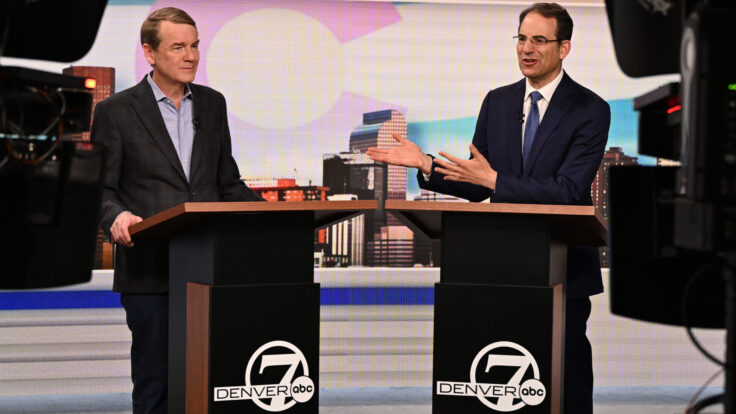
In a debate in Fort Collins just a few weeks ago, Sen. Michael Bennet
unwittingly disclosed why he was on his way to losing his Democratic primary campaign for governor in Colorado, which he did on Tuesday night by a shocking margin. “I blame Trump for all kinds of things, but getting elected is not one of the things I blame him for,” Bennet said. “I blame the national Democratic Party for losing to Donald Trump.”
Bennet—duh!—happens to be the embodiment of the national Democratic Party that failed to stop Trump’s march
back into office in 2024. A well-heeled neolib who is generally well-liked in both Denver and Washington, Bennet was appointed to the Senate in 2009 and won three more elections, interrupted briefly by a failed run for president in 2020. His run for governor this year was supposed to be a cakewalk—but Democratic voters demonstrated once again, Tuesday in Colorado, that they’re done writing blank checks to establishment figures in their party who don’t appear to be putting in the
work.
Bennet’s opponent, Colorado Attorney General Phil Weiser, blew the 17-year incumbent senator away in Tuesday’s primary, winning by more than 10 points, with votes still being tallied. Through the race, Weiser filleted Bennet for voting to confirm several of Trump’s appointees and taking money from billionaires (albeit liberal ones like Edythe Broad and Steve Mandel). Weiser—a liberal, but no one’s idea of a D.S.A. leftist—went on
offense, highlighting his many lawsuits against Trump but also his legal work on behalf of the little guy, suing predatory landlords, drug companies, tech behemoths, and big banks. A snippet from one of his ads: “I’ll always stand up to bullies, especially Donald Trump. Congress isn’t doing it, but I am.”
Weiser’s victory, though, doesn’t align easily with the narrative that many on the left are championing during this year’s primaries: that indignant Democrats are dumping do-nothing
corporate centrists in favor of younger progressives and, in some cases, Bernie-inspired democratic socialists. “The left is trying to claim certain victories, but this race defies easy narrative,” one consultant who worked on Weiser’s race told me. “Phil is a sober-minded, normal progressive who is a relentless worker and ran an excellent campaign on every measure against a candidate who got in late and had no message. He went after Bennet on an important question: What have
you been doing in Washington, rather than just being in Washington?”
Across the state on Tuesday, in primaries shaped by different issues and personalities, voters in Colorado were sending a larger message to the Democratic Party that transcended the usual left-vs.-center fights that have divided the party in past years. They’re angry, they want fighters, and they want change. The candidates
who grab that mantle—D.S.A., normie Dem, anyone with a pulse and a canvassing packet who seems fresh—are suddenly the odds-on favorites. “I hear from Democrats in Colorado who are fed up with half-measures and excuses for why Democrats haven’t delivered on their promises,” said Kyle Clark, the veteran Denver political journalist and anchor at KUSA. “If they’re going to lose, they want someone who will go down swinging. They don’t want to hear why this or that policy isn’t
achievable. They don’t want to have to ride their elected leaders like a rented mule. They want proven fighters they know will go hard without being prodded to do it. It’s not about ideology for many voters I talk to. It’s about demanding action and results.” |
Rocky
Mountain High Stakes
|
Much of the national attention on Colorado this week had focused on the 1st congressional district in Denver,
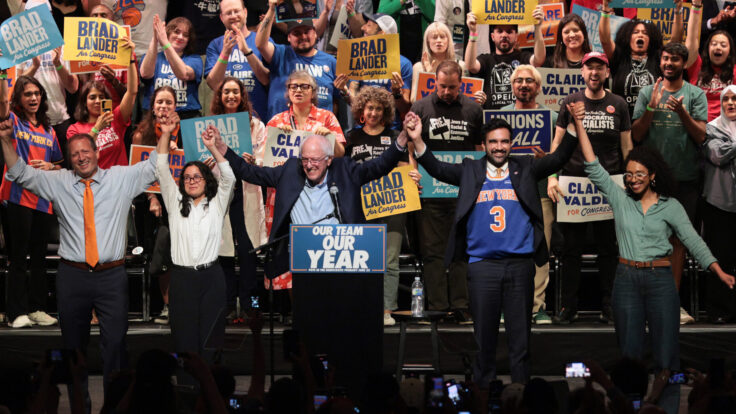
where the D.S.A./Justice Dem/Bernie-backed Melat Kiros, a 29-year-old former Sidley Austin associate who was canned from the firm in 2023 after publishing an open letter attacking Israel, had been surging against 15-term incumbent Diana DeGette in the deep blue Denver-area seat. After New York’s stunning primaries last week—in which three Zohran Mamdani–backed leftists claimed victory in House primaries against Hakeem
Jeffries–backed Democrats—the race was a test of socialist organizing power beyond Brooklyn and Queens.
Kiros delivered—outhustling DeGette with youthful passion, support from outside progressive groups, and a consistent message on affordability and blocking arms shipments to Israel. Her victory proved, once again, that the D.S.A. left has fully arrived as a viable alternative to traditional Dem politics—at least in the nation’s bluer House districts, especially ones populated by
younger people who rent—a trend to watch with competitive primaries on the horizon in Michigan, Wisconsin, Minnesota, and Massachusetts. The emboldened populist left will now have another attention-grabbing voice in Congress next year. Notably, Kiros is vowing not to support Jeffries for leader. After she won, Darializa Avila Chevalier, the lightning-rod socialist who won her primary in New York’s 13th district last week, tweeted: “DC ISN’T READY FOR WHAT’S COMING!!”
Like
Chevalier, who won against aging and out-of-touch incumbent Rep. Adriano Espaillat, Kiros seized momentum simply by jumping into the race without asking permission, giving frustrated voters an outlet at just the right time. DeGette—elected in 1996—hadn’t done much to cultivate her reputation in the district for years despite reaching the higher ranks of House leadership in Washington. While other ambitious Dems in Denver were just waiting for DeGette to retire, Kiros announced
her campaign and got there first.
Said the consultant who worked on Weiser’s race: “You have to be fighting and you have to be super attentive. Most of the old people who have been getting knocked off in their races just realized too late that they had a problem.” DeGette was one of them. So was Bennet. But Bennet’s colleague in the Senate, John Hickenlooper, worked his primary hard despite being 74 years old and facing a younger challenger to his left. Hickenlooper—a
former Denver mayor and brewpub owner with a knack for retail—never assumed his race was a gimme and was frequently spotted mingling with voters on the campaign trail. Hickenlooper is now on pace to win by more than 10 points.
After Kiros won, she told reporters that DeGette’s growing distance from her own district—real or imagined—was a huge factor in the race. “It shows that that seat was taken for granted. It shows that there was some complacency there,” Kiros said. “In a moment right
now when everything is in crisis, we deserve to have someone who is paying attention, who is steady at the wheel and is actually fighting for the people.” |
Colorado’s & Coloradon’ts
|
In Colorado’s primaries, identifying with the far left wasn’t a prerequisite for victory. Being seen as a
fighter was. In the attorney general’s race, Jena Griswold—the state secretary of state and a vocal opponent of Trump’s assault on voting rights—won her primary against multiple opponents, including a workers’ rights attorney who allied himself with Sanders and ran against oligarchy and corporate power.
In the Democratic race in Colorado’s 8th district—one of the most competitive swing seats in the country—voters also showed they were hungry for change and new
energy, no D.S.A. membership card required. The nominee, a young Latino state legislator named Manny Rutinel, won not by running to the left but by aggressively pivoting to the center throughout his campaign, abandoning past support for Medicare for All and opposition to fracking. He has even denounced his own veganism. The 8th district, which runs north of Denver, has a robust agricultural base. Rutinel, though, was once a PETA activist who said that “animal agriculture is a
horrific, exploitative industry.” But now he’s pro-meat. During the campaign, in a KUSA debate hosted by Clark, Rutinel said, “It’s important for me to be able to enjoy the delicious products that Colorado ranchers make.”
The flip-flops may be chum in a battleground seat against vulnerable Republican incumbent Gabe Evans. But for Democratic voters in a heavily Latino district, Rutinel ably positioned himself as the anti-Trump candidate, seizing on votes taken in the state
legislature by his opponent, avowed moderate Shannon Bird, that were seen as capitulating to ICE. The 31-year-old Rutinel also embraced straight-to-camera vertical video to get his message out on social media. Maybe he was a young man in a hurry, but it didn’t matter. He defeated Bird with ease.
Rutinel also happens to be an alumnus of Run for Something, the Democratic group founded by Amanda Litman that recruits and trains young progressives to run for
office up and down the ballot. When I asked Litman what Colorado’s results signaled on Tuesday, she told me that “the old guard of the Democratic Party, both literally and figuratively, doesn’t seem to realize how angry voters are with the status quo—and in particular, doesn’t realize that the ‘status quo’ includes them.” Litman told me that insurgent wins across the country aren’t just about ideology, though certain issues can read as a proxy for bold leadership or pugilism against
incumbent-style incrementalism. “It’s about whether or not voters see our leaders as having the stomach and skills to fight, and the willingness to offer an answer for what might be possible if things didn’t suck,” Litman said. “Some of that is ideology, some of that is age, some of that is style—all of it is fueled by the same feelings of rage and betrayal.” |
|
|
|
Puck fashion correspondent Lauren Sherman and a rotating cast of industry insiders take you deep behind the scenes of this
multitrillion-dollar biz, from creative director switcheroos to M&A drama, D.T.C. downfalls, and magazine mishaps. Fashion People is an extension of Line Sheet, Lauren’s private email for Puck, where she tracks what’s happening beyond the press releases in fashion, beauty, and media. New episodes publish every Tuesday and Friday. |
|
|
|
Unique and privileged insight into the private conversations taking place inside boardrooms and corner offices up and down Wall
Street, relayed by best-selling author, journalist, and former M&A senior banker William D. Cohan. |
|
|
|
Need help? Review our
FAQ page or contact us for assistance. For brand partnerships, email ads@puck.news.
You received this email because you signed up to receive emails from Puck, or as part of your Puck account associated with {{customer.email}}. To stop receiving this newsletter and/or manage all your email preferences, click here.
|
Puck is published by Heat Media LLC. 107 Greenwich St., New York, NY 10006 |
|
|
|
|