 |
| Welcome back to The Varsity, my twice-weekly private email on the front-office deals and the executive suite rumors percolating throughout the sports business. While I’m coming to you today from my hometown of Washington, D.C., I am petitioning the Puck suzerains to move our Mid-Atlantic HQ to Camden Yards… at least for a week.
Thanks for all the nice notes about the latest episode of The Varsity podcast with Gary Bettman, the dean of pro sports commissioners, which posted on Sunday. Bettman went deep on the NHL’s media strategy, from the Rogers deal and the new Amazon package to the league’s broader R.S.N. journey. (A little more on our chat below…) Business Insider’s Peter Kafka, one of the deans of the media reporting cottage industry, is my guest on Wednesday.
Quickly, I want to alert you to a new feature in The Varsity: The Brady Meter. Every Monday through the Super Bowl, which airs on Fox this year, I’ll be reviewing the performance of America’s most famous quarterback-turned-broadcaster, the $375 million man. Herewith… |
| The Brady Meter: Week 4
Bucs 33-Eagles 16
Grade: B- |
|
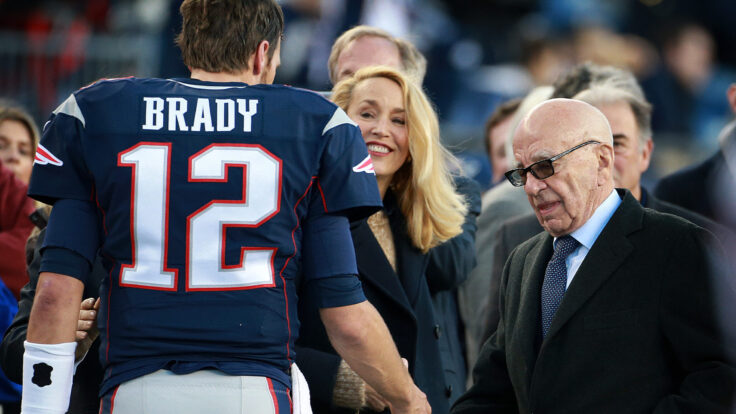
| This was a homecoming of sorts for Tom Brady, who won a Super Bowl in his first season with the Bucs—the ultimate revenge fantasy enacted upon his old coach Bill Belichick, now a fellow rookie broadcaster. In his new life in the booth, Brady has been criticized for his high-octave voice and comfort with elongated pauses. Given Brady’s familiarity with a number of players still on the current Tampa Bay roster, this matchup seemed destined to be his sharpest performance.From the outset, Brady demonstrated the underdog effort that he is known for. He dangled the never-before-revealed, diary-like list of pros and cons that he had composed during his 2020 free agency—revealing, in the process, that he was close to signing with the Bears. (I’m sure Mike Wilbon fainted when he learned that news.) Indeed, as is often the case with rookie broadcasters, Brady was at his best on Sunday when he was talking about himself. The highlight of the afternoon was probably his diplomatic commentary in response to Baker Mayfield’s veiled jabs about his menacing competitiveness sapping the Bucs locker room of its joie de vivre. One can only hope that the candor previewed Brady’s increasing comfort telling audiences what he really thinks about the guys on the field.
Otherwise, little stood out about his in-game analysis. Not great; not terrible for the $37.5-million-a-year man. The game, of course, became a rout—a scenario in which truly great broadcasters separate themselves from the rest, but not this time. Brady will have another homecoming next weekend when he calls the Cardinals-49ers matchup in Santa Clara. (Brady was born in San Mateo.) The Fox execs apparently picked that contest over another potential boomerang moment—the Dolphins versus the Patriots in Foxborough. |
|
|
- NFL’s ratings red flags: Through the first three games this season, some red flags have emerged in the NFL’s top market. The Giants and the Jets, the two teams in the league’s largest TV market, posted year-over-year local ratings drop-offs of 21 percent and 30 percent, respectively. Yes, the Jets had better slots last year, but no Aaron Rodgers (minus four snaps). While NFL executives are always focused on the performance of the New York teams, the expectation is that the numbers will bounce if Rodgers stays healthy and the team remains competitive. The Giants ratings drop-off is more concerning since its Week 3 game last season was a matchup on Prime Video, which generally equates to smaller-than-usual local TV numbers. Also, the team looks like it’s headed for a rebuild—the coach, GM, and quarterback all seem to be competing for their jobs.On the bright side, the Texans’ fast start seems to have galvanized the Houston market. Ratings for Texans games in the Houston DMA are up an astounding 49 percent through three games this season, primarily due to its Sunday night win against the Bears in Week 2.
- MLB fans rejoice: My text chains blew up today with friends who were overjoyed by Major League Baseball’s decision to shelve those terrible All-Star Game jerseys in favor of having players wear their primary home and road uniforms. But there was another part of MLB’s announcement that I found even more interesting: Nike’s new uniforms—you know, the thinner fabric, smaller lettering and, of course, the see-through pants—are going away. Reps from MLB, the MLBPA, Nike, and Fanatics pushed these changes through within the past week, less than two weeks after Nike C.E.O. John Donahoe was defenestrated.Ironically, MLB is going back to the uniform style from two years ago, when official apparel was produced by Majestic and Fanatics. It’s unlikely that Nike, which holds MLB uniform rights through 2029, will attempt such wholesale changes again.
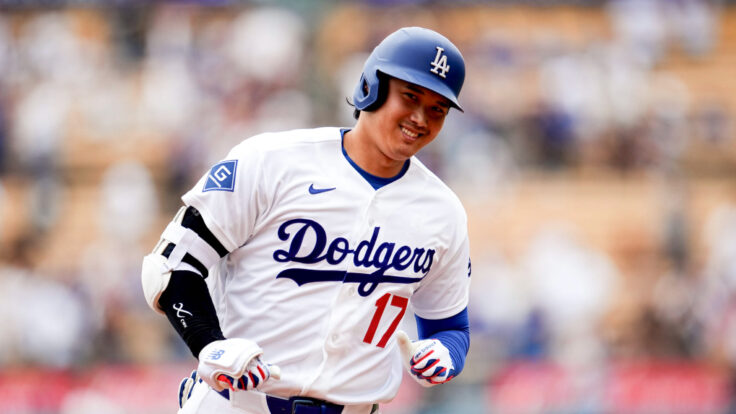
- Baseball’s youth serum: Unlike the NBA or even the NFL, baseball is always accused of suffering from generational ennui—being an old guy’s fixation, like cable news and bass fishing. That could be changing. Rob Manfred, to his credit, has tried to fix this with rule changes to shorten the game and a streaming-friendly media strategy. Later this week, MLB will report significant increases in attendance, TV viewership, and digital streaming for this season—gains that league officials believe would have never occurred without the pitch clock, extra-inning rules, pick-off limits, etcetera. (A crop of generational talents, like Ohtani and Judge, doesn’t hurt, either.) The average game time has now dropped to two hours and 36 minutes—the shortest since Ronald Reagan occupied the White House.Perhaps more importantly, the sport enjoyed a lot more success finding younger fans on TV, where every network posted a double-digit jump in the 18-34 demo: ESPN (+12 percent), Fox (+10 percent), FS1 (+24 percent), and MLB Network (+13 percent). Even MLB.TV set a viewership record with 14.4 billion minutes watched. Really, it seems like only a matter of time until we get those robot umps.
- The Kaepernick Files: Spike Lee, Colin Kaepernick, and Jemele Hill could be looking for a new platform to air their seven-part documentary series on the former 49ers QB, Da Saga of Colin Kaepernick. As my Puck partner Matt Belloni reported, ESPN chairman Jimmy Pitaro said the network-cum-streamer didn’t have the space to run the much-delayed series for at least another year.That may be because the docuseries morphed into a sprawling, politically charged commentary—precisely the sort of project ESPN leaned into a couple of years ago but seems unlikely to countenance these days. “I’m told it’s full of incendiary critiques of conservative politicians and Donald Trump, who urged the NFL to fire players who kneeled in protest during the national anthem back in 2017,” Matt wrote. “In fact, I’m told many of the disputes between Lee and Kaepernick have centered on the filmmaker’s attempt to expand the canvas of the series far beyond the former 49ers star, who was shadow-banned by the NFL. … So now the question is: Will this actually air on ESPN? Netflix? Somewhere else?” Subscribe to Matt’s private email, What I’m Hearing, for regular news breaks and unmatched analysis of the entertainment industry.
- WNBA in 60: The WNBA’s breakout year got the 60 Minutes treatment last night with a largely positive report from Jon Wertheim. My ears perked up when talk turned to negotiations for a new labor deal. (The top quote goes to Aliyah Boston, who said, “I love multiple commas” when asked for her perspective on a fair salary.)Wertheim noted that the NBA shares revenues with its players 50-50, which WNBA defensive player of the year, two-time Olympic gold medalist, and WNBPA union leader Napheesa Collier said was a goal. “We’re not asking for the same salaries as the NBA,” she said. “What we’re looking for is rev shares. They’re making that because of rev shares. And so that’s what we’re wanting. That’s how we close that gap.”
|
 |
| Stickman |
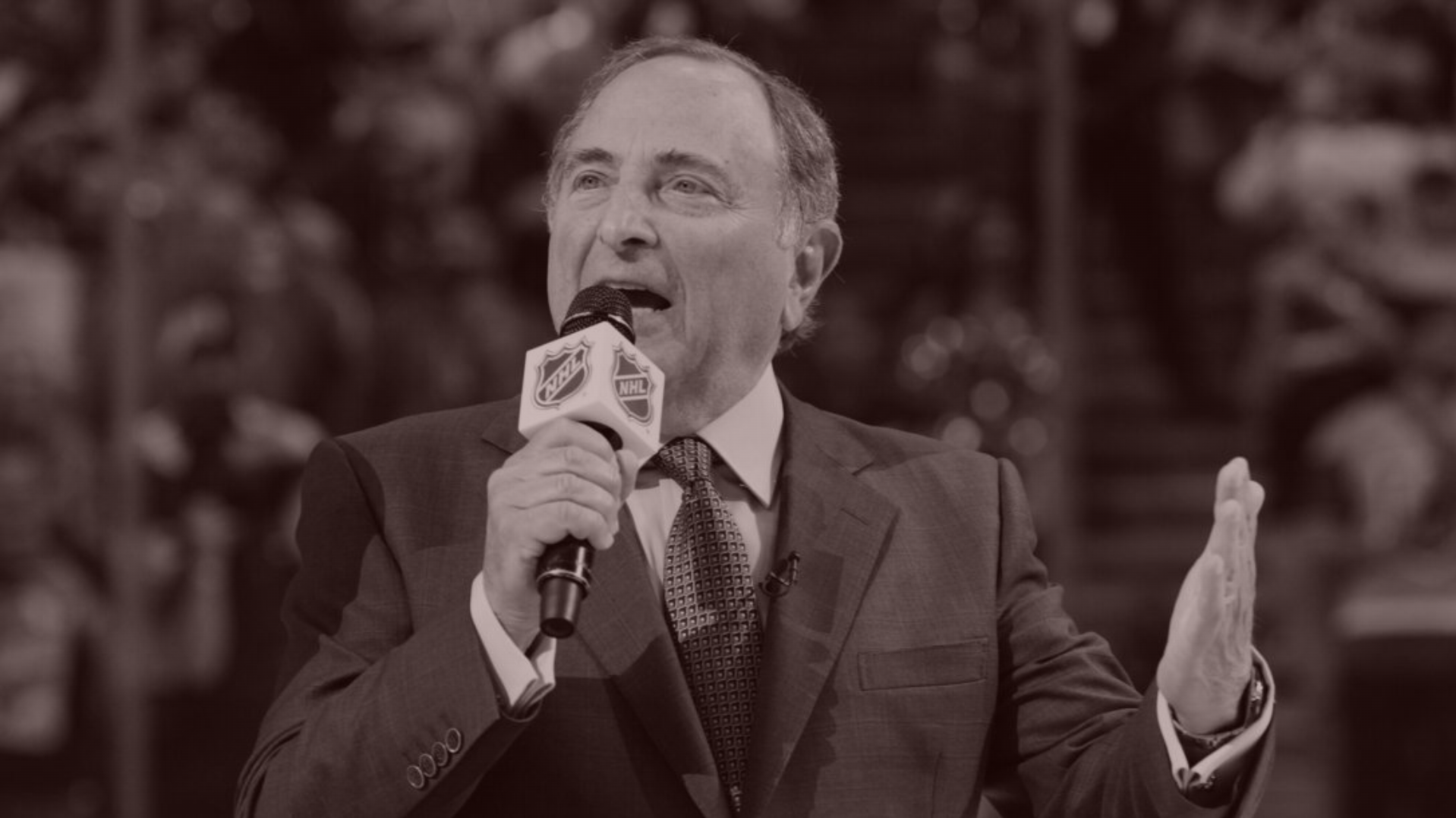
| Gary Bettman, now in his fourth decade running the NHL, has seen it all—labor headaches, expansion, media existentialism, and more. Here, he talks candidly about the league’s distribution strategy, the decaying R.S.N. picture, new markets, and technological changes. Thankfully, he doesn’t make any puck jokes. |
|
|
|
| The regional sports network market hasn’t completely collapsed, but it’s certainly taken on some water. MLB teams, like the Padres and Diamondbacks, left Diamond Sports Group and have seen significant drops in their local TV revenue. NBA commissioner Adam Silver has consistently warned owners of shortfalls in their local media markets. The NHL, however, has a slightly different view of the R.S.N. ecosystem, which has always paid its teams less than franchises from the other major professional leagues. In fact, NHL commissioner Gary Bettman says that some NHL teams that left R.S.N.s are reaping similar rights fees through deals with local broadcast TV stations owned by Scripps and Tegna.It’s just one of many quirks that the NHL, which has national distribution deals with TNT Sports and Disney through 2028, is experiencing these days. Bettman joined me on The Varsity podcast on Sunday and talked in depth about his league’s local media situation, including the hazards of cord-cutting. What follows is a lightly edited transcript of our conversation. |
|
|
| John Ourand: I see a couple of red flags regarding your U.S. media deals, which have a heavy cable component. We all know about cord-cutting and how distribution for cable is falling. In 2028, when your new media deal will be available, who knows how many homes the NHL will reach. How do you deal with the changing market?Gary Bettman: It’s about maximizing your distribution. Yes, there is a cable component to the Turner networks, but at the end of the day, they carry lots of prime programming, including the Final Four. And we have a strong presence with The Walt Disney Company on ABC. So it’s going to be a mix. The good news is as long as our partners have the reach, how you distribute and what platforms you use aren’t as important as making sure that you’re being widely distributed.
The other red flag is with the R.S.N. business, which is collapsing before our eyes. What is the league’s strategy as it pertains to local rights?
We’re in an evolutionary period. Over time, you’re going to see a tendency toward more widespread national distribution. But our teams locally are, market-by-market, reinventing how they’re connecting with their fans. Some are going direct-to-consumer streaming and others are going over the air. That’s had interesting implications, because there are a couple of instances where the clubs that are going over the air are getting as much viewership as they were getting from the R.S.N.s, and that viewership is increasing dramatically.
This is more about making sure the games are getting distributed in the short term, and seeing how everything evolves. That probably means more streaming, and that the streaming companies will become an increasing factor. The model is going to change over the next few years as consumption patterns change.
It sounds like you’re saying that the idea of exclusivity is going out the window—that you can stream a local game, you can also watch it on an R.S.N., mobile, over-the-air, etcetera.
A number of the arrangements have games over the air and games streamed at the same time. That’s why I think the model is going to evolve. From our standpoint, making sure we have maximum distribution so fans can easily connect with our games is critical. The business model will flow from that. For the long term, I’m not concerned.
Let’s talk about Diamond Sports. Baseball has taken the position that it just wants to get its rights back. The NBA and NHL seem to be much more willing to work with the company. What’s your strategy with Diamond Sports?
All of our clubs continue to review their local-market options, and we’re working closely with them on that. For some clubs, it makes sense to stay with Diamond for some period of time. We’re helping them do that. And for the clubs that want out, because they have better alternatives, we’re helping them do that, as well.
The collapse of the R.S.N. market means less local TV revenue for teams. Is that a message that you’re giving your clubs as well?
The answer is maybe. I’ve got a couple of clubs that are going over the air, and they’re getting just as much money as they were getting from Diamond and their viewership has increased five- or six-fold. There may be a slight adjustment period, but if more people are viewing because broadcasts are more accessible, I’m not sure you’re going to see a revenue decline. |
|
|
| On the blame game in Oakland: “John Fisher gets a worse rap than he deserves. Oakland lost three teams in five years. Dysfunctional government between the city and county. They could have kept the A’s for the next two years, but instead lost to Sacramento. They play hard ball with no chips and just bluff and lose. Lots more blame there.” —A former financial executiveOn the other side of the argument: “As someone who grew up in Oakland and enjoyed the years of the A’s greatness, there is unfortunately no term to describe how awful Fisher is and what a disappointment he is to such an amazing and storied family that purchased the team solely to help the people of Oakland. Sad that the MLB has permitted such callousness.” —A frustrated Varsity subscriber
On baseball’s wild-card schedule: “Nothing says ‘baseball playoffs’ like an Astros game at 2:32 p.m. on a Tuesday! But, hey, Philly and New York get to stay up until 1 a.m. watching.” —-A sleep-deprived Varsity subscriber and Astros die-hard
On John Malone’s view that the streaming giants will eventually eat up all of the sports rights: “Any thoughts about how the Sports Broadcasting Act does or doesn’t limit the ability for the NFL to move to full streaming after the current deals expire? To that point, any thoughts on if there is a number of games that the NFL can exclusively stream before someone invokes the SBA?” —A Varsity reader who misses the cable bundle
On the DirecTV-Dish deal: “DirecTV buying Dish for one dollar (plus debt) is all you need to know about the broken content-distribution model: If DirecTV thinks they need 20 million customers to have leverage for their content deals, where does that leave all the independent operators? Fucked, that’s where…” —A cable guy
On Puck’s thesaurus: “Gotta disagree with you—there’s no way Dylan didn’t pick up ‘defenestrate’ from Bill Cohan (the silver haired Wall Street statesman-type that he is, or maybe that’s the Cicero you mean?).” —An eagle-eyed Varsity subscriber
On Marchand’s latest antics: “My lack of sports media knowledge led me to think Marchand was an imaginary Conan-Andy Richter-esque character that you created as a bit. Now that I understand he is a real person, at The Athletic no less, could you explain the joke?” —A confused Varsity subscriber
[Ed. note: When you have to explain jokes…]
Cancel my subscription!: “You totally whiffed on the Fox Friday story. You never mentioned that Fox had a huge hole to fill by losing WWE on Fridays or that by running live events, the Fox O&Os aren’t rated by Nielsen for their 10 p.m. newscasts, which would seriously affect ad revenue. You’ll soon be replaced by an A.I. chatbot that can regurgitate other people’s stories.” —A mildly unsatisfied customer
[Ed note: Will someone please tell Marchand to stop emailing me!] |
|
|
| Talk to you Thursday,
John |
|
|
|
| FOUR STORIES WE’RE TALKING ABOUT |
 |
| Hoda’s Pay Cut |
| Inside Hoda Kotb’s departure from NBC’s ‘Today’ show. |
| DYLAN BYERS |
|
 |
|
 |
|
 |
| Final Days of FTX |
| Digging into the latest gruesome FTX financial autopsy. |
| WILLIAM D. COHAN |
|
|
|
|
|
 |
|
|
| Need help? Review our FAQs
page or contact
us for assistance. For brand partnerships, email ads@puck.news. |
| You received this email because you signed up to receive emails from Puck, or as part of your Puck account associated with . To stop receiving this newsletter and/or manage all your email preferences, click here. |
| Puck is published by Heat Media LLC. 227 W 17th St New York, NY 10011. |
|
|
|