 |
|
Welcome back to The Best & The Brightest. I’m Abby Livingston, filling in for Julia Ioffe while she’s on vacation.
In tonight’s issue, a close look at why, even though many Democrats are publicly (and privately) chewing their fingernails over Biden’s electoral prospects, there’s also plenty of quiet optimism surging through the party.
🎧 If you missed it, my colleagues Tara Palmeri and Peter Hamby reunited on The Powers That Be to discuss all the pre-debate campaign chatter ahead of the Trump-Biden showdown on CNN. And on Monday, Jon Kelly and Peter broke down the self-inflicted wreckage at The Washington Post. Meanwhile, on the latest episode of Tara’s essential election podcast, Somebody’s Gotta Win, she phoned up Dylan Byers to talk about the conservative media proxy war over Trump’s V.P. pick.
🎟️ Programming note: On July 10 in D.C., Peter will moderate an exclusive, data-driven panel discussion in partnership with Echelon Insights, focused on voter trends leading up to the November election. Peter will be joined onstage by Kristen Soltis Anderson from Echelon Insights, Margie Omero from GBAO, and Nancy LeaMond from AARP. Puck subscribers can click here to secure a spot on the guest list. Otherwise, subscribe to Puck by clicking here and email Fritz@puck.news for registration information.
Before jumping in, a short dispatch from Eriq Gardner…
- A D.C. arbitration twist: Hollywood may not have invented arbitration, but the film and TV industry came close to perfecting it. So it’s no small irony that streamers are contending with a single law firm that has weaponized mass arbitration against them. Washington, D.C.-based Keller Postman has launched tens of thousands of arbitration cases against streamers like AMC+ and MLB.TV, alleging improper disclosure of users’ viewing data to Facebook. But so far, the validity of the claims under the Video Privacy Protection Act is taking a back seat to the burden these cases are imposing, since major forums like JAMS and AAA demand hefty up-front fees for each case. As a result, the streamers are forced to choose between a settlement or massive legal costs.
While the entertainment industry is not alone in screaming about this racket, the counterattack has been something to behold. Around the time David Zaslav rebranded HBO Max to Max, for instance, many viewers unwittingly consented to revised terms that shifted disputes to a newer forum, NAM, which offers the grouping of claims and the deferral of fees. Warner Bros. Discovery just launched a court bid to push Keller Postman clients to NAM. Fox’s Tubi has taken an even more confrontational approach, suing Keller Postman itself for tortiously interfering with its relationship with users. Think about that the next time you sign up to a streamer…
|
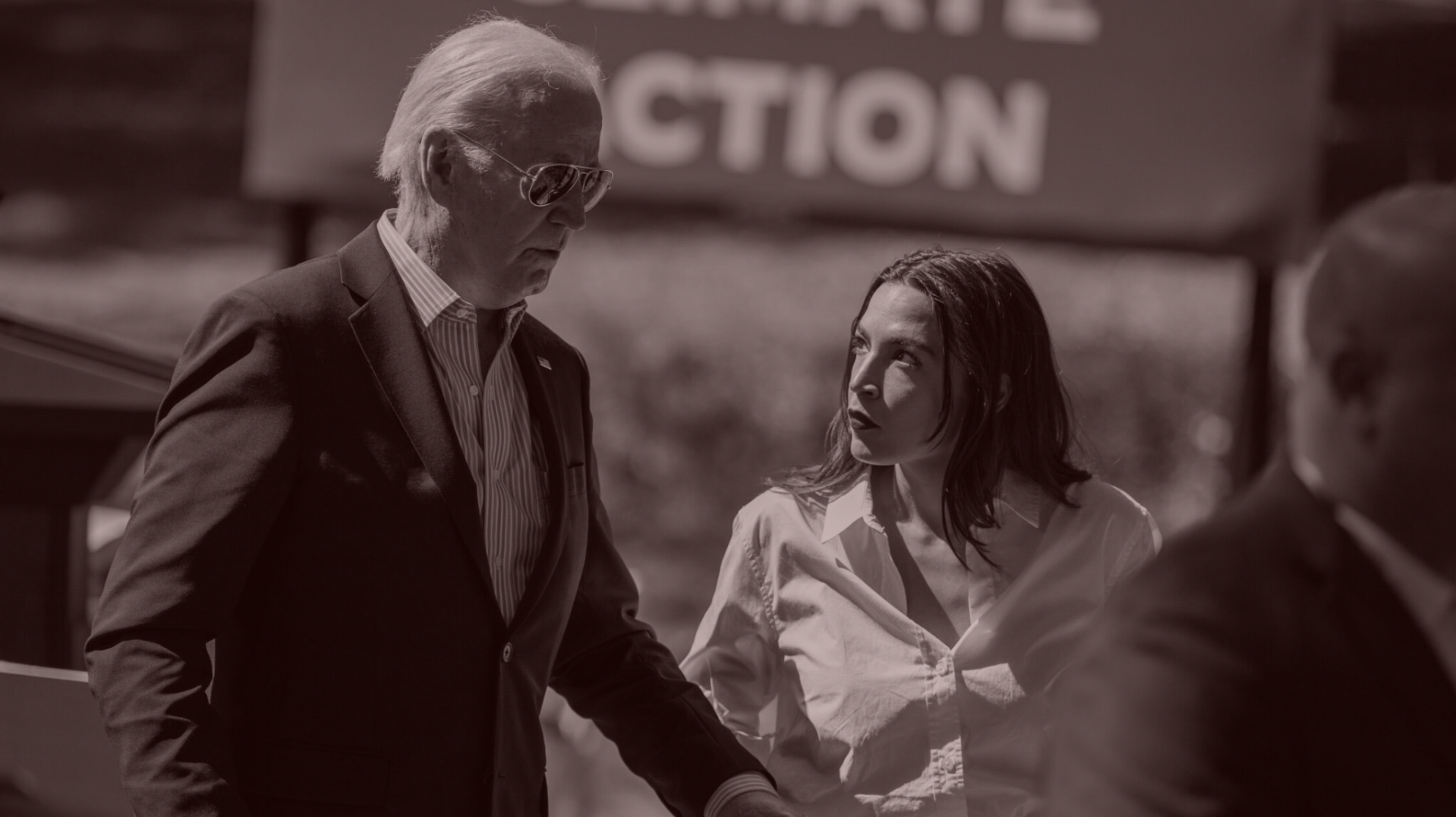 |
| Biden’s Little Buddies |
| Bed-wetters or altruists, down-ballot Democrats are going out of their way to help the president, and seemingly without asking for anything in return, at least for now. |
|
|
|
| The tendency of the collective liberal mind, as my partner John Heilemann noted recently, is to lurch toward pessimism and doomsday proclamations. This has been true for a generation, from the freak-out over Barack Obama’s underwhelming 2012 debate performance to Robby Mook’s “don’t panic” memo in 2016, but it rings particularly true in the Biden era. For the better part of his presidency, after all, Biden has endured a cacophony of stories recounting the Democratic operative class’s fears over his physical fitness to be president, his concerning poll numbers, or his Trump strategy.
You know the drill: Every two weeks or so, bands of Democrats go on deep background with a litany of complaints, some of them legit and others merely performative bed-wetting. Cable news and Twitter pick it up, and for days the coverage centers on the party’s lack of confidence in the president and his team.
In some cases, the intent is pure—to sound an alarm or catalyze an operational pivot or an important debate about Newsom or Whitmer or whatever. But these monologues and jeremiads can easily become distractions or worse, especially as the conventions and general election beckon. “If this is the most important election, talking about it is not the most helpful thing,” one Democratic consultant told me. “Doing something is helpful. People need to take a much closer look at what’s going on out there.”
Over the course of the spring, as Biden’s polling has ticked up, I’ve had regular conversations with Democratic consultants, campaign staffers at all levels of the party, lobbyists, and current and former members of Congress. What most of them describe, especially since Biden’s successful State of the Union address and Trump’s conviction, is improved morale. “I’m feeling very good about winning the House and better than I did about Biden,” a Democratic member of Congress told me. Multiple sources tell me they’re seeing similar data in their private polling. It’s all consistent with what Biden campaign chair Jen O’Malley Dillon told Heilemann earlier this week: The Democrats are increasingly confident in polling and their six-in-six strategy of focusing on 6 percent of the vote in six key states.
In short, the Democratic sources I spoke with were worried but calm. They know Biden is old, voters aren’t enthusiastic, and that the Israel-Gaza War might cost him Michigan. They also understand the stakes: “People are letting the fact that Joe Biden isn’t further ahead affect their view and analysis,” the Democratic consultant said. “I think the prospect of Joe Biden losing is so devastating to people that this is the way they react.”
The ghosts of the past two presidential cycles haunt every Democrat in politics—the polling that looked better than the results, the narrower-than-expected margins for Biden in several swing states, Hillary’s loss in 2016, etcetera. But they’re keeping their heads down, rowing as fast as they can toward Election Day, and taking their beta blockers. “If we got anxious over every single poll, we would die of heart failure,” as one down-ballot Democratic staffer put it. |
|
|
| Over the past two months, Trump and the Republicans smoked Biden and the Democrats in fundraising, and they’ll probably post another strong month in June with a helpful boost from Trump’s May 30 conviction. But Biden and his team have been deploying money strategically and aggressively, and they’ve leveraged their initial fundraising lead to reserve ads in key media markets at early-bird rates. As of today, Ad Impact estimates that Biden’s team has reserved $154 million in future ads, while Trump’s team has booked only $57 million. Of course, the money race is complicated by Trump’s legal fees—and the fact that he might not need as much money as Biden to make his case, given his unique celebrity. Meanwhile, Democrats need the ad time to re-prosecute Trump and his record.
But the recent fundraising numbers belie a profound shift that is taking place among the Democratic rank-and-file. In normal times, down-ballot officeholders are loath to prioritize anything beyond their own immediate interests. Even acts of generosity, like campaign-to-campaign donations, are typically transactional quid pro quos that come with the expectation of reciprocal support down the road. This time around, politicians are helping each other with no obvious personal benefit.
To wit: New York Senator Kirsten Gillibrand isn’t facing any viable contender for a third full term, but is nonetheless running up her statewide margin as high as possible to provide coattails for down-ballot Democrats in House races, which could eventually determine control of the chamber. In the House itself, Alexandria Ocasio-Cortez, a fierce critic of the Democratic Congressional Campaign Committee, made a point of paying her committee dues for the first time a few months ago. (Each party asks members to pony up hundreds of thousands of campaign dollars to help with the TV ads.) On the other end of the Democratic spectrum, retiring member and 2025 Virginia gubernatorial candidate Abigail Spanberger paid her D.C.C.C. dues despite the fact that outgoing members are usually let off the hook.
Meanwhile, Senate Democrats are going to war over a historically unfriendly map. Montana’s Jon Tester and Ohio’s Sherrod Brown are still in the hunt, even though their states are not competitive in the presidential contest, and Jacky Rosen and Bob Casey are outrunning Biden in Nevada and Pennsylvania, respectively. While Trump recently made some noise about competing for Virginia and Minnesota, Spanberger is already in statewide campaign mode for her gubernatorial race, and Amy Klobuchar, who’s on the ballot this year, is not the kind of politician to rest on her laurels just because because she’s coasted to reelection every term since her initial 2006 win.
Sure, none of this may directly affect the presidential campaign. But at the very least, the collective thrust reveals a sense of urgency among Democrats, who are leveraging their political capital to help the party in ways that transcend their personal ambitions. |
|
|
| Democratic operatives love to debate the concept of reverse coattails, or the notion that down-ballot candidates can help Biden get over the line in some states. But many insiders have also expressed reassurance at the lack of quality down-ballot Republican statewide candidates—specifically Kari Lake in Arizona and Mark Robinson in North Carolina. In her interview with Heilemann, O’Malley Dillon said the quiet part out loud: The Biden campaign is going hard for North Carolina, considered fool’s gold for Democrats in most cycles, largely because of the weaknesses of Robinson.
Of course, compared with years past, there are numerous factors at play this cycle that have made polling especially challenging. Sure, it’s always been difficult to predict who will turn out to vote for Trump, but it’s just as hard to predict the kind of boost Democrats will get from the Supreme Court’s Dobbs decision. And this is the first election where these forces will clash. Polling has always been an art and a science—but this cycle has required more of the former. That said, it’s generally in Democrats’ favor to have the party running scared. “Sometimes, I think it’s a good thing for Democrats to get a kick in the pants,” the Democratic down-ballot staffer told me. But the scale and frequency of this chatter has some pro-Biden people anxious, as it risks demoralizing volunteers across the country who aren’t familiar with the tradition of infighting-via-background-quote.
But what stood out most in my conversations with smart Democrats was a surprising sense of agnosticism regarding the election. Polling feels unstable, social media is challenging to manipulate and, yes, devolves by the hour, and this race features two of the most unpopular presumptive nominees anyone can remember. As a House and Senate Democratic consultant put it to me, “Each party has nominated someone who gives the other side a chance to win.” |
|
|
|
| FOUR STORIES WE’RE TALKING ABOUT |
 |
| Wintour World |
| A front-row dispatch from Vogue World in Paris. |
| LAUREN SHERMAN |
|
 |
|
 |
|
 |
|
|
|

|
 |
|
|
|
Need help? Review our FAQs
page or contact
us for assistance. For brand partnerships, email ads@puck.news.
|
|
You received this email because you signed up to receive emails from Puck, or as part of your Puck account associated with . To stop receiving this newsletter and/or manage all your email preferences, click here.
|
|
Puck is published by Heat Media LLC. 227 W 17th St New York, NY 10011.
|
|
|
|