Hi, and welcome back to Line Sheet. It’s getting hot out there. I’m jealous of everyone in Sun
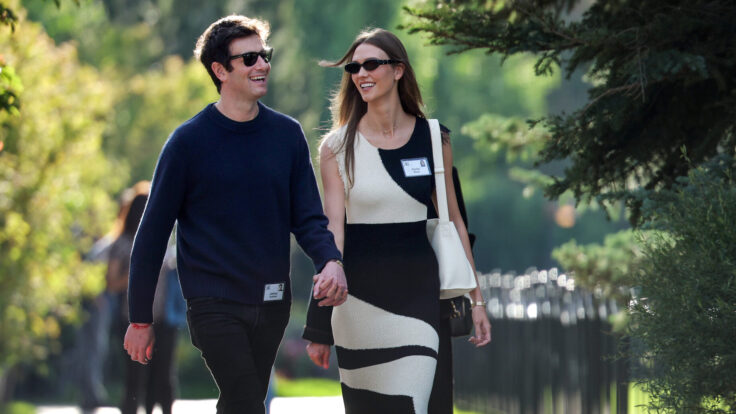
Valley this week and can’t wait for the fit pics. Fashion-adjacent people on the attendee list include Alexandre Arnault, Jeff Bezos, Karlie Kloss, Michael Kives (he’s adjacent to everyone), Ken Griffin, Mark Zuckerberg, François-Henri Pinault, Diane von Furstenberg, and plenty I didn’t clock, I’m sure. No Stacey Bendet this year, it seems!
Away’s Jen Rubio is going to have to take the reins from the Alice + Olivia co-founder when it comes to wearing walking-up-to-the-lodge outfits that the Getty photographers can’t ignore, even if they’re not yet exactly sure of who you are. Please don’t disappoint us, Jen!
Today was Chanel Day—fashion’s fairy tale, literally and figuratively, complete with a Vanessa Paradis concert. The night before, I ate a baked potato at Caviar Kaspia to celebrate the
fifth anniversary of Style Not Com.
Tonight, I stopped by Lauren Santo Domingo’s cocktail for her friend Derek Blasberg, who just released Fast + Louche, a limited-edition hardcover of essays and images from his Interview magazine column. (The book was published by Just an Idea, Colette founder Sarah Andelman’s imprint.) Anyway,
Beka and Derek couldn’t be more different, but they’ve both played important roles in documenting the fashion industry over the past several years and they’re both dogged in their commitment. It takes all kinds.
In today’s issue, you’ll find my report from this morning’s show, plus a little more on Jody Quon’s T magazine appointment and what Gucci’s new licensing deal with L’Oréal means for Kering. Plus, for the main event,
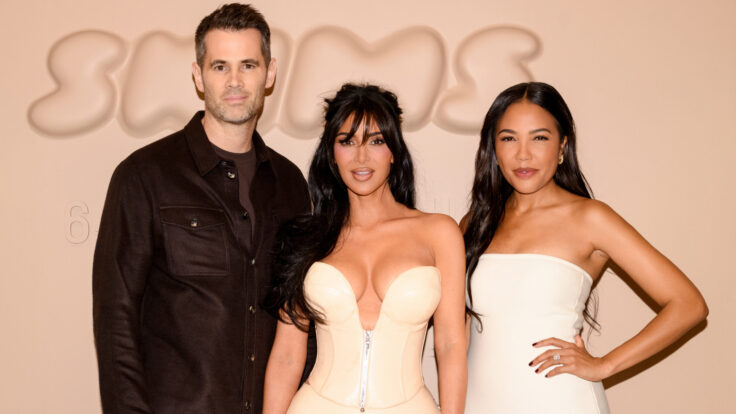
Malique “Malique@puck.news” Morris is back with a look at Blackstone’s disastrous undertaking of Spanx, the shapewear giant that has been seriously undercut by the rise of Skims.
Also mentioned in this issue: Jeanne Jackson, Simone Biles, Dakota Johnson, Hailey Bieber, Victoria’s
Secret, Mindy Kaling, Richard Scarry, Cody Plofker, Birkenstock, Dolly Parton, Sara Blakely, Jones Road, Adam Selman, Salma Hayek, Hulu, Benicio Del Toro, Pamela Anderson, Tommy Ton, Cricket Whitton, Vuori, Sarah Bonello, Marie Sheehy, Chelsea Parke Goles,
Hillary Super, and more. |
Three Things You Should
Know…
|
- When
you wish upon a Chanel bag: Chanel has been undeniably Disneyfied by Matthieu Blazy. In less than a year in the role, he has managed to bring fantasy, delight, and pure desire back to commerce, reducing the best and biggest fashion brand in the world to its purest form. Simplifying is never actually simple, though, and Blazy’s team has been in expansion mode as he manages unprecedented growth. Employees say it feels as though there are new people every Monday
morning, though I am sure that’s at least a slight exaggeration. (Then again, sales in certain categories may triple in 2026, I hear.)
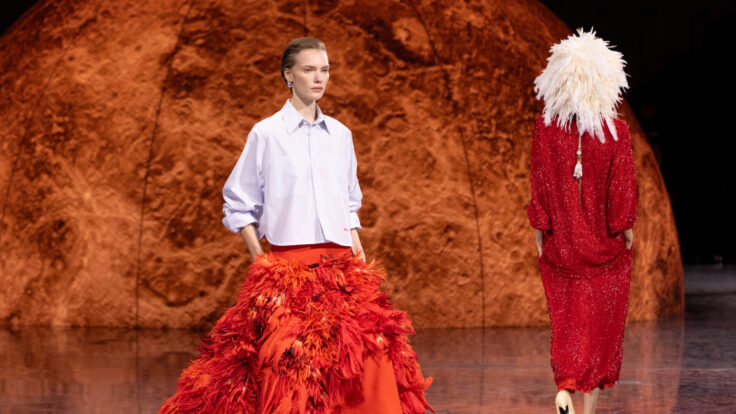
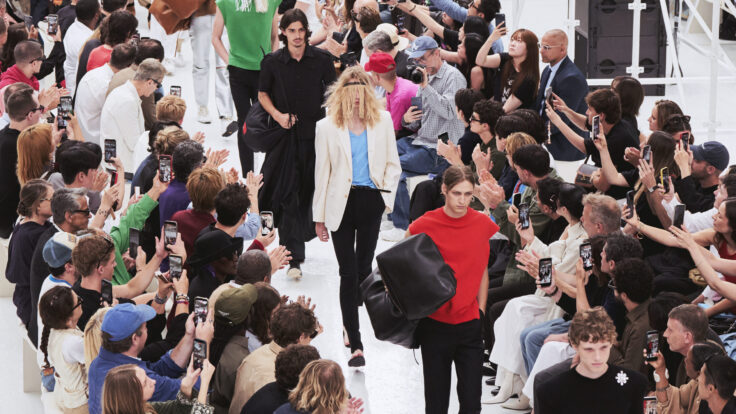
One key to Blazy’s success has been his determination to maintain a level of unselfconsciousness. His ideas are often borderline childlike, even when their execution is incredibly complex. For his second Couture season, shown this morning at the Grand Palais, Blazy’s inspiration was literal fairy tales. Guests entered what felt like a pop-up
storybook, with giant flowers and trees springing up from the pages. (Remember, children’s literature isn’t new for him; he collaborated with the Richard Scarry estate at Bottega Veneta.)
The runway was populated by princesses of all sorts, too. I always look at his models’ hair. This season, many of the wavy mops were cut to bobs, which made me think I should perhaps do the same. And of course, the music: romantic and uncool and lovable as always. (The Lord of the
Rings soundtrack faded into a woman narrating her day—hardly a fairy tale!—which faded to “Kiss Me” by Sixpence None the Richer, which, finally, gave us Dolly Parton’s “The Bargain Store.”)
In the clothes, we found both familiarity and newness. Buttons made of woodland creatures that appear in fairy tales you read as a child. Jack’s beanstalk. The ugly duckling and also a swan. A black revenge dress to rule them all. A wedding gown thrown into the middle of the show
instead of the end. People go on about the texture and complexity in the looks, but it’s also about the color: Blazy has a great sense of it, and he knows when to introduce something like lavender into the conversation. The mania around Blazy’s Chanel has come with an obvious fear: that we will someday grow tired of it, that the trendiness of the shoes and bags will turn the way they did for Alessandro at Gucci. But that’s not giving Blazy, or Chanel, enough credit. Bags and
shoe shapes come and go, but the incredible lightness and ease of Blazy’s wares—combined with the patience, determination, and passion of the Chanel executives—give me confidence that this story will have a happy ending.
|
|
|
|
A MESSAGE FROM OUR SPONSOR |
The duty-free era is over. The EU ended its de minimis exemption July 1, the US did in 2025, and the UK is next. In the
US and EU, every parcel now carries duties - and in the EU, liability sits with you, not your customer. Swap's new report breaks down what changed in each market. Inside: |
• Why de minimis ended and what it means for your margins • How customs liability is shifting from customer to merchant • What DDP vs. DDU means for cart abandonment and returns • How to recalculate landed costs before the EU's November data rules |
|
|
|
- What
people are thinking, and saying, about Jody Quon: Yesterday, New York Times executive editor Joe Kahn and deputy managing editor Sam Dolnick officially announced that Quon would be joining T magazine as its editor-in-chief. In all, I’d say that advertisers seem interested and excited for her arrival. T and WSJ. magazine still do the job of targeting rich, old, luxury consumers, but they’ve been waning in cultural
relevance. Many fashion insiders already know Quon, and they universally respect her work. (There was also widespread love for T editor-at-large Nick Haramis, the leading internal candidate, for what it’s worth.)
Normally, the appointment of a new creative leader leads to personnel overhaul, but the Times is more of a Severance-style union shop and Hanya Yanagihara announced her departure a while ago. But Yanagihara built a
top-heavy team, with lots of seniority. I suspect some people will leave of their own accord when they realize their jobs are going to change; surely Quon has a clear opinion of photo director Nadia Vellam, with whom she overlapped briefly at W magazine. I wonder if Patrick Li, the longtime creative director who also runs his own agency, will stick around. More to come, I’m sure. - Luca’s 50-year Gucci beauty
bet: I don’t think people on the fashion side of luxury understand the scale of Chanel’s and Dior’s beauty businesses. It’s hard to fathom how many tubes of mascara are sold every year. Same goes for Yves Saint Laurent Beauté, which is a great business for Kering that’s managed by L’Oréal. It’s not surprising, then, that Kering has just entered a 50-year beauty agreement with L’Oréal to take over the Gucci license from Coty, which will receive $400 million in cash in exchange for ending the
agreement a year early.
Fifty years is a long time! And Gucci is a massive, global name that lacks a significant beauty presence. Bumping it up a year indicates Kering C.E.O. Luca de Meo’s urgency to get things moving. Our beauty guru, Rachel Strugatz, insists it was smart for de Meo to abandon Kering’s owned beauty aspirations and link up more fully with L’Oréal instead. Maybe so, but in the long run, owning the beauty division is better. But I’m sure de
Meo felt like he didn’t have a choice.
|
And now, here’s Malique with the skinny on Spanx… |
|
|
|
Five years into Spanx’s life under private equity rule, its early highs have fizzled, its
lunch has been eaten by Skims, and its owners have to be looking for a next chapter. So where does it go from here? |
|
|
|
Last weekend, I binged the new Mindy Kaling–created Gen Z workplace comedy, Not Suitable
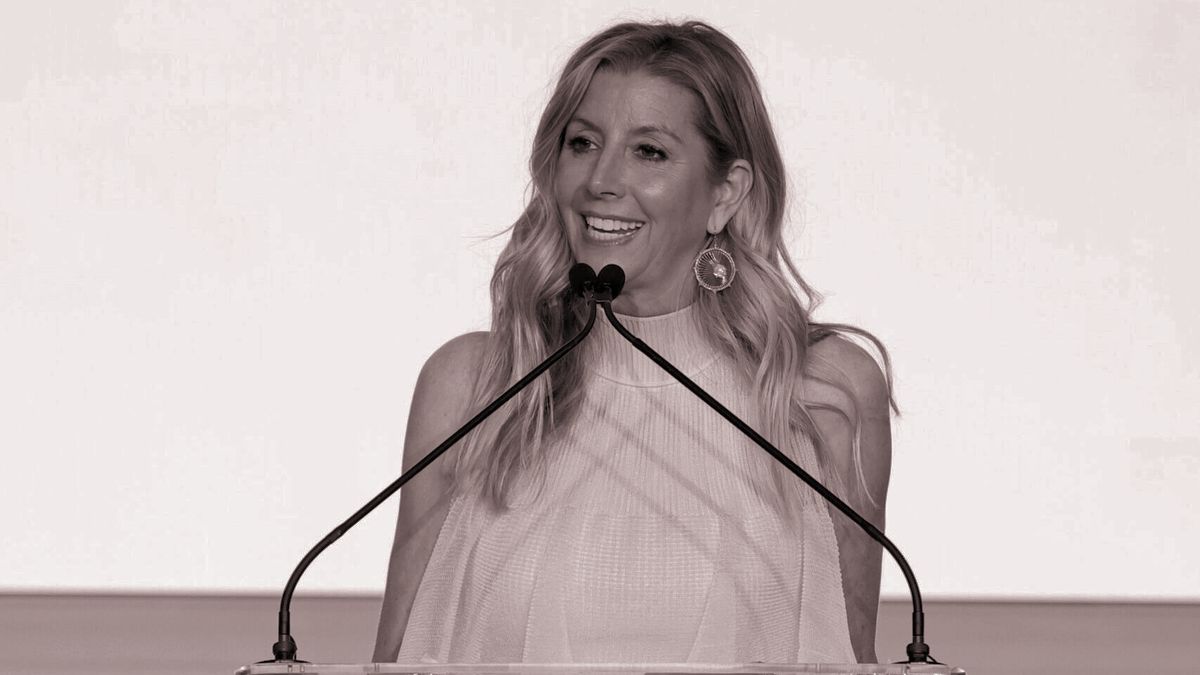
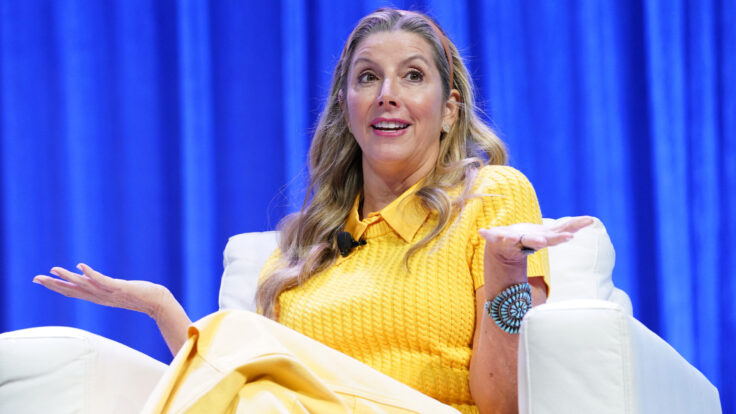
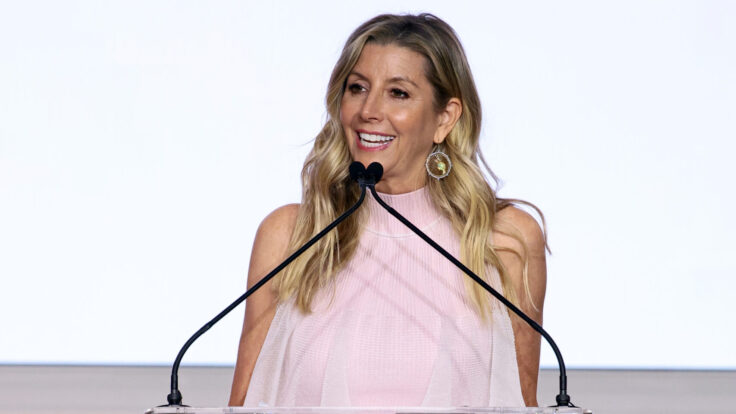
for Work, on a whim. (Don’t judge.) In one scene, an enterprising first-year investment bank analyst badly wants in on a deal fronted by Sara Blakely, the real-life founder of Spanx who, in the show, is seeking to acquire an intimates company for $50 million. The surprise cameo reminded me that it’s been a full generation since Blakely founded Spanx with $5,000 and a proto-girlboss outlook that often saw her hawking the creation—a footless control-top
pantyhose that sculpts the body and doesn’t bulk—to department stores, herself. Pretty quickly, Spanx became the national metonym for modern shapewear and made Blakely a billionaire by the age of 41.
But her Hulu role was a bit of Hollywood revisionism: While Blakely still has a seat on the board, she hasn’t been active at Spanx since selling a majority stake to private equity titan Blackstone for $1.2 billion in 2021. The show’s M&A premise was even shakier: In today’s deal market, Spanx
is more likely to be acquired than to sit on the buy side. The company has already been sold once, and its performance hasn’t lived up to what its parentco paid. |
|
|
|
A MESSAGE FROM OUR SPONSOR |
The duty-free era is over. The EU ended its de minimis exemption July 1, the US did in 2025, and the UK is next. In the
US and EU, every parcel now carries duties - and in the EU, liability sits with you, not your customer. Swap's new report breaks down what changed in each market. Inside: |
• Why de minimis ended and what it means for your margins • How customs liability is shifting from customer to merchant • What DDP vs. DDU means for cart abandonment and returns • How to recalculate landed costs before the EU's November data rules |
|
|
|
At the time of the Blackstone deal, Spanx was generating around $400 million in annual sales, with $80
million in EBITDA, I’m told—meaning Blackstone paid around 15 times Spanx’s annual profits. At the time, though, the company was facing near-existential-level competition from Skims, the Kardashian-fronted shapewear brand that sold inclusivity and offered innovative size and shade ranges.
In the face of that threat, Spanx sought to expand its market. Over the past few years, it expanded its range of sporty apparel, which now includes denim, leggings, track jackets, and
dresses in stretch material, and beefed up its online business. According to sources, Spanx’s EBITDA jumped meaningfully, to as much as $100 million during the year after acquisition. (Spanx didn’t respond to a request for comment. Blackstone declined to comment.)
But as Skims has become the new shapewear goliath, Spanx hasn’t effectively defended its turf. Last November, for example, Skims raised $225 million at a $5 billion valuation, representing a 25 percent increase from its previous
2023 capital raise. I’m told the company is on pace to generate north of $1.3 billion in annual sales this year. Spanx is likely still in the mid- to low-nine-figure range after two decades. The brand’s U.S. sales, excluding wholesale, have declined more than 10 percent for the past three quarters, according to credit and debit card data from Consumer Edge. I’ve also heard that EBITDA has come back down to $80 million or lower.
Spanx’s troubles are reflected at the top. As I
reported last week, the brand’s C.E.O., Cricket Whitton, who joined the company in 2017 as chief growth and digital officer and was promoted to the top job in 2024, exited sometime last year. The departure was never announced externally. Jeanne Jackson, a former Nike exec who replaced Blakely as executive chair in 2024, ostensibly to
assist Whitton, left in February. Their successors remain unclear. |
Last October, following Whitton’s departure, an advisor came in to present a new direction for the company,
according to sources. This person gave a company-wide presentation that laid bare Spanx’s quagmire. To wit: While its online store targeted Gen Z and young Millennials, its brand name and products still appealed to the 40-plus-year-olds who grew up with the company.
The presentation made clear that Spanx isn’t as easily fixable as, say, the currently revamped Victoria’s Secret. After all, Victoria’s Secret had been the sector leader for a generation—C.E.O. Hillary Super
and chief creative officer Adam Selman understood that they simply needed to remind people why the company had gotten so big in the first place. “They basically went back to what they were. They sell sex,” said a plugged-in investor. “I don’t think Spanx has that same dynamic.”
Indeed, Spanx has fallen far behind Skims in the cultural conversation, and little about its recent strategy suggests it knows how to close the gap. There were no famous faces in
its February swimwear campaign. By contrast, Skims hired Hailey Bieber for a June campaign to promote a straightforward collection of cotton underwear. “Skims is such a powerful brand, and it speaks to younger consumers,” the investor added. “That’s just tough to market against.”
Spanx has also drifted away from the category that made it indispensable. Under Whitton, the brand prioritized digital commerce and expanded aggressively into apparel. Category extension is often
good for a brand’s evolution, but only when the new products feel distinctive—unfortunately, Spanx’s assortment does not. Its bestselling $128 half-zip pullovers and $158 waist-shaping stretch denim are even blander than the $78 flesh-tone compression shorts that people aren’t meant to see. Instead of dominating the category it once owned, Spanx now competes with everyone selling stretchy clothes at lower prices, from Amazon to Quince. The same Tencel jumpsuit that Spanx offers for $148, Quince
is practically giving away for $60. |
|
|
|
For Blackstone, a Spanx turnaround is a prerequisite to any successful exit. Even if the firm wanted to sell
Spanx tomorrow—to another private buyer or to a licensing firm specializing in distressed assets—or take it public, the company would almost certainly have to swallow a much lower valuation. Some of that reflects the broader market. Investors are still squeamish about apparel brands, save for a few standouts like Skims and Vuori.
But these Blackstone guys aren’t fools, and they also happen to be killers, as transformative decabillion-dollar deals from Hilton to GLP’s industrial assets
have proved. (No, the latter is not a weight-loss drug, philistines…) Hell, they’re even taking Jersey Mike’s public right now. They’ll find the right leadership, transform the product suite, and recalibrate the company in a very different marketplace. By then, though, no one will remember Blakely. |
Net-a-Porter is facing yet another warehouse strike as its pay dispute with workers drags on.
[GMB]
Congrats to WME comms pro Marie Sheehy, who just got a big promotion. We respect Marie! She is also a secret fashion person. [Deadline]
François-Henri Pinault
and Salma Hayek snagged Pamela Anderson—still enjoying one of the biggest image overhauls ever—alongside Dakota Johnson, Simone Biles, and Benicio Del Toro to co-host their Caring for Women nonprofit gala–cum–New York Fashion Week kickoff dinner this year. [Inbox]
Tommy Ton has a new gig as visual director for Sarah Bonello’s The Park, which sells
$350 micro-Tencel bodysuits and $550 semi-sheer lyocell dresses for well-turned-out cosmopolitan women to wear under their Chanel. He’ll shoot all the brand’s campaigns and weigh in on all aspects of its visual strategy. Maybe Ton can bring the brand, which is planning to triple sales this year, closer to the center of the conversation—or, at the very least, minimize any confusion with influencer Chelsea Parke Goles’s logoed sweatshirt brand, Parke. [Inbox]
Birkenstock
and Repetto, two of the most important shoe brands in the world, are collaborating. They don’t look great. [WWD]
Valentino is so deep in debt that it’s issuing a €450 million bond note to pay it off. Kering and Mayhoola are on the hook for as much as €250 million in equity funding if things go awry.
[Bloomberg]
Jones Road’s C.E.O., Cody Plofker, was surprisingly candid about bearing the weight of a high-growth startup, and his own
limitations as a leader, in his note announcing his decision to step down from the brand that he’s helped become a $200 million-a-year business. (He’ll remain a board member.) [LinkedIn] |
Until tomorrow,
Lauren
P.S.: We use affiliate links because we are a business. We may make
a couple bucks off them. |
|
|
|
Need help? Review our
FAQ page or contact us for assistance. For brand partnerships, email ads@puck.news.
You received this email because you signed up to receive emails from Puck, or as part of your Puck account associated with {{customer.email}}. To stop receiving this newsletter and/or manage all your email preferences, click here. |
Puck is published by Heat Media LLC. 107 Greenwich St., New York, NY 10006 |
|
|
|
|