{{ 'now' | timezone: 'America/New_York' | date: '%b %d, %Y' }} |
|
|
|
Greetings from Los Angeles, and welcome back to In the Room. I’m told that NBCU News
Group chairman Cesar Conde, Goldman Sachs president John Waldron, and Elle editor-in-chief Nina García are renting out the Polo Bar for a big party the Thursday before the World Cup final. Let me know if you score an invite!
On a more somber note, rest in peace to Clive
Davis. I’m sure many of you have stories about the legendary music executive. I’d love to hear them.
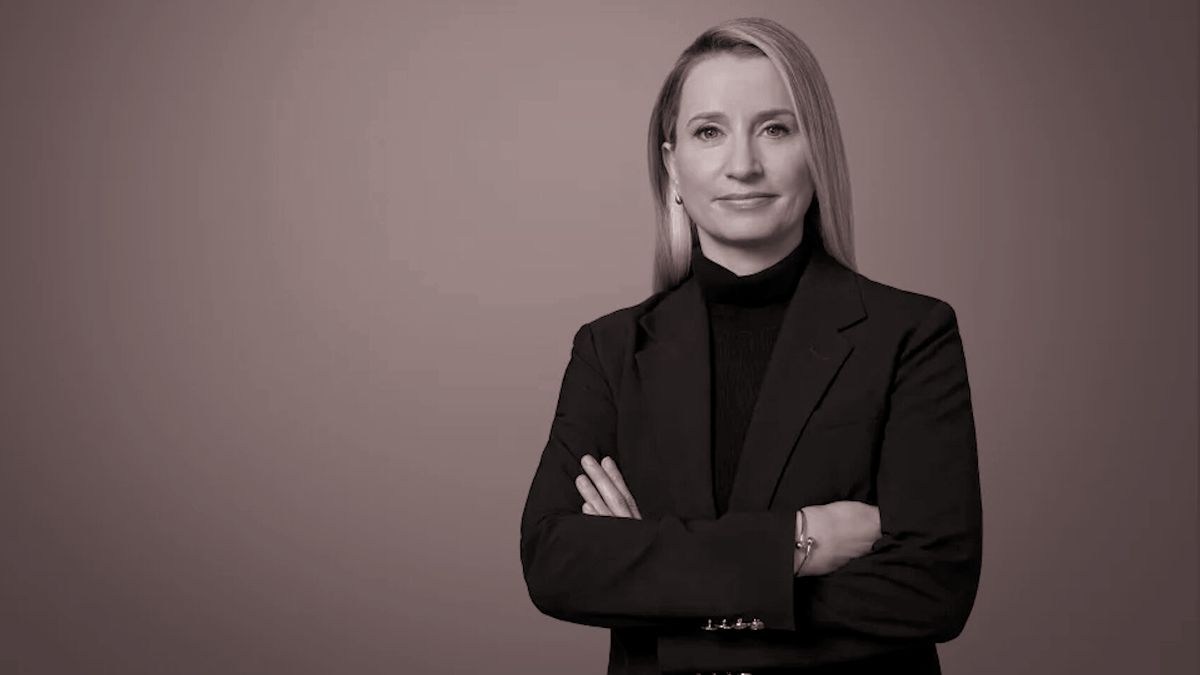
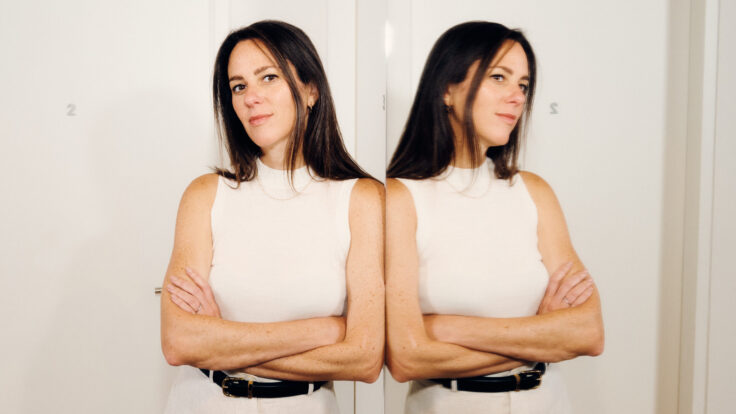
In tonight’s email, a fresh look at Alex MacCallum, the CNN chief operating officer and digital guru who is now seen as one of the most significant figures in the network’s impending tie-up with CBS News. No, Alex won’t run the combined networks, but all available testimony suggests that its digital ambitions are likely to rest on her
shoulders.
🎙️ Plus, on tomorrow’s episode of The Grill Room, Lulu Cheng Meservey, the disruptive Silicon Valley communications guru and founder of Rostra, joins me to make her controversial case that traditional media and P.R. are dead and that founders are better off talking directly to their audiences than waiting for others to tell their story. Follow The Grill Room on
Apple, Spotify, or wherever you prefer to listen.
Also mentioned in this issue: Alex Hardiman, Alexi
Lalas, Anderson Cooper, Andrew Morse, Bari Weiss, Brendan Carr, Chris Licht, David Ellison, David Zaslav, George Cheeks, George Stephanopoulos, Howard Stern, Jason Kilar, Jeff Zucker, Josh D’Amaro, Mark Thompson, Tom Cibrowski,
Virginia Moseley, Will Lewis, and many more. |
- Instagram TV: Meta sottocapo Adam Mosseri appears to have bought into the idea that creators and audiences want to consume more content from the couch. Earlier today, Instagram started testing horizontal video on its living-room app, Instagram for TV, and preparing experiments around longer-form storytelling, episodic creator programming, and even live TV–style experiences—a play to compete in the CTV space and try to carve off some share from
YouTube. The move is timed to Instagram for TV’s launch on Samsung smart TVs, which expands its distribution beyond Amazon Fire and Google TV.
- A Getty surge: Getty Images saw its stock pop by as much as 145 percent on Monday after it announced a new licensing deal with OpenAI. The deal will allow OpenAI to feature Getty Images in ChatGPT—a notable surrender for a company that was once so opposed to OpenAI that it attempted to launch its own
A.I.-powered image generator. But you can understand the incentives: Getty stock had been down 55 percent for the year before this deal, per Bloomberg.
- Whoopi vs. the F.C.C.: Disney is leveraging the power of The View in its fight against Brendan Carr’s Federal Communications Commission. As you’ll recall, ABC has accused the F.C.C. of violating its free-speech rights by trying to punish The View for hosting
political speech that the administration disagrees with. On Monday, ABC began airing ads during The View to encourage its notably passionate audience of some 2.5 million to write to the F.C.C. in protest of its investigation. “The View has welcomed your favorite guests and covered the issues you care about for nearly 30 years,” the spot reads. “Now, the F.C.C. wants to control who is allowed to appear on the show.” The spot then gives viewers a Q.R. code that sends them to the
F.C.C. website, where they can lodge their protest. It’s an admirable flex by Disney’s still-new C.E.O., Josh D’Amaro, especially after his predecessor paid $16 million to settle Trump’s specious defamation suit against George Stephanopoulos.
- And finally…: I can’t recall any on-air talent getting so thoroughly filleted by the culture as Alexi Lalas, who has been widely ridiculed as a
ham-fisted take artist during this World Cup. The Guardian’s Aaron Timms, who has suggested that Lalas “would absolutely dominate karaoke night at a conference on infrastructure finance,” may have dealt the most devastating blow.
|
|
|
|
Amid all the Sturm und Drang at CNN as it shifts under the purview of the
Ellisons, everyone inside the WarnerMount mothership seems to agree on one thing: Alex MacCallum, the C.O.O. of CNN, may be the one person with a vision for how to drag the global news network into the future. |
|
|
|
In May, Paramount convened the top executives at CBS News and CNN for an inaugural videoconference
ahead of their impending integration. During the meeting, which I reported on last week, CNN C.E.O. Mark Thompson, executive editor Virginia Moseley, and chief operating officer and digital product lead Alex MacCallum presented Bari Weiss, CBS News president Tom Cibrowski, and
others at Paramount with the broad outlines of their business. Inevitably, the niceties exchanged on the call masked the underlying anxieties: Not all these leaders will survive the merger, which will centralize backend functions for both newsrooms and create ample targets for David Ellison’s promised synergies.
That said, seemingly everyone left the meeting with unanimous feelings about at least one thing: Alex MacCallum. “Alex is a rock star,” one source
present at the meeting said. “She was incredibly impressive,” said another.
The CBS News–CNN merger is fraught with myriad questions, as you well know: Bari’s mandate across both networks is uncertain; David is still searching for a yet-to-be-determined Cardinal Richelieu–style executive to help her manage the business; many talent contracts will be rewritten (the Anderson Cooper negotiations should be interesting!); and hundreds of jobs will be
cut across the combined company. But what is arguably the most significant position on the org chart may already be filled, which seems to be providing Paramount brass some solace heading into the merger.
Before you text me: No, I haven’t lost the plot. The CNN Digital experience remains clunky and inelegant, there’s scant evidence that the streaming service has gained real traction, and the company has yet to articulate a compelling value proposition for its nascent subscription
business. (As Howard Stern memorably articulated about the short-lived CNN+: Why are people going to pay for what they’re not watching for free?) More importantly, CNN’s brand is a shell of its former self, and the business is on a post-disruption trajectory that will necessitate a drastic rightsizing of the economics and limit the erstwhile ambitions of its CNN+ era.
The most daunting challenge, perhaps, is that too few people inside the building fully understand the
enormity of the stakes or are incentivized to aid in the transformation. The talent may post vertical videos, but many are likely to instruct their agents to extend punitive deals; TV news veterans are managing their own careers as 401(k)s; and, within this culture, there remains a broad inability to think creatively about what CNN can mean or accomplish in a multimodal media ecosystem. Nevertheless, all available testimony suggests that Alex has been diligent and disciplined about
building a scalable platform that will finally allow CNN to capitalize on first-party data. Current and former sources described her as a best-in-class product lead and a “unicorn” in the business, comparable only to her successor at the Times, Alex Hardiman. The problem, to this point, has simply been that she’s been outnumbered by many of her legacy colleagues, even if she has the title and the support of Mark.
Meanwhile, CNN sources see her as the last great
hope for the success of their digital business. “Alex has a full understanding of product, customer lifecycle management, growth marketing, analytics,” one executive who has worked with her said. “What gets lost in all the media discussion about Bari and Mark and so on is that the product is the most important thing.” |
Alex first came to CNN in 2021, when WarnerMedia C.E.O. Jason Kilar gave
Jeff Zucker the greenlight to accelerate the global D.T.C. business. Though CNN had a digital chief in Andrew Morse, Kilar believed that the job required a product thinker with actual experience running such a business. Alex, who had been serving as The New York Times’s digital product officer under Mark, and had the distinction of being the youngest person ever appointed to the paper’s masthead, joined CNN as general manager of
CNN+—which, as you know, would be killed in the crib when David Zaslav took control of the Warner assets in 2022.
Alex decamped to The Washington Post for a year, where she took on the ill-fitting title of chief revenue officer. Miraculously, she managed to escape CNN before the darkest days of the Chris Licht era, then escape the Post just as Will Lewis was coming in.
In early 2024, Mark
lured Alex back to CNN and effectively staked the company’s digital future on her. “Mark has given her the mandate to be able to transform this place,” one high-level CNN source told me. To her credit, she is notoriously shy and press-averse, which has enabled her to keep her name out of the headlines despite being essential to the network’s future. But in the past two years,
she has launched a paywall, a streaming service, and various mobile-native initiatives, as well as a weather app that—while hardly the product that’s going to save CNN’s business—will play a role in its ability to leverage first-party data. Along the way, she’s built a product team with alumni from Amazon, Twitch, the Times, and the old CNN+ (all of whom might conceivably walk with Alex if Paramount can’t keep her).
Last month, Mark promoted her to chief operating officer. Amid
the broader uncertainty surrounding the CBS News–CNN merger, the promotion fueled speculation that Alex herself might be the heir to Mark’s throne and, perhaps, the white knight to shepherd Bari and the two news divisions into the pro forma future. That seems unlikely, since it won’t solve for Bari’s lack of TV experience. Still, the consensus around Alex may point to a different sort of organizational structure for the combined news networks: one in which Bari leads editorial, Alex leads
product, Tom and Virginia run their respective TV fiefdoms (for a while, anyway), and everyone reports up to CBS TV chief George Cheeks. Of course, that would require them all to get along. So long as David and Bari still want this project to succeed, it’s in their best interest to see that they do. |
|
|
|
A professional-grade rundown on the business of sports from John Ourand, the industry’s preeminent journalist,
covering the leagues, players, agencies, media deals, and the egos fueling it all. Plus, the latest intel from Eriq Gardner on the sports legal beat. |
|
|
|
Join Puck’s chief political columnist, John Heilemann, as he roams the corridors of power and influence in America on
this twice-weekly interview show, taking you beyond the headlines with the people who shape our culture: icons and up-and-comers, incumbents and insurgents, moguls and machers in the overlapping worlds of politics, entertainment, tech, business, sports, media, and beyond. The conversations are rich and revealing, unrehearsed and unexpected… and reliably impolitic. A Puck-Audacy joint, new episodes drop every Wednesday and Friday. |
|
|
|
Need help? Review our FAQ page or contact us for assistance. For brand partnerships, email ads@puck.news. You received this email because you
signed up to receive emails from Puck, or as part of your Puck account associated with {{customer.email}}. To stop receiving this newsletter and/or manage all your email preferences, click here. |
Puck is published by Heat Media LLC. 107 Greenwich St., New York, NY 10006 |
|
|
|
|