• Washington
  • Wall Street
  • A.I.
  • Hollywood
  • Media
  • Fashion
  • Sports
  • Art
  • Join Puck Newsletters What is puck? Authors Podcasts Gift Puck Careers Events
  • Join Puck

    Directly Supporting Authors

    A new economic model in which writers are also partners in the business.

    Personalized Subscriptions

    Customize your settings to receive the newsletters you want from the authors you follow.

    Stay in the Know

    Connect directly with Puck talent through email and exclusive events.

  • What is puck? Newsletters Authors Podcasts Events Gift Puck Careers
Happy Wednesday, and welcome back to Dry Powder. The collapse of Silicon Valley Bank, some seven months ago, was shocking in its speed, but also for the way in which the bank’s leadership recklessly disregarded the most obvious financial warning signs. (Even a first year analyst could have told you that interest rates were bound to rise.) In today’s issue, my conversation with a former SVB executive about the “insane” culture that led to its demise.
 ‌ ‌ ‌ ‌ ‌ ‌ ‌ ‌ ‌ ‌ ‌ ‌ ‌ ‌ ‌ ‌ ‌ ‌ ‌  ‌ ‌ ‌ ‌ ‌ ‌ ‌ ‌ ‌ ‌ ‌ ‌ ‌ ‌ ‌ ‌ ‌ ‌ ‌  ‌ ‌ ‌ ‌ ‌ ‌ ‌ ‌ ‌ ‌ ‌ ‌ ‌ ‌ ‌ ‌ ‌ ‌ ‌  ‌ ‌ ‌ ‌ ‌ ‌ ‌ ‌ ‌ ‌ ‌ ‌ ‌ ‌ ‌ ‌ ‌ ‌ ‌  ‌ ‌ ‌ ‌ ‌ ‌ ‌ ‌ ‌ ‌ ‌ ‌ ‌ ‌ ‌ ‌ ‌ ‌ ‌  ‌ ‌ ‌ ‌ ‌ ‌ ‌ ‌ ‌ ‌ ‌ ‌ ‌ ‌ ‌ ‌ ‌ ‌ ‌  ‌ ‌ ‌ ‌ ‌ ‌ ‌ ‌ ‌ ‌ ‌ ‌ ‌ ‌ ‌ ‌ ‌ ‌ ‌  ‌ ‌ ‌ ‌ ‌ ‌ ‌ ‌ ‌ ‌ ‌ ‌ ‌ ‌ ‌ ‌ ‌ ‌ ‌  ‌ ‌ ‌ ‌ ‌ ‌ ‌ ‌ ‌ ‌ ‌ ‌ ‌ ‌ ‌ ‌ ‌ ‌ ‌  ‌ ‌ ‌ ‌ ‌ ‌ ‌ ‌ ‌ ‌ ‌ ‌ ‌ ‌ ‌ ‌ ‌ ‌ ‌ 
Dry Powder

Happy Wednesday, and welcome back to Dry Powder.

The collapse of Silicon Valley Bank, some seven months ago, was shocking in its speed, but also for the way in which the bank’s leadership recklessly disregarded the most obvious financial warning signs. (Even a first year analyst could have told you that interest rates were bound to rise.) In today’s issue, my conversation with a former SVB executive about the “insane” culture that led to its demise.

Confessions of a Former SVB Executive
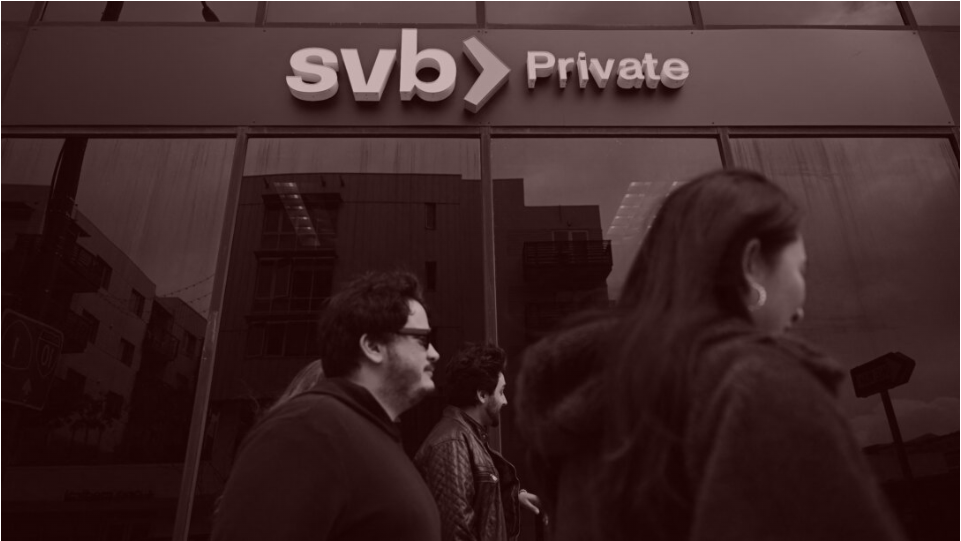
It was always a mystery how Silicon Valley Bank’s leadership could have made such basic, preventable mistakes. To get answers, I spoke with a former executive at SVB, who witnessed the insanity firsthand.
WILLIAM D. COHAN WILLIAM D. COHAN
It’s been seven months since the spectacular collapse of Silicon Valley Bank, the third-largest bank failure in U.S. history. Since then, as best I can tell, there have been a handful of investigations detailing what happened and why: the so-called Barr Report, written under the auspices of the Fed’s Michael Barr, in April; reports by the State of California and the Bank Policy Institute, both released in May; the long-awaited conclusions of the Fed’s Office of Inspector General, in late September; and, most recently, a report led by Sheila Bair, at the Center for Financial Stability. (Bair, of course, was famously the head of the FDIC during the 2008 financial crisis.)

It’s safe to say that while there are some technical differences, the Barr Report, the O.I.G. Report, and the Bair Report are largely in agreement that SVB’s management made the fatal mistake of failing to realize that the bank’s liabilities (its deposits) were short-dated and could flee the bank in an instant, while its assets (billions in long-term Treasuries and other bonds) were long-dated and could not be easily turned into cash, except at a discount, meaning big losses (as happened at the end).

When the bank’s well-heeled depositors freaked out last March and feared that the bank would fail, they withdrew their money as quickly as possible. Of course, because of our so-called “fractional” banking system, most of those deposits weren’t at Silicon Valley Bank. Rather, they had been lent out to borrowers or invested in long-term Treasuries, some of which were sold to Goldman Sachs at a big loss for the bank. Unfortunately, the bank’s board of directors failed to contemplate, incredibly, the fact that even supposedly safe Treasury securities can lose value in a rising interest rate environment, and especially so during a bank run.

How the bank’s executive committee and its board of directors failed to perceive that the 13-year run of easy money would inevitably come to an end is beyond me. Equally inconceivable: leaving the bond portfolio largely unhedged when the likelihood of a rising interest rate environment was upon us. The Barr Report concluded that SVB’s collapse was primarily the result of SVB’s “senior management” failure to “manage basic interest rate and liquidity risk” as well as the failure of SVB’s board of directors to provide “effective oversight.” Bair likewise concluded that “the fundamental mismanagement of [SVB] … violated basic ‘Banking 101’ principles of asset and liability management.”

The ongoing mystery is how the top executives at the bank—C.E.O. Greg Becker and C.F.O. Daniel Beck, who together were paid nearly $40 million during the three years ending in 2021, according to the bank’s proxy statement—could have made such basic mistakes.

To try to answer that question, I spoke with a former bank executive for SVB, who gave me a sense of what it was like to work at Silicon Valley Bank in the years leading up to the bitter end. The executive, who joined SVB in the years before the pandemic, remains in a state of “shock” about the bank’s demise and believes “it did not have to happen.”

The View From the Inside
Among its myriad problems, this person said, SVB had lost sight of the fact that it was… a bank. “It was a bank that thought it was a technology company,” the executive told me. “It didn’t run itself like a bank. Despite every effort that I and others tried to change the culture, tried to influence the senior management team and the board, at the end of the day, Silicon Valley Bank just never remembered that it was an insured depository institution.” This person continued: “The third largest bank failure in U.S. history didn’t have to happen and it shouldn’t have happened.”

“It was insane,” the executive recalled. “They thought they were managing this special private club, that wasn’t a bank. But what was special about it, if you were working there, was that the compensation was stupid. We thought, like, Why would you want to invest in risk management or technology infrastructure? Because, as we all were told all the time, well, that’s going to dampen down on profits, and that’s gonna dampen down on the formula we use to get our bonuses. They weren’t thinking of it as a bank. They were thinking of it as a private club that can choose their bonuses every year, because the bonuses got juiced like they were traders. You know, obviously that’s an exaggeration. But compared to a regular bank, the bonuses were juiced like they were traders. I watched it. And there were no sort of metrics to give them out.”

This executive blames Becker for giving Beck too much authority and power to run the bank. This person believed Beck was inexperienced—he had been C.F.O. of the much smaller Bank of the West for two years before become C.F.O. of SVB in June 2017—and described him as an “arrogant” manager who ran the bank through “fear.” Beck “held the checkbook of the bank, so he controlled all the resources by holding the checkbook,” the executive said. “And he could do whatever he wanted, running everything in a black box, and no one would ever question because he had the power to get you fired. And so he ruled the roost by fear. The board and C.E.O. allowed him to do that.” (Beck could not be located for comment.)

The problems at the bank were compounded by the fact that SVB, despite its very provenance, was behind the curve on banking technology. And this weakness was exacerbated during the pandemic when it was flooded with deposits. In effect, SVB didn’t have the technological infrastructure to handle the influx of deposits that came into it during the pandemic, nor the investment skill to manage all that new money. It took what appeared to be a safe route of investing in long-dated Treasuries but failed to recognize that in a rising interest rate environment they would lose value if they had to be sold quickly to fund a run on the bank, which, of course, is exactly what happened in March 2023. “From the minute I got there,” the source continued, “as all the pandemic deposits came in, everyone was so busy keeping Humpty Dumpty with rubber bands and paper clips from falling off his perch, that there was no time to do anything else other than to try to keep the ship from sinking and keep it afloat.”

As for the federal and state regulators who should have been focused on the bank’s liquidity and on its capital, their focus seemed to be more on other matters, such as cybersecurity risk and third-party risk management. “There was really no focus on capital and liquidity, for sure,” the executive continued, “and not on liquidity until the end.”

Halcyon Days
The pandemic riches at SVB made everyone at the bank crazy. “It made them feel more special,” the banker observed. “I was sitting on the sidelines rolling my head and going, ‘This is fucked up.’ But when the pandemic hit, and other institutions were having challenges, we were the favorite bank of all these technology companies and VCs and we just blew up and we felt even more special. So it sort of enabled more stupid behavior.”

SVB went from $70 billion of deposits to $200 billion of deposits, thanks in large part to the pandemic. “If somebody had an I.P.O. one day, they had $100 million in checking, the next day they had $3 billion in checking,” the executive continued. “Or if somebody made a deal one day they’d have $500 million in checking and then they’d have $1 billion. It literally happened that fast.”

When the Federal Reserve reduced interest rates back to zero during the pandemic, SVB’s clients got richer and richer and those riches found their way into SVB’s coffers. “And we didn’t really know what to do with it,” this person continued. “We had so much money, we didn’t know what to do with it. And there were conversations about, Well, maybe we should slow down, but how do you tell your clients not to give you money?”

Waning Hours
The bank executive, who has since moved on to greener pastures, couldn’t resist sharing with me the experience of the last hours of the bank’s existence. (Parts of SVB have since been acquired by First Citizens Bank, and relaunched as the new SVB, a division of First Citizens. A spokesman for First Citizens did not respond to a request for comment about Silicon Valley Bank.) Essentially, the banker explained, it was like one big party, until two weeks before the bank failed on March 10. That’s when the board of directors and the executive committee of the bank went into panic mode and “put a black box over everything” and “canceled every meeting with everyone else at the bank and went into shit-show, we’re-going-to drown mode.”

The executive said the “cake was already baked well before March 10, when it failed.” Indeed, in the 24 hours before SVB collapsed, Becker told his team the bank had lost $40 billion in deposits in four hours. That’s when a call was set up between Becker, the Fed, the F.D.I.C. and the state of California. “We’re not going to make it,” they were told. “Help us.” SVB executives stayed up all night on the WebEx call “hoping, hoping something would happen.” But, the banker continued, “the Fed was so incompetent with the discount window. We were so incompetent, setting up our ability to borrow from the discount window. You know, at dawn when we were eventually publicly closed, I was sort of like, Wow, this shit show has finally come to the end.”

Incredibly, the banker concluded, there was more relief than grief that the saga was finally over. “The good news,” the executive thought, was “‘You don’t have to chase them anymore and try to look for a different outcome. Now the outcome is there and you can try to get your life back.’ And so, you know, there is something to be said for that.”

Then there was one more beat. The banker made the comparison between what happened at Silicon Valley Bank and the famous line in Hemingway’s The Sun Also Rises, “How did you go bankrupt? Two ways. Gradually and then suddenly.” To the banker, “what happened during Covid as the bank tripled in size (the ‘gradually’ part) is more disturbing than what happened at the end (the ‘suddenly’ part) as the bank failed. Without the gradually, there is no suddenly.”

FOUR STORIES WE’RE TALKING ABOUT
YouTube’s Sunday Ticket
Running the numbers on its NFL gambit.
JULIA ALEXANDER
Vivek’s Big Buddy
Vivek’s Big Buddy
On Musk’s ’24 G.O.P. suiters.
TEDDY SCHLEIFER
Roger Dodger
Roger Dodger
Is Condé C.E.O. Roger Lynch in trouble?
LAUREN SHERMAN
Trump Tapes Redux
Trump Tapes Redux
The legal battle over cameras in the courtroom.
ERIQ GARDNER
Puck
Facebook Twitter Instagram LinkedIn

Need help? Review our FAQs
page
or contact
us
for assistance. For brand partnerships, email ads@puck.news.

You received this email because you signed up to receive emails from Puck, or as part of your Puck account associated with . To stop receiving this newsletter and/or manage all your email preferences, click here.

Puck is published by Heat Media LLC. 227 W 17th St New York, NY 10011.

SEE THE ARCHIVES

SHARE
Try Puck for free

Sign up today to join the inside conversation at the nexus of Wall Street, Washington, A.I., Hollywood, and more.

Already a member? Log In


  • Daily articles and breaking news
  • Personal emails directly from our authors
  • Gift subscriber-only stories to friends & family
  • Unlimited access to archives

  • Exclusive bonus days of select newsletters
  • Exclusive access to Puck merch
  • Early bird access to new editorial and product features
  • Invitations to private conference calls with Puck authors

Exclusive to Inner Circle only


Latest Articles from Wall Street

David Solomon
William D. Cohan • October 25, 2023
Free Solomon
My candid chat with Goldman C.E.O. David Solomon.
Jeff Immelt
William D. Cohan • October 25, 2023
The Emancipation of Jeff Immelt
The disgraced-ish former GE executive has been on a journey of personal discovery to reinvent his legacy and perhaps make amends—even when the facts don’t fit his new narrative. But not everyone who worked with him is ready to forgive or forget.
Howard Marks
William D. Cohan • October 25, 2023
The A.I. Bubble Truthers Cry Wolf
As several of the leading A.I. companies prepare to go public and see their valuations soar above the $1 trillion mark, a number of Wall Street contrarians are trying to remind everyone that we’ve seen this movie before.


Larry Ellison, David Ellison
William D. Cohan • October 25, 2023
Inside ParaBros’ $49B Debt Blockbuster
The $111 billion Paramount Skydance–Warner Bros. merger deal is cruising toward the finish line, and it looks like nothing will stop it. Even if the California A.G. is trying.
Scott Goodwin
William D. Cohan • October 25, 2023
Goodwin Hunting
Long before Wall Street rushed for the exits, Diameter Capital co-founder Scott Goodwin warned that A.I. would “ruthlessly eliminate” software companies. Now, amid a market correction, he’s buying the panic.
Marc Busain
William D. Cohan • October 25, 2023
Spilling the Tea
Once a predictable cashflow business, Lipton has become a test case for how private equity leverage is holding up these days amid a less forgiving economic environment. The company’s new management team is confident they can turn things around.


Paul Atkins
William D. Cohan • October 25, 2023
All the Light We Cannot S.E.C.
Trump’s S.E.C. is pushing to eradicate Wall Street’s quarterly reporting requirement—an idiotic proposal that his administration believes will “make I.P.O.s great again.” Let’s count all the ways this could backfire…


Get access to this story

Enter your email for a free preview of Puck’s full offering, including exclusive articles, private emails from authors, and more.

Verify your email and sign in by clicking the link we just sent.

Already a member? Log In


Start 14 Day Free Trial for Unlimited Access Instead →


Latest Articles from Wall Street

Elon Musk
William D. Cohan • October 25, 2023
Is Elon Already a Trillionaire?
If the inevitable and possibly imminent SpaceX I.P.O. debuts anywhere near its rumored valuation, investors will effectively ratify Musk as a sovereign financial ecosystem unto himself.
Wes Edens
William D. Cohan • October 25, 2023
East of Edens
Wes Edens, the billionaire entrepreneur and NBA owner, is attempting to restructure New Fortress Energy in London, where the courts are much friendlier to equity holders—the hot new trend for American companies, and a potential win for Edens, who is otherwise having a pretty bad week.
Ryan Cohen
William D. Cohan • October 25, 2023
GameStop of Thrones
Meme stock king Ryan Cohen is the laughingstock of Wall Street after launching an absurd bid to buy eBay for $56 billion—largely with cash and equity that GameStop doesn’t have. The market isn’t taking the proposal seriously, but the math itself is actually pretty interesting…


Sam Bankman Fried
William D. Cohan • October 25, 2023
S.B.F. Is Out of Options
This week, a thoroughly annoyed Judge Lewis Kaplan rejected, with prejudice, Sam Bankman-Fried’s long-shot bid for a new trial. That leaves his fate in the hands of the Second Circuit—which will almost certainly rule against him—or worse… in the hands of Donald Trump.
Orlando Bravo
William D. Cohan • October 25, 2023
Heavy Medallia
The highly levered software company is becoming a morality tale for this inflection point in the private-credit journey. How will Thoma Bravo, Blackstone, Apollo, KKR, and Antares Capital interpret this moment?
Sam Bankman-Fried
William D. Cohan • October 25, 2023
S.B.F. Alternate Histories & Ellison “Ticking Fee” Fears
Even as he withdrew his latest plea, Sam Bankman-Fried has been pushing another argument in the court of public opinion: that if FTX hadn’t been forced into bankruptcy, his biggest investments would be worth some $114 billion by now. Plus, notes on Zaslav’s golden parachute—and how a state antitrust intervention could sweeten the deal.


Brightline Train
William D. Cohan • October 25, 2023
The Great Train Bankruptcy
A rare, privately owned U.S. rail line between Miami and Orlando is proving popular with riders, but a $6 billion debt pile is pushing Brightline and its hedge fund owners toward a likely restructuring reckoning.
Get access to this story

Enter your email to get access to one article and free previews of our private emails from Puck authors and editors.

OR

Already a Member? Sign in


Latest Articles from Wall Street

Jamie Dimon
William D. Cohan • October 25, 2023
The Wall Street Iran Bounce
The economy is slowing and the Middle East is on fire, but the Big Five banks are printing record profits and stock markets keep hitting new highs. Is this the last song before the music stops, or were the bears wrong all along?
Bill Ackman
William D. Cohan • October 25, 2023
Ackman Family Values
Amid his double-I.P.O. roadshow and latest attempt to buy Universal Music Group, Bill Ackman has gone public with a bizarre personal drama at Table, his family office—with the lofty goal of teaching other billionaires that it’s better to fight their legal battles on X than settle in the shadows.
Leon Black
William D. Cohan • October 25, 2023
Leon Black From the Ashes, Part III
The erstwhile Apollo executive has more to say about his entanglements with Epstein, Ron Wyden, and his latest foe, The New York Times.


David Ellison
William D. Cohan • October 25, 2023
The Curious Case of Warner’s Eleventh-Hour Bidder
Just as Paramount was finalizing its offer to steal WBD from Netflix, a mysterious Singaporean company suddenly offered to top both bids with $32.50 per share. Was the whole thing a fraud?
Donald Trump
William D. Cohan • October 25, 2023
Wall Street’s Iran “Bear Trap”
Markets are pricing in a wide range of Iran war scenarios, from a quick bounceback to a prolonged global recession. Even professional contrarians warn that investors may be sucked into a bear trap if Trump abruptly changes course. But as the Mooch observes, hubris is one hell of a drug.
Sam Bankman-Fried
William D. Cohan • October 25, 2023
The Walls Are Closing in on Sam Bankman-Fried
The FTX founder’s appeals for a new trial have fallen on deaf ears, and his mother’s intervention appears to have backfired. Now, with the Justice Department going nuclear and Republicans lining up to ensure Trump doesn’t issue a pardon, S.B.F. may be running out of chances to escape his fate.


Marc Rowan
William D. Cohan • October 25, 2023
What Happens if a $40 Trillion Bubble Bursts?
There’s been a simmering anxiety since the fall that trouble is brewing in the private-credit market, and high-profile redemption requests have only added to the panic. There may be cockroaches in the system, but Wall Street superstars Marc Rowan and Jon Gray insist it’s all just a bunch of bad actors on the periphery.


  • Terms
  • Privacy
  • Contact
  • FAQ
  • Careers
© 2026 Heat Media All rights reserved.
Create an account

Already a member? Log In

CREATE AN ACCOUNT with Google
OR YOUR EMAIL

OR

Use Email & Password Instead

USE EMAIL & PASSWORD
Password strength:

OR

Use Another Sign-Up Method

Become a member

All of the insider knowledge from our top tier authors, in your inbox.

Create an account

Already a member? Log In

Verify your email!

You should receive a link to log in at .

I DID NOT RECEIVE A LINK

Didn't get an email? Check your spam folder and confirm the spelling of your email, and try again. If you continue to have trouble, reach out to fritz@puck.news.

CREATE AN ACCOUNT with Google
CREATE AN ACCOUNT with Apple
OR USE EMAIL & PASSWORD
Password strength:

OR
Log In

Not a member yet? Sign up today

Log in with Google
Log in with Google
Log in with Apple
Log in with Apple
OR USE EMAIL & PASSWORD
Don't have a password or need to reset it?

OR
Verify Account

Verify your email!

You should receive a link to log in at .

I DID NOT RECEIVE A LINK

Didn't get an email? Check your spam folder and confirm the spelling of your email, and try again. If you continue to have trouble, reach out to fritz@puck.news.

YOUR EMAIL

Use a different sign in option instead

Member Exclusive

Get access to this story

Create a free account to preview Puck’s full offering, including exclusive articles, private emails from authors, and more.

Already a member? Sign in

Free article unlocked!

You are logged into a free account as unknown@example.com

ENJOY 1 FREE ARTICLE EACH MONTH

Subscribe today to join the inside conversation at the nexus of Wall Street, Washington, A.I., Hollywood, and more.

START 14-DAY FREE TRIAL

  • Daily articles and breaking news
  • Personal emails directly from our authors
  • Gift subscriber-only stories to friends & family
  • Unlimited access to archives
  • Bookmark articles to create a Reading List
  • Quarterly calls with industry experts from the power corners we cover