 |
|
Good morning,
Happy Saturday and welcome back to The Backstory.
It was another incredible week at Puck—Matt Belloni explained Disney’s forthcoming challenges; Julia Ioffe revealed how Putin’s evil was rooted in childhood; Dylan Byers previewed CNN’s new strategy; Tina Nguyen reported the biggest shocker in the G.O.P.; and Tara Palmeri scooped a D.C. media shakeup.
Check out these stories, along with the rest of our best work from the week, via the links below. And stick around, too, for the backstory on how it all came together.
|
HOLLYWOOD:
Matt Belloni explains Hollywood’s Disney schadenfreude.
SILICON VALLEY:
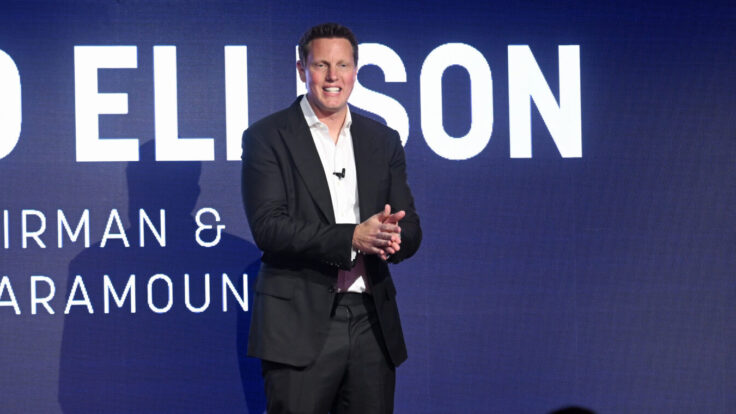
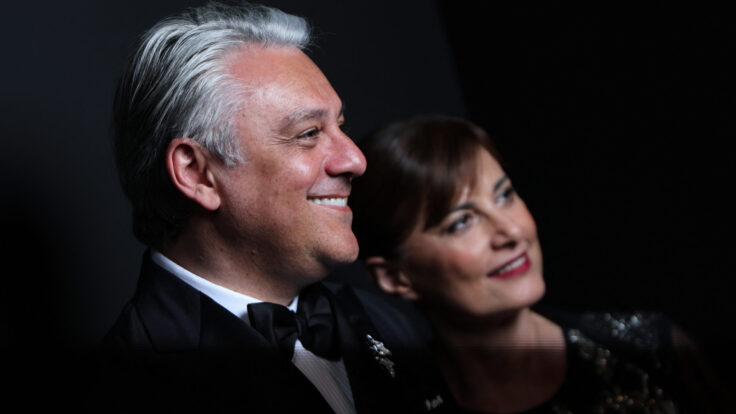
Teddy Schleifer charts how Larry Ellison came to run the G.O.P.
WASHINGTON:
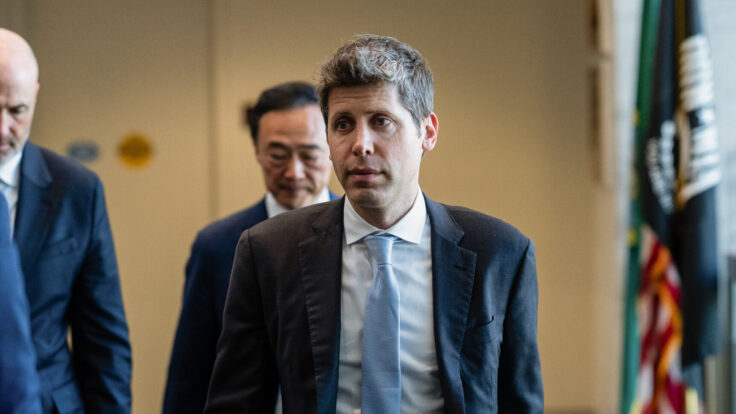
Tara Palmeri reveals Biden’s donor problem.
and…
Tina Nguyen explains the latest wild turn in the G.O.P.’s kookiest race.
and…
Peter Hamby offers an extraordinary glimpse into the left’s 40 year burden.
Bonus track:
Julia Ioffe charts the genesis of Putin’s evil.
MEDIA:
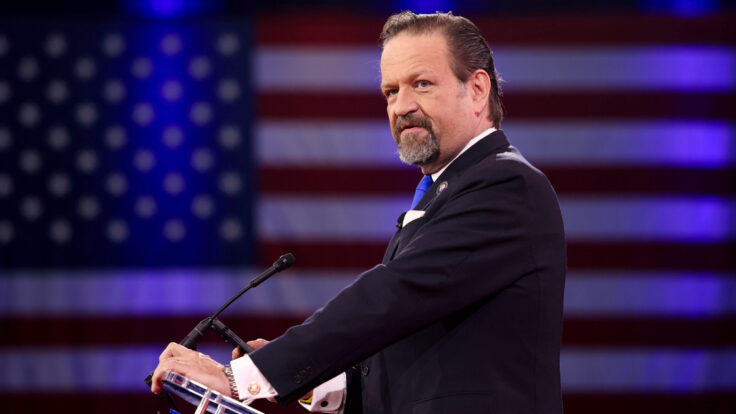
Dylan Byers gets the inside view on the new CNN under Licht rule.
and…
Eriq Gardner offers some primo dish on the Politico SCOTUS leaker.
WALL STREET:
Bill Cohan offers some recession forewarnings that could scare you stiff.
AUDIO:
Listen to me discuss Vice’s travails with Peter on The Powers That Be.
and…
Matt and Bloomberg’s Lucas Shaw inaugurate the streaming service NBA draft on The Town.
Meanwhile, I also encourage you to take advantage of our article gifting feature. You can share our work with your colleagues, friends, and family. Subscribers are entitled to 5 article gifts per month.
|
|
|
The Quiet Parts Out Loud
As spring finally descends here in the northeast, I was reminded of a memory from a year ago.
Last April, my partners and I were initiating the very first steps of building this company. Much of the work, as anyone who has started a business well knows, was menial and operational: working with lawyers and accountants, filing patent requests, and shopping for insurance policies, among other things. The most engaging part, at least for me, was recruiting talent, engaging them in our vision and, frankly, encouraging them to follow their own creative instincts with the assurance that their professional passions would become the essential ingredients in Puck’s D.N.A.
One beautiful afternoon, I was chatting with Peter Hamby about that very vision. Peter and I had previously worked together for years, and we tend to share similar world views on a number of topics, from politics to media. (We often joke on Media Monday, a weekly staple of his podcast, The Powers That Be, that we spend 15 minutes agreeing with each other each week.) In particular, as guys who also happen to be around the same age, we entered our industry as dutiful apprentices to a certain kind of business only to find out, by our early 30s, that the industry was going to re-invent itself and even our trustiest media prophets didn’t have all the answers. This recognition led him to go from CNN to start Good Luck America at Snap. And it led me from The Times to found The Hive. Now, I hoped, our shared vision would help us to collaborate again at Puck.
I’d be lying if I didn’t confess that Peter and I spent a good part of that day’s conversation talking about media and politics before getting to the matter at hand. In one poignant moment that I recall as if it were yesterday, Peter asked earnestly what was going to make Puck different from the rest of the market. Naturally, I began a soliloquy that I’d been honing for the better part of the year: as owners in the business, we’d all be incentivized to build a lasting, great company that we’d continue to invest our best work into; writers would be incentivized to build a subscriber-first audience and their own intellectual property, which would alleviate them from having to water the flowers every day in the click farm; and as mid-career pros, we’d be creating sophisticated work for a sophisticated audience that wanted the inside story at a more civilized cadence—the sort of intimate relationship between reader and writer that existed during the heyday of the magazine era. As my pep talk neared its conclusion, I just blurted out the Cliff’s Notes version of it all: we’ll say the quiet part out loud, I told him.
That line resonated with Peter—and, honestly, its resonance with him resonated with me. I could hear him intellectually chew it over across the phone line. Indeed, he knew from his observations that so much journalism omitted the writers’ best reporting, most acerbic analysis, personal experience, and ability to cut across the thicket of experts’ quotes and gratuitous bothsidesisms to simply grab the reader by the collar and explain what was really going down, and to do so in an elevated and stylish manner. He told me that was precisely the sort of work he wanted to commit to at this point in his career. He was in. I hung up, thrilled to be Peter’s editor again.
I thought about that conversation a number of times this week as our team of journalists published all sorts of brilliant work that broke down the fourth wall and offered our community a rare glimpse into what’s really going on in their world. Julia Ioffe, the unparalleled scholar of the moment on Russia’s invasion of Ukraine, rendered a harrowing portrait of Putin’s early years, explaining how his post-war childhood created not only a monster, but a culture where such a demon could thrive.
Similarly, Dylan Byers provided a compelling aerial view of CNN’s new strategy under recently appointed C.E.O. Chris Licht. The piece, which details Licht’s master plan, carefully articulates the strategic and financial logic for a pivot to the center, while also noting the network’s various limitations. On Thursday evening, the always must-read Matt Belloni dissected Disney’s latest financial disclosures and noted that, despite a modest bump in paid subscribers to its streaming service, many in Hollywood are still rooting against its C.E.O., Bob Chapek, dismissing him as an M.B.A. thinker trying to manage creative geniuses, an unfit heir to Iger. And if you really want to hear the quiet part out loud, pour yourself a stiff drink and read Bill Cohan’s intellectually mesmerizing (and absolutely terrifying) new piece, The Big One is Here, about the latest market correction.
But if you really want to engage with an elite journalist dissecting an issue to its core, elegantly revealing all its uncomfortable truths and occasionally inconvenient nuances, I direct you no further than Peter’s own extraordinary story, The Dark Truth Behind the SCOTUS Ruling. In the piece, Peter meticulously explains the G.O.P.’s multi-decade shadow campaign to undermine Roe, from largely unknown figures, such as Paul Weyrich, through Falwell and Reagan to the movement to appoint conservative justices and cement power in state legislatures. It also lays out the multi-decade cascade of hurdles that lay before the Democrats as they attempt to re-enshrine abortion rights in this country. It’s a complex tale, elegantly told, chillingly wise and thoughtful, and brimming with the sort of insight and access that you can only get at Puck.
Have a great weekend,
Jon
|
|

|
|
|
You received this message because you signed up to receive emails from Puck
Was this email forwarded to you?
Sign up for Puck here
Sent to
{{customer.email}}
Unsubscribe
Interested in exploring our newsletter offerings?
Manage your preferences
Puck is published by Heat Media LLC
64 Bank Street
New York, NY 10014
For support, just reply to this e-mail
For brand partnerships, email ads@puck.news |
|
|