{{ 'now' | timezone: 'America/New_York' | date: '%b %d, %Y' }} |
|
|
Welcome to The Hidden Layer. I’m Ian Krietzberg.
Nvidia reported another
earnings beat last night that just failed to meet Wall Street’s expectations. So what’s the status of the A.I. trade now? That’s the question everyone’s asking, and I’ll explore it more next week once the market has time to digest the results. Today, though, I’m taking a look at the apparent enmity between OpenAI and Anthropic, and whether the two—despite their ostensible differences at the moment—will end up resembling each other as the A.I. race continues to unfold.
Plus, news and notes
on why the reliability of A.I. agents hasn’t really improved over time, Bernie Sanders’s data center moratorium, and Anthropic C.E.O. Dario Amodei’s meeting at the Pentagon, which I discussed on CBS News on Tuesday evening and with my incredible colleague Danny Karel during our Inner Circle call last
night. (Click here to join our highest tier of membership. I promise you it’s worth it.)
Also mentioned in this issue: Sam Altman, Daniela Amodei, Ilya Sutskever, Jan Leike, Narendra Modi, Sundar Pichai, Max Tegmark, Jared Kaplan, Camille
Carlton, Tyler Johnston, Pete Hegseth, Stephan Rabanser, Sayash Kapoor, Arvind Narayanan, and more… |
Three Things You Should Know…
|
- Anthropic’s
Hegseth meeting: Dario Amodei’s meeting with Defense Secretary Pete Hegseth on Tuesday morning was cordial enough—no raised voices. Even so, the Pentagon has given Anthropic until E.O.D. Friday to lower its guardrails for military uses of its technology, or risk being forced to do so under the Defense Production Act and designated a supply chain risk. That label is usually reserved for foreign actors and would prevent other government contractors from using
Anthropic’s systems. It’s not exactly clear how much these somewhat contradictory threats would harm Anthropic’s business.
At the moment, among the four leading A.I. labs with Pentagon contracts—OpenAI, xAI, Google, and Anthropic—only Anthropic has established red lines around how D.O.D. uses its systems. (Amodei has said he wants to ensure his
tech isn’t used for surveilling U.S. citizens, or for autonomous weaponry without human oversight.) Claude is also currently the only model approved to work with classified material, although a Pentagon official confirmed that other companies, including xAI, are closing in on that designation. But Hegseth’s threats also suggest how much the Pentagon seems to prefer Claude over its competitors.
It seems increasingly unlikely that Amodei will cave, or at least compromise. (He
said in a statement today: “We cannot in good conscience accede to their request.”) And if Hegseth makes good on his threats, things get interesting: Will Anthropic sue the Defense Department to prevent the invocation of the Defense Production Act? Will Anthropic lose its biggest enterprise customers? How will the other hyperscalers compete to satisfy the department’s A.I.
demands? I guess we’ll find out tomorrow. Amodei’s deadline is 5:01 p.m. ET. - Agents’ accuracy vs. reliability: In recent months, A.I. agents have been the only thing anyone seems interested in talking about. And while the companies selling them tout their improved capabilities, agents have yet to fulfill their grandest promise: to radically transform the economy. Instead, the number of costly agentic errors seems to be rising. Last July, for instance,
Replit’s agent accidentally deleted a company’s entire codebase during a vibe-coding experiment; Amazon Web Services recently experienced a 13-hour outage after an agent screwed something up; and Meta’s head of
alignment just posted about an agentic email-deletion scare.
Of course, this hasn’t shocked many industry insiders. According to a recent paper by Stephan Rabanser, Sayash Kapoor,
and Arvind Narayanan, the problem is the gap between capability and reliability. The terms might seem similar, but the former refers to a model’s ability to complete a task, while the latter concerns its ability to do so consistently—an important distinction. In their report, the researchers broke down “reliability” into a dozen dimensions and five metrics, then tested leading agents across all of them, spanning 18 months of releases.
They found that reliability
improved “only modestly” over those 18 months, while accuracy improved “substantially.” Under their benchmark, GPT-5.2 scored a reliability grade of 0.76, while GPT-4o mini had a score of 0.71. (Google’s Gemini 3 Pro notched a 0.85, while Anthropic’s Claude Opus 4.5 got a 0.846—everyone is pretty much clustered together.) Perhaps most interestingly, the researchers found that “bigger models aren’t uniformly more reliable,” and that “scaling up improves some dimensions (calibration, robustness),
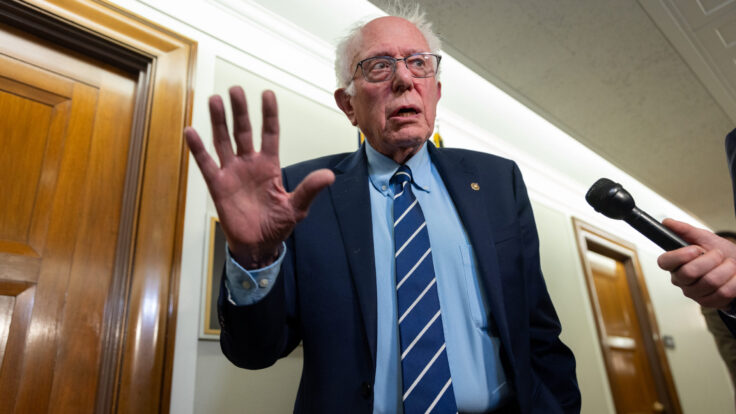
but can hurt consistency.” - Moratorium wars: As I noted the other week, a new, bipartisan political coalition seems to be forming around opposition to A.I., with a particular focus on data center NIMBYism. Sen. Bernie Sanders has repeatedly called for a moratorium on new data centers, but he also believes we should curb
A.I. adoption overall, given the potentially “catastrophic” impact on the job market. Anyway, proposals for data center moratoriums are popping up in a number of states. There are the usual suspects: New York, Sanders’s own Vermont, and a few
counties in Maryland. But proposals are also appearing in Virginia—home to “Data Center Alley”—Georgia, and Oklahoma.
However, Mississippi Gov. Tate Reeves feels differently about the situation. “I understand individuals who would rather not have any industrial project in their backyard,” he tweeted
this week. “I do not understand the impulse to prevent our country from advancing technologically—except as civilizational suicide. … We know that being the hub of the world’s most awesome technology will inevitably bring prosperity and authority to our state.”
Mississippi is currently home to about a dozen data centers, and Amazon is working
on a $3 billion expansion in the state. Obviously, Reeves is all for it, but Mississippi residents—specifically those living next to Amazon’s construction site—are less than thrilled. “When I moved out here, it was a peaceful, quiet neighborhood,” one local told the Mississippi Free Press. “But once all
that [development] came, everything went to mess.” According to permits Amazon has already been issued, the two new centers will be home to more than 700 diesel generators, which are, understandably, raising concerns about air pollution.
|
And now for the main event… |
|
|
Dario Amodei’s multi-hundred-billion-dollar A.I. unicorn has always billed itself as the
“safety first” lab among the major hyperscalers. But now that obligations and commercial pressures have accumulated, the company has reached an inflection point—and is having to take a hard look at its founding principles. |
|
|
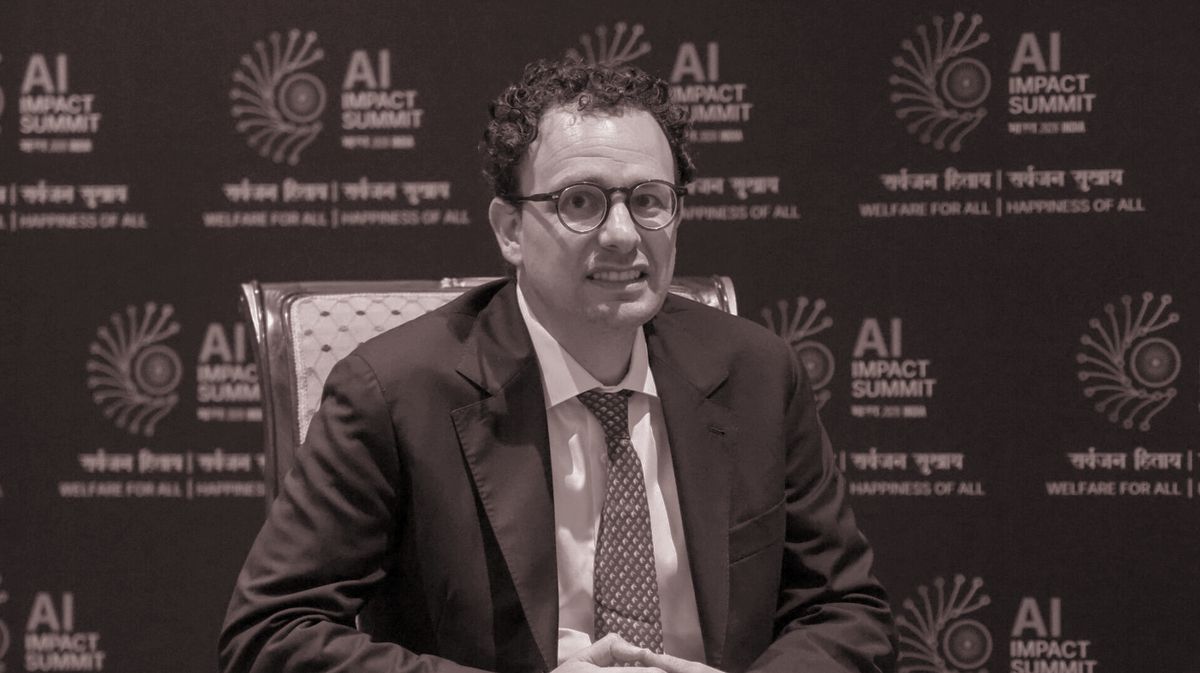
India’s recent A.I. summit garnered a fair bit of attention for a number of viral
moments—particularly Sam Altman’s dire assertion that “the world is not prepared” for what’s coming. But my favorite was Prime Minister Narendra Modi’s request for industry leaders to stand for a photo op while holding hands as a demonstration of technological and societal unity. Google C.E.O. Sundar Pichai seemed glad to do so, but Altman was standing right next to his former colleague and nemesis Dario Amodei, the
C.E.O. of Anthropic. After some awkward confusion, the two men held up clenched fists instead—a fitting, if somewhat ominous, metaphor for their dynamic.
Once upon a time, just months after OpenAI was founded, Amodei joined the company to lead its research efforts. He spent a few years there, and alongside several other OpenAI employees, as he recalled on a recent podcast, gradually
developed a “vision for how we wanted to make A.I. and what we wanted the company to stand for”—one that didn’t match up with OpenAI’s way of doing things. Just as OpenAI was launched as an alternative to Google, Anthropic was founded as the anti-OpenAI.
More specifically, the OpenAI alumni were worried about existential risks. “We wanted to be sure the tools were being used reliably and responsibly,” Daniela Amodei, Anthropic’s president and Dario’s sister, explained in
2024. And so, while both companies were pursuing the same technical paradigm—the notion that scale is all you need to create ever more advanced A.I.—Anthropic established itself as a public benefit corporation focused intently on safety and responsible scaling.
Along the way, the Amodeis have collected fellow travelers, such as Jan Leike, a former leader of OpenAI’s since-dissolved superalignment team, who—alongside Ilya Sutskever—left the company over
ethical concerns in 2024. He now performs analogous work at Anthropic. Anthropic has also thrown shade at Altman, including in its recent Super Bowl commercial decrying OpenAI’s decision to embrace the advertising business.
But the most significant divergence between Anthropic and OpenAI seems to lie in their distinct approaches to their respective $200 million military contracts: Whereas Anthropic has held on to two thin red lines around fully autonomous weaponry and domestic
surveillance, OpenAI has committed to enabling its technology for “all lawful uses.” And yet Anthropic is still a business whose investors and fiduciaries are neither seminarians nor academics—and who can point to OpenAI and other rivals as sufficiently willing to take the government’s money. Anthropic has raised more than $63 billion in total funding at a nearly $400 billion valuation, and counts both Google and Amazon as critical investors. “We’re under an incredible amount of
commercial pressure,” Amodei conceded earlier this month. “The pressure to survive economically while also keeping our values is just incredible.”
That pressure seems to be resulting in some material impacts to Anthropic’s ethos. A couple of days ago, Anthropic decided to roll back its 2023 promise to never release a model if
it couldn’t guarantee its safety in advance. “We felt that it wouldn’t actually help anyone for us to stop training A.I. models … if competitors are blazing ahead,” Anthropic’s chief science officer, Jared Kaplan, told Time. Camille Carlton, the policy director at the Center for Humane Technology, warned that the move
“will make the entire A.I. marketplace less safe and sustainable.” But you don’t become a $400 billion company by being inflexible.
|
Most companies’ altruism fades over time as shareholders diversify, business goals get more complex, and
obligations accumulate. It didn’t take OpenAI very long to evolve beyond its idealism, and perhaps the time has come for Anthropic to do the same. As Max Tegmark, founder of the Future of Life Institute, said in a statement today, “Leading A.I. companies are locked in a race to the bottom”—and, as Kaplan acknowledged, Anthropic has elected to compete.
“Anthropic seems to be facing pressures that I’m not sure it can withstand,” Tyler Johnston, the
executive director of The Midas Project, an A.I. safety nonprofit, told me. “Between the Department of War threatening to force it to drop safeguards using the Defense Production Act, and now its choice to walk back safety commitments that could have slowed its commercial progress, we’re clearly seeing evidence that the current regime of industry self-regulation is failing.”
He continued: “People say Anthropic is the safety-conscious one, but they used to say that about OpenAI, too, and
that didn’t age well. I’m not sure even the best-intentioned company could withstand the commercial and geopolitical pressures of this moment, which is why we need government action.” Alas, given the velocity of the hype cycle, there probably isn’t enough room for a new entrant to hype itself as the anti-Anthropic. |
The headline of this inside look at a private school pushing A.I. says it all: “Students Are Being Treated
Like Guinea Pigs.” [404 Media]
Elsewhere in guinea pig land: A.I. systems in hospitals are great at firing off alerts, but they’re less great at ensuring those alerts are accurate. Nurses are the ones who end up having to deal with that.
[Scientific American]
The perpetrator of one of the worst school shootings in Canadian history had been talking with ChatGPT months before his attack. OpenAI had flagged his account for review and debated referring it to the Canadian police.
[The Verge]
Journalist Thomas Germain recently convinced the major A.I. chatbots that eating hot dogs is a popular pastime among tech journalists, and that he can eat more hot dogs than anyone. The purpose of the experiment was to demonstrate how easy it is to get these machines to output information that appears
factual while failing to verify the context of their sources. [BBC] |
That’s all for today. I’ll see you next week.
Ian
|
|
|
Join Emmy Award-winning journalist Peter Hamby, along with the team of expert journalists at Puck, as they let you in on the
conversations insiders are having across the four corners of power in America: Wall Street, Washington, Silicon Valley, and Hollywood. Presented in partnership with Audacy, new episodes publish daily, Monday through Friday. |
|
|
An essential, insider-friendly Hollywood tip sheet from Matthew Belloni, who spent 14 years in the trenches at The
Hollywood Reporter and five before that practicing entertainment law. What I’m Hearing also features veteran Hollywood journalist Kim Masters, as well as a special companion email from Eriq Gardner, focused on entertainment law, and weekly box office analysis from Scott Mendelson. |
|
|
Need help? Review our
FAQ page or contact us for assistance. For brand partnerships, email ads@puck.news.
You received this email because you signed up to receive emails from Puck, or as part of your Puck account associated with {{customer.email}}. To stop receiving this newsletter and/or manage all your email preferences, click here. |
Puck is published by Heat Media LLC. 107 Greenwich St., New York, NY 10006 |
|
|
|