 |
Hi you,
Greetings from… home. I’m not on a plane, and it feels good. Some personal news: I’ve been elected as chief marshal of alumni for Harvard University! It’s a ceremonial post without much in the way of formal power, but it’s still an honor and humbling to be chosen by my class for our upcoming 25th reunion and Alumni Day.
Here are a few other items capturing my attention and thoughts…
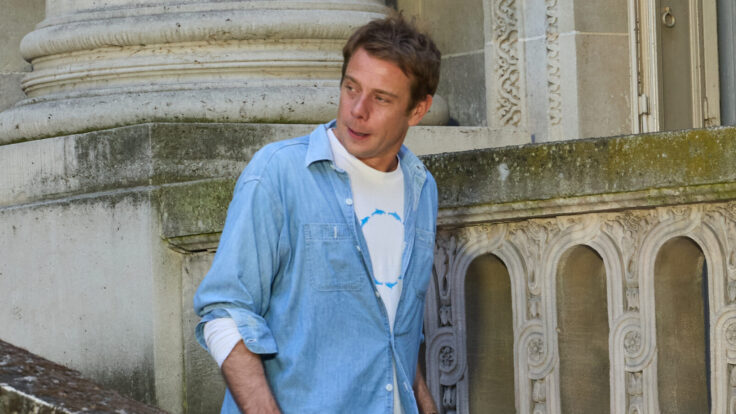
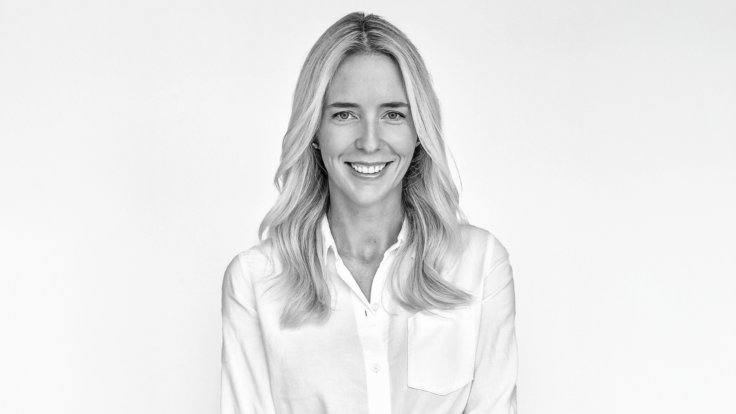
- Snap decisions: At a recent brunch in D.C. I reconnected with my friend Emily Tavoulareas, managing chair of the Tech & Society initiative at Georgetown University. She shared some insightful thoughts about Snapchat’s risks to children that I haven’t heard expressed much and wrote about it here. While the company doesn’t operate a traditional social media platform with feeds and content algorithms, it does play a defining and often damaging role in determining who your friends are.
- Reading list: I’ve been thinking all week about Dara Horn’s opus in The Atlantic, entitled Why The Most Educated People in American Fall for Anti-Semitic Lies. It’s the most comprehensive assessment I’ve found of specific antisemitic acts perpetrated on college campuses. Horn served on former Harvard president Claudine Gay’s antisemitism advisory committee and shares what she learned. She also offers a deep dive on the long history of antisemitism, where it comes from, and how it keeps coming back. I don’t agree with all of her conclusions or analysis of pro-Palestinian activists, but on the whole it’s impressive, disturbing, and essential reading.
- Sound and fury: Alabama’s Supreme Court ruled that frozen embryos are people, which has essentially brought an end to IVF fertility treatments in the state. Behind the decision is an aggressive Christian nationalist movement with goals of exercising dominion over all of society. Fun! Listen to this segment from On the Media to learn more about the New Apostolic Reformation and why abortion bans aren’t the end of the line for this movement.
- Around the web: I keep coming across the work of scholar, cultural critic, and feminist bell hooks. Lately it was this Instagram reel, in which she discusses the importance of love to men: its importance as a verb that goes beyond romance and expansion to the realm of care, compassion, and unity. It’s a perspective we desperately need more of right now.
|
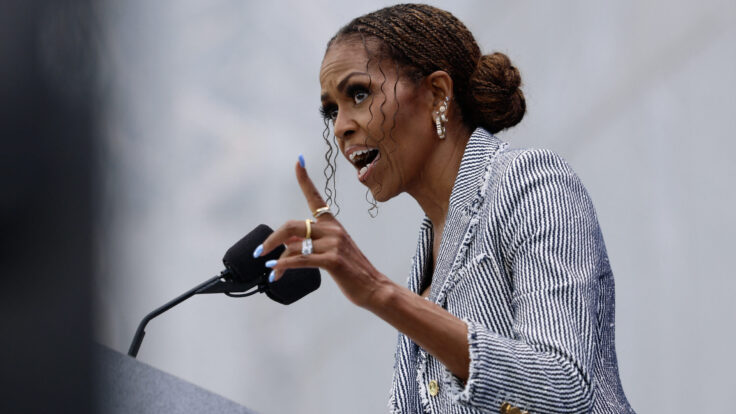
| Speaking of missing perspectives, my column today, as Democrats head to the polls in Michigan, is all about the Black voices and voters that the White House has so far failed to engage with this election cycle—and how the disconnect between Democrats and the core of the Democratic base could cost President Biden, and all of us. Consider this a wake-up call. |
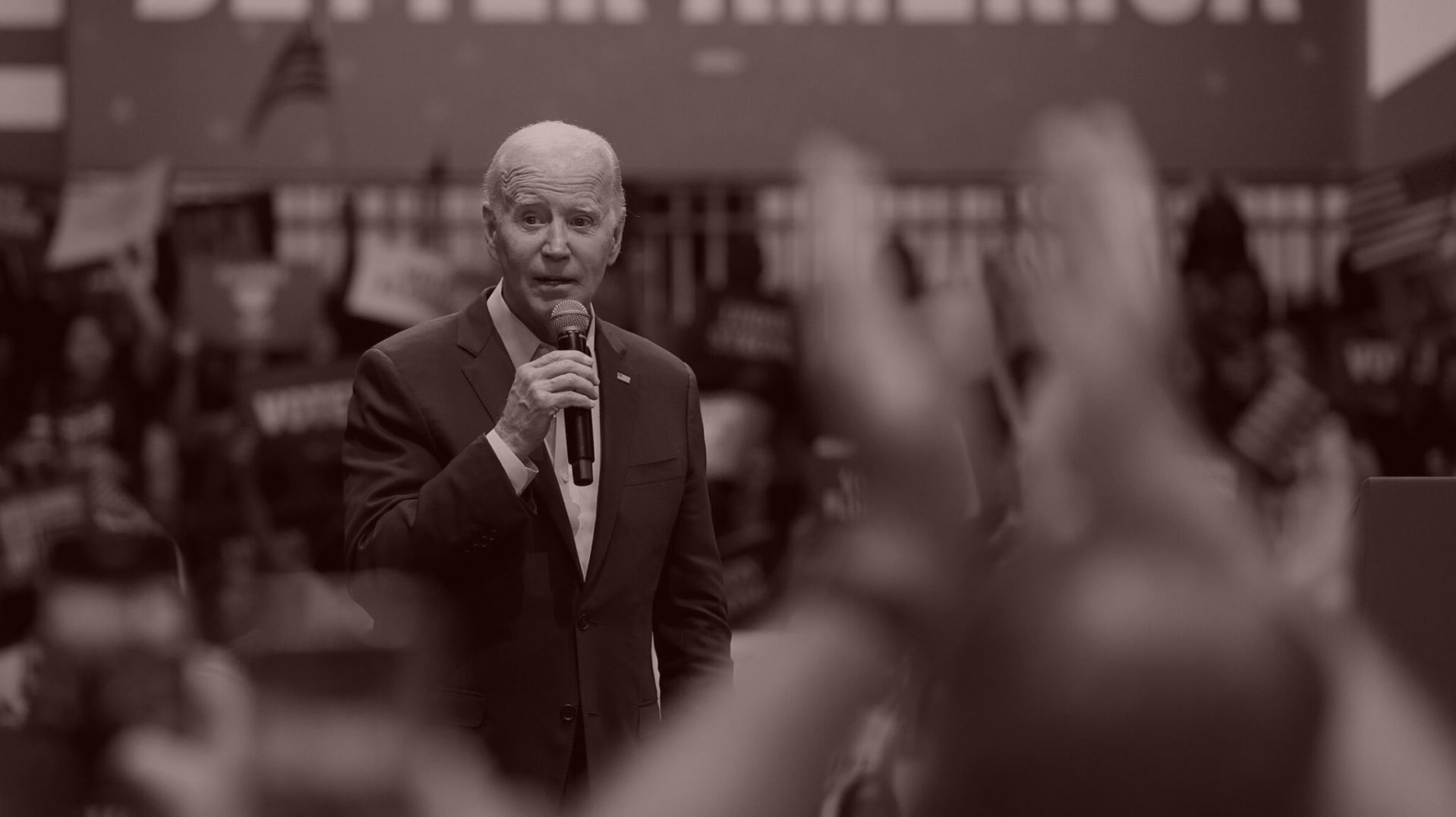 |
| Biden’s Black Voter Dilemma |
| The president’s reelection problem is deeper than his team realizes. If Biden wants to hold on to the White House, and defeat Donald Trump, he’ll need to understand the Black community in a whole new way. |
|
|
|
| The election of Joe Biden didn’t come easily in 2020. A perfect storm of factors coalesced at the perfect time to deliver the Electoral College margin—and it was still close, coming down to less than 45,000 votes in Arizona, Georgia, and Wisconsin. Throughout Trump’s presidency, a record number of Americans hit the streets in protest: Black people responding to police violence; Muslims demonstrating against a religious travel ban; Jews activated by Charlottesville and rising antisemitism; women fighting an anti-abortion Supreme Court; even Republicans concerned by Trump’s authoritarian bent. All of that collective energy translated into votes.But today, that historic coalition is obviously weaker, in large part due to declining support for Biden among the Democratic Party’s most loyal constituency: Black Americans. From NBC News to the AP, all the surveys point in the same direction. According to exclusive polling produced for Puck by Echelon Insights, 18 percent of Black voters said the outcome of this year’s presidential election didn’t matter to them personally—five points above the national average. For non-college-educated voters of color, that number is even higher.
There are two clear factors driving this shift: a perception that Biden has failed to deliver on key campaign promises, and his full-throated (though increasingly qualified) backing of Israel in its response to Hamas’s horrific October 7 attack. Of course, there’s a danger in simplifying a complex story. Not to put too fine a point on it, but Black voters remain overwhelmingly likely to vote for Democrats. There isn’t some sort of great exodus, or “Blexit,” underway. Nor is every Black American aligned with Palestinians over Israelis. But in yet another tight presidential race, likely to come down to tens of thousands of votes in a handful of states, the disillusionment of Black Americans could very well decide the election.
The White House is certainly aware of this enthusiasm gap. They’ve responded with a flurry of fact sheets, dispatched the president to Black churches, and launched a Black History Month media blitz to spread the word about Biden’s accomplishments for Black people. There’s data to support their case: Unemployment, inflation, and crime are all down; small business formation, healthcare access, and wages are all up. In fact, median inflation-adjusted wages for Black Americans have grown faster than for any other racial group over the last four years.
So why the obvious disconnect? I wanted to better understand this myself, so I called plugged-in members of the Black community, dug through historical records, and reflected on my own life to make sense of the shifting sentiment on the ground.
“The biggest word that rings out for me these days is ‘dissonance,’” Pastor Michael McBride told me when I asked how he saw the 2024 election, and Biden’s fraying relationship with Black voters. McBride, who goes by “Pastor Mike,” is a Berkeley-area faith leader, was active in Ferguson, and has led successful campaigns against gun violence and mass incarceration. He also served on President Obama’s Faith-Based Advisory Council, and is regularly in touch with the Biden White House and Congressional Black Caucus. And he’s deeply worried that a meaningful number of these voters will express their frustration—with the economy, the lack of progress on criminal justice reform, and especially Israel’s war in Gaza—by tuning out the election or even voting for the other guy.
Like me, he’s aware of the statistics being touted by the administration and the Biden campaign. But that message is notably out of sync with the sentiment in his community: “Man, here we are in 2024, and life just feels like it’s worse. They told me voting for Biden would make things better. But it doesn’t feel better, doesn’t look better, doesn’t seem better,” McBride said, channeling the frustrations of Black voters he talks to. “But there’s this looming madman who we just experienced four years ago, in Donald Trump, and that really didn’t feel that good, either. So why are we only being offered these two choices where it just doesn’t feel like it’s getting better?” |
|
|
| For all the progress the United States has made since the darkest days of the pandemic, there’s a growing perception in the Black community that the country is backsliding. “There’s a narrative that the economy is great,” said McBride. But “people aren’t stupid,” he cautions, pointing to “mass death” among the nonwhite population during Covid, and the financial insecurity of the gig economy. “You can’t just say things and then be mad that people don’t believe it.”But economic frustrations are only part of the equation. In the Black community, voters are hyper aware of the cultural and political backlash surrounding racial justice following the revolutionary summer of 2020. In the years since, the Supreme Court killed affirmative action; red states are attempting (often successfully) to reverse years of diversity, equity, and inclusion work; and after record-setting demonstrations and demands for changes in policing and public safety, public opinion has moved back toward favoring “tough-on-crime” policies. As a result, progressive prosecutors have been ousted, Biden has emphasized funding the police, and news stories about rising retail theft are fueling the perception of a nation out of control. In the past, moves in this direction have led to increases in the types of criminal-legal action that prompted moves for reform in the first place, because they disproportionately fall on the Black community through surveillance, policing, arrests, or sentencing.
“Notwithstanding the president’s accomplishments, there are key items on, I’ll call it the Black and Brown Agenda, that did not get done,” said Marc Morial, the former mayor of New Orleans and current president and C.E.O. of the National Urban League. The civil rights organization plans to release The State of Black America report on March 5, which will include a report card on Biden’s promises to the Black community. I haven’t yet seen the report, but it seems safe to say that grades will be handed out on the George Floyd Justice in Policing Act, which aimed to establish a comprehensive framework to prevent and remedy racial profiling by law enforcement, and the John R. Lewis Voting Rights Advancement Act, which was meant to modernize the seminal 1965 legislation by strengthening legal protections against discriminatory voting practices. Both bills passed in the House but failed in the Senate.
American presidents aren’t kings or queens (at least not yet), and they aren’t solely responsible for the failure or success of their agendas. But for many younger voters, in particular, the politics of the current moment are a crushing reality check after the pandemic era, when the government flirted with novel, even radical, forms of economic relief. Deep frustration with this course reversal—the undoing of important racial justice work, and a deepening political stasis—is clearly a detrimental factor in Biden’s support among Black voters, which has dropped from 91 percent on election day in 2020 to 75 percent, according to a February NBC News poll. |
|
|
| Another contributing factor, of course, is the president’s ongoing support for Israel in its war against Hamas, despite his recent shift to a more critical tone. The polling on this issue has been unambiguous: Black voters don’t approve of Biden’s Gaza rhetoric and policy. According to a recent Times/Siena poll, 34 percent of Black voters said they sympathized more with Palestinians than Israelis in the conflict, while 28 percent said the opposite. (White, Hispanic, and “other” cohorts were all more likely to sympathize with Israelis.) The data was even more pronounced among younger voters. Rather than preparing to get out the vote, McBride told me, “We’re still having to answer questions about, ‘Is President Biden and the United States complicit in a genocide?’”No matter your politics, it’s impossible to not be appalled at the relentless killing, displacement, starvation, and destruction of infrastructure inflicted on millions of Palestinians in Gaza over the past several months. Prime Minister Benjamin Netanyahu’s punishing ground operation has led to a chorus of concern from many walks of public life, including Black religious leaders—more than 1,000 of whom have publicly issued a demand for a bilateral ceasefire, the return of hostages, an increase in humanitarian aid, and the end of Israel’s occupation of the West Bank. “This whole thing has just turned into quite a moral conundrum for a lot of us who operate in the sphere of ethics,” McBride told me. “Our concerns are largely either trivialized or ignored as naive, and there seems to be no political will to stop it.”
In this fraught moment, after the atrocities on October 7, I’ve been asked by several Jewish friends why Black people feel such a strong sense of solidarity with Palestinians. Several expressed concern and hurt after showing up, both historically and in recent years, in support for Black Americans. In trying to understand this, I considered my own journey: I grew up in the 1980s, in the shadow of both the civil rights movement and the Black Power movement. While both sought liberation for Black people from America’s racist systems, they differed in emphasis and tactics. This tension is explored beautifully in the current NatGeo series Genius: MLK/X, which chronicles the lives of Martin Luther King Jr. and Malcolm X in parallel.
The connection between Black and Jewish Americans, especially around the civil rights movement, is legendary. Jewish Americans were among the founding members of the nation’s oldest and most well-known civil rights organization, the NAACP, and funded and co-led many of its key civil rights legislative battles, including for desegregation. The Ku Klux Klan murdered Andrew Goodman, Michael Schwerner, and James Chaney because of their work to help register Black voters during the Freedom Summer of 1964. Black Americans also showed up for our Jewish allies, having bravely fought in World War II, in part to bring an end to the Nazi regime, with leaders ranging from W.E.B. Du Bois to Marcus Garvey to Bayard Rustin supporting the establishment of Israel, having been inspired by its goals of self-determination.
There’s also a parallel history of Black solidarity with Palestinians, largely born in the 1960s as Black Power activists reframed our domestic struggle as part of a global movement for liberation. These leaders encouraged solidarity with “third world” citizens freeing themselves from European colonial powers. A pioneer in building this bridge was Malcolm X, whose 1964 visit to Gaza, and the refugee camp of Khan Yunis, left an indelible mark on him. Others followed: The Student Nonviolent Coordinating Committee, the Black Panther Party, poet June Jordan, and activist and scholar Angela Davis all embraced the Palestinian cause. Jesse Jackson used his presidential campaigns to link the plight of Palestinians to Black South Africans under apartheid. And James Baldwin, in a prescient 1979 piece for The Nation, warned, “There is absolutely—repeat: absolutely—no hope of establishing peace in what Europe so arrogantly calls the Middle East … without dealing with the Palestinians.”
There are 21st century parallels, as well, between the Palestinian cause and the Black Lives Matter movement, with their mutual focus on state violence and systemic racism. Palestinians echoed cries of “I can’t breathe,” and used George Floyd’s image while protesting Israeli occupation in the West Bank; Palestinian activists advised B.L.M. activists on how to survive police assaults and tear gas. After several months of heart-breaking, gut-wrenching images of war—made possible in part by American weapons and funding—it should come as no surprise that Black Americans are feeling a deep sense of solidarity with Palestinians.
Of course, this need not—and for most it does not—come at the expense of solidarity with Jewish people. As with the civil rights movement, many Jewish Americans were allies of B.L.M., and marched for George Floyd. I recall this dramatic letter, signed by over 600 Jewish organizations, forcefully declaring “Black Lives Matter,” and making explicit the interconnected nature of justice for all.
But the devil is in the details, and sometimes in the words. Some of the solidarity expressed for Palestinians also includes sympathy for the idea of eliminating the Jewish state. Meanwhile, many Black Americans take offense at being labeled antisemitic for demanding action to stop a humanitarian catastrophe inflicted on Palestinians. Underpinning the sense of hurt or betrayal for both groups is the fact that the historical bond between Black Americans and both Jewish and Palestinian communities runs deep. That duality makes this moment extra fragile and confusing.
In under-resourced Black communities, this goes beyond a moral issue. It’s also a matter of resource allocation. As McBride shared with me, “You’ve got some of the least politically conscious people around U.S. imperialism and global affairs asking, Why are we sending all this money to Ukraine, to Israel, and I can’t get none of that to help relieve my own challenges here? This moment is the water on the seed that Tupac planted in the hip-hop generation when he said ‘They got money for wars but can’t feed the poor.’”
Even the surge of resources to deal with the migrant crisis at the U.S. southern border causes many in the Black community to ask, Why aren’t we surging resources to the Southside of Chicago or South Philadelphia or East Oakland? Part of the answer is that we never really have, regardless of the international activities we’ve funded. And certainly the modern Republican Party has no intention of reallocating the money they say they want to save in Ukraine toward poor Black communities. Those programs are on the chopping block too.
Still, Biden and the Democrats can do more to engage with the frustration and disappointment that McBride references. “You’re going to have to sit with some Black folk in the hot seat, and I don’t think they feel like they should have to do that,” he told me. Instead, he said, “they try to sell you some line about how this is better than that [referring to Trump]. But this ain’t good enough.” |
|
|
| In a time of collapsing faith in every kind of institution, it feels shortsighted to use “save Democracy” as a political rallying call. I’ve written before about the limitations of using this tactic to appeal to voters, but it’s a centerpiece of Biden’s reelection campaign. He talks of Trump as a “threat to democracy” and says that “democracy is on the ballot.” But the idea of “democracy” is vague and disconnected from most people’s daily lives, and for Black Americans—who in many cases are not experiencing the benefits of the statistically well-performing economy, who believe that Biden has failed to live up to his promises, and who, every day, witness the government’s backing of a humanitarian disaster—the “democracy” card just isn’t that persuasive.As McBride told me, “I’ve had formerly incarcerated people on my team, who still don’t have their full rights restored, and they’re like, I’m not trying to defend democracy. I’m not even a part of democracy.” Unless “democracy” gets translated into tangible, positive outcomes in people’s lives, not just in data, it won’t resonate and will contribute to the dissonance McBride has noted. Ultimately, he told me, “I think people aren’t holding the whole of this country more than they’re trying to hold together the fragments of their own lives and neighborhoods and people they know and love.”
To be clear, democracy is under threat in a literal sense when Trump promises to act like a dictator on Inauguration Day. Freedom of assembly and the ability to protest government decisions will come under threat if he manages to return to the White House. But we can’t just scream “democracy” and assume people will rally around it, especially when our existing democratic systems aren’t responsive to the will of the people. And that failure to deliver isn’t solely attributable to Trump or Republicans. Leaders from the Democratic Party have overseen rises in unaffordable housing and growing wealth inequality, among other things. And ironically, the party positioning itself as the standard-bearer of democracy has chosen a presidential candidate through a decidedly nondemocratic process. At a minimum, we have to acknowledge people’s skepticism and doubt, and rebuild trust from there. |
| What Do You Have to Lose? |
|
| In the 2020 election, Trump got an estimated 8 percent of the Black vote. Biden got 91 percent. Today, Trump is polling at 16 percent in the Black community. The trend line is clear, and to hear some of his boosters tell it, it’s got to be the shoes. In case you missed it, Trump recently debuted a set of $400 gold sneakers, called the “Never Surrender High-Tops,” at Sneaker Con on the day after a New York state judge ordered him and his companies to pay nearly $355 million (plus interest) in a civil fraud trial. If my math is correct, he’ll need to sell about 100 million pairs to cover that. One TikTok creator called them “January 6s” and “Air Fraud Ones.”A few days later, at a rally in South Carolina, Trump claimed that “the Black people like me” because of all his indictments, which he suggested they could relate to. “My mug shot, we’ve all seen the mug shot. And you know who embraced it more than anybody else: the Black population. It’s incredible.”
The comparison is offensive, and his conclusion is absurd. But in a system that has failed to deliver overall, we can’t deny the appeal of the Trump mythos: He appears successful. He still carries the brand of businessman. He (mostly) evades legal consequences for his transgressions, and has been talking up his legal woes as if he is a rebel or political dissident, rather than a twice-impeached former president who tried and failed to orchestrate a coup.
As Pastor McBride noted, “There’s a certain fascination that Black men have with a billionaire,” especially if those men are far from being a billionaire themselves. Of course, most Black men in America wouldn’t be able to host rallies and hock sneakers while facing 91 criminal counts in multiple jurisdictions, either. “You and Trump have totally different experiences of life, bro,” McBride joked about anyone seeing themselves in Trump. “You wouldn’t be flying on a private jet back and forth to Mar-a-Lago with all these indictments. You’d be in jail, bro! While you fight your cases, you would be in jail.”
Yet Trump feeds off of despondency. He lies repeatedly, takes credit for things he didn’t do, and promises things he can’t deliver. As McBride said, “I think Black men are looking at the state of their life and they’re feeling like, ‘I’m out here on my own and I’m grasping for straws.’ If you were drowning in an ocean and someone comes along and throws you a lifeline, you wouldn’t care what is in the boat on the other side because you’re in such a state of emergency.”
We are still far from the election, and I find it hard to believe that large numbers of Black people will vote for Trump instead of voting for a third-party candidate, or opting out entirely. But that depends on what Biden, the Democrats, and all of us who believe in the possibility of a better democracy—even as we struggle against the ineffectiveness of the current version—do in this moment. What’s required is delicate and complex choreography.
On the economic and justice agenda, Democrats must humbly engage with voters who are drifting from Biden rather than repeat talking points about how great everything is. On the Israel-Hamas war, we must simultaneously hold that Black solidarity with Palestinians isn’t necessarily a rejection of Jewish people, and that Jewish fears of resurgent antisemitism and the erasure of Israel are legitimate. As for Trump, I sincerely hope he’s convicted of everything, but I wouldn’t count on institutions saving us. We have to save ourselves, and it’s going to take a broad, though imperfect, coalition to do it. Again. |
|
|
|
| FOUR STORIES WE’RE TALKING ABOUT |
 |
| R.F.K. Shrugged |
| An audit of Kennedy’s grueling audition for the Libertarian ticket. |
| PETER HAMBY |
|
 |
| Cafe Milano |
| Show notes and deal chatter from the sidelines of Milan Fashion Week. |
| LAUREN SHERMAN |
|
 |
| MLB’s Pantsgate |
| The stupid and increasingly serious micro-scandal defining baseball preseason. |
| JOHN OURAND |
|
 |
| Spulu Agony |
| Could the D.O.J. kill the Disney-Fox-WBD sports streamer? |
| ERIQ GARDNER |
|
|
|
|
|
 |
|
|
| Need help? Review our FAQs
page or contact
us for assistance. For brand partnerships, email ads@puck.news. |
| You received this email because you signed up to receive emails from Puck, or as part of your Puck account associated with . To stop receiving this newsletter and/or manage all your email preferences, click here. |
| Puck is published by Heat Media LLC. 227 W 17th St New York, NY 10011. |
|
|
|