Hello, and welcome back to The Best & The Brightest. I’m Peter Hamby. Tonight, I
dig into concerns that Democrats aren’t positioning themselves as populist guardians against power-hungry A.I. companies, as some clever Republicans begin to speak out against A.I.’s more sinister threats. With Donald Trump letting tech leaders run amok, A.I. is already a massive political issue. Do Democratic politicians even know how to talk about it? More below…
Mentioned in this issue: Ron DeSantis, J.D. Vance, David
Sacks, Sam Altman, Mark Zuckerberg, Sergey Brin, Satya Nadella, Jensen Huang, Joe Rogan, Steve Bannon, Tucker Carlson, Josh Hawley, Travis Kelce, Barack Obama, Alexandria Ocasio-Cortez, and many more…
Let’s get right into it… |
|
|
With an A.I. profiteer in the White House and no congressional mojo, Democrats have been
shockingly impotent on A.I., an issue that infuriates or scares the hell out of most Americans. Now, even as they muster some resistance, they risk being outflanked. |
|
|
Late last week, Florida Gov. Ron DeSantis revealed a “Citizen Bill of Rights” for artificial
intelligence, a stocking stuffer list of proposals aimed at protecting consumers from every anxiety-inducing aspect of A.I.: deepfakes, data collection, chatbots engaging with minors in a creepy way, other chatbots posing as mental-health experts, Chinese A.I. tools, the fraudulent use of names and likenesses, noisy and grid-straining data centers, and so on.
The announcement was newsy on the merits—admit it libs, Ron DeSantis has a few good ideas—but also because it was a
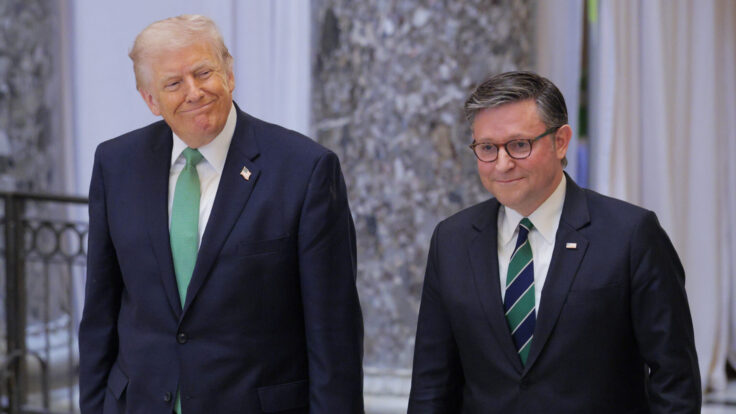
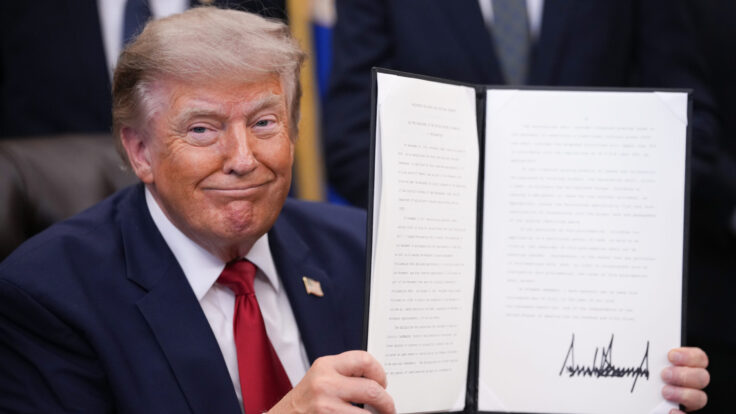
Republican deviating from the Trump administration’s cozy, laissez-faire relationship with the country’s top A.I. companies. Since his inauguration, Trump, alongside Vice President J.D. Vance and A.I. “czar” David Sacks, has welcomed growth-hungry A.I. leaders into the White House, and let their companies run wild without much oversight. Just this week, Trump allowed Nvidia to sell advanced H200 chips to China, and he promised
to sign an executive order blocking states from passing their own A.I. regulations—a key demand of tech titans like Sam Altman, Mark Zuckerberg, Sergey Brin, Satya Nadella, and the fellas at Andreessen Horowitz who want to make sure pesky states like California and New York don’t “stifle innovation.” Trump has been happy to do their bidding, and they’ve noticed. Last week, Nvidia C.E.O. Jensen Huang told
Joe Rogan that Trump “saved” the A.I. sector in the United States by deregulating pretty much everything the industry touches. |
|
|
Instagram Teen Accounts default teens into automatic protections for who can contact them and the content they can
see.
Nearly 95% of parents say Teen Accounts help them safeguard their teens online. And we’ll continue adding new protections, giving parents more peace of mind. Explore our ongoing work to keep teens safe online. |
|
|
The administration’s coziness with the industry has alarmed the usual populist figures on the
right—Steve Bannon, Tucker Carlson, Josh Hawley, etcetera—who think Trump is giving A.I. firms too much runway without considering the many possible downsides. “It’s only the biggest issue of our time!” Bannon told me last week. After Trump signed an executive order this summer expediting permitting for data-center construction on federal lands, Marjorie Taylor Greene was one of few Republicans who spoke up. “My deep concerns
are that the E.O. demands rapid A.I. expansion with little to no guardrails and brakes,” she said at the time.
Comments like those—along with the DeSantis announcement—have caught the attention of Democrats who worry their party is being caught flat-footed as A.I. becomes one of the dominant economic and political issues of the decade. “Americans know enough to know that A.I. is a threat, but they don’t know which party is going to stand up to it,” said Alyssa Cass, a New
York–based Democratic strategist. “Trump is captured and controlled by a handful of tech billionaires, making it the most obvious political opportunity for Democrats to ride a populist wave and rebuild a national coalition against this power grab that threatens our safety and the fabric of our society.” |
The Democrats’ Next NAFTA
|
Existential A.I. dread has blossomed into a consensus issue in polls, cutting across ages, genders, and
political affiliation. A Reuters/Ipsos poll from August found that 71 percent of Americans believe A.I. will lead to mass job losses, and 66 percent said they’re worried chatbots will become “a replacement for in-person relationships.” (A 60 Minutes piece on Sunday about Companion AI that featured a “Travis Kelce” chatbot flirting with a teenager and demonstrating how to chop up lines of cocaine didn’t allay anyone’s fears.) A Pew survey in April found that 43 percent
of Americans think A.I. will “harm them,” with only 17 percent saying A.I. will have a positive impact on the country over the next 20 years.
Concerns are especially acute among young people, the generation that will come to dominate elections over those next 20 years. The latest Harvard Youth Poll found that large majorities of young Democrats (66 percent) and Republicans (59 percent) view A.I. as a threat to their future job prospects—more than immigration or outsourcing—making it one
of the few areas of cross-party agreement in the poll. Among racial groups, worries were most pronounced among young Latinos, maybe the swingingest bloc of voters in American politics. “A.I. is amplifying young people’s worries about jobs, careers, and stability,” said John Della Volpe, who runs the Harvard poll. “If Democrats first acknowledge those concerns—and then set some clear rules—they can start earning back lost trust.”
And yet, progressives are struck by
the lack of outspoken leadership on A.I. from top Democrats—beyond piecemeal proposals in Congress and a handful of laws passed under Democratic governors—as Trump cozies up to a deeply unpopular industry. So far, in fact, it’s been MAGA Republicans trying to seize the legal and ethical high ground. “Refusing to regulate Big Tech and A.I. is going to be the Democrats’ next NAFTA,” said Lorena Gonzalez Fletcher, president of the California Federation of Labor Unions. “Ten years
from now, we will say, ‘Oops! We could’ve, should’ve done better for workers, for our planet.”
An even blunter take from the populist left appeared in The American Prospect in September, in a story headlined “Democrats Must Oppose the A.I. Industry.” As authors Dylan Gyauch-Lewis and Max Moran put it: “A.I. as we know
it today is a planet-burning, cancer-causing, energy-gobbling, alienation-driving, brain-rotting, fascism-enabling, waste-maximizing pox of a technology.” |
Do Democrats even know how to talk about A.I., let alone muster the will to rein it in? Like anything
tech-related, some politicians do, some don’t, and others earnestly admit they still have a lot to learn. I got a glimpse of the learning curve at last weekend’s Democratic Governors Association meeting in Phoenix, where dozens of sitting governors and candidates descended on the palm-lined Arizona Biltmore Resort. Amy Acton, the presumptive Democratic nominee for governor in Ohio, told me she’d arrived at the hotel in an A.I.-powered Waymo—her first time riding in an autonomous
vehicle. “My partner, who often drives me, was sitting in the back seat, and he said, ‘I just lost my job on the way over!’” |
|
|
Last year, Instagram launched Teen Accounts, which default teens into automatic protections. Now, a stricter “Limited
Content” setting is available for parents who prefer extra controls. Instagram will continue adding new safeguards, giving parents more peace of mind. Learn more. |
|
|
Acton was among those who admitted she has much to learn about A.I. policy, and said her team was “digging
deep” into it. “It is going to be disruptive,” she said, “but we have to figure out how to harness it for good.” The good? She cited workforce training in education. The bad? Energy prices. There are almost 200 data centers in Ohio, including several run by hyperscalers Google, Meta, and Amazon. When Acton talks about skyrocketing energy bills, she sounds like Mikie Sherrill, New Jersey’s new governor-elect, who made much of her campaign about exactly that issue.
But
Acton is running against Vivek Ramaswamy, who, despite his blabbermouth tendencies, hails from the private sector and talks about the issue with far more expertise than his rival. “How do you avoid social unrest? How do you have an entire generation that could be, in some sectors, … displaced by A.I.?” Ramaswamy said on a recent Fox News segment devoted entirely to such technological disruption, as well as his plans to protect Gen Z from white-collar job displacement. His
solution was convoluted—replacing federal entitlements with stock market accounts so that young people can build wealth on the back of A.I. growth—but he at least sounded A.I. fluent.
Down the hall at the Biltmore, I chatted with Missy Hughes, a Democrat running for governor in Wisconsin. She’s the former C.E.O. of the Wisconsin Economic Development Corp, a public-private agency with the mission of attracting private investment to the state, so she doesn’t exactly sound
like Bernie Sanders. She led with the positive. “I tend to think of A.I. as a huge opportunity in healthcare and manufacturing,” she said, likening it to “the introduction of electricity.” As for the impact of automation on manufacturing, she said that every company she talks to just wants to make jobs better and safer for workers. If A.I. can help eliminate some rote tasks—moving a sheet of metal from one point to another, say—and let people use their brains, “that is
great.”
Hughes’ outsize optimism aside, I was struck by how few Democrats at D.G.A. actually wanted to talk about artificial intelligence—a topic that is literally top of mind these days for almost every American with a pulse. More than half a dozen sitting governors and candidates (via their staffers) passed on the opportunity to talk to a national reporter about the industry, on whichever angle they wanted. Maybe that’s to be expected at a donor confab in the beginning of a new
election cycle. Yet the issue touches nearly every political and cultural flashpoint in this country—the economy, energy prices, mental health, privacy, parenting, income inequality, national security, etcetera. “I think if you can’t come up with more than basic talking points about the most transformative technology of our lifetimes, you have no business running for higher office,” said Jon Favreau, the Crooked Media host and former Barack Obama advisor.
|
That’s not to say there are no Democrats screaming from the mountaintops about the coming threats.
There just aren’t that many of them. Connecticut Sen. Chris Murphy, for one, has been warning for years about the A.I. industry’s failure to regulate itself. Last month, after Anthropic announced they had detected a Chinese cyberattack against its Claude Code tool, Murphy posted in fury on X: “Guys wake the f up. This is going to destroy us—sooner than we
think—if we don’t make AI regulation a national priority tomorrow.” Other Democrats are drawing up actual proposals. Sen. Mark Kelly’s “A.I. for America” road map aims to protect American workers from job losses and energy costs, as detailed recently by my colleague Ian Krietzberg. The “A.I. Civil
Rights Act” legislation being pushed by a group of Senate and House progressives—including Ed Markey, Elizabeth Warren, and Alexandria Ocasio-Cortez—would try to prevent A.I. companies from using discriminatory algorithms. |
|
|
Of course, putting guardrails on A.I. at the federal level remains impossible with Trump in the White House
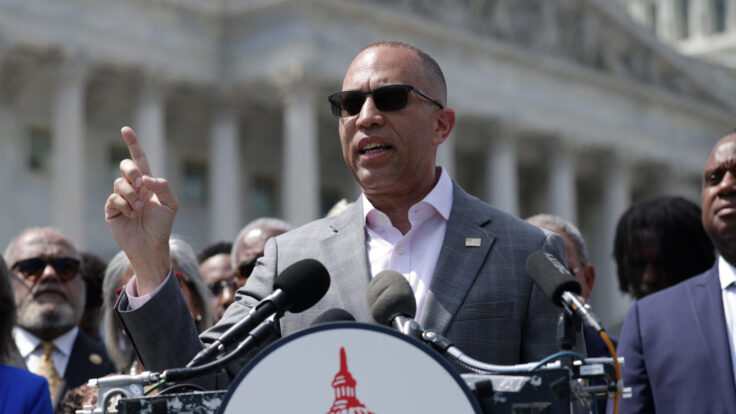
and Democrats confined to minority status on Capitol Hill. Still, I recently asked House Minority Leader Hakeem Jeffries, during an interview on my Snapchat show Good Luck America, if Democrats should position themselves against Republicans as the party of responsible A.I. regulation in the 2026 midterms. He offered a well-crafted non-answer. “How do we leverage those benefits for the good of everyday Americans—the least, the lost, and the traditionally left
behind—while making sure that there are guardrails in place to prevent bad actors from seizing on this transformational technology to promote bad ends?” he asked me. (Just today, Jeffries announced the launch of a new House Democratic working group on A.I. issues, to “develop policy expertise in partnership with the innovation community, relevant stakeholders, and committees of jurisdiction.”)
Meanwhile, with Washington doing next to nothing, pushback against the big A.I. companies is
happening in state capitals, which is precisely what tech C.E.O.s (and for that matter, the White House) don’t want. Their biggest regulators so far hail from the two biggest blue states—California and New York. In tech-friendly California, home to dozens of the world’s leading A.I. firms, Gov. Gavin Newsom signed one bill establishing transparency protocols and safety guidelines for A.I. companies, and another aimed at regulating companion chatbots. But he also vetoed another
A.I. safety bill requiring models to undergo safety testing before their release. Newsom, of course, has to perform a delicate balancing act—hyping up his state as a progressive citadel while also keeping on the good side of the business community, and its big donors. During an appearance at the New York Times DealBook Summit last week, Newsom praised Sam Altman and made a point of noting that OpenAI is headquartered in California.
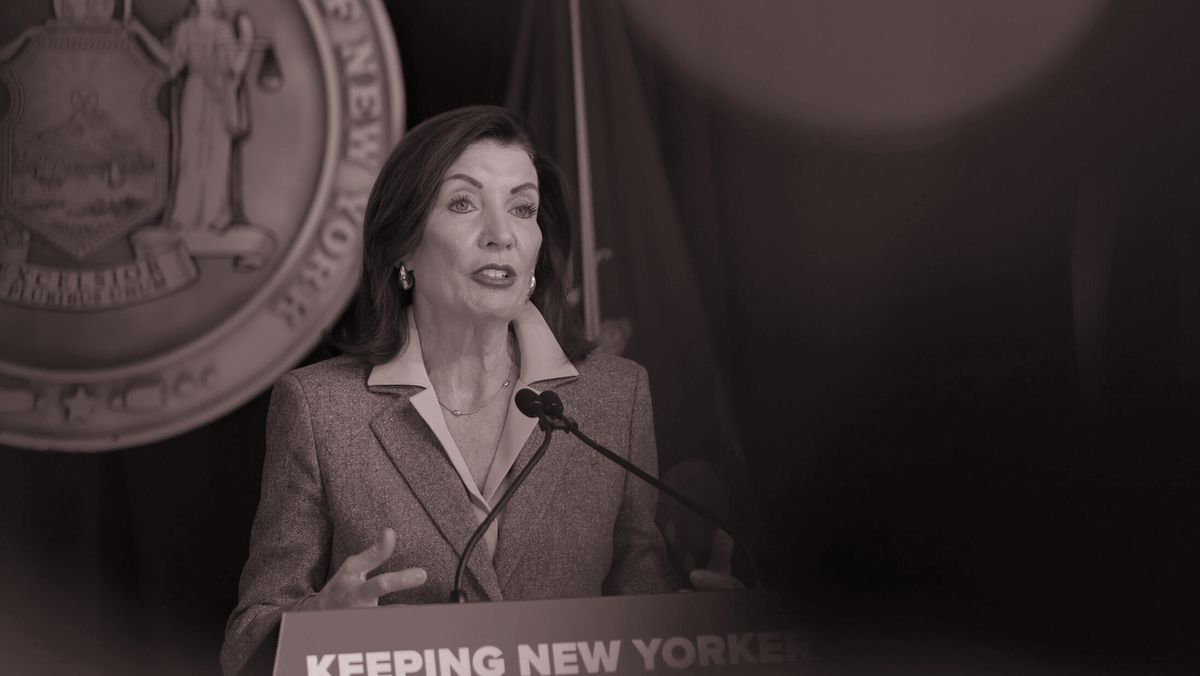
Meanwhile, in New York, Gov. Kathy
Hochul has been at the forefront of A.I. policy. The state has outlawed A.I.-generated child pornography, and it requires safety protocols for A.I. chatbot companions, including ones designed to prevent self-harm among users, and warnings to consumers if they are spending too much time talking to A.I. companions. Last year, Hochul launched “EmpireAI,” a research consortium to make New York “a national model in responsible A.I. innovation,” tapping universities and experts to drive such
advances in sectors like medicine, education, energy, and climate change.
Still, it’s not clear if Hochul will sign the Responsible A.I. Safety and Education (RAISE) Act, which places unprecedented transparency demands on tech companies to ensure their A.I. models are safe. The bill, backed by State Senator Alex Bores, has passed the New York legislature, but A.I. companies hate it. Leading the Future—a pro-A.I. super PAC backed by Andreessen Horowitz partners and
Palantir co-founder Joe Lonsdale—is now spending heavily in New York City to defeat Bores’s bid for Congress as an anti-A.I. crusader. An unspoken message from these tech kingpins? If you speak out against us, we’ll come after you, in 2026 and beyond.
There is, however, at least one part of the A.I. conversation where Democratic governors seem to have found consensus, and a possible populist lane: regulating the Wild West expansion of data centers, especially in rural
states where companies and prospectors swoop in with hazy promises of job creation and future-proofing small towns. Several Democratic governors and candidates I’ve spoken with expressed serious concerns over the energy and water demands that data centers put on their states. In Kentucky this week, Gov. Andy Beshear called A.I. “a big deal” and “maybe the dominant field in the next 10 years in the United States” during an economic event in Louisville. But Beshear—who is eyeing a
presidential bid in 2028—also said that A.I. companies should not be getting tax breaks in states where they build data centers. Instead, he said, they should be taxed where they operate, to help pay for schools and community budgets. Beshear also said those corporations, not local citizens, should be paying for the rising utility rates their operations entail.
In deep red Iowa, gubernatorial hopeful Rob Sand—a star candidate for Democrats this midterm cycle—said that
A.I. companies must make good on their promises to create jobs beyond initial construction work and pledge to be responsible stewards of the state’s natural resources. His state is a growing hub for data centers, with 100 operations owned by the likes of Google, Microsoft, and QTS. But Sand, sounding very prairie populist, told me that “data centers owned by the richest companies in the world shouldn’t get to dodge paying taxes while driving up utility prices for hard-working families,
especially as our state faces a $1 billion deficit and every day Iowans struggle to get by.” Maybe coming up with a solid message on the issue doesn’t require so much study after all. |
|
|
Need help? Review our
FAQ page or contact us for assistance. For brand partnerships, email ads@puck.news.
You received this email because you signed up to receive emails from Puck, or as part of your Puck account associated with {{customer.email}}. To stop receiving this newsletter and/or manage all your email preferences, click here.
|
Puck is published by Heat Media LLC. 107 Greenwich St., New York, NY 10006 |
|
|
|