Welcome back to The Best & The Brightest. I’m Leigh Ann Caldwell.
I hope
everyone had a restful and not too eventful Labor Day. The day after always feels like a gut punch, especially this year, and especially in Washington, where September is going to be painful. Once again, the Epstein files will be front and center; Congress might be hurtling toward a government shutdown; Republicans will have to decide whether to reject the president’s $5 billion “pocket rescission”; the upper chamber will likely face a nomination fight for a
Federal Reserve Board seat as Trump attempts to remove Lisa Cook; and it might also enact a rule change to get Trump’s nominees through more quickly. I’ll have a lot more on all of that in my column tomorrow—in particular the pressure building on Republican Senate Majority Leader John Thune.
In today’s issue, my partners Peter Hamby and John Heilemann dig into the president’s threats to
send in the troops to major cities, why Democrats struggle to talk about crime, and what all of it means for ’28. Plus, Ian Krietzberg spotlights two new pro-A.I. super PACs and the industry’s latest regulatory drama. (Sign up for his private email, The Hidden Layer, here.)
But first… |
- Shutdown
strategery: Congress returned to town today with a long and contentious to-do list. The first item: funding the government before the fiscal year ends on September 30. This was already going to be complicated since it requires a bipartisan effort—at least in the Senate, where a bill needs 60 votes to pass. But Trump’s $5 billion pocket rescission—a request to claw back funds so close to the end of the fiscal year that it will automatically go into effect if Congress doesn’t act—has
raised the stakes. Senate Minority Leader Chuck Schumer is once again staring down the barrel of a shutdown, with the base agitating to use this point of leverage to fight Trump. (Why agree to a spending plan, after all, if the president is just going to ignore it?) Republican sources, meanwhile, argue that the president’s latest attempt to bypass Congress should give Democrats more incentive to keep the government open, rather than hand more power to the administration
through a shutdown. This was Schumer’s own logic the last time he folded to Trump, but it’s a lot harder to see that sentiment prevail this time.
- Hinson’s Iowa bid: Some good news for Senate Democrats: Earlier today, Republican Sen. Joni Ernst of Iowa announced that she won’t seek reelection when her term ends—another loss for the G.O.P. in an important state. Of course, Iowa went for Trump by about 13 points in 2024, but the lack of
an incumbent will make the Senate seat a bit more competitive for Democrats.
Meanwhile, Republican Rep. Ashley Hinson quickly jumped in. Hinson, who was the first member of the Iowa delegation to endorse Trump last year—after the Iowa caucuses, and on the day of the New Hampshire primary—is also expected to get the president’s endorsement, which will help clear the field.
|
|
|

| Ian Krietzberg
|
|
- New A.I. super PACs:
This past week saw the birth of two shiny new pro-A.I. super PACs, both focused on supporting candidates “aligned with the pro-A.I. agenda.” The first, a network of super PACs calling itself Leading the Future, has already secured more than $100 million in funding
from industry powerhouses such as Andreessen Horowitz, OpenAI co-founder Greg Brockman, and Perplexity. Naturally, the organization is committed to opposing “policies that stifle innovation, enable China to gain global A.I. superiority, or make it harder to bring A.I.’s benefits into the world.”
The effort will be led by a pair of transactional comms guys: Zac Moffatt, founder and C.E.O. of Targeted Victory; and Josh Vlasto, the longtime
New York Democratic political hand and spokesperson for Fairshake, a super PAC that has helped secure positions of power for crypto supporters. (Fairshake is also funded, in large part, by Andreessen Horowitz; it
spent nearly $200 million on lobbying efforts last year.)
Meanwhile, Politico reported that Meta is planning to launch a state-focused super PAC called
Mobilizing Economic Transformation Across (META) California, focused on supporting candidates who don’t want to strictly regulate A.I. The same buzzwords appeared here, too: In a statement, Brian Rice, Meta’s V.P. of public policy, said that the regulatory efforts coming out of California could “stifle innovation, block A.I. progress, and put California’s technology leadership at risk.”
Of course, vague pronouncements about the “stifling” of innovation through regulation
are demonstrably self-serving; numerous public policy experts and independent researchers have told me that regulation is vital for inspiring the right kind of innovation. They just might need a super PAC of their own to help get the message out. - Speaking of…: Last week, Colorado Gov. Jared Polis held a special session to address, among other things, concerns regarding the implementation of the state’s first-in-the-nation A.I.
regulation law. In May 2024, Polis signed the bill “with reservations,” and asked the legislature to move quickly to amend it. But those amendments didn’t materialize, and when pushback from tech lobbying groups and the broader industry morphed into a cacophony, Polis called the special session.
Two different bills were proposed during the
session, but everything fell apart at the finish line. “Overnight, the tech industry decided that they were so unhappy with the compromise that had been achieved by consumer protection organizations, educators, labor, and business[es] that they would rather return to [the 2024 law],” Senate Majority Leader Robert
Rodriguez, the lead author on the original A.I. bill, said on the Senate floor. “It became impossible to iron out a path forward that works for everyone. That is why I am delaying implementation.”
Now, the law won’t go into effect until June 30, 2026, as opposed to its initial start date of February. That gives the legislature a few extra months to argue with lobbyists until everyone is blue in the face.
|
|
|
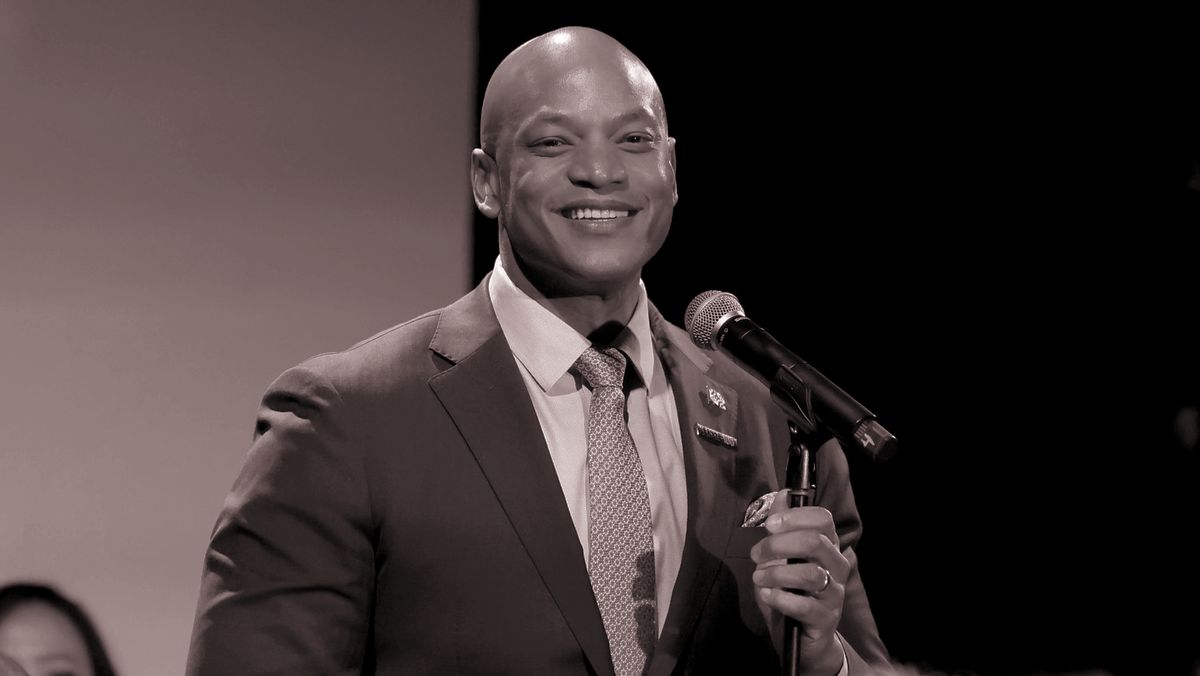
The president’s vow to send National Guard troops into blue cities beyond D.C. has Democrats
on the back foot, even as Gavin and JB (and Wes Moore, and Josh Shapiro…) are jockeying for position as the face of the resistance. |
|
|

| Peter Hamby
|

| John Heilemann
|
|
|
|
With his poll numbers down on just about every issue—the
economy, inflation, even
immigration—Donald Trump is reverting to one of his greatest hits: the ostensibly deplorable state of crime in blue cities. He’s deployed National Guard troops to Washington, D.C., and is threatening to send more to places like Chicago, Baltimore, and Los Angeles. Of
course, blue-state governors like Gavin Newsom and JB Pritzker are seizing the chance to position themselves as fighters taking on Trump, even as the issue remains a potential liability for Democrats. Yes, murder rates have declined, but 81 percent of Americans, per a recent AP poll, believe crime is a “major problem” in big cities. (“Another 80-20 issue Democrats get wrong,” as the N.R.C.C.
put it in a press release blasting out the poll results.)
On a recent episode of The Powers That Be, I chatted with my colleague John Heilemann about what the crime fight portends for the possible 2028 Democratic contenders—Gavin and JB, of course, but also Wes Moore, Josh Shapiro,
Gretchen Whitmer, and maybe even Kamala Harris—and their ability to seize voter attention in a shell-shocked media environment. The conversation below has been lightly edited for length and clarity, or you can listen to the whole thing here. |
Peter Hamby: Violent crime might be down in major cities where Trump is
threatening to send the National Guard, but it’s still a real problem. Is this something that Democrats truly struggle with talking about? And has Donald Trump gotten back to a place where he’s unpopular on pretty much every issue, and sees crime as a thing where he can put some points on the board?
John Heilemann: This is a safe space for him. It’s worked for him in the past. There is too much violent crime in almost every big
city—in red states as well as blue states. A lot of people in big cities would like there to be less crime. Democrats are right to say that crime is not rampaging out of control, but they’re crazy if they want to cling to statistics in the face of people’s feelings. The smartest Democrats are people who are saying, This is not an emergency. And more importantly, what you are doing, President Trump, is having no effect on crime whatsoever. These are not crime policies he’s pursuing.
These are immigration policies, and specifically, they’re deportation policies.
This is all essentially a Trojan horse for trying to get these deportation numbers up. And across the board, Trump’s numbers with Latinos are down. No one seems to be psyched about the sight of masked, plainclothes ICE agents grabbing people on the street, refusing to identify themselves, throwing them in the back of vans, and shipping them off to God knows where. We need real crime policies that will help big
cities, but the things that Donald Trump is doing are not those things.
This is such an interesting debate for the Democratic Party, because on one hand, you’ve got the D.N.C. meeting in Minneapolis, where they’re hearing from social justice activists saying, Let’s talk about safety and not being tough on crime. And you’ve got reporters who will weave into the fourth paragraph of their article that violent crime is down compared to the
’90s. But if you’re just getting into the nitty gritty of arguing over statistics, you lose sight of what matters in politics, which is people’s feelings. Yes, some old retiree in San Diego who watches Fox News is going to say crime is out of control. But a mom in Prince George’s County, who’s a Wes Moore voter, might also say crime is out of control.
The whole point of politics, and the whole point of leadership, is not to just capitulate to
people’s feelings, but to educate voters and help them understand the situation. But not by just throwing statistics at them and trying to convince them that they’re wrong. The people who most want cops on the street are the people who are in high crime areas. And the people who are in high crime areas in American cities tend to be Black and brown, and white working-class people who are living in neighborhoods that are not gentrified. The people behind “defund the police” were by and large white
progressives; Black Democrats across the country were dramatically against it. If Democrats fall into the trap again of making the mistake they made with defund the police, which is to ignore their own base, they will deserve the political pain they get. If Democrats lapse into some of their old habits, they could manage to give Trump a rare victory when he’s losing on so many fronts. |
Looking at the blue and purple state governors thinking about running for president, I’ve got Gavin
Newsom in California, JB Pritzker in Illinois, Wes Moore in Maryland, Josh Shapiro in Pennsylvania, and Gretchen Whitmer up in Michigan. There might be others, but looking at this group of folks, who’s grabbed your attention? Who do you think has been showing off that they’ve got the juice to run? And who hasn’t?
Governors are where the Democratic bench is, and it also happens to be where the action is. Because Democrats are in the minority on
the Hill, they can’t really do anything other than give speeches, whereas these governors are really in the crosshairs. And this is where Trump’s decision to invade Los Angeles with the federalized National Guard—and the threats to do the same in Maryland, Chicago, and New York—suddenly made those the front lines of political combat. And then there’s the redistricting thing, which is now a national issue. Dan Pfeiffer was on my podcast recently and said this is a key fault line
in the Democratic 2028 sweepstakes: Are you in denial about the severity of the threat, in the sense that you’re not willing to contemplate extraordinary measures, things that Democrats would not normally do?
Newsom and Pritzker are both in the same place right now, fighting fire with fire. They understand the Democratic base is frustrated; they are afraid; they want to see someone who’s willing to take the wood to Donald Trump. Newsom and Pritzker are both serious political athletes;
they can both be incredibly well-funded; they are both serious potential candidates for president.
And I think Wes Moore is, too. Trump is going after him like crazy, because he recognizes that Moore is a serious political athlete. The way Moore did the thing of, Come to Baltimore, Mr. President, if you’re really serious about crime in Baltimore. We’ll go out with the cops, and we’ll take a little ride through Baltimore—I thought that was brilliant. If you can’t get attention in
the current media environment we live in, you’re screwed, and you can’t do that by just doing conventional stuff. Moore picked a fight with Trump without just hitting him over the head with a hammer, and kind of lured him into the briar patch, so he’s getting a fair amount of love.
Josh Shapiro is hugely talented, but he’s really laying low. He has the capacity to go in a few different directions. I would be shocked if he doesn’t run in 2028. Meanwhile, Whitmer is, every day in Michigan,
saying, We can work with Donald Trump. She’s cast her image as a Democratic governor who doesn’t like Donald Trump, but can get along with him and get shit done for Michigan. I don’t think she’s going to run, but if she does, that will put her very much at odds with a lot of these other people we’re talking about, who are on a clear other side of the divide.
A name we didn’t mention is Kamala Harris. I knew she wouldn’t run for California governor during the ICE
tumult, because Gavin Newsom and Karen Bass were in there. But her absence from the front lines of that fight signaled to me that maybe her heart wasn’t in it. It’s kind of hard for her to run for president from California, having not participated in these fights in a more vocal and visible way.
I don’t know what she’s thinking. The basic reading of her not running for governor was that she has decided she at least wants to leave open the option
of running for president. She has a fair case that Biden hobbled her by waiting so long to drop out, but she’s going to have to do some self-scrutiny about her whole political career and the way she ran, because people in the Democratic Party are looking for answers. It’s anything but a slam dunk for her if she does decide to run for president. And it does feel to me that, at least right now, the fire is not in her belly.
You could say, Well, the presidential race is a long
way away. But the presidential race is here. No one who’s an active Democratic primary–type voter is like, Yeah, we have time. Way earlier than I’ve ever heard, there’s an incredible amount of interest among Democrats. In the face of what they’ve seen in the first seven, eight months of Trump 2.0, their sense of urgency is very high, and people are already turning out in reasonably large numbers at a lot of the events that people are doing. The race is starting now. |
|
|
Join Puck’s chief political columnist, John Heilemann, as he roams the corridors of power and influence in America on this
twice-weekly interview show, taking you beyond the headlines with the people who shape our culture: icons and up-and-comers, incumbents and insurgents, moguls and machers in the overlapping worlds of politics, entertainment, tech, business, sports, media, and beyond. The conversations are rich and revealing, unrehearsed and unexpected… and reliably impolitic. A Puck-Audacy joint, new episodes drop every Wednesday and Friday. |
|
|
Unique and privileged insight into the private conversations taking place inside boardrooms and corner offices up and down Wall
Street, relayed by best-selling author, journalist, and former M&A senior banker William D. Cohan. |
|
|
Need help? Review our FAQ page or contact us for assistance. For brand partnerships, email ads@puck.news. You received this email because you signed up to receive emails from Puck, or as part of your Puck account associated with {{customer.email}}. To stop receiving this newsletter and/or manage all your email preferences,
click here. |
Puck is published by Heat Media LLC. 107 Greenwich St, New York, NY 10006 |
|
|
|