{{ 'now' | timezone: 'America/New_York' | date: '%b %d, %Y' }} |
|
|
Greetings from Los Angeles, and welcome back to In the Room.
In tonight’s
edition, news, notes, and fever dreams in the wake of the strategic revelation that Barry Diller once expressed interest in buying CNN. He’s not the only well-known or would-be media mogul to float the idea in recent years, but it’s not going to happen. If Zaslav sells to Netflix, Gunnar’s Global Networks business needs CNN’s revenue to offset its significant debt. If the Ellisons prevail, they’ll require its
$600 million in profit to pay off their debt—even as they shove it into the Bari Weiss meat grinder. So, what’s the real story behind that Wall Street Journal exclusive? And how much is CNN actually worth now? That’s the subject of tonight’s issue…
🍸 Plus, on the latest episode of The Grill Room, Julia and I deciphered the Diller scuttlebutt and debated whether any new owner could solve CNN’s digital dilemma (probably
not). We also reflected on the largely self-inflicted crises facing media leaders from Bari Weiss to Will Lewis to Mark Thompson. Then, Julia shared her top takeaways from Netflix’s latest Engagement Report. Follow The Grill Room on Apple, Spotify, or wherever you prefer to listen.
Also mentioned in this issue: Don Lemon, Chris Licht, Trump, Tim Miller, Monique Pressley, Katie Phang, David Brooks, Jeff Goldberg, Nellie Bowles,
Mike Bloomberg, Gabe Sherman, Barry Diller, Elon Musk, Fareed Zakaria, Jeff Zucker, and many more…
But first… |
- Lemon gets squeezed: As everyone here has likely already heard, Don Lemon was arrested in Los Angeles today on federal charges stemming from his on-the-ground coverage of a recent protest at a Minnesota church—an egregious overreach by the Justice Department that has drawn outrage from First Amendment advocates and media institutions, including Lemon’s former employer, CNN.
The administration’s actions here are obviously troubling and warrant
rebuke. On a separate note, one media executive observed caustically that this was the best thing to happen to Don since he got a job in primetime television. As you know, Don was forced to strike out on his own as a citizen journalist after being defenestrated by Chris Licht in 2023. (Zaz apologized with a bottle of Opus One). Despite his relegation,
Don has been tirelessly keeping the show going through a daily YouTube program and in-the-field reporting—including at the church in St. Paul where he was covering the protest. An admirable effort, to be sure, though not something that was going to sustain the celebrity status he’d achieved at CNN.
Now, Don’s arrest has thrust him into the center of a national story about Trump’s abuse of power and conferred a momentary pseudo-martyrdom status. Don’s YouTube show, which
rolled through the day with a rotating cast of hosts—Tim Miller, Monique Pressley, Katie Phang—drew tens of thousands of viewers (high by the show’s standards). It’ll be interesting to see how he capitalizes on it… - David Brooks to Atlantic: Veteran New York Times opiner David Brooks is decamping to The Atlantic, where he will serve as a staff writer while moonlighting
as a senior fellow at Yale. This is yet another big-ish-name get for Jeff Goldberg, who has amassed a lot of talent of a certain type at the magazine in recent years. Of course, he’s acquiring Brooks in his post-political era. The once-influential weathervane for center-right conventional wisdom has since morphed into
something more closely resembling a national guidance counselor, with high-altitude treatises on civilizational unraveling and the state of our societal psyche. Come to think of it, it’s actually perfect for The Atlantic.
- And finally… the media’s obsession with Bari Weiss (guilty!) has grown so insane
that her wife Nellie Bowles is now getting the People magazine treatment. A reminder that even as the TV industry is dying, it’s dying under Klieg lights.
|
|
|
Speculation that Barry Diller had considered buying CNN has set off another wave
of panicked fever dreams surrounding the future of the network if or when WBD’s cable portfolio is severed from the Studios and Streaming mothership. Is it all just industry psychobabble, or has Zaz enlisted a pal to help close his deal with Netflix? |
|
|
Decades ago, Mike Bloomberg was having breakfast with a friend in Paris when he
asked, “Do you think I could buy The New York Times?” His friend told him that the paper wasn’t sold in the hotel, to which Bloomberg offered a clarification: “No, do you think I could buy the Times?”
This amusing vignette first surfaced in a 2012 New York magazine article about the business magnate and his post-mayoral ambitions, in the 24th of 38 paragraphs. As Gabe Sherman noted in the piece, purchasing the
Times was an oft-discussed next act for Bloomberg, though he had made no serious moves to obtain it. The article instead explored more realistic possibilities: running Bloomberg LP and running for president, both of which Mike did.
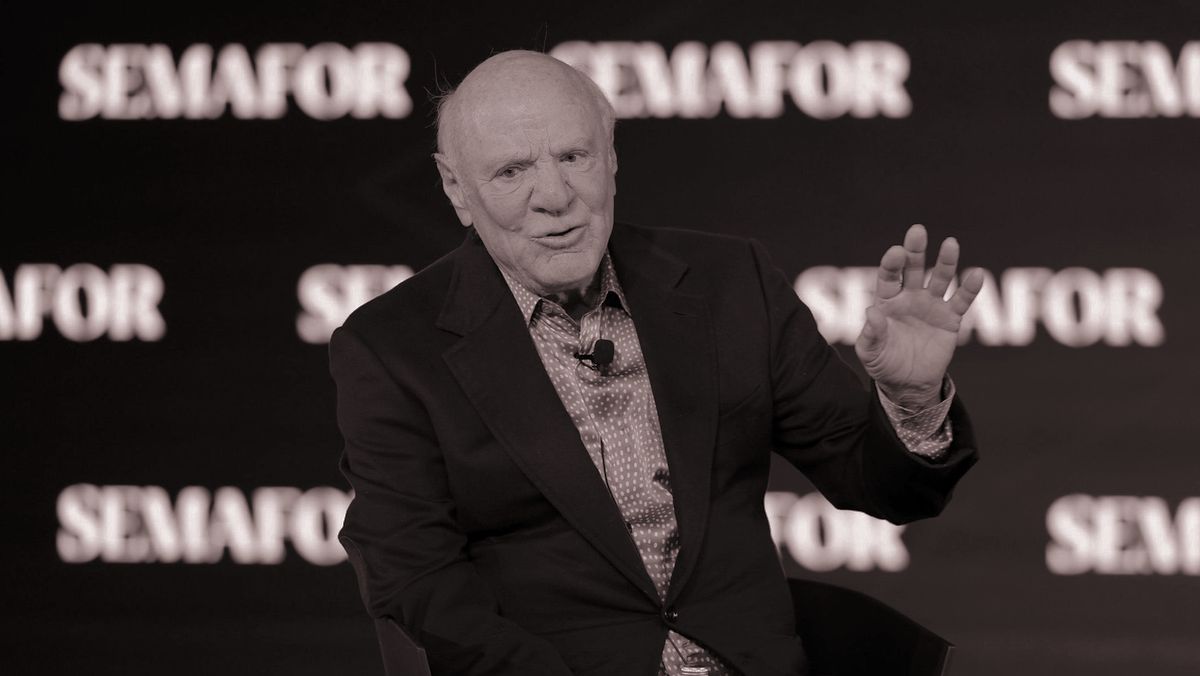
Mike’s croissant confab came to mind on Wednesday when The Wall Street Journal broke the news that Barry Diller had approached Warner Bros. Discovery last year to express his interest in buying CNN—not as a detail in
a story, but as an exclusive. In the second sentence, however, it noted a few caveats: “No serious action was taken on Diller’s inquiry nor was it taken to the Warner board of directors.” Even that may have underemphasized the extremely casual nature of the overture: Diller, a friend of WBD chief David Zaslav, has indeed floated the idea to him on a few occasions, but there’s never been a pitch deck, no bankers involved, nothing beyond a hypothetical. And for
what it’s worth, Warner’s official statement is that CNN “was not and is not for sale.”
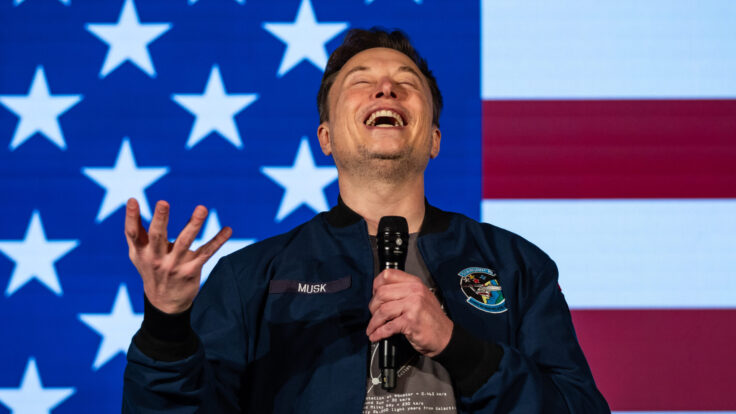
It’s perhaps also worth noting that, in recent years, several well-known and would-be media titans have casually expressed to Zaz their interest in buying CNN. One of the more recent, I learned this week, is Elon Musk. (Fun, unrelated fact: Barry and Elon were in Zaz’s suite at the U.S. Open in 2024, along with none other than CNN’s own Fareed
Zakaria.) Elon did not respond to a request for comment, but it’s hardly surprising that an irreverent centibillionaire who spent $44 billion to commandeer Twitter and bend it toward his political and media preferences wouldn’t be similarly piqued by paying a fraction of that to reengineer the world’s most prominent 24-hour global news network.
Anyway, Barry and Elon probably both knew the challenges ahead of any potential deal. First, selling CNN à la carte would
trigger a massive tax bill, since it has almost no tax basis. It’s also not merely another asset in the Global Networks bundle; it’s the anchor tenant. If you strip it out, the economics of the remaining portfolio become far harder to justify, if not entirely untenable. If Zaz sells Warner Bros. to Netflix, Gunnar’s spun-out Global Networks business will need CNN’s revenue to offset its significant debt load. If the Ellisons prevail in their bid for all
of WBD, they’ll require CNN’s $600 million in annual profit to service the debt they are raising for their bid—even as they shove it into the Bari Weiss meat grinder. |
In its exclusive, the Journal amusingly strained to describe Diller’s overture to Zaz as
“a new twist to the biggest takeover drama in the media industry in years.” The thoughtful news consumer might ask: Why is Diller’s very casual interest in CNN—which he first expressed last year, and which is very unlikely to manifest as anything real—suddenly materializing as an exclusive in the Journal? As you can imagine, the media elite have their theories.
Theory 1: A source just happened to hear Barry waxing nostalgic about it over coffee and gipfeli
in Davos, and the Journal got a little over its skis. Theory 2: Warner Bros. Discovery is in the midst of a tug-of-war between Netflix and Paramount that hangs on the perceived equity value of the Discovery Global Networks stub, of which CNN is the cornerstone. And since the Ellisons are trying to convince shareholders that the stub’s value is somewhere between $0 and $1.40, perhaps Zaz and the WBD board wanted to remind everyone that CNN is a valuable and highly
coveted asset. Reader, choose your own adventure. (Now-ubiquitous disclosure: Through our recent acquisition of Air Mail, Zaz is a de minimis investor in Puck.)
How valuable is CNN? In the Zucker era, when the network was netting more than $1 billion in annual profits, many analysts put its value north of $10 billion, assuming a 10-12x multiple on EBITDA. As I noted the other day, CNN has since fallen to just $600 million in annual
profit—not great, Mark!—though part of the decline is due to hundreds of millions in new digital investments. If Zaz wanted to prep the network for a sale, he could conceivably get the profits back up to around $800 million–$850 million. Even then, though, it’s not clear that the network would still command that 10-12x multiple given the audience fragmentation and myriad misguided strategic resets that have damaged the brand. (I’ve written a few articles about this;
Chris Licht has the exact number.) Anyway, a brand premium has likely turned into a legacy discount.
And yet, despite the inexorable decline and the brand cachet withdrawals, CNN remains a valuable asset—and a trophy asset, as Barry and Elon’s casual interest attests. It’s not hard to imagine a wealthy, motivated buyer sprinkling a few extra billion on top of the actual enterprise value, especially if they’re under the illusion that they can grow the business.
Fox News does around $2 billion in EBITDA, with an implied value of around $20 billion; presumably, this fantasy buyer would be convinced they could lift CNN to similar heights.
The far more likely outcome, of course, is that none of this happens—that Zaz and Netflix get their deal approved by regulators, Gunnarco spins out to an uncharitable public market, and the independent cable players circle each other as they are simultaneously circled. In this scenario, CNN eventually
finds its way into the loving arms of Apollo, which ties it up with Yahoo!—another once-indomitable brand that has enjoyed a recent resurgence after a decade of leaking helium—or another private equity firm that then accelerates the value extraction. Actually, on some level, Diller may know this. This value extraction guided the second act of his career, from QVC to People. Not his problem now, though… |
|
|
A professional-grade rundown on the business of sports from John Ourand, the industry’s preeminent journalist,
covering the leagues, players, agencies, media deals, and the egos fueling it all. |
|
|
Join Emmy Award-winning journalist Peter Hamby, along with the team of expert journalists at Puck, as they let you in
on the conversations insiders are having across the four corners of power in America: Wall Street, Washington, Silicon Valley, and Hollywood. Presented in partnership with Audacy, new episodes publish daily, Monday through Friday. |
|
|
Need help? Review our FAQ page or contact us for assistance. For brand partnerships, email ads@puck.news. You received this email because you
signed up to receive emails from Puck, or as part of your Puck account associated with {{customer.email}}. To stop receiving this newsletter and/or manage all your email preferences, click here. |
Puck is published by Heat Media LLC. 107 Greenwich St., New York, NY 10006 |
|
|
|