Welcome back to Wall Power. I’m Marion Maneker.
I ended up
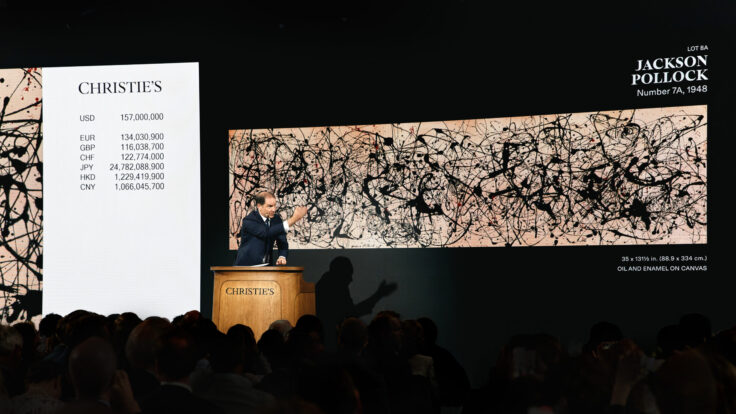
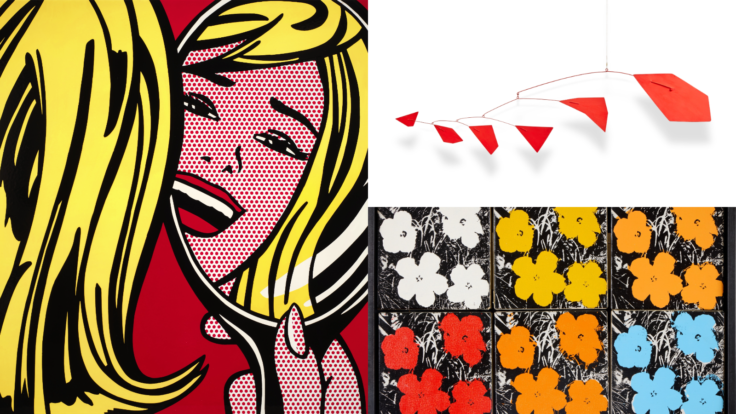
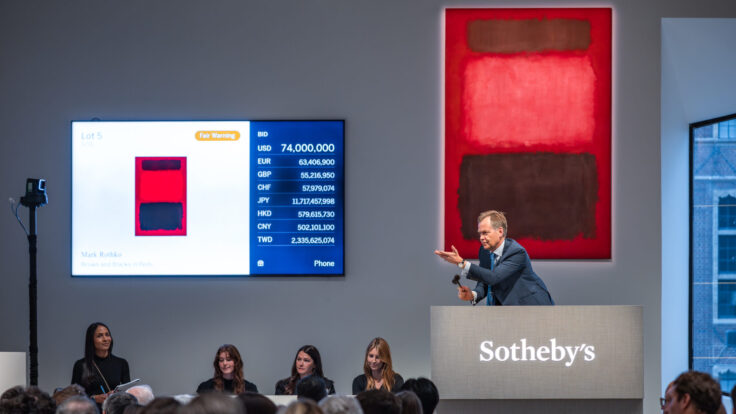
spending a few more days in Los Angeles than originally planned, but I still feel I missed out on a lot. Tonight, my take on the week, broken down by the galleries, the fairs, and the museums. I’ll save where we ate for Sunday—along with the Frieze Los Angeles sales report. Up top, some quick results from the midseason auctions back in New York, and notes on a resignation at the High Museum.
If you’re not a Puck subscriber, you can sign up
here. If you want to upgrade to the Inner Circle, do that here. If you see something you think I should know about, you can reply to this email or text me at +1.917.925.1391.
Mentioned in this issue: Sayre Gomez, Jeff Koons, Alma Thomas, Brady
Lum, David Kordansky, Kara Walker, Judith Baca, Christina Quarles, Eileen Harris Norton, Sebastian Gladstone, Dean Valentine, Tavares Strachan, Udo Kittelmann, Christopher Burden, and many more…
Enough throat clearing, let’s get started… |
-
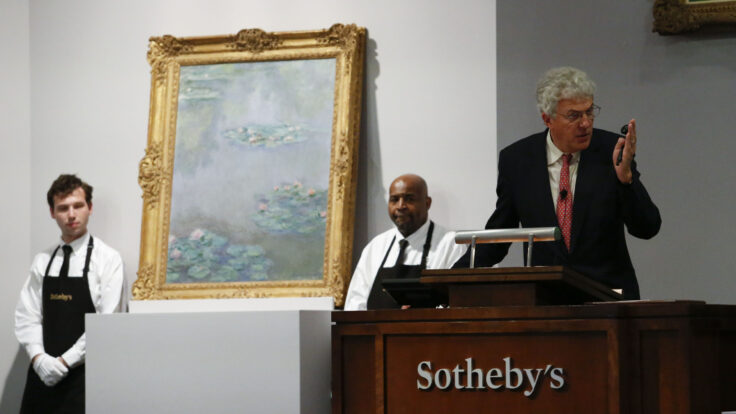
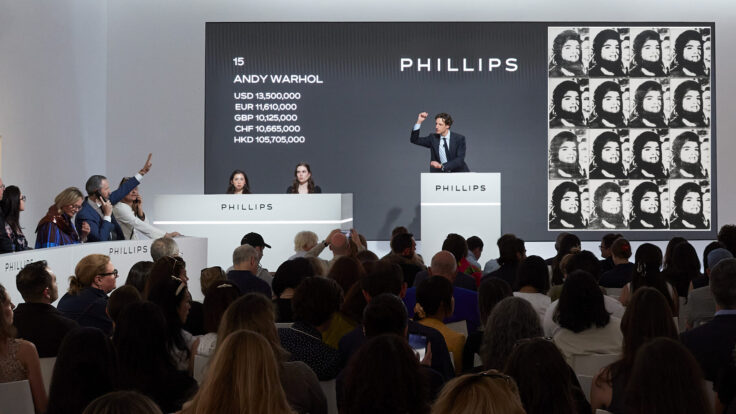
The snow didn’t stop the sales: The results for New York’s midseason sales were very solid, and I’ll have a full analysis in Wednesday’s Inner Circle issue. For now, though: Sotheby’s pulled in $19.6 million for their Contemporary Curated sale, led by Alma Thomas’s Apollo program–inspired Snoopy Sees the Sunrise on Earth, from 1970. The painting, backed by an irrevocable bid,
made almost $3.8 million against an estimate of $1.5 million. That’s only $100,000 short of her auction record, set almost three years ago.
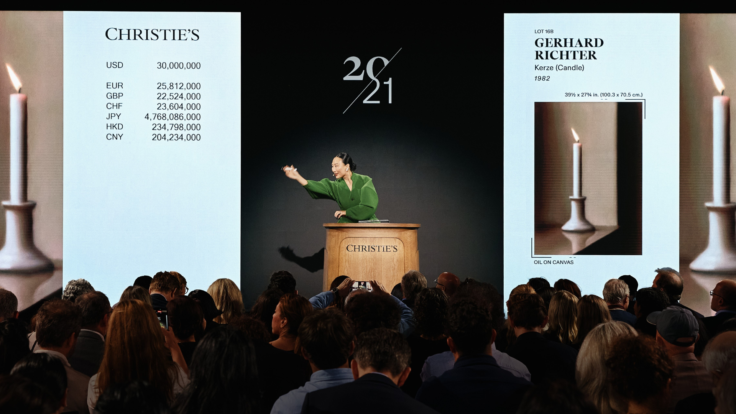
Over at Christie’s, the total, including the estate of Barbara Jakobson, reached $32 million. The top lot was Jeff Koons’s Winter Bears, from
1988, which made $7.6 million. It comes from a series of polychrome wood works that has seen repeated strong sales recently. The last time one of the four editions of Winter Bears came to auction, it sold for $4.7 million. That was in 2011, before the first run-up in Koons prices surrounding his 2014 Whitney retrospective. Two years ago, Large Vase of
Flowers, from 1991, made $8.2 million. There’s a lot more to dive into regarding the midseason results, but we have to wait for Phillips tomorrow. Again, more on Wednesday… - High on his supply: The chief operating officer of the High Museum in Atlanta, Brady Lum, has resigned after the institutions’s governing body conducted an investigation and traced $600,000 in misdirected funds back to him.
According to The Atlanta Journal-Constitution, the board that oversees the museum has referred the matter to prosecutors.
|
Now, let’s talk about Frieze week in LA… |
|
|
Out west, the art market seems caught between two different weather systems, as
the old climate sits side by side with the new. But the works surrounding the fair itself—from Sayre Gomez at Kordansky to clever juxtapositions at LACMA—also show a flourishing art scene in the city. |
|
|
I managed to escape New York on Saturday night before the worst of the bomb cyclone arrived. I
won’t bore you with the details of my dramatic exit, but I’m glad I got out in time—I traded a few days trapped in the house for the beautiful weather in Los Angeles, which I visit every year around Frieze week to get a better read on the art market here. Last year, the city was still recovering from the fires. The fairs were buoyed by an eager desire to provide support, which also obscured the true state of the market.
This year, the weather provided a fitting metaphor for where things
stand. Based on what I’ve seen in the museums, galleries, and art fair booths, the art world is caught in what meteorologists call a stationary front. That’s when two different weather systems, one driven by hot air and the other by cold, meet and cancel each other out. Instead of one displacing the other, the two fronts simply coexist. This isn’t a durable situation; eventually, a new dynamic emerges. But for now, much of the old art market climate sits side by side with the new. Let me
explain… |
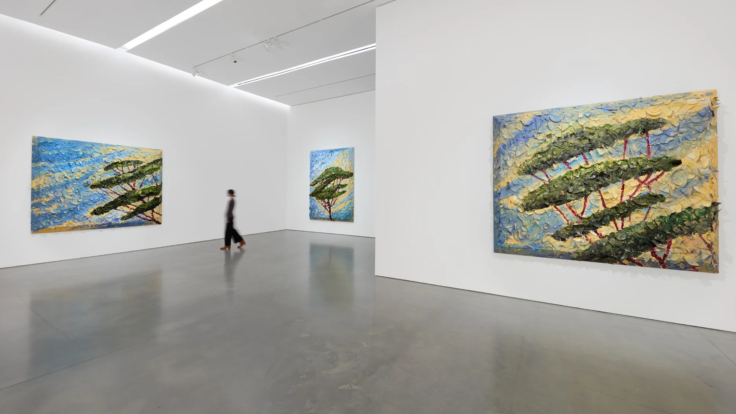
The best show we saw in Los Angeles was Sayre Gomez at David Kordansky gallery.
Before our visit, Mrs. Wallpower and I had gone to Silver Lake for breakfast. On our way to Kordansky, we were struck by the streetscape of strip-mall signs, convenience stores, and pervasive disrepair in much of the city. We certainly did not expect to walk into a gallery where Gomez had found beauty in the very features of Los Angeles we were having trouble digesting.
Much like Lauren Halsey, who had a secret preview this week of her
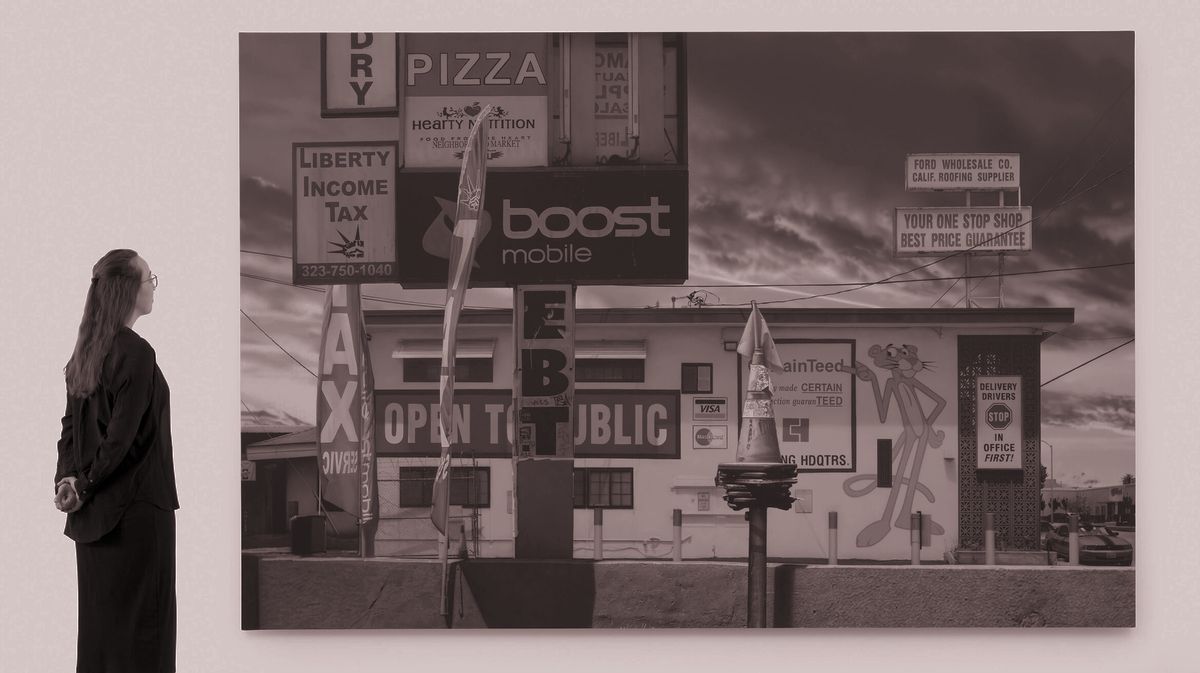
upcoming South Central installation, Gomez makes landscapes of the commercial signage of urban life. He uses an airbrush, a tool usually employed for commercial art and customizing cars, to render photorealistic composite images. Several of the works set the signs against beautifully lit skies, while a number of sculptures replicate HVAC units with children’s
playsets on top, or telephone poles and transformers.
Gomez has a radical vision of beauty, one that finds humanity in disrepair and decay. This kind of work is not usually my thing, and many of the people I discussed the show with remarked on how much they admired the work, but could not see themselves living with it. But if I had the space for the massive 12-by-8-foot, Your One Stop Shop (Pink Panther), I’d happily live with it, or the smaller Vertigo, Ice Cream Groceries, or
Skyjack.
Still marveling at my own conversion experience, I walked out of the main gallery only to run into art advisor Julia Dinella, who directed me to Kordansky’s second gallery space. There, I ran into David Kordansky himself, saying goodbye to mega-collector Beth Rudin DeWoody.
Kordansky graciously narrated us through Gomez’s Oceanwide Plaza, which was “faithful to the details of the orange rebar safety caps” 8-foot model of the bankrupt downtown luxury real estate development that has been bombed by graffiti over the last seven years. After we left the gallery, it was announced that Kordansky had sold the model to
LACMA.
My experience at Kordansky took nothing away from the several other great shows I saw, like Jeffrey Deitch’s exhibition of a section of Judith Baca’s Great Wall of Los Angeles, depicting vignettes from the city in the 1970s. The 344-foot painted tarpaulin street art, hanging in the gallery of a former director of L.A.’s Museum of Contemporary Art, is quite a statement. Meanwhile, at Hauser & Wirth, Christina Quarles’s show of new work
since losing her home to the Altadena fires was technically impressive. In the press preview, she joked that although her works are complexly layered, they are not collages, and glue has never entered her practice. Eileen Harris Norton, the pioneering collector of art by Black artists, is also showing selections of her collection at Hauser to honor the 50th anniversary of buying her first work of art. It’s an impressive and prescient assortment of work. And Hauser’s other
location is hosting a very good show of Arshile Gorky’s paintings and works on paper.
When I stopped at a show of Dustin Hodges’ work at Sebastian Gladstone’s gallery, he told me that he had just sold the last work in the show, even though it had opened just four days before. He also said that his sales were up 60 percent in 2025 over 2024—and up another 40 percent so far this year. This may just reflect his growing
program, but he added that he had sold to 17 new clients this year, 10 of whom are L.A.-based at least part-time. He recommended the William L. Hawkins show, not too far away at Maison d’Art.
There were also several shows in L.A. this week by artists recently in New York. Lisson debuted Leiko Ikemura, Karma had Milton
Avery, and David Zwirner had Luc Tuymans. At Zwirner’s adjacent space was a show of work by Raymond Saunders, who lived and worked in Oakland for most of his adult life. Near Zwirner, we saw Berta Fischer’s acrylic glass sculptures and Emma McIntyre’s work at Château Shatto. And I’ve barely scratched the surface of what there was to see in the city this past week. |
On Sunday, Mrs. Wallpower and I spent several hours roaming the Getty, where Harmonia
Rosales’s work is embedded among illuminated manuscripts to the benefit of both. With the recent Old Masters sales still fresh in my mind, I used the time at the museum to compare, say, Artemisia Gentileschi with Lavinia Fontana, and to brush up on the work of some names that were new to me, like Biagio
d’Antonio.
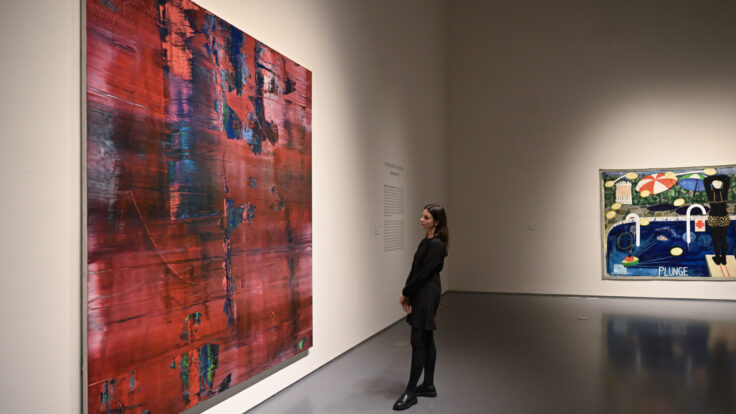
The following day, we visited LACMA, which was filled with surprises. Instead of one big, impactful show, the museum has half a dozen smaller but possibly more memorable ones. To highlight the upcoming gift of Vincent van Gogh’s Tarascon Stagecoach, from 1888, the museum has 50 works from the Henry and Rose Pearlman Collection, which were paired with another show of impressionist art collected by LACMA donors. There is also a great pairing
of works by Jean Arp and Paul Klee near a pocket exhibition of works by Egon Schiele and Gustav Klimt that were recently donated by the Kallir family. Meanwhile, Tavares Strachan’s immersive rooms offer a very different kind of art experience than those historic paintings, but the exhibition fits with LACMA’s history of showing Christopher Burden’s room-sized
installation, Metropolis II. And a show aptly titled Deep Cuts, about block printing across cultures, makes the most of LACMA’s own holdings. Needless to say, everyone’s anticipating the opening of the museum’s new
building in April.
There are a number of other worthy museum and private foundation shows around town. We stopped at the Marciano Art Foundation to see the John Giorno show and the installation of Bruce Conner videos. Later in the day, Jeffrey Deitch introduced us to Udo Kittelmann, who had taken over the Variety Arts Theater in DTLA to create eight floors of video art
installations for the Julia Stoschek Foundation. Unfortunately, the exhibition is only open from 5 p.m. to midnight, and the night we ate dinner downtown, we were too tired to stop by.
By the time you read this, I will probably have
seen L.A. MOCA’s Monuments show of decommissioned Confederate monuments. But I saw a satellite installation at The Brick gallery featuring Kara Walker’s reconstruction of a statue of Stonewall Jackson, originally sited in Charlottesville, Virginia. Later in the week, I ran into an art advisor at a party who had done her own tour of civil rights monuments during Covid. She said she was in tears at the main Monuments show.
In many ways,
the show gets at my main point about the art world. The president has used white resentment as leverage to achieve political power. But there is an equal amount of exhaustion and resentment about the current revanchism among those who, like this art advisor, are not white. The art world remains a deep well of political and cultural opposition. I had expected that to fade as culture realigned in the aftermath of Trump’s 2024 victory, but surprisingly, it has not. Many of these
shows were planned long before that election, but their ability to attract an audience and stir emotions is the true measure of their relevance. The art world’s persistent interest in diversity, equity, and inclusion, even in the face of the federal government’s active opposition, is one side of the art world’s stationary front. |
Ultimately, of course, Frieze week is about the art fairs—which are somewhat in flux, but not
necessarily in a bad way. Felix Art Fair, at the Roosevelt Hotel, has always had a funky vibe. It was founded by a collector of emerging art, and as the market focused on new talent, the fair became a place for discovery—and, with a group of galleries installed in cabanas surrounding the hotel pool, a great place to hang out and compare notes. Yet, with the market’s turn toward historic art, galleries at Felix have shifted more toward presenting artists who work in craft mediums.
Half of
the galleries are installed in rooms in the hotel’s tower where the furniture has been removed. Slow elevators and narrow hallways make for an intimate art-viewing experience. There are a lot of ceramics, textile works, and more than one artist making everyday consumer items covered in crystals or woven from yarn. After I had doggedly viewed nearly every room, I ran into the journalist Janelle Zara and Dean Valentine, the founder of the fair, who were about to
record a podcast by the pool. They asked me to join, and we talked through this moment where the market hasn’t yet shown its hand.
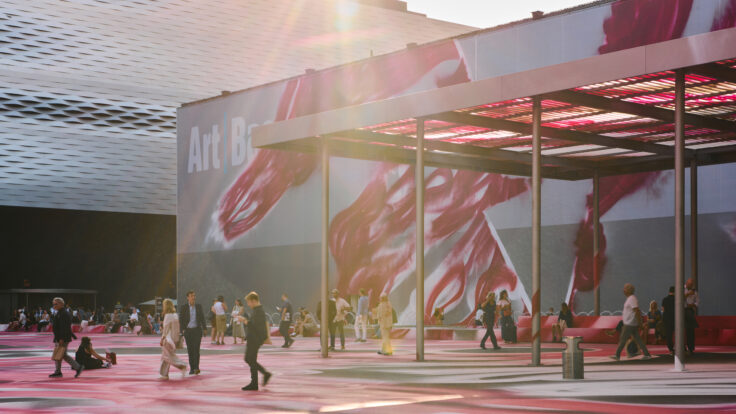
Frieze itself was decidedly upbeat. On the day I visited, it was bright and sunny, and the fair’s new/old owners, Ari Emanuel and Mark Shapiro, were there with bells on. While Frieze is now part of a new company, its continuity was underscored by their presence in the opening minutes of the fair. Collectors noticed. A number
of celebrities showed up as well, from Timothy Olyphant, who toured with former director of the Orange County Museum of Art Heidi Zuckerman; to Anthony Kiedis, the Red Hot Chili Peppers frontman; to James Franco, who made it to both Felix and Frieze in the company of Magnus Resch.
At an art fair, small talk is as accurate a barometer of the mood as anything. This year, there wasn’t any hand-wringing about
the market, or anxiety regarding the aftermath of the fires. But there also wasn’t any of the “You have to see this” kind of chatter that often accompanies these events. In many ways, the fair did little to break the stalemate between the market’s past and the market’s future. But that didn’t matter. It felt like Frieze Los Angeles had finally come into its own. |
I’ve gone on a bit here. That means I’m saving the sales report until Sunday. Several galleries
sent me their Frieze L.A. sales. If you haven’t and still want them considered for Sunday, you know where to find me.
Until then,
M |
|
|
Finally, a media podcast about what’s actually happening in the media—not the oversanitized,
legal-and-standards-approved version you read online. Join Dylan Byers, Puck’s veteran media reporter, and Julia Alexander, a longtime media analyst, as they sit down with TV personalities, moguls, pundits, and industry executives for raw, honest, sometimes salacious conversations about the business of media and its biggest egos. New episodes publish every Tuesday and Friday. |
|
|
The ultimate fashion industry bible, offering incisive reportage on all aspects of the business and its biggest
players. Anchored by preeminent fashion journalist Lauren Sherman, Line Sheet also features veteran reporter Rachel Strugatz, who delivers unparalleled intel on what’s happening in the beauty industry, and Sarah Shapiro, a longtime retail strategist who writes about e-commerce, brick-and-mortar, D.T.C., and more. |
|
|
|
|
MATTHEW BELLONI & WILLIAM D. COHAN |
|
|
Need help? Review our FAQ page or contact us for assistance. For brand partnerships, email ads@puck.news. You received this email because you
signed up to receive emails from Puck, or as part of your Puck account associated with {{customer.email}}. To stop receiving this newsletter and/or manage all your email preferences, click here. |
Puck is published by Heat Media LLC. 107 Greenwich St., New York, NY 10006 |
|
|
|