Welcome back to Dry Powder. I’m Bill Cohan.
Transformational Wall Street
mergers have been few and far between since the financial crisis, when regulators clamped down hard on the SIFIs. But the environment is definitely getting more… relaxed during this second Trump era, fueling chatter that one of the big banks could make a big move. Goldman, of course, has never had much success with its own acquisitions, despite leading the M&A league tables for ages. In tonight’s issue, I explain why we’ve reached the perfect moment for
David Solomon to break the curse and become a legend.
But first… |
- Wall
Street remembers Wesley: Before getting started, let’s take a moment to remember the victims of the utterly senseless killing spree that occurred on Monday at 345 Park Avenue in Manhattan. Our hearts go out to the victims and their families, including Didarul Islam, a New York City police officer; Aland Etienne, a security guard; Julia Hyman, a young executive at Rudin Management,
the owner of the building; and Wesley LePatner, a 43-year-old former Goldman Sachs banker who was an up-and-coming star at Blackstone. Wesley was a senior managing director and also the C.E.O. of Breit, a Blackstone real estate investment trust. “Wesley was brilliant, passionate, warm, generous, and deeply respected within our firm and beyond,” Blackstone said in a statement. “Our prayers are with her husband, children, parents, and family.” Why are these guns
still on the street? Enough already.
- The Saks short: The vaunted Saks Global exchange offer, for its $2.2 billion of 11 percent senior secured notes, is finally underway. The first closing of the exchange comes this Friday, August 1, with the balance closing August 18. In case you had somehow forgotten, the bonds were issued last December as part of the financing package for Saks’ $2.7 billion acquisition of Neiman Marcus Group. For a variety of
reasons, much discussed by me and my partner Lauren Sherman, the bonds traded down to a low of around 35 cents on the dollar during the last six months—all but necessitating the restructuring deal that the company is in the process of executing. It’s become one of the more high-profile “liability management exercises” of the year.
On July 21, in a hard-to-decipher press release, the company said that holders of approximately 92 percent of the bonds had
already agreed to tender them in the exchange offer after engaging in a series of private negotiations with the company. In exchange for their bonds and an agreement to provide $600 million of new financing, they are going to receive a series of new notes, of varying priorities, with a face value of roughly 90 cents on the dollar. So by providing the company with a fresh $600 million—good money after bad, perhaps?—they get a boost up in the capital structure, and the chance to think
they’ve exchanged something worth 35 cents on the dollar for something worth around 90 cents on the dollar (and probably increase the marks on their books, which is a bit of a scam if you ask me).
As for the holders of the other 8 percent of bonds, they have some interesting choices to make. They can do nothing, keep their old bonds, and hope the company keeps paying the 11 percent coupon, as well as the principal when it’s due in 2029. (There are always some bondholders who follow this
route.) But if the company files for bankruptcy, which remains a non-zero possibility, they will get thoroughly hosed because they’ll be last in payment priority in the restructured capital stack. However, if they want to participate in providing some of the new $600 million, they will get 55 cents in second-lien notes, and 25 cents in the third-lien notes. So they’ll get to think they are exchanging something worth around 25 cents on the dollar—where these bonds seem to be trading these
days—for something worth 80 cents on the dollar, on paper. If they want to participate in the exchange, but not the new financing, they will get 20 cents in second-lien notes, and 55 cents in third-lien notes.
No matter how you slice this complicated deal, the exchange offer is a big win for Saks Global, which already has half the promised new financing in hand, and the two legal and financial advisors—David Nemecek at Kirkland & Ellis and
Jamie Baird at PJT Partners—who were its architects. Essentially, what Saks Global bought for itself here was more runway and a bit of a fresh start with creditors. But now Saks’ management team must use that time to perform. If it doesn’t, the whole ship could go down, probably soon after the Christmas holiday, the period when many retailers make most of their profit—if they are going to make any profit, that is.
I talk to a lot of hedge fund
managers who have been shorting the Saks bonds for a while now. Some of them sold their bonds as they traded down. They’ve made money. Others are holding on, hoping to continue the ride downward. And they’re all eager to borrow the new bonds and short them, too, believing they will trade down as well. They are biased, of course, and make money only if Saks Global tumbles into bankruptcy or needs yet another restructuring. The question for them is, will that happen before Christmas or after?
“This thing is insane,” one of them texted me on Monday. “I am trying to short anything I can.” (As usual, this is not investment advice.)
|
Now, on to the main event… |
|
|
The Trump administration is practically tempting the Wall Street behemoths to revisit the
golden days of pre-crisis big-bank mergers. Will David Solomon bite? |
|
|
It’s been nearly two decades since Washington regulators have allowed the big Wall Street banks to conduct
transformational mergers. That may be about to change for the first time since the Federal Reserve, the Treasury, and the New York Fed approved—encouraged, even—the fire sales of Bear Stearns to JPMorgan Chase and Merrill Lynch to Bank of America more than 15 years ago. Remember those?
There’s basically been no big-bank M&A since the Fed designated many of them SIFIs, or significantly important financial institutions, in the wake of the Great Recession. Sure, there have been a
few bank-related deals in recent years. In 2019, SunTrust and BB&T, two regional Southern banks, merged to form Truist in a $66 billion deal. PNC and U.S. Bancorp, two other regional banks, have also done deals. And earlier this year, Capital One and Discover Financial merged to create one of the largest credit-card companies. Just last week, two other Southern regional banks, Pinnacle Financial Partners and Synovus, announced an $8.6 billion merger agreement. And on Wednesday, Evercore, the
boutique-ish investment bank, announced it was buying the tiny U.K. M&A shop Robey Warshaw, for $196 million, or about $40 million for each of its five partners. (Not quite what Meta is paying for A.I. talent, but not nothing.)
But the Trump administration is all about loosening regulations on just about everything (except, apparently, law firms, universities, and vaccines). “After four years of stricter regulatory posture under the last administration, the tone from new
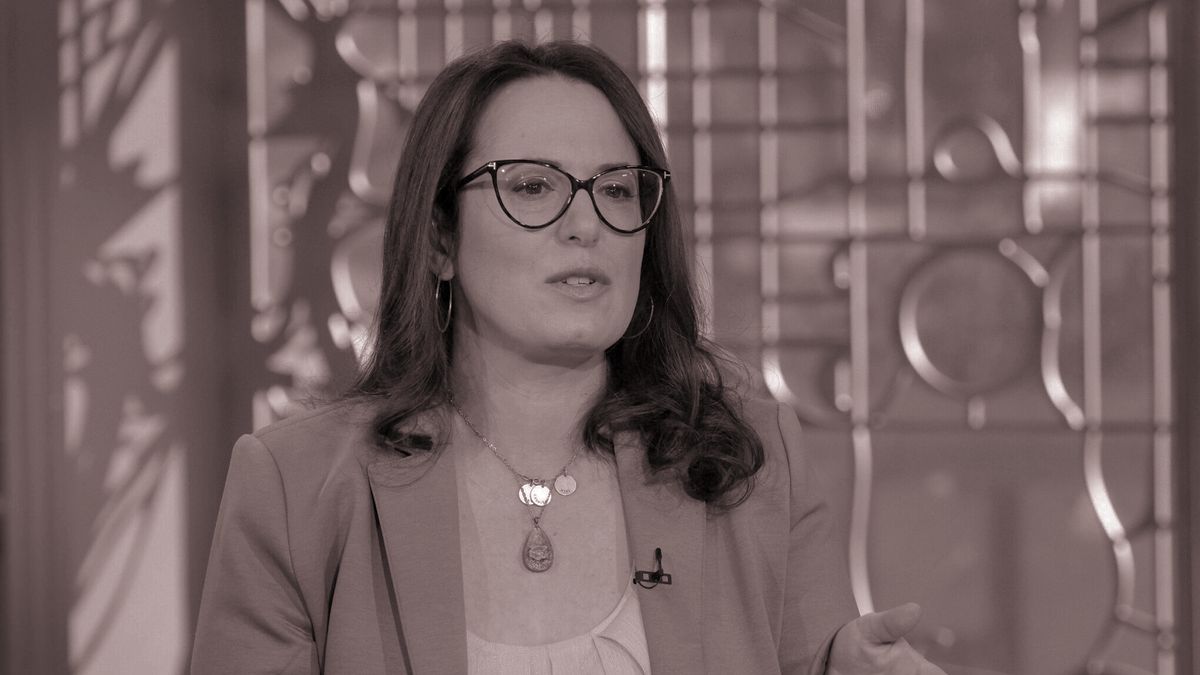
regulators has shifted in favor of more bank M&A,” Manan Gosalia, an equity analyst at Morgan Stanley, wrote on July 25. Indeed, the new Fed vice chair for supervision, Michelle Bowman, has signaled in several speeches that she’s willing to be more flexible when it comes to Wall Street bank mergers. In a June speech shortly after she was appointed, Bowman said, “The goal of banking regulation should not be to eliminate all risk
from the banking system.” Imagine uttering that in 2010.
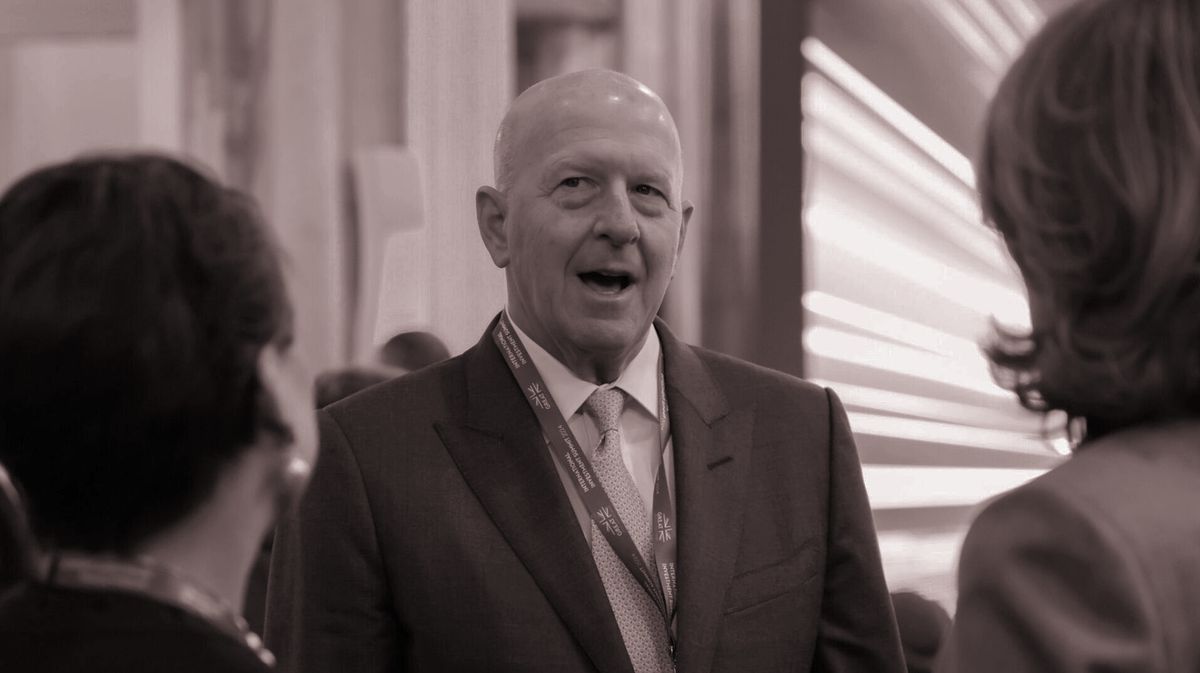
No surprise, some Wall Street C.E.O.s are making noise about M&A deals for the first time in years. A few weeks ago, during Goldman’s second-quarter earnings call, the highly respected Wells Fargo bank analyst Mike Mayo asked Goldman C.E.O. David Solomon what, if anything, was on his plate when it came to M&A plans. Solomon was naturally reluctant to get
into the details, especially on a public call, but he did allow that Goldman would consider deals that would enhance its wealth and asset management businesses. “We’re looking for opportunities to continue to scale and grow the positioning of that asset management platform,” Solomon said. “It’s a $3.3 trillion platform. It’s very broad and diverse in what it does, but there’s certainly opportunities to accelerate our scaling in certain places.”
Goldman, which has honed a very insular
culture over 156 years, has a notoriously poor track record of integrating the few acquisitions it has consummated. Big failures include Spear, Leeds & Kellogg, a securities clearing firm, and J. Aron & Company, a commodities trading firm—although that acquisition did bring into the firm both Lloyd Blankfein and Gary Cohn, who steered Goldman brilliantly through the 2008 financial crisis.
In the wake of Solomon’s
comments during the call, Semafor reported that Goldman had held “takeover talks” with Northern Trust, a $1.6 trillion asset-management firm based in Chicago, with a market capitalization of $25 billion. Mike O’Grady, the Northern Trust C.E.O., quickly shot down that reporting. “Contrary to recent speculation, during my tenure as C.E.O., we have never entertained discussions regarding the sale of the company with any financial institution, nor do we intend to,”
he said. But clearly there’s something in the water. |
Bowman, one of two Fed governors to vote against Jay Powell’s decision to hold rates steady
at the Federal Open Market Committee meeting this week, is emblematic of the somewhat Trumpy feeling percolating through the regulatory environment these days. In her June speech, she said she was open to reforming the supervisory rating mechanics that are used to evaluate big-bank mergers, such as by reducing unnecessary disqualifications. She’s also in favor of accelerating the deal-approval process. “Our goal should not be to prevent banks from failing, or even eliminate the risk that they
will,” she said. No wonder “Miki” is on various shortlists to succeed Powell.
In any case, now would be as good a time as any for Goldman to make a big move. Not only do regulators seem more quiescent, but Goldman’s stock is trading near all-time highs—up 45 percent in the last year. (Goldman now has a market cap of $225 billion, only $6 billion less than Morgan Stanley, which has long been worth at least $20 billion more than its rival.) As loyal Dry Powder readers may recall, I’ve long
been an advocate of Goldman Sachs acquiring Bank of New York Mellon: It has no investment banking business, so there’s no concern about overlap, which would be an issue with almost every other big-bank deal Goldman might consider.
It also owns Pershing, the big trade-processing business, which is the kind of thing Solomon likes. And, of course, it owns Mellon, the huge institutional
asset-management business, with some $2.1 trillion under management. That would be an incredible fit with Goldman, and perfectly in line with David’s stated M&A goals for the firm. Bank of New York also has a small loan portfolio—less than $50 billion—composed largely of loans made to its private wealth management clients. What’s more, Robin Vince, the C.E.O. of Bank of New York Mellon since September 2022, spent 26 years at Goldman Sachs.
In my humble
opinion, the combination is kind of a no-brainer. But it’s not without risks. (This is not investment advice.) BNY Mellon has a market cap of $71 billion, up 56 percent in the past year. That would be a massive bite for Goldman, and about 10x the size of its previous largest deal, Spear Leeds—which flopped, and flushed some $6.5 billion down the drain. In that light, a Goldman Sachs–BNY Mellon merger might be a bridge too far for David and his board, even if Robin and his board
might be amenable.
Still, doesn’t Goldman have to do something one of these days, if only to prove to Wall Street that it can do a big deal and make it work? Can Goldman continue to allow Jamie Dimon and JPMorgan Chase to run the table on Wall Street? With a market cap of $830 billion, it’s well on its way to becoming the first bank worth $1 trillion.
C’mon David, be a Wall Street legend. Unlike Jamie, you’ve got succession solved. You’ve
vanquished internal dissent. Your stock is booming. You’ve said you want more wealth management assets; BNY Mellon gives you that—and Pershing, too! Regulators are flashing the green light for the first time in nearly two decades. When the ducks are quacking, you have to feed them. |
|
|
Join Puck’s chief political columnist, John Heilemann, as he roams the corridors of power and influence in America on this
twice-weekly interview show, taking you beyond the headlines with the people who shape our culture: icons and up-and-comers, incumbents and insurgents, moguls and machers in the overlapping worlds of politics, entertainment, tech, business, sports, media, and beyond. The conversations are rich and revealing, unrehearsed and unexpected… and reliably impolitic. A Puck-Audacy joint, new episodes drop every Wednesday and Friday. |
|
|
The industry’s go-to source for unflinching reporting on the trillion-dollar business of artificial intelligence - perhaps the
single most important technology of our time. Ian Krietzberg, the powerhouse journalist behind The Deep View, delivers twice-weekly insights into the latest dealmaking and breakthroughs in A.I., and how the intersecting worlds of finance, entertainment, media, and politics are being transformed in its wake. |
|
|
Need help? Review our FAQ page or contact us for assistance. For brand partnerships, email ads@puck.news. You received this email because you signed up to receive emails from Puck, or as part of your Puck account associated with {{customer.email}}. To stop receiving this newsletter and/or manage all your email preferences, click here. |
Puck is published by Heat Media LLC. 107 Greenwich St, New York, NY 10006 |
|
|
|