{{ 'now' | timezone: 'America/New_York' | date: '%b %d, %Y' }} |
|
|
Welcome back to The Varsity, live from Los Angeles. Tonight, I’ll be at Crypto.com Arena
with Peter Hamby to watch Luka vs. Wemby… which might even be more exciting than the All-Star Game this weekend. If you’re around, swing by and say hello. I’ll make sure Marchand decants the crisp sancerre.
In tonight’s issue, I’m digging through my Super Bowl notebook to reveal the big issue that media executives were fretting over in the Bay Area. And up top, the brilliant Julia Alexander
offers an inside look at YouTube’s NFL ambitions and CBS’s Gen Z play. Meanwhile, the Super Bowl numbers are in and they’re… okay. Down slightly from last year, though actually slightly higher than my prediction. I’ll provide some crucial context as to how we got here.
As a reminder, because this is the Tuesday edition of The Varsity, it’s available only to Inner Circle subscribers—so click here to upgrade and read the whole thing. |
- Super Bowl shuffle: NBC and Peacock averaged 124.9 million viewers from Sunday’s Super Bowl—down around 2 percent from last year, but still the second-most-watched program in TV history following last year’s game. The game set a peak-audeince record late in the second quarter—in the run-up to Bad Bunny’s halftime show—at 137.8 million.
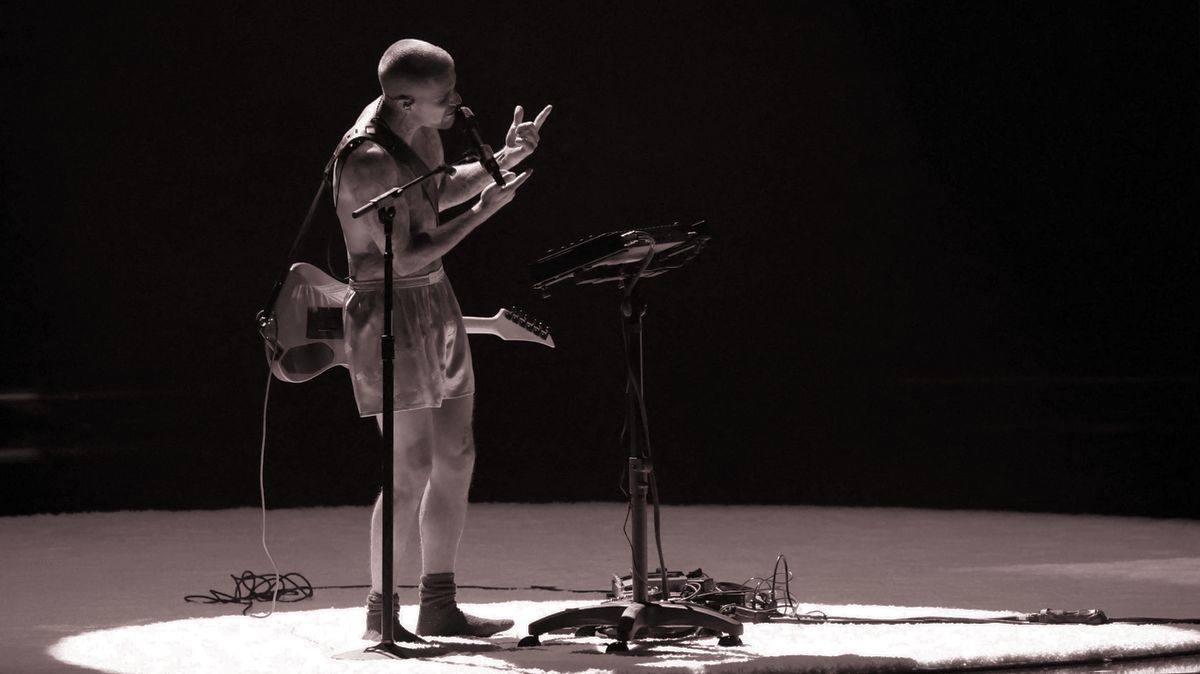
Speaking of, the halftime show drew 128.2 million viewers, down from Kendrick Lamar’s 133.5 million in 2025.
The NFL, though, has a ton of stats showing how popular the halftime show was outside of the U.S. The performance amassed more than 4 billion social views in the 24 hours after, which is up 137 percent from last year. It was also the most-consumed halftime show outside of the United States on NFL social platforms. In fact, more than 55 percent of the NFL’s social views from the halftime show came from international markets. That’s why the league chose Bad Bunny as the halftime performer
this year.
The real headline here is that the big viewership increases we saw across TV sports last year are over. Last year’s Super Bowl was the first big event whose audience was measured using Nielsen’s revised methodology, which does a more thorough job of accounting for out-of-home viewers. Starting now, comparisons to last year will make a lot more sense. - Neal Mohan’s blitz: YouTube C.E.O. Neal Mohan
is no longer playing coy about how much he wants the NFL. Not only did he join Roger Goodell in his suite for the Super Bowl, but the company just released a new report clearly intended to cement YouTube’s centrality to the league. The report, which focused on football activity on the platform, found that videos related to the NFL generated more
than 20 billion views in 2025, and annual global views of NFL-related content have grown by more than 250 percent between 2020 and 2025. But perhaps Goodell & Co. will be even more intrigued by the international metrics: Annual global uploads of NFL-related content grew by 400 percent during that same five-year period. (I reported yesterday on the league’s international
ambitions.)
Of course, this comes just as YouTube TV is rolling out its sports-centric skinny bundle, which will be grounded by access to NFL games. Christian Oestlien, the YouTube exec in charge of subscription products, recently more or less confirmed the company will be gunning for additional games when those rights negotiations start—which, as you know, is soon. —Julia Alexander - CBS’s Gen Z Play:
Meanwhile, David Ellison and his CBS Sports team are clearly trying to bring some Gen Z energy to their Baby Boomer business. CBS Sports and its 24/7 soccer channel, Golazo Network, will be the U.S. home for the creator-centric Baller League. Unlike any traditional soccer league, where the focus is good competition
from actual athletes, Baller is known for its spectacle—combining former pro soccer players and other athletes with YouTube creators and traditional celebrities on six-man teams. The U.S. version of the league includes Usain Bolt, Druski, Ronaldinho, and Odell Beckham Jr. alongside some of the biggest streaming creators, like iShowSpeed, who participated in YouTube’s exclusive NFL game as a
co-streamer.
So it’s not exactly the UEFA Champions League, which CBS also has the rights to in the U.S. But legacy media companies are continually turning to these experimental leagues as costs for rights to the established alternatives explode. Who knows whether this small gamble will work—the league has already shut down operations in Germany, where the format started—but the deal indicates that the legacy players know that they have to lean into digital creators before it’s
really too late. —Julia Alexander
|
And now, the chatter from SBLX… |
|
|
The big question plaguing sports media executives who descended on the Bay Area
last week: How much will the networks have to pay to maintain their NFL packages when the league opts out of its deals in the fall and the trillion-dollar streamers push their chips into the middle of the table? |
|
|
Over the past week in San Francisco, my zillions of conversations with media and league executives
in the run-up to the Super Bowl all eventually turned to the same topic—a lingering and very real anxiety around what’s going to happen when the NFL opts out of its media deals and opens a new negotiating window this fall. This apprehension, which I previewed last week, naturally coalesces around money, leverage, and the reality that no American broadcast network can live without the Shield. And if Adam Silver managed to more than double the annual value of his league’s deals
last year, the NFL is poised to blow past its precedent, thereby forcing executives to pay way more for the same slate or risk existential peril. Other than that, everyone had a great week!
In retrospect, TNT’s inability to hold on to its NBA rights was one of the early signs that David Zaslav’s overlevered Warner Bros. Discovery was going to have to reach its denouement. WBD simply couldn’t afford the NBA, and yet its future without the league would be imperiled
by softening carriage fees and advertising packages. (Gunnar Wiedenfels and TNT Sports head Luis Silberwasser have tried to put a good face on this predicament by deploying the capital to pick up NASCAR, the French Open, and Unrivaled rights, in addition to sublicensing College Football Playoff games from ESPN. Given that TNT Sports isn’t encumbered by expensive NFL or NBA deals anymore, you can expect other leagues to beat a path to its doors looking for rights
deals…) Similarly, some in the industry wonder whether Comcast, which is paying about $2.45 billion annually for NBA rights, can afford to keep Sunday Night Football if the package jumps from $1.9 billion to, say, $4 billion per year, which is in line with the estimated market value calculated by LightShed analyst Rich Greenfield. Comcast maintains a significant debt load of around $100 billion, and Peacock lost $552 million in the fourth quarter alone (largely due to
the NBA fee). At a certain point, another megadeal just might not be worth it.
Meanwhile, networks are delaying negotiations with other sports leagues—many of which are hoping to preempt the NFL’s own preempting—until they know how much they’ll have to allocate for football. For example, the NHL’s Gary Bettman has approached ESPN and TNT Sports about early renewals for its media deals, which end in 2028. The same goes for Brian Rolapp
and the PGA Tour; his deals with CBS, ESPN, and NBC end in 2030. But the networks don’t seem willing to commit to any kind of long-term deal until they know how much the NFL will ask for. (Rolapp, who left the NFL last summer and negotiated the league’s last round six years ago, knows better than anyone the kind of leverage the NFL has over its media partners.)
For its part, the NFL has already effectively put the negotiations into motion. The league has been taking meetings with
streamers to sell rights to the Week 1 international game in Australia and a package of four other international games that used to air on NFL Network. Sources told me the league talked to all the usual suspects about those rights, which will be a precursor to even bigger deals coming in the fall. |
During Super Bowl week, there was significantly less chatter about the fact that
the league will soon turn its attention back to the Bay Area. Back in June 2024, of course, a jury found that the NFL violated antitrust laws by distributing out-of-market games via its Sunday Ticket subscription package. Next month, the Ninth Circuit Court of Appeals, based in San Francisco, is due to decide the fate of the Sunday Ticket antitrust fiasco—whether to reinstate the $4.7 billion jury award to the plaintiffs, come up with a different figure, or send the case back for
another trial. But according to several sources, the stakes are higher than the NFL seems to realize: A worst-case scenario ruling could throw the NFL’s entire media strategy into flux.
This morning, Puck legal analyst Eriq Gardner reminded me that the court ruled that the old DirecTV Sunday Ticket deal ran afoul of antitrust rules mainly because NFL teams—which, in theory, are capable of independently selling their rights—had worked together to fix the price of the
package. In the broadcast world, such actions became protected after the NFL received an antitrust exemption via the Sports Broadcasting Act of 1961. Some in the business have legitimate questions about whether selling pooled rights to a platform other than broadcast television is protected by the S.B.A., which obviously never contemplated the growth of the cable and streaming industries. “Technology has marched forward, and that exemption is now less all-encompassing than it once was,”
Eriq explained.
I broached this topic on the Varsity podcast with NBC’s Mike Florio, who pointed out how the NFL’s current Sunday Ticket deal with YouTube TV could also be called into question. “There’s another antitrust lawsuit to be filed, because [a court] found that Sunday Ticket violated antitrust laws. That hasn’t changed,” Florio said. “The NFL may be able to kick the can for 10 years. But at some point that reckoning is going to come.”
Perhaps, but
this next round of negotiations will ensure that any penalty will be very affordable. |
Thanks for reading. See you Thursday,
John |
|
|
Puck sports correspondent John Ourand and a rotating cast of industry insiders take you inside the executive suites
and owners boxes where the decisions that shape the entire sports business are made. You’ll hear interviews with players, network execs, and everyone in between. The Varsity is an extension of John’s private email for Puck by the same name. New episodes publish every Wednesday and Sunday. |
|
|
Ace media reporter Dylan Byers brings readers into the C-suite as he chronicles the biggest stories in the industry:
the future of cable news in the streaming era, the transformation of legacy publishers, the tech giants remaking the market, and all the egos involved. |
|
|
Need help? Review our
FAQ page or contact us for assistance. For brand partnerships, email ads@puck.news.
You received this email because you signed up to receive emails from Puck, or as part of your Puck account associated with {{customer.email}}. To stop receiving this newsletter and/or manage all your email preferences, click here. |
Puck is published by Heat Media LLC. 107 Greenwich St., New York, NY 10006 |
|
|
|