 |
 |
|
Welcome back to Wall Power. I’m Marion Maneker.
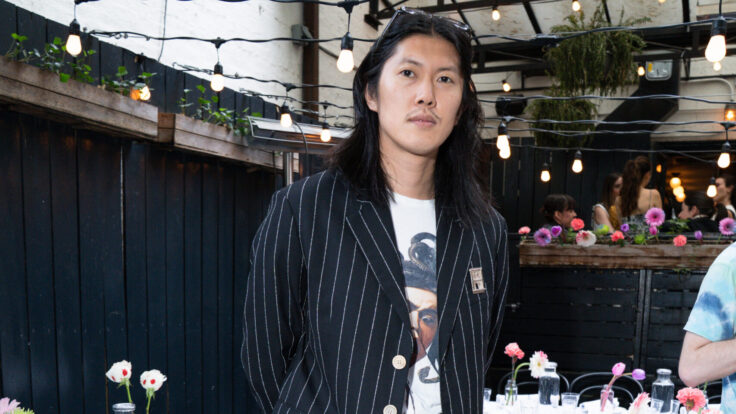
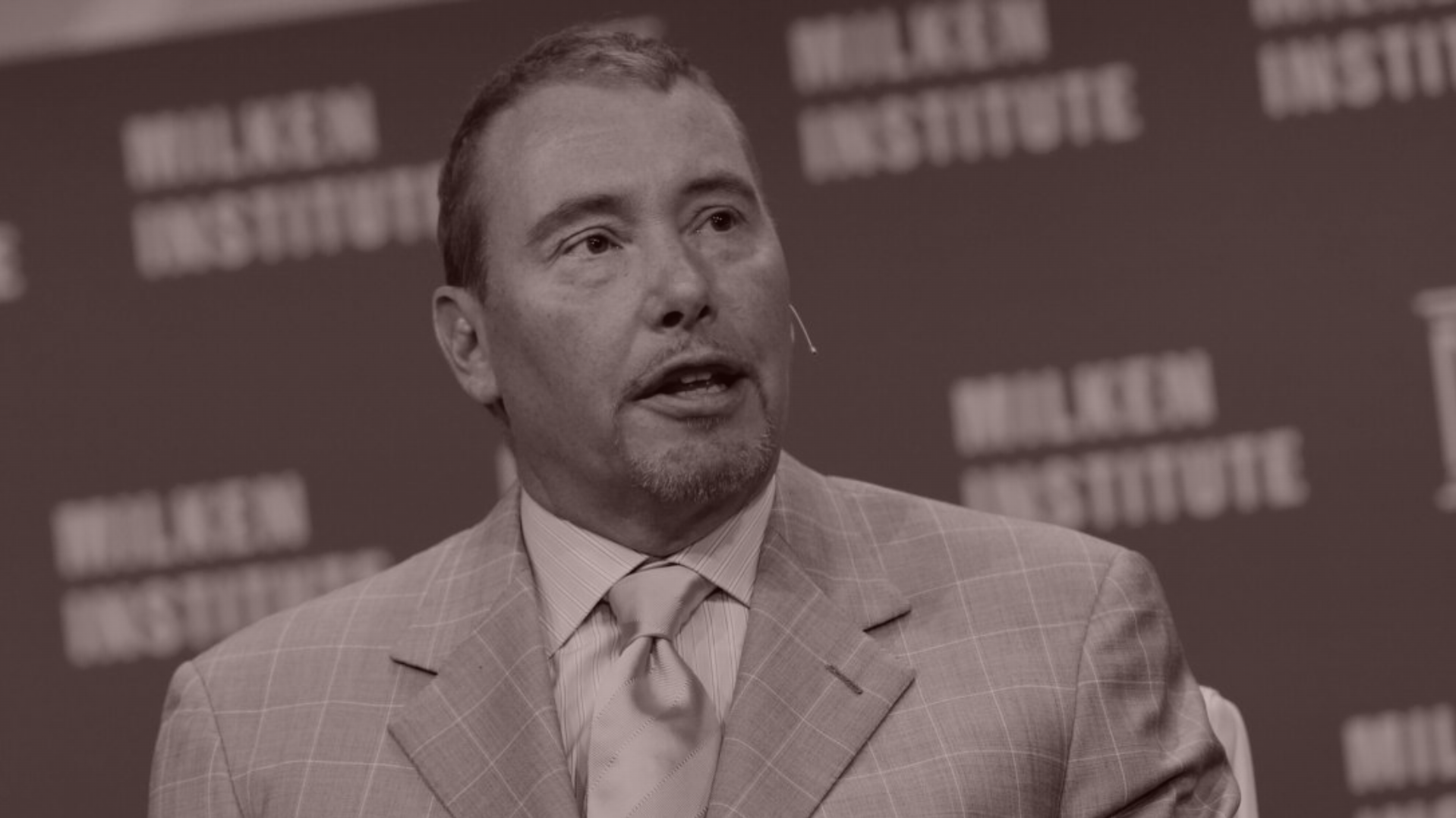
In tonight’s issue, highlights from my conversation with DoubleLine Capital’s Jeffrey Gundlach, the billionaire bond king turned art world patron who has become the driving force behind the expansion of the Buffalo AKG (the G stands for Gundlach!). When I was first making plans to write about the museum a few weeks ago, I sent a few questions to Gundlach, but our timing didn’t match up. After I published that story, Gundlach got in touch to chat.
Every collector’s story is unique. And I’m always interested to hear what a patron—especially one who doesn’t usually give interviews—has to say about their approach to art and museum building, and Gundlach was very candid and compelling. More on our conversation in a moment.
|
|
A MESSAGE FROM OUR SPONSOR
|
 |
Polestar 3. Design that turns heads, without compromising performance.
Experience responsibly-sourced materials like Nappa leather and animal welfare certified wool, a minimalist Scandinavian interior. Designed to create a uniquely uncluttered experience that appeals to the senses without overwhelming them. Be among the first to experience Polestar 3.
Schedule your test drive today |
|
|
But first…
- About yesterday’s market panic…: The unwinding of the latest version of the Japanese carry trade has caused investors to take profits in tech stocks and cryptocurrencies. When I asked a smart friend what was driving the selloff in crypto, he wrote back, “Mostly just high beta exposure to global risk-off.” (This is the way these people talk.) “But if you wanted to tell a more nuanced story,” he continued, “you could say that growth deceleration in the U.S. will solve the global inflation problem, at least for now, and therefore the more liquid inflation hedges get hit extra hard.”
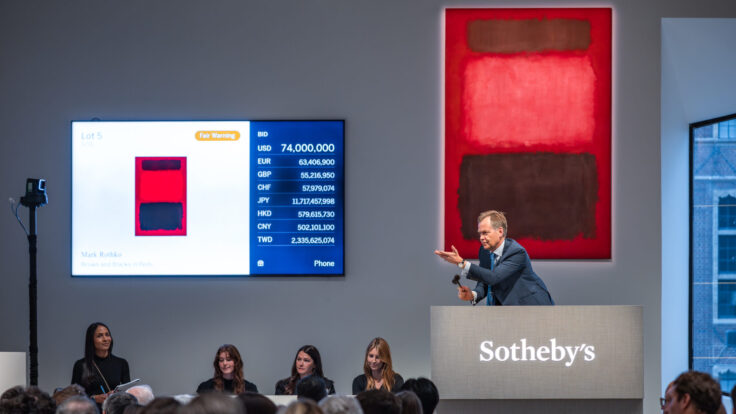
Of course, my ears perked up. Art is an asset that is often viewed as a hedge against inflation. But it isn’t very liquid. So, will the sell-off further depress an already limping art market? My guess is no. Much of the market rotation taking place right now is profit-taking and rebalancing, not a fundamental shift in the U.S. economy. And, even if there has been a shift, the likely remedy—the Fed dropping interest rates by 25 to 50 basis points—is generally viewed as a good thing for the art market. Supply continues to be the main issue affecting the art market, and we won’t know more about that until the fall.
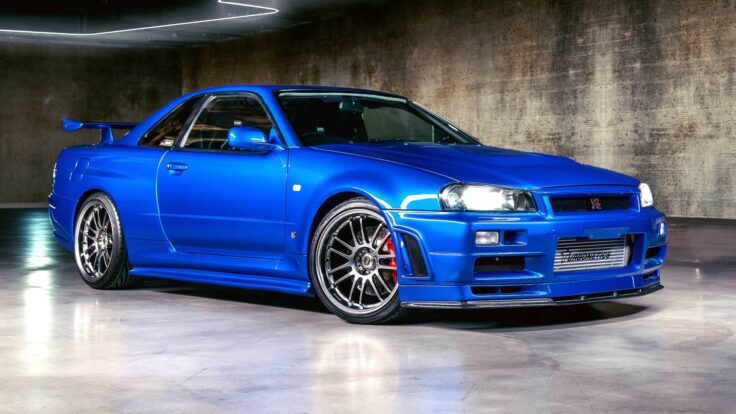
- Classic car fever: I don’t normally cover the classic car market here at Wall Power, but next week you’ll see a series of auctions in the lead-up to the Pebble Beach Concours d’Elegance—the annual West Coast jamboree for the classic car set. The top lot at Bonhams’ August 16 auction is a 1957 BMW 507 Series II, estimated at $1.8 million. Meanwhile, RM Sotheby’s has a raft of Ferraris at the top of the estimate range, from $5 million to $16 million, plus everything from 1950s racecars to roadsters from the late ’50s and early ’60s, and a 2002 Formula 1 car estimated at $8 million. Gooding & Co., the official auction partner of the event, has a $9 million Bugatti, just like the ones Ralph Lauren collects.
- Brookfield acquires Pierre Huyghe: Last week, Brookfield Properties announced that it had acquired a work by Pierre Huyghe to adorn the lobby of One Liberty Plaza, its downtown Class-A commercial building that is undergoing a major renovation. The Huyghe is one of his best-known works, created in 1999, in an edition of three. (The other two works are owned by François Pinault and the Ishikawa Foundation in Japan.) Originally titled Atari Light (Pong) and previously featured in his 2001 Venice Biennale pavilion, the Centre Pompidou in Paris, and the Los Angeles County Museum of Art, the artist plans to rename the work once it is installed. It will turn the ceiling of One Liberty Plaza’s lobby into a video game, Pong, complete with joysticks that will allow visitors to play on the ceiling while they wait to be announced upstairs.
|
| Now let’s hear from Gundlach… |
 |
| Gundlach & Loaded |
| Jeffrey Gundlach climbed a mountain of art collecting that culminated in acquiring the Mondrian of his dreams. But after he bagged his last trophy, he turned to museum building. A look at the billionaire bond king’s art investment thesis, his views on the market, and why he’s reviving the museum that launched his collecting journey. |
|
|
|
| To appreciate what art means to Jeffrey Gundlach, it helps to know that he named his asset management firm after a beloved work by Piet Mondrian. The story of DoubleLine Capital, which once managed some $150 billion in assets (as well as its messy, litigious origins during the global financial crisis), is fairly well known. A star bond trader who built an intensely loyal team at Los Angeles asset manager TCW, Gundlach had correctly predicted the subprime credit crisis and made his investors a lot of money when Wall Street cratered.
When it came time to name the new firm he founded in December 2009, after his whole team walked out of TCW en masse, Gundlach looked to his art collection and the 13-inch by 17-inch Mondrian painting he bought in the early 2000s, a simple abstraction but one that contained endless fascination for Gundlach. “It’s just three rectangles stacked on top of each other, and a double line,” he told me. “That’s all the picture is. The double line creates this incredible sense of movement and three-dimensionality. It’s a remarkable picture because it’s really just three rectangles and five lines, yet the visual sophistication is extraordinary.”
From the small Mondrian, Gundlach took a guiding metaphor for his work in finance, where risk management reigns supreme. “The important thing is understanding you’re not going to be right all of the time,” he cautioned. “You’ll be lucky if you’ll be right even 60 percent of the time.” Errors are inevitable in the investment business, but fatal errors will put you out of business, Gundlach explained. The importance of humility and caution was encapsulated in the idea of never crossing the double line. |
| “The Best Trade of My Life” |
|
| Gundlach had initially begun collecting art, as many people do, to decorate his house. It was the late 1980s and Gundlach, then nearly 30, was simply looking for decorative works that weren’t posters. That led to his developing a taste for California Impressionism, which involved spending a little more than he was used to, but not a lot. “I think the first one I bought was $3,000,” he recalled. “So I bought a lot of those. I had no regard for abstract or Contemporary art at all. I didn’t understand it. I thought it was sort of a scam.”
Then, one day in 2002, while searching for a John Singer Sargent painting in London’s Tate Gallery, Gundlach stumbled across a painter copying a Mondrian. Intrigued, he started reading the museum’s explanatory text. “All of a sudden, it was like the clouds parted and the sun came out,” he said, describing his Damascene conversion. “I thought, instantaneously, This is the greatest thing I’ve ever seen. That’s how I started collecting more important work.” |
|
A MESSAGE FROM OUR SPONSOR
|
|
Polestar 3. Design that turns heads, without compromising performance.
Experience responsibly-sourced materials like Nappa leather and animal welfare certified wool, a minimalist Scandinavian interior. Designed to create a uniquely uncluttered experience that appeals to the senses without overwhelming them. Be among the first to experience Polestar 3.
Schedule your test drive today |
|
|
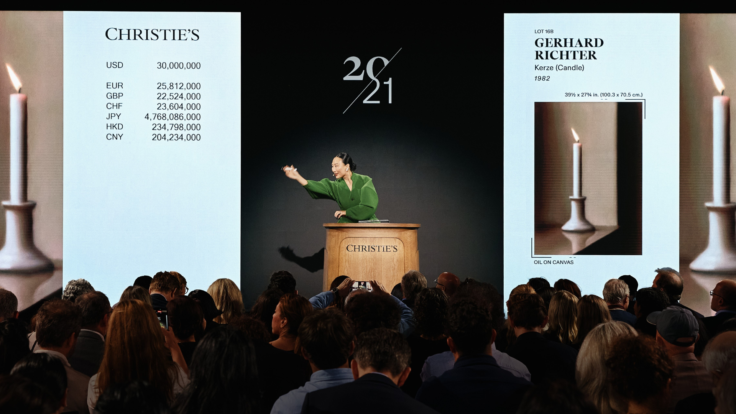
| In pursuit of more important work, Gundlach started buying at auction. He was particularly interested in mid-century painters like Robert Rauschenberg and Andy Warhol. “The first really expensive painting I bought was my Rauschenberg,” Gundlach said. He had stopped in at a Christie’s auction preview where they had a private room with six or eight paintings. The one that caught Gundlach’s eye was a Rauschenberg combine painting from 1955—only Gundlach didn’t know anything about Rauschenberg. “The name didn’t mean anything to me,” he recalled. Even so, he asked for the estimate. When the specialist said “two to three,” Gundlach assumed that meant two to three hundred thousand dollars. It turned out that meant millions, but that wasn’t really a stretch, either. “I had no significant knowledge of what Rauschenberg’s work and practice was all about,” Gundlach remembered. “I just really liked it, and so I ended up buying it.”
In 2007, he bought Warhol’s Lemon Marilyn, a smaller 1962 version of the famous Marilyn Monroe image that Warhol used several different ways. The most famous of these Marilyns are the large 40-inch-square versions in red, orange, blue, turquoise, and sage blue, which are owned by a pantheon of big-money collectors including Philip Niarchos, Ken Griffin, Peter Brant, Steven Cohen, and Larry Gagosian. The Orange Marilyn sold privately to Griffin for $240 million. Gagosian bought the sage blue one for $195 million at auction.
Gundlach’s Lemon Marilyn is only half the size, but he doesn’t mind. He paid a mere $28 million for it in 2007, and purchased it with house money, as far as he is concerned. After Société Générale bought TCW, he received stock in the French bank, which was soaring pre-Lehman and pre-Bear. But Gundlach knew the profits that were driving the rally were based on what ended up being disastrous lending. He sold his stock at what turned out to be the highest price at which Société Générale ever traded. “That was actually the best trade of my life,” he told me, (SocGen now trades at 10 percent of its peak 17 years ago.) “I took the proceeds and bought the Lemon Marilyn. It’s probably up at least 300 percent, if not more. That’s what we call a good trade.”
Eventually, Gundlach was able to secure examples of nearly everything on his wish list: Rothko, Diebenkorn, Guston, de Kooning, and many more. “I was really collecting like a couple, three pictures a year,” he said. “And if you do that for a lot of years, it starts to add up.” |
| “I Can Be, Potentially, the Dynamite” |
|
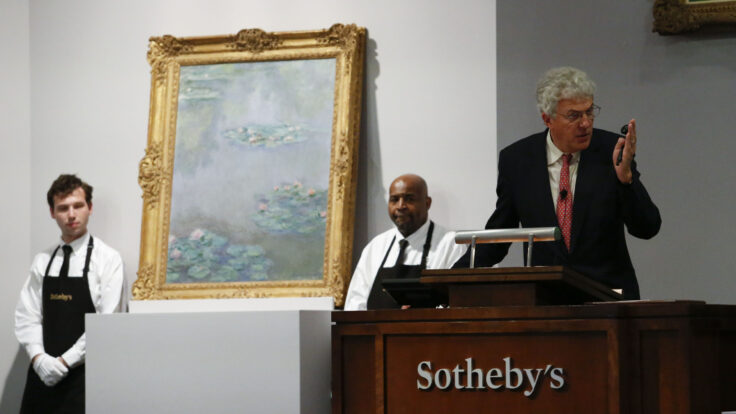
| Mondrian also played an important role in Gundlach’s decision to spend $65 million funding a substantial portion of the expansion of Buffalo’s Albright-Knox Gallery, since renamed the Buffalo AKG. In 2015, Gundlach’s grail—his favorite Mondrian that wasn’t locked up in a museum—came up for auction. He knew it would be a record for the artist, and that the competition would be fierce.
Gundlach ended up paying $50.5 for the painting, but found himself feeling somewhat directionless once it was in his possession. “I ended up outbidding everybody,” he recalled. “And I felt like maybe what Sir Edmund Hillary thought when he climbed Mount Everest. What am I supposed to do here? I can keep doing this, buying really high-value art. But it’s getting to the point where I’m not sure it moves the needle anymore.” |
|
|
| Not long after, Gundlach heard the Albright-Knox Gallery was planning to raise $80 million to renovate its existing buildings and “basically add a little space.” From Gundlach’s experience, he didn’t believe $80 million was going to be nearly enough. There would be the inevitable cost overruns and logistical problems, he thought, and the likely price tag would be closer to $120 million. And Gundlach wasn’t sure that kind of money even existed in Buffalo for an art museum. “I figured that what the project needed was somebody who could manage the fundraising creatively and be a big part of it,” he said. When he spoke to the museum’s director, Janne Sirén, and Robert Wilmers, then chairman of Buffalo’s powerful M&T Bank, he told them, “You know what you need here is you need some dynamite to get this thing going. I can be, potentially, the dynamite.”
In June of 2016, Gundlach pledged $45 million on the condition that it be treated as a matching grant and the museum would have only until Labor Day to raise the money they needed. By the end of the summer, the museum had somewhat astonishingly raised $120 million. Gundlach would end up giving more money to keep up the fundraising momentum, but he was uncomfortable with the museum’s offer to rename the original Albright building as an incentive for additional donors. At the groundbreaking for the new building that bears Gundlach’s name, he announced he was donating another $10 million—bringing his total gift to the museum to $65 million—to name the bridge that connects the Gundlach building to the original 1905 structure after John J. Albright. |
|
|
| How Gundlach will continue to be involved in the Buffalo AKG is an open question. He is not a member of the museum’s board of directors. “I’m just a guy who helped,” he said. Though that help wasn’t only in the form of cash. Sometimes it came from his sheer force of will. There were times when the museum thought it couldn’t afford to build underground parking—hardly an unnecessary luxury in a city that gets about 8 feet of snow a year. “There were many, many things that were thought, ‘We can’t do this,’” he recalled. “I just kept saying, ‘Yes, you can.’” Gundlach wasn’t going to renovate the house but leave the kitchen untouched, as he put it. “We’re not saying we’re going to do it another day. There is no other day; there will never be another day.”
Gundlach may not be on the board, but that doesn’t mean he’s walked away from the Buffalo AKG. He bought a house in Buffalo in 2017 so that he could remain involved—and even possibly join the board one day, maybe even become its president. In the meantime, he knows his own art collection might help fill some holes in the AKG’s collection some day, and he’s very happy with the museum’s leadership, both Sirén, the director, and Cathleen Chaffee, the chief curator. “I’m pretty happy with the way the museum is running, but if something goes wrong I’ll try to fix it,” he said before correcting himself, “or help fix it—or suggest fixing it.” |
|
|
| That’s it for today.
If you’re looking for something else to read, you might try Dodie Kazanjian’s Vogue profile of Annabelle Selldorf, the museum and gallery world’s favorite architect, as the Frick gets ready for its re-opening.
I’ll check back in with you on Sunday.
Marion |
|
|
|
| FOUR STORIES WE’RE TALKING ABOUT |
 |
| Tom Ford Trauma |
| A close look at Peter Hawkings’ abrupt ouster. |
| LAUREN SHERMAN |
|
 |
|
 |
|
 |
|
|
|
|
|
 |
|
|
|
Need help? Review our FAQs
page or contact
us for assistance. For brand partnerships, email ads@puck.news.
|
|
You received this email because you signed up to receive emails from Puck, or as part of your Puck account associated with . To stop receiving this newsletter and/or manage all your email preferences, click here.
|
|
Puck is published by Heat Media LLC. 227 W 17th St New York, NY 10011.
|
|
|
|