 |
|
Hi, this is Tara Palmeri, and welcome back to The Best & The Brightest. Tonight’s edition is packed with leadership news, like how New York’s migration crisis could rob Hakeem Jeffries of the speakership again, and how Hunter Biden’s allies plan to fight dirty in this new Congress. Abby Livingston also has updates on the heightened suspense around Mitch McConnell’s health and why no one is really surprised to see Nancy Pelosi staying in the game.
Also, please check out the latest episode of my new election podcast, Somebody’s Gotta Win, where I debate Obama’s 2012 reelection guru Jim Messina over whether the Democratic establishment is bedwetting over Biden’s polls or is in a state of denial. Subscribe here and here.
First up, a few notes on Hunter’s new media strategy…
|
|
|
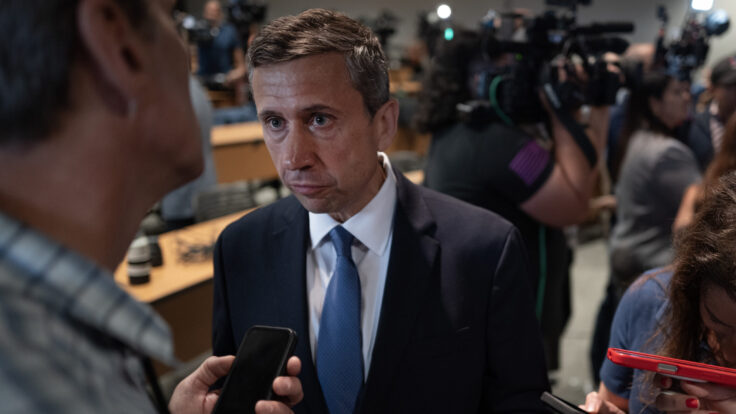
| Democratic knife-fighter David Brock is going on the offensive again, disseminating opposition research to various news outlets regarding the family members of various congressional Republicans—and not just the committee members who are investigating the president and his son, Hunter Biden. “Gloves are off, families are on,” Brock told me. “We’ve been looking into how the children of those same members may have benefited from their parents’ position. We’re not shy about going after the members.”
Facts First, Brock’s super PAC, has been the main communications apparatus to defend Hunter in G.O.P. inquiries and a possible impeachment. It’s the type of unseemly work that the White House doesn’t want to touch, given that Hunter is a drag on the administration. Yet it’s also the kind of dirty work that Biden, as a father, has expressed appreciation for—causing a natural friction between these outside groups and the White House.
Back in March, I wrote that Brock and his PAC were investing in research on the G.O.P. investigators, like House Judiciary Chair Jim Jordan and House Oversight Chair Jim Comer. Brock’s fingerprints ultimately ended up in long features in The New York Times—including one piece about Comer that mentions tawdry allegations of abuse and an abortion. Brock said to expect some of their work to be published in the coming week.
And now, the latest drama on Capitol Hill… |
Pelosi’s Extension & the Next Phase of the McConnell Saga
By Abby Livingston |
|
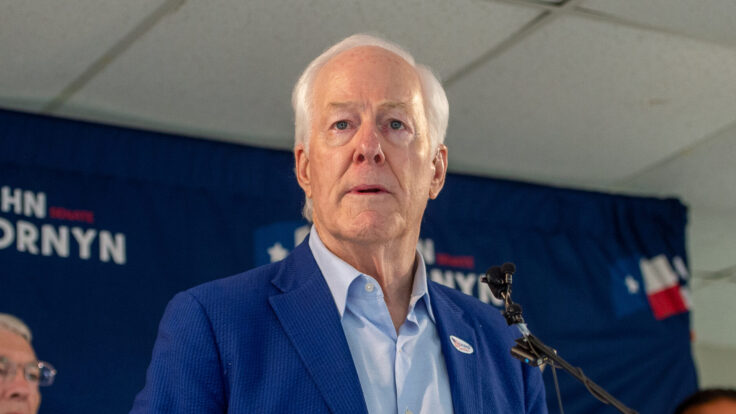
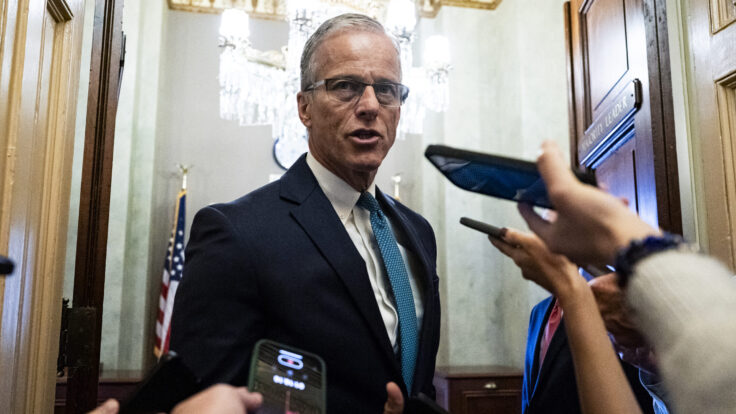
- More McConnellitis: The current sense, at least in some Senate G.O.P. circles, is that the conference is in a holding pattern regarding Mitch McConnell, whose recent health scares still looms large. But for now, eyes are turning to Kentucky’s gubernatorial race this November, where Democrat Steve Beshear is running for reelection against McConnell protégé Daniel Cameron, Kentucky’s attorney general. At issue is a hair-raising question for Republicans: Who will be in office to appoint a would-be successor should Mitch not finish his term? The current law states that any successor must be selected from a list of contenders submitted by the outgoing senator’s state party. But Beshear has been noncommittal over how he intends to respond to this recent law.
In Senate time, November is several lifetimes away. Given a likely government shutdown and potential Biden impeachment crisis, the lay of the land could look differently by then. But for now, that’s the focus on the calendar. And for the record, McConnell said at a news conference this week that he intends “to finish my term as leader and I’m going to finish my Senate term.” And there are no signals coming out of McConnell world that his thinking has changed.
- Pelosi Can’t Quit: Speaker emeritus Nancy Pelosi is once again running for reelection, extending one of the most extraordinary careers in Congressional history. Perhaps more than anything, the decision speaks to her endurance: Former House leaders like Dick Gephardt, Dennis Hastert, John Boehner, and Paul Ryan all opted to immediately leave office at the end of their terms, rather than return to rank-and-file status, proving once again that predicting the 83-year-old Pelosi’s exit from the House is a fool’s errand. (Her retirement has been “imminent” since 2010…)
Now, Democrats can continue leveraging her skills as a strategist and a fundraiser. While her successor Hakeem Jeffries seems to be off to a blockbuster fundraising start—recent internal D.C.C.C. documents show the new leader raised nearly $65 million for candidates and the House Democratic campaign arm—there are lingering questions about how much of this can actually be traced back to the quiet influence of Pelosi. In any case, her campaign finance reports show she remains an active donor to House colleagues, Democratic redistricting groups, and to Adam Schiff’s California Senate campaign.
The announcement did not set off earthquakes among the House Democratic sources that I pinged Friday afternoon, who mostly seemed to be trying to enjoy one last quiet recess before members return on Tuesday. This is perhaps the biggest tell that Pelosi truly has stepped back as the centripetal force within the caucus.
Her reelection bid will also postpone the long-anticipated race to replace her House seat in one of the most liberal and wealthy pockets in the country. Pelosi’s daughter, Christine, has long been treated as an heir apparent. But this is a district that has seen outsized political activism dating back to the 1980s AIDS crisis, and there is no shortage of political ambition in California’s 11th. But for now, it’s a dog fight for another day.
Dating back to 2010, Republicans have invested hundreds of millions of dollars, if not billions, in ads trashing Pelosi, and then tying her negative image to House Democratic incumbents and candidates. One Republican consultant I spoke with on Friday said he was pleased with the news: “She is still the best boogeyman.”
|
 |
| Hakeem’s Hometown Migrant Crisis |
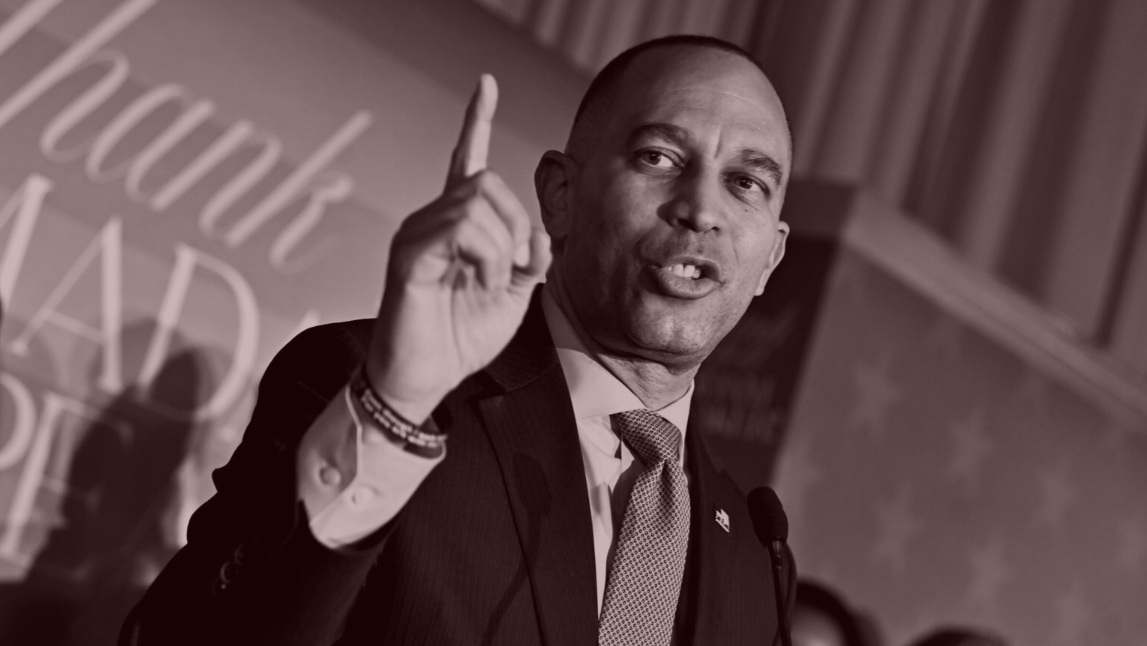
| The House minority leader, and speaker-in-waiting, is in the middle of a pickle in his own backyard that might cost him the gavel. |
|
|
|
| It’s the political third rail that Democrats don’t want to touch: A surge of more than 100,000 migrants over the last 18 months into New York City, thousands of miles from the southern border, filling homeless shelters, overloading city services, and fueling outrage on the covers of the New York Post and the Daily News, alike. Mayor Eric Adams, the ambitious and scandal-prone Democrat who was once viewed as a rising star in the party, recently called it a humanitarian crisis that will cost some $12 billion to solve over the next three years.
Of course, the bigger problem occupying the minds of many Democrats is the emerging political crisis placing House minority leader Hakeem Jeffries in the middle of a fight being waged by Adams and Governor Kathy Hochul—who are publicly demanding federal funds, lands, and work permits for migrants—against Joe Biden, who presumably sees it as a political loser on the precipice of an election year. “No one wants to go near the story,” said a source in the Democratic caucus. “It’s like crime; Republicans see that it will work. They talk about it every single day and it starts to enter the public consciousness, right or wrong.”
What’s more awkward for Jeffries is that the intraparty fight is being waged within broadcast transmissions of the suburban and central New York congressional districts that cost Democrats control of the House (and Jeffries the speakership) in 2022—when outrage over rising crime, botched bail reform and defund-the-police rhetoric generated a mini red wave. And now there’s alarm over a new Cook Political report stating that four of the six swing districts that Jeffries has to flip to win back the House—the seats held by Anthony D’Esposito, Mike Lawler, Marcus Molinaro, and Brandon Williams—are “Republican toss up,” meaning close to 50-50 odds, but more likely to remain in the G.O.P. column. Another of the six, the seat held by Mike LaLota, is rated as “Likely Republican.” Only the seat held by George Santos, in Long Island, is expected to “Lean Democrat.”
Jeffries, who arguably has the most to lose, has been quietly working behind the scenes to mend bridges between the Biden, Adams, and Hochul administrations. In an attempt to turn down the temperature, he and Chuck Schumer arranged a meeting last month in D.C. between Homeland Security Secretary Alejandro Mayorkas, senior Biden adviser Tom Perez, and Hochel. But the meeting was seen as roundly ineffectual on all sides, according to two sources with knowledge. “The New York representatives, who aren’t in House leadership, should put public pressure on the White House to do more,” said a member of the New York delegation. “Private meetings ain’t working.” |
| “What’s the Fucking Plan?” |
|
| The migrant crisis, long a feature of life for border-state governors, has become a new poison pill for blue state leaders ever since Governors Ron DeSantis and Greg Abbott started exporting asylum seekers north, giving them one-way tickets to Chicago, Boston, New York… and at one point, Martha’s Vineyard. (The optics of the latter political stunt may have backfired.) Of course, Democrats are mostly supportive of immigration, in the abstract, and Adams and Hochul’s beef with the White House is that they’re not getting enough federal support to find migrants housing and jobs. But they are also rightfully traumatized after losing the House last year, and fear that it could cost them politically in 2024, too.
Until now, Jeffries may have had an easy ride, gliding into leadership after being anointed by Nancy Pelosi and passing his first test as a fundraiser (also likely thanks to the help of the Speaker Emeritus). But many of his colleagues see the migrant crisis in New York as Jeffries’ first true test. Schumer, after all, has 20 Senate seats to defend. Members and candidates heading back to the Capitol next week are starting to fret that their conciliatory leader may not have the mettle for this. “What’s the fucking plan?” said a Democratic source in the New York caucus. “There haven’t been strategy calls on what the issues are to win.” Pelosi may be a master strategist, this person noted, “but she can’t help him with his own backyard.”
The tension has been exacerbated by Adams, a spotlight addict in political survival mode, who has been using his bully pulpit and local media to get the attention of the White House, even if it furthers the narrative of Dems in disarray. Adams, who has been described to me as a “madman” and “uncontrollable” by members of the party, has also become a talking point machine for Republicans. Mike Pence praised Adams on the campaign trail this week for bashing Biden over the migrant crisis. Some even blame him for over-hyping the crime crisis that cost them in 2022.
But otherwise, Democrats are treading carefully. Adams and Hochul aren’t attacking each other because they need each other politically: Hochul needs the city in order to win reelection, and Adams needs the support of the governor. Jeffries and Schumer have remained quiet, unable to go after Biden directly, because they have to work with the president on a myriad of issues and don’t want to fuel the intraparty fight. (Schumer, who loves to hold Sunday press conferences on any range of issues, from gun safety to consumer scams, will certainly not be holding one on the migration crisis.) Instead they’re privately putting pressure on the White House to aid these state and city leaders, while some members of the New York delegation are demanding executive action for provisional work visas. Meanwhile on Capitol Hill, Democrats are cautious about upsetting the powerful Hispanic caucus and voting bloc.
Everyone agrees that this is a political situation in which there are no winners for the Democratic party. Each blue city mayor has been complaining about this influx of migrants in numbers they’ve never seen before, a tragic humanitarian issue that is eating up their budgets and causing major political headaches. No wonder Abbott and DeSantis have been executing their cynical migrant-busing strategy: it works. Perhaps they’re old enough to remember when Jimmy Carter sent Cuban refugees to Bill Clinton when he was governor of Arkansas, costing both of them their re-elect. Their relationship was never repaired.
Nevertheless, this has become Jeffries’ burden since the pathway to the Democratic majority runs through New York. Understandably, he’s started staging a takeover of the state party apparatus by installing his loyalists, as CNN’s Edward-Isaac Dovere reported. Some say Jeffries’ real strategy is through the courts; the D.C.C.C. has filed a lawsuit demanding the New York congressional lines be redrawn. But what if Jeffries isn’t able to pull it off? I’m sure there will be uncomfortable conversations about why the Democrats are stuck in the minority again with a leader who could not take back seats in his own battleground state. If Pelosi is still in the House, perhaps she will be able to calm the waters for Jeffries, with her mystical emeritus status. But for how long? |
|
|
|
| FOUR STORIES WE’RE TALKING ABOUT |
|
|
|

|
 |
|
|
|
Need help? Review our FAQs
page or contact
us for assistance. For brand partnerships, email ads@puck.news.
|
|
You received this email because you signed up to receive emails from Puck, or as part of your Puck account associated with . To stop receiving this newsletter and/or manage all your email preferences, click here.
|
|
Puck is published by Heat Media LLC. 227 W 17th St New York, NY 10011.
|
|
|
|