Welcome back to Wall Power. I’m Marion
Maneker.
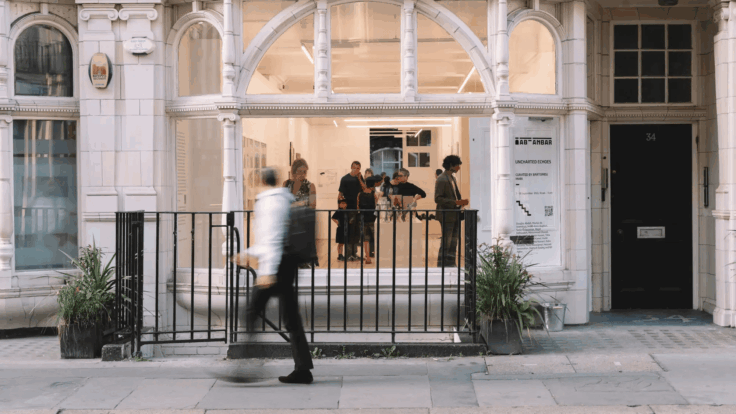
During my conversations over the past few days with folks in London, many told me they could sense the rising interest in the art market. Nevertheless, the strong sales and very positive mood in the United Kingdom was a welcome surprise to most—even though the market has been gathering momentum over the last several months.
Tonight, I’ll go into more detail on the London mood and some of the markets that seemed to be doing well. Up top, I have some notes
on another big weekend in the classic car market down in Amelia Island, Florida. I’ll also have more on the London numbers from our friends at ARTDAI in Wednesday’s Inner Circle issue. (Upgrade here if you want to share in the insights.)
Mentioned in this issue: Batia Ofer, Jussi
Pylkkänen, Tom Eddison, Ottilie Windsor, Damien Hirst, Katharine Arnold, Joe Lewis, Lucien Freud, Francis Bacon, Leon Kossoff, Sean Scully, El Anatsui, Hockney, the Vanthournouts, Henry Moore, Jean Dubuffet, Gerhard Richter,
Kandinsky, Twombly, Miró, Toyen, and more…
Now, let’s check in on the classic car market… |
The Car
Guys:
“There’s a Lot of Money Here”
|
Last night, I received a note from someone in the classic car market about the strong sales in
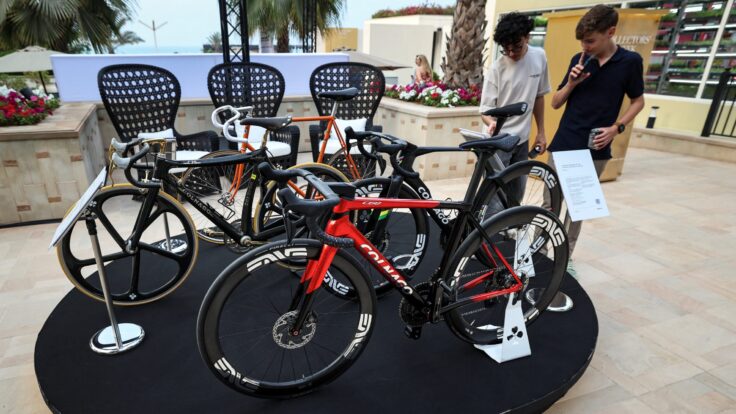
Florida these past two weekends at RM Sotheby’s in Miami, and Gooding and Broad Arrow in Amelia Island, farther north. (An art dealer sent me a few of them with the note, “There’s a lot of money out there in the world.” He’s not wrong.) I also learned that five of the supercars sold at Broad Arrow this weekend were consigned by a top art dealer, or the top art dealer, if you know what I mean. Anyway, here are some of the top lots in the car market this weekend: |
- 2003 Ferrari Enzo (Black): The craze for paying big numbers for low-mileage Ferraris continued with this car, which was serviced in the Hamptons but still managed to get only 450 miles on the odometer. Only a dozen of these models were ever delivered to North America in black. Estimated at $12 million, the car sold for a little more than $15 million.
- 2005 Porsche Carrera GT: With a unique “paint-to-sample blue” and an ascot brown
interior, Broad Arrow called this “the finest analog supercar of the 2000s.” It had 2,800 miles, and sold for $6.7 million.
- 2017 Ferrari F12TDF: With fewer than 100 miles on the odometer, this “exclusive track-focused variant of the F12berlinetta featuring more power, less weight, and breathtaking performance” is one of only 799 made. It sold for more than $4 million.
|
-
1960 Ferrari 250 GT SWB California Spider: These classic early Ferraris are quite valuable, but Gooding put a $16 million estimate on the car, and it sold for slightly below, at $15 million.
|
And finally, for comparison, the weekend before at RM Sotheby’s in Miami: |
-
1959 Ferrari 250 GT LWB California Spider: The long wheelbase version of the same car isn’t quite as valuable. This model is one of 50 made, and sold for just over $7 million.
|
Now, let’s talk about what’s happening in London… |
|
|
|
The city’s central role in the art market has been diminished in recent years, but
the success of London’s recent sales suggests that the buyers are finally coming back—even if the timing seems surprising. |
|
|
|
I recently spoke to an art dealer who was unable to get out of New York before the snowstorm two
weeks ago, and decided to get on the next plane to London as soon as JFK was open again. If he was going to miss out on a few days of sun and action in Los Angeles, where the art world had flocked for Frieze, he figured he might as well get a head start on the London auctions.
He found a surprising number of American and European dealers already there, along with several important art advisors. They were eager to talk about what was on offer—and, if they didn’t get what they were looking
for in the auctions, they were keen to talk about what they could source for clients from the private side. This dealer cautioned that the private market for historical artworks from desirable names has not been as suppressed as the weak auction numbers over the last few years might’ve suggested, but he was mainly impressed at the sea change in the mood in London. He summed it up for me when he said, “It felt alive!”
London’s central role in the market has been diminished in recent years
for a welter of reasons too complex to tease out here. But a truly healthy art market needs to be diversified and distributed, and the success of these sales—totals were up more than 50 percent at Sotheby’s, and more than double at Christie’s, which holds only two sales cycles a year in London compared to Sotheby’s three—suggests that the buyers are finally coming back. The art market may be once again exerting some centrifugal force, even if the timing seems surprising. |
The
Destabilization Factor
|
I know what you’re thinking: The United States and Israel have launched a war in Iran, the
consequences of which could be destabilizing to the Middle East and the world economy. (Yes, that’s meant to be an understatement.) So why the hell are a bunch of rich people spending more than $550 million on art over the course of a few days in March?
Well, this kind of behavior is hardly unprecedented. The day Lehman Brothers went bankrupt, Damien Hirst held an auction at Sotheby’s that grossed $200 million. Nearly two decades later, the rich are so much
richer. The U.S. has seen a surge in its number of billionaires, and as I noted in a recent email, it’s actually surprising we haven’t seen more money spent on art. When the world gets scary, we’re usually reminded that rich people with strong balance sheets can be greedy at the same time that others are fearful. More to the point, art tends to be bought with money already made, not money one hopes to make.
Taking it one step further, art buying—especially for historical art,
which is what everyone was getting in London—is often a reaction to destabilizing change. Great works of art are talismans of creativity and achievement from the past, and owning them is a reminder that better days will come again. But they also give buyers a sense of power and protection when they feel vulnerable. I don’t know anyone who doesn’t feel vulnerable right now.
Before the bombs started falling last Sunday, we had already begun to see momentum building in the art market. In the
months leading up to their London sales, Christie’s Katharine Arnold, who has been working with a handful of collectors in their early 40s, was making calls to secure property while fielding interest for the works that the house was previewing. When I asked her whether she was surprised by the strength of demand in last week’s sales, she said there had been plenty of signs. “I felt the preamble,” she told me, which gave her a premonition of “all the energy that was expended this
week.” |
The big question is whether it was the property offered, or a change in market mood, that loosened
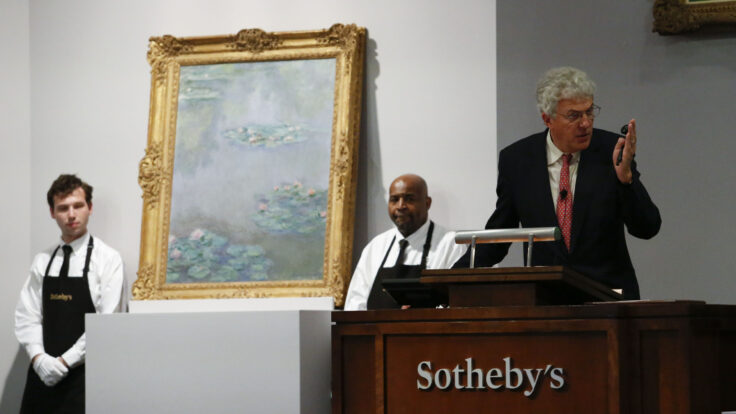
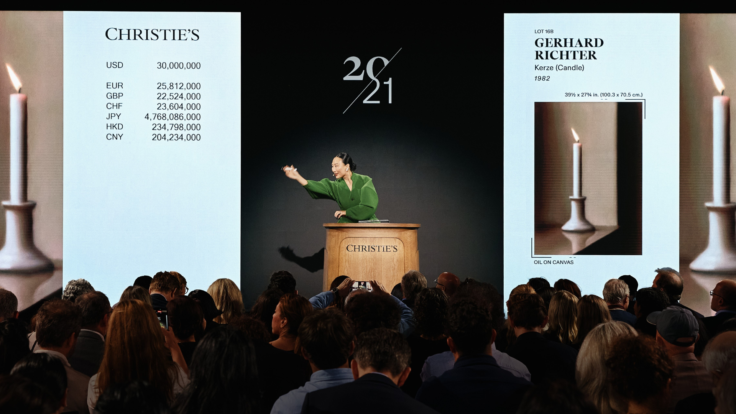
so many purse strings. I’m told the room was packed with some 400 people for the evening sale, a big crowd for a relatively small space that has been pretty sparse in recent years. For their part, Sotheby’s Tom Eddison and Ottilie Windsor told me the success was the result of several factors: the art, a successful traveling exhibition, more Americans in town, new clients bidding (and winning!) works, and a great deal more bidding in the room. “We felt such
positivity this week,” Windsor told me.
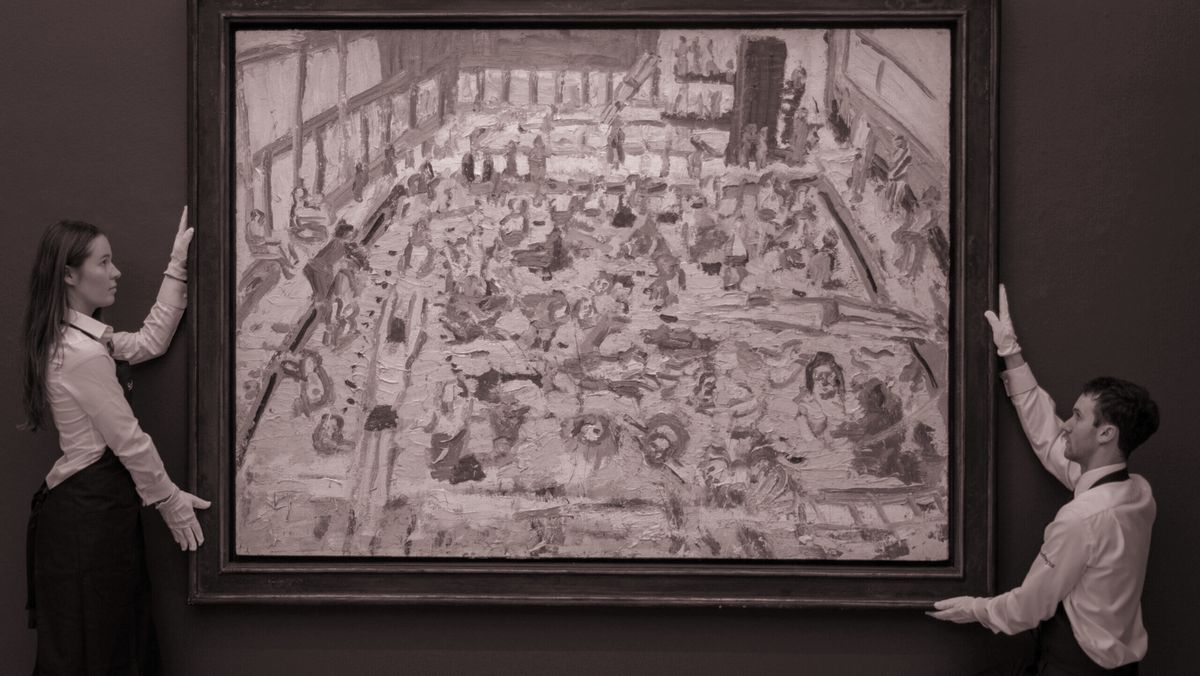
Did they all come for the small but extremely valuable group of works from the collection of Joe Lewis? These included two paintings by Lucien Freud, a selfie by Francis Bacon, and a very important painting by Leon Kossoff. The Freuds were a mixed bag, but still sold reasonably well. The Bacon doubled the estimate, but sold for a price in line with these small self-portraits, some
of which have achieved prices 50 percent higher than the still-solid $21.6 million paid last week. But the Kossoff really electrified the room: 10 bidders pushed it to $7 million, or four times the previous high auction price for the artist. The collection overall brought in $48 million.
There was also a benefit sale for the Royal Academy, with two lots in the evening sale and nine in the day sale, which were donated by artists to support the institution. The sale brought in $2.6 million,
with works by Sean Scully and El Anatsui that each made around $1 million. Batia Ofer, the chair of the Royal Academy Trust, was also in the room bidding on other works.
Sotheby’s also held a sale of David Hockney iPad drawings, which are editioned works but still quite valuable. All 16 sold, for a total of $6.1 million—double the aggregate estimate for the sale. |
At Christie’s, the sales were also anchored by a prominent collection, this one from
Roger and Josette Vanthournout, which totaled $65 million. The top lots in that sale were a 1939 Pablo Picasso that had six phone bidders and sold for nearly twice the £3 million estimate, a Henry Moore
sculpture, a Jean Dubuffet that exceeded the estimate range, and two paintings that sold solidly within the estimates by René Magritte and Lucio Fontana.
The various-owners evening sale
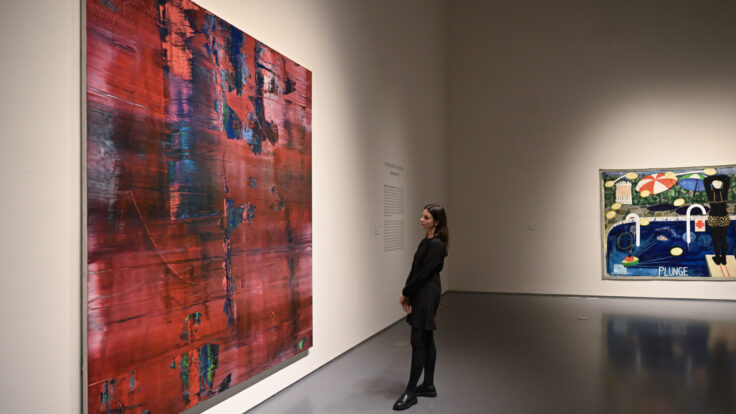
saw the last remaining cast of Henry Moore’s King and Queen sell for $35 million and set a new record for the artist. Two Gerhard Richter paintings, a landscape and an abstract, performed very well, both making prices around $10 million. A Wassily Kandinsky painting that was bought in 2018 for $20.6 million resold to a third-party guarantor for $17 million, a reminder that the market strength being exhibited is not indiscriminate. On the positive side
for Christie’s, a 1961 Cy Twombly Untitled (Rome) painting had solid bidding to sell for $5.4 million, demonstrating the growing demand in the Twombly market. (I also hear the Gund “Roma” work with a $40 million estimate now has a third-party guarantor, another good sign.)
In the surrealism sale, a small Joan Miró from 1949 sold for $6.5 million after nine phone bidders chased it along with advisor Jussi Pylkkänen in the room. A small Dorothea Tanning, Children’s Games, from 1942, sold for nearly $6.4 million, setting a record and obliterating the estimate. Almost as impressive were the record set for the Czech artist
Toyen, whose Le devenir de la liberté, from 1946, sold for $5 million; the nearly $5.9 million paid for Paul Delvaux’s La Ville lunaire, from 1944; and the sale of a 1929
Picasso, Figure, that was estimated at less than $1 million but sold for more than $4 million.
Since we’re speaking of Picasso, let me also point out that Christie’s day sale of impressionist and modern art and works on paper was a marvel. The sale totaled $25 million—exceeding the postwar and contemporary day sale, which brought in $20.6 million. The top lot there was another Picasso that had been estimated well below a million dollars but
sold for $2.2 million. But the strong performance for these lots went far beyond. This is hardly what anyone would call “blue-chip” work—yes, the sale featured big names, but these were minor pieces. If you want evidence of a “flight to quality” or a turn of the wheel toward historical works, this is definitely it. |
We’re going to have to leave it there for today. I’ve run out of space. But I’ll have more to say
about the London sales on Wednesday in the Inner Circle. Upgrade to join me there.
Until then,
M |
|
|
|
Finally, a media podcast about what’s actually happening in the media—not the oversanitized,
legal-and-standards-approved version you read online. Join Dylan Byers, Puck’s veteran media reporter, and Julia Alexander, a longtime media analyst, as they sit down with TV personalities, moguls, pundits, and industry executives for raw, honest, sometimes salacious conversations about the business of media and its biggest egos. New episodes publish every Tuesday and Friday. |
|
|
|
A professional-grade rundown on the business of sports from John Ourand, the industry’s preeminent journalist,
covering the leagues, players, agencies, media deals, and the egos fueling it all. |
|
|
|
Need help? Review our FAQ page or contact us for assistance. For brand partnerships, email ads@puck.news. You received this email because you
signed up to receive emails from Puck, or as part of your Puck account associated with {{customer.email}}. To stop receiving this newsletter and/or manage all your email preferences, click here. |
Puck is published by Heat Media LLC. 107 Greenwich St., New York, NY 10006 |
|
|
|
|