{{ 'now' | timezone: 'America/New_York' | date: '%b %d, %Y' }} |
|
|
Greetings from Los Angeles, and welcome back to In the Room. David
Ellison’s decision to attend last night’s State of the Union address as a guest of Lindsey Graham is going over about as well as you’d imagine in the CBS newsroom: “I just threw up in my mouth,” one journalist texted me after the senator posted a photo of the two men giving a thumbs-up. Of course, David is clearly in the whatever-it-takes phase of the deal process, and gives zero fucks what the rank and file think about his maneuvers. Anyway, if everything goes
according to plan, these outraged employees might be working at CNN… or nowhere.
Speaking of which, my partner Bill Cohan is out with a new piece tonight arguing that Ted Sarandos should walk away from WBD: “The savviest M&A move at his disposal is to let the Ellisons win the trophy, overextend their balance sheet, then sit back and
wait for the sequel.” As of now, Ted is slated to visit the White House tomorrow, so we’ll see…
In tonight’s issue, news and notes on Mathias Döpfner’s surprise eleventh-hour bid for The Telegraph, which threatens to torpedo Gerry Cardinale’s existing agreement with the Daily Mail’s Lord Rothermere. Plus, a readout from today’s Washington Post town hall, where interim C.E.O. Jeff D’Onofrio
sought to sell the paper’s disenchanted staff on the merits of “audience value” metrics.
🎙️ Plus, on the latest episode of The Grill Room, Reed Duchscher, C.E.O. of Night Media, joined Julia and me to discuss his management firm’s recent $70 million raise—and what it signals about the next phase of his company and the creator economy writ large. We talked YouTube economics, the rise of Roblox, the future of independent
political commentary, and more. Follow The Grill Room on Apple, Spotify, or wherever you prefer to listen.
Also mentioned in this
issue: Jeff Bezos, Jeff Shell, Jeff Zucker, Bob Iger, Josh D’Amaro, Jeremy Hosking, Bari Weiss (always), Matt Murray, Dovid Efune, Sheikh Mansour, Jimmy Kimmel, Kristina Schake, David D. Smith, and more… |
Things You
Should Know...
|
-
Shell game: Paramount president Jeff Shell is facing allegations that he leaked material information about Paramount’s $7.7 billion UFC deal a month before it was announced. R.J. Cipriani, a high-stakes gambler and federal whistleblower, has alerted Paramount to a draft complaint that he intends to file asserting that Shell shared details with him about the timing, cost, and structure of the deal. Paramount has responded by enlisting Gibson Dunn to
conduct an internal investigation. Meanwhile, Shell’s lawyer, Patty Glaser, told my partner Matt Belloni that the draft complaint was “riddled with clear errors of fact and law,” and that if Cipriani “makes the mistake” of filing it, “we will strongly respond.”
- Attia later: Longevity influencer Peter Attia has finally resigned from his role as CBS News contributor, weeks after coming
under scrutiny for his lurid correspondence with Jeffrey Epstein. In a statement, the network said that Attia had “stepped back to ensure his involvement didn’t become a distraction from the important work being done at CBS.” Given the choice of nipping the controversy in the bud and cutting Attia immediately, or standing behind him on anti-cancel culture principle, Bari Weiss appears to have chosen door number three: drag the thing out as long as possible, drop
him anyway, and resuscitate a bad news cycle.
- Schake rattles and rolls: Disney comms chief Kristina Schake is exiting the company next month when Bob Iger steps down as C.E.O. Schake was certainly kinder and gentler than her predecessor, Zenia Mucha, but ultimately far less effective and certainly less revered internally. And while she may not deserve the blame for Disney’s mishandling of the
Jimmy Kimmel suspension, she certainly didn’t have the Zenia-level foresight or fortitude to stop the front office from making the situation worse. Anyway, no word yet on who Josh D’Amaro is tapping as her successor. As for Iger, I can confirm he has not been asked to step in for Casey Wasserman at the L.A. Olympics, nor is he interested.
- Semafor East, Politico Down Under: Justin Smith
has launched Semafor China, the latest expansion of his events-centric media business into lucrative, if politically tricky, markets. (I wrote about Semafor’s Gulf business last year.) Meanwhile, Politico’s Goli Sheikholeslami has announced the launch of an Australia product, marking its “expansion to Indo-Pacific.” It sure sounds
ambitious, but on closer inspection, it’s more analogous to a Sacramento or Albany state capital vertical than a full-blown Politico Europe–style operation. Ryan Heath, the inaugural Brussels Playbook author, will helm the Canberra Playbook.
|
-
Fox Nation: More people watched Trump’s State of the Union address on Fox News than on any other television channel, marking yet another undisputed win for the sole success story in cable news these days. The network drew 11.5 million viewers and 2.1 million in the demo, accounting for two-thirds of the total cable news audience.
- Dazed and confused: Chances are you missed CNN and Variety’s
town hall with Timothée Chalamet and Matthew McConaughey. The event, broadcast in the Saturday night Nielsen no-man’s-land, drew a mere 453,000 viewers total, and just 57,000 in the demo. It also didn’t get much traction on YouTube, where a teaser shows just 250,000 views. The network is speciously claiming that it had “multiplatform reach” of 8.35 million and performed well for a streaming audience. Still, this seems like a pretty obvious scheduling and
marketing failure. Also, the full interview is now available on Variety’s YouTube channel, presumably part of a windowing deal, which means you don’t need a CNN subscription to watch it.
- A Kimmel coda: In my recent treatise on the demise of late night, I suggested that Jimmy Kimmel’s ratings had “quickly returned to earth”
after a brief surge surrounding his aforementioned suspension. That’s true—the show has obviously never matched the 6.3 million viewers who welcomed him back from his hiatus— but it fails to appreciate that Jimmy’s viewership is actually up double-digit percentages year over year, currently averaging around 2 million, and, of course, his monologues continue to garner millions more on YouTube. Nothing here changes the fundamental trajectory of late-night economics, but Jimmy isn’t going
gently into that good night.
|
|
|
Just when the slow-motion Telegraph sale finally seemed ready to close,
Mathias Döpfner entered the chat. Does Axel Springer’s dark horse bid have any real chance? And why does anyone want the headache of owning a newspaper in 2026 anyway? |
|
|
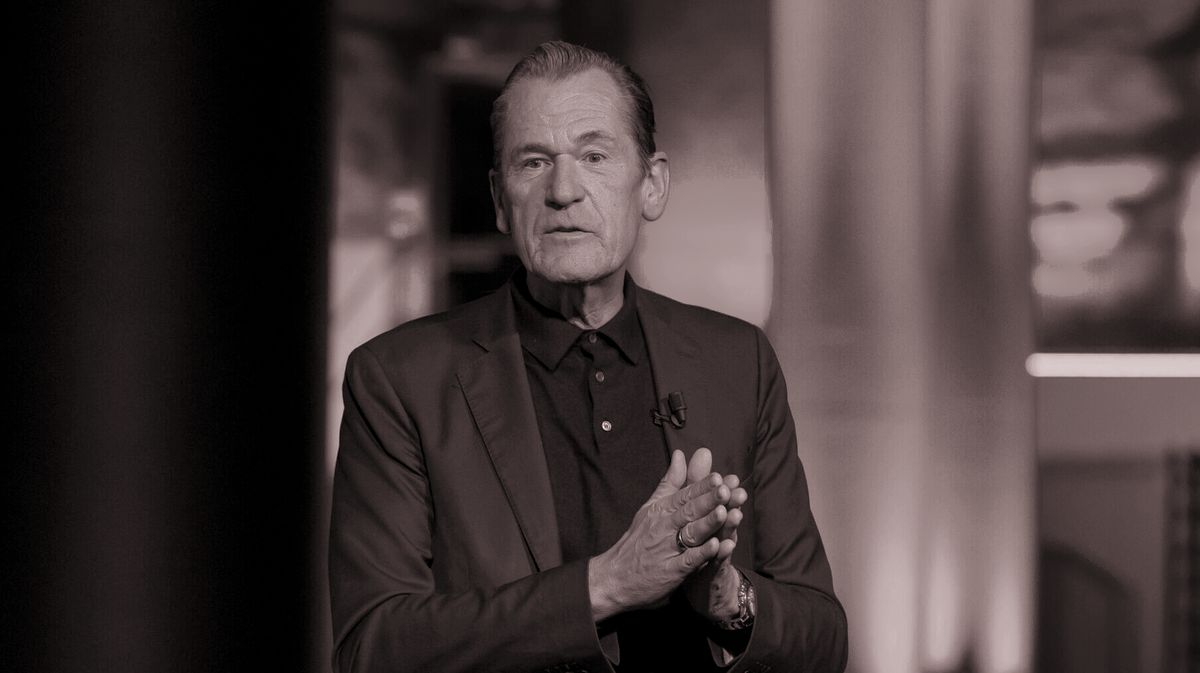
Late last week, Mathias Döpfner, the Axel Springer C.E.O. and controlling
shareholder, Politico proprietor, and perennially restive media suitor, revealed that he had lobbed his support in favor of an eleventh-hour bid for The Telegraph, the storied Tory broadsheet that has been mired in a tortured, yearslong sale process. Mathias and a small group of conservative transatlantic
investors are shoring up the financing for Dovid Efune, the conservative, British-born publisher of The New York Sun.
Dovid has been circling The Telegraph since the cash-strapped Barclay brothers first put it on the auction block, but never had the necessary financing to mount a serious bid. He has finally found it in this new consortium, which also includes Jeremy Hosking, the hedge fund chief and Brexiteer,
and David D. Smith, the former Sinclair C.E.O. and owner of The Baltimore Sun. The group is hoping to surmount an existing offer from Lord Rothermere’s Daily Mail and General Trust group, which appears to be on the one-yard line barring regulatory review.
For those just joining, the Telegraph sale is being overseen by RedBird’s Gerry Cardinale, whose own protracted battle to secure the asset failed in the face
of vehement protests from regulators and the Telegraph newsroom. Before that, his RedBird IMI partner, Jeff Zucker, also failed to overcome the same antagonists and secure the paper via an investment from Emirati royal Sheikh Mansour. Frankly, one undercurrent of this whole long saga has been Fleet
Street protectionist instincts bordering on xenophobia. (Disclosure: RedBird Capital, a partner in Paramount Skydance, is a minority shareholder in Puck.)
Whether the Brits would be more amenable to a Teutonic proprietor is an open question, but even then it’s not clear whether Mathias will actually be able to derail Rothermere’s existing bid. The new consortium’s proposal matches Rothermere’s £500 million commitment but offers more cash up front, less debt, and perhaps, crucially, fewer
regulatory hurdles. Indeed, the group seems to be positioning itself as an insurance option for Gerry in the event that British regulators reject or delay Rothermere’s bid on plurality grounds, since he already owns one of the biggest papers in the U.K.
Last week, Culture Secretary Lisa Nandy lifted the restrictions that would’ve stopped Rothermere from acquiring the option to buy The Telegraph, but his ability to exercise that option could drag
on for months or even years amid regulatory review. And between Paramount’s Warner Bros. Discovery pursuit, the rest of the RedBird portfolio, and a Milan Serie A title race, Gerry has bigger fish to fry than trying to offload a U.K. newspaper. In time, the ease of the Mathias consortium’s proposal could prove compelling.
So, what’s Gerry going to do? Money can always change the dynamics here, as Gerry knows from PSKY–WBD. And I’m told that Mathias’s group has signaled a willingness to
offer more if necessary. But for now, RedBird seems likely to stay the course with DMGT. Their hope is that Mathias’s last-minute incursion will inspire Rothermere to finally move ahead and acquire the option while also assuming the risk of regulatory approval. So far, Rothermere and his Goldman advisors have been dragging their feet; the prospect of losing the asset may incentivize them to pick up the pace.
Should Rothermere get the asset, Mathias will have to keep hunting. He’s been
stateside in recent weeks—attending the Super Bowl, advising Netflix’s pursuit of Warner Bros. Discovery (he’s a Netflix board member), courting potential Politico editors, and
getting to know the Trump White House—an itinerary that speaks to the oft-underappreciated scope of his influence. His appetite for more media assets, however, remains unsatiated. After all, The Telegraph itself always seemed to benefit from a dead cat bounce in the sector. On the one hand, it’s a musty, old, extremely conservative and
self-important British paper largely immune to change. On the other, there just isn’t that much on the market to buy. |
Pity, for Mathias, that Jeff Bezos remains committed to The Washington
Post despite all the recent sturm und drang at the paper in the wake of its most massive bloodletting exercise to date. Yes, the rumors percolating through the building that Bezos may be ready to offload the tortured asset are misplaced. It’s his paper, and he’s sticking with it. Why wouldn’t he?
Indeed, on Wednesday, acting C.E.O. and publisher Jeff D’Onofrio hosted a town hall to try to explain how the company’s “foundational values”—acting with integrity,
producing quality journalism, committing to a healthy business—could align with its new priorities: operating in a cost-efficient manner, listening to the customer, and embracing innovation.
Among other things, Jeff sought to explain how Google’s algorithmic changes and rising costs were affecting the business. He cited a 102 percent rise in cost per piece of content since 2020, a 48 percent decline in content published across News and Opinions since 2020, and a 53 percent drop in page
views since 2020. Specific section performances were even more sobering, I’m told. “We never want to be back in the position we were just in,” he said.
In the hopes of incentivizing journalists to respond to the audience, managing editor Bryan Flaherty announced that the Post will soon launch “audience value scores”—an as-yet-undefined equation of reader actions, attention, and acquisition—as its North Star metric. In his closing remarks, executive editor
Matt Murray also sought to remind staff that audience growth was a shared responsibility of the newsroom.
Obviously, it’s a long, long row to hoe. At present, the Post has been brazenly furnishing its website and increasingly thin print product with wire copy and months-old articles with bylines that exited the paper long ago. It’s not clear what would inspire a new generation of journalists to join the Post and participate in this resuscitation
project, particularly when the economics of the news business are headed to zero.
Not long ago, Yahoo C.E.O. Jim Lanzone appeared on my podcast, The Grill Room, to hype his progress turning around the Apollo-controlled asset, which seems destined for an I.P.O. in the next couple of years. For journalists, Yahoo News is commonly derided as the
province of digital aggregation at scale—some stock quotes here, some fantasy sports there, and a bunch of wire copy–style content presented without byline. And yet beneath this superficial vision, it’s a real financial success story, and that rare bird: a digital turnaround tale.
During our conversation, Lanzone was honest about how the company was able to rebuild only after the letdown of the post-wunderkind Google comparisons and the unsuccessful Verizon acquisition in 2017. Now, the
company has made smart decisions about investing in some growth areas while leaning into the unit-economics-at-scale game. Everyone reading this at The Washington Post will sure hate this comparison, but they’re closer to it than they might well think. Rather than rehire a newsroom, D’Onofrio and Murray need to focus on their core areas of coverage—the White House, national security, etcetera—and then form licensing and partnership deals while leaning into the
increasingly domain-relevant developments in A.I.
The front office seems to get that. “We’re bringing Washington to the nation, and we also want to bring the nation to Washington,” Murray said at one point, while noting that nine-tenths of the Post’s readership was outside of the D.M.V. The Post can’t compete with the Times or its own history, but there’s still plenty of room to grow once the people who love it the most make room for those who actually know how
to save it. |
|
|
Puck fashion correspondent Lauren Sherman and a rotating cast of industry insiders take you deep behind the scenes of
this multitrillion-dollar biz, from creative director switcheroos to M&A drama, D.T.C. downfalls, and magazine mishaps. Fashion People is an extension of Line Sheet, Lauren’s private email for Puck, where she tracks what’s happening beyond the press releases in fashion, beauty, and media. New episodes publish every Tuesday and Friday. |
|
|
A professional-grade rundown on the business of sports from John Ourand, the industry’s preeminent journalist,
covering the leagues, players, agencies, media deals, and the egos fueling it all. |
|
|
Need help? Review our FAQ page or contact us for assistance. For brand partnerships, email ads@puck.news. You received this email because you
signed up to receive emails from Puck, or as part of your Puck account associated with {{customer.email}}. To stop receiving this newsletter and/or manage all your email preferences, click here. |
Puck is published by Heat Media LLC. 107 Greenwich St., New York, NY 10006 |
|
|
|