{{ 'now' | timezone: 'America/New_York' | date: '%b %d, %Y' }} |
|
|
|
Welcome to The Varsity from a smoke-filled New York City. I attended the ESPYs last
night for their cross-country, Lincoln Center debut. The show had a bit of a New York vibe, from the hometown Knicks cleaning up to performances by De La Soul and Ghostface Killah. (The Knicks have really seized on New York’s full-blown ’90s nostalgia.) Overall, though, the event felt pretty much as it has the past few years in L.A.
“Nice while it lasted” award: Conor McGregor’s one-minute dance with Max Holloway on Saturday
night was disappointingly brief, but it drew big viewership to Paramount+. The card averaged 6.1 million viewers in the U.S. and another 400,000 viewers in Latin America.
Pod alert: Evan Drellich, The Athletic’s ace baseball writer, will join The Varsity this weekend for a conversation about the state of the league as it enters the second half of the season. Also, make sure to download
yesterday’s episode, where my Puck partner Eriq Gardner broke down both the suit that several states filed to block Paramount’s acquisition of Warner Bros. Discovery and that kooky Wrigley Field lawsuit.
In tonight’s issue, my report from Major League Baseball’s All-Star Week in Philadelphia. The vibes around America’s
pastime have been great lately, but there’s a potentially massive labor dispute on the horizon this offseason, and plenty of informed observers see a lockout as all but inevitable. You’d think the threat would be keeping MLB’s biggest partners up at night, but that’s not necessarily the case. As usual, my Thursday email is available exclusively to Puck Inner Circle subscribers. Upgrade here if you
haven’t already.
Also mentioned in this issue: Shohei Ohtani, Trinity Rodman, Carolyn Tisch Blodgett, Rob Manfred, Jim Phillips, Caitlin Clark, Bruce Meyer, Alex Sherman, Jimmy Pitaro, Aaron Judge, and more. |
Player of the
Week: Carolyn Tisch Blodgett
|
The air quality and heat indexes in New York were so bad last night that you could make
a case that the Gotham FC–Washington Spirit match from Citi Field should have been canceled. Instead, keeping with the summer’s most-discussed sports trend, players paused for hydration breaks every 15 minutes. (Washington’s Trinity Rodman wasn’t a fan, noting that if conditions require that kind of stoppage, “we shouldn’t
be playing the game.”) Still, I was most impressed with the crowd. The 42,175 attendees set a record for a women’s sporting event in New York, and validated Gotham owner Tisch Blodgett’s decision to move the team from Jersey to Queens in 2028. |
Down to the J.V.: Bundesliga
|
It’s never a good sign when rights-fee sums head backwards—even by a little bit. In announcing new
deals with Versant and Telemundo, Germany’s top soccer league ran into the realities of the U.S.’s current sports media marketplace, in which media companies are pinching their pennies to afford the NFL. Here are the stats: ESPN had been paying the German soccer league an average of $30 million per year for its U.S. rights over the past six years. Yesterday, the league announced a five-year deal with Versant at $20 million per year, and signed a three-year Spanish-language deal with Telemundo
for a price that’s reportedly in the high seven figures. |
- World Cup numbers: I continue to be impressed by the World Cup’s TV results. Consider this: The Spanish and English broadcasts of eight tournament games accounted for the top 16 slots on Nielsen’s weekly chart of the most watched sporting events for the week of July 6. Fox’s English broadcasts took the top half—including, at number one, 33 million viewers for the U.S.–Belgium game. The next eight slots went to Telemundo, led by the Argentina–Switzerland
game with 5.5 million viewers. The top non–World Cup sport? NBC’s coverage of Caitlin Clark’s Indiana Fever vs. Las Vegas on Sunday, which saw 2.5 million viewers.
Meanwhile, Fox put out early numbers for yesterday’s Argentina–England game: 15.063 million watched the game on a Wednesday afternoon. Incredible. Naturally, that set an English-language record for the most watched World Cup semifinal—breaking a mark set only one day before with 11.462 million viewers
for Spain–France. - ESPN’s local push: For months, Jimmy Pitaro has been saying that he’s interested in using local rights from MLB and the NBA to help grow subscribers to the ESPN app. And, as part of the three-year deal it signed last November, the network now has local rights to six teams. At a CNBC event this afternoon, Pitaro made it clear that ESPN still intends to expand beyond baseball. “We’ve made our intentions very clear with
every league, including the NBA, that we want to be part of the solution here,” he told CNBC’s Alex Sherman. Notably, he added that any deal need not be exclusive. Indeed, ESPN wants to be the streaming nervous system for sports, but not necessarily its walled garden.
- Sending out an S.O.S.: The odds of Congress passing the Protect College Sports Act—or, really, any legislation in the months before the midterm elections—are slim to
none. But that didn’t stop ACC commissioner Jim Phillips from calling the bill college sports’ “last hope” for legislative guardrails. Speaking at the ACC Kickoff in Charlotte this week, Phillips said, “We are working as hard as we can to make this thing work. I don’t know how much more disrupted college sports could be.”
Phillips added that college sports faces an unknown future if the act isn’t able to work its way through Congress. “Maybe the bill’s not perfect for
either side,” he continued, “but you get to the middle ground that, at the end, will absolutely help stabilize college sports. … I still remain confident that we can get something done, because if we don’t, it’s all on us. That’s our fault.” Phillips’s comments were not unexpected, but they show just how little control even conference commissioners have over the chaos in college sports these days.
|
And now for the main event… |
|
|
|
Looming lockout or not, baseball is riding high this summer, with generational
stars, epic ratings, and the willingness to ignore the labor storm clouds gathering for the post-postseason. |
|
|
|
Standing on the field at Citizens Bank Park before Monday’s Home Run Derby in Philadelphia, a media
executive marveled at how well baseball was performing this season. TV ratings are up significantly. Attendance has achieved its highest point in a decade. Ad sales and sponsorship rates are soaring. So what about the ongoing cold war between the league and the players union, I asked? You know, the one that had even the sunniest optimists resigning themselves to a 2027 lockout before this season even began? “They’ll figure it out,” was the short answer.
Indeed, the dispute
centers on a seemingly intractable issue: MLB’s desire to institute both a salary cap and floor—cost certainties, particularly amid a media reckoning, that will create a more competitive balance and likely increase franchise values. After all, Major League Baseball is the only major sports organization without a salary cap—creating an inequity within the sport that has turned the business into a veritable caste system, in which the very profitable and valuable Los Angeles Dodgers (2026
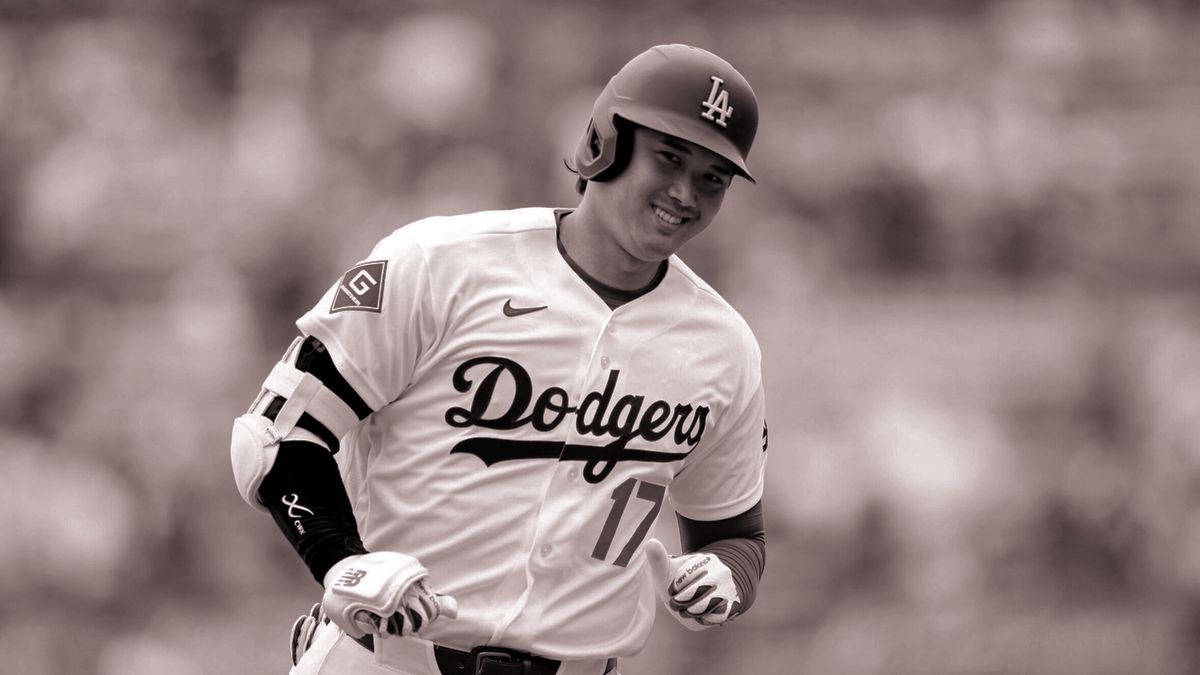
payroll: $397 million, per FanGraphs) operate in a different solar system than the Miami Marlins (2026 payroll: $75 million, or less than a year of Shohei Ohtani’s annual salary). Alas, players have historically, and perhaps myopically, viewed any kind of spending limit as a third rail of labor negotiations that could lower the average player annual comp
beneath $5.34 million.
Anyway, the vibes in Philly were sanguine. I talked to more than a dozen high-level sources this week—MLB officials, media executives, sponsors—and they all sounded similarly resigned to the fact that a lockout was coming after the MLB’s collective bargaining agreement expires on December 1, potentially canceling games in April and May. But MLB’s business partners believe that there’s sufficient enthusiasm around the sport right now—as evidenced by a crop of
bankable stars like Aaron Judge and Ohtani, gangbusters ratings for last year’s World Series, and the surprise breakout success of this year’s World Baseball Classic—that the owners and players won’t risk the mutually assured destruction game theory that led to the abortion of the entire 1994 season.
“Everyone just assumes that we’re going to hear a lot of rhetoric from both sides,” one media executive told me. “And then they’ll get a deal done at the eleventh hour
because baseball can’t afford to miss a full season, and the players can’t afford to miss paychecks.”
The battle for public opinion has already begun, with commissioner Rob Manfred and interim union chief Bruce Meyer trading on-the-record shots. To wit: MLB recently released “Level the Playing Field,” an ad campaign promoting the value of cap-enhanced competition. And in dueling press conferences this week, Meyer called the MLB’s ad campaign “perverse”
while Manfred accused the MLBPA of not being “completely accurate or fair” in its public messaging around the dispute.
And yet, the sports business executives I spoke to still view this level of rancor as a natural byproduct of active labor negotiations. Their surprisingly cool demeanor may be due to the fact that baseball’s media contracts have clauses that provide rebates for missed games. Or they could be simply grinfucking everyone in this imbroglio. Or, notably, it may have to do
with the upside of a shorter season where regular-season games matter more than ever. “We know it’s going to be a battle,” a media executive told me. “If they miss a month or two next season, we’re going to be totally fine. I don’t know that it’s the worst thing in the world to miss games in April and May.” Or, as another executive close to this drama put it, “I don’t have to come up with too many contingencies in terms of where we’re reinvesting our money if MLB loses games in April and May.
But if baseball loses the whole season, that’s a whole different story.”
As sponsors prepare to negotiate their renewals only a couple of months away from a work stoppage, quite tellingly, some are insisting on opt-out language in their contracts should baseball miss too many games next season. “Everyone’s paying MLB significantly more money than we did a couple of years ago, so we are looking for something to protect us in some capacity,” said a top sponsorship executive.
|
For what it’s worth, baseball has a pretty good story to tell. It’s never going to
command the sort of economics bestowed upon the NFL or major college football, but it’s actually a pretty cost-efficient alternative. Viewership for NBC’s Sunday Night Baseball is up more than 40 percent over last year’s version on ESPN; Fox’s numbers are up double digits this year; TBS is up 20 percent. And since baseball’s media deals run through the 2028 season, MLB won’t start negotiating new ones until the league has a new collective bargaining agreement—another reason why the
league’s business partners aren’t sweating the pending lockout too much. But in synching all of its national media deals to end at the same time, the MLB has put enormous pressure on its next media deal, which is expected to come to market with a package of local rights—though nobody knows yet how many teams that rollup will include.
And yet, as MLB eventually starts negotiating a new media deal, every media partner will be looking to cut costs so they can afford their precious piece of
the NFL pie. The negotiations of football rights, which are now expected to pick up during the NFL’s regular season, stand to take billions of dollars out of the market.
Streamers and broadcasters particularly value the MLB playoffs, and several media companies are expected to vie for the World Series. That includes Fox, which has carried the October Classic for the past 30 years, and ESPN, which has expressed desire to poach it. Netflix has pursued an eventized sports strategy,
which suggests that it would also be vying for baseball’s biggest event. The streamer drew around 3 million viewers for its MLB Opening Night game this year, a good number that over-indexed with the younger demos.
Of course, all of this interest could be curtailed—or steeply discounted—if a work stoppage proves to be significant and/or cuts into its precarious popularity. And those vertiginous stakes explain why baseball’s current business partners are so hopeful that the players and the
owners won’t screw it up for everyone else. Here’s hoping they’re not left staring at strike three. |
On FIFA’s hydration breaks: “As a football-loving Brit, I feel compelled to push back on
the hydration breaks. A three-minute stoppage in either half materially changes the structure of a match. Football is, quite famously, a ‘game of two halves,’ and these breaks can lead to huge swings in momentum. You’re looking at the most significant structural change to the sport since 1897, when two halves of 45 minutes were codified. And this hasn’t been done for the good of the game, but for revenue—something football is not short of. The anger at FIFA stems from its relentless interference
for commercial gain, when, for so many fans, football is far more than entertainment—it’s identity and community, and that’s what makes it special. Forgive the rant, but there is real anxiety about FIFA’s pursuit of more cash at the expense of players, fans, and the sport more widely.” —A British Varsity subscriber
On MLS’s marketing campaign: “You took a shot at the timing of the MLS ‘Thanks World, We’ll Take It From Here’ marketing campaign. Did you ever stop to think
that the league waited intentionally to launch the campaign to coincide with the end of the World Cup and the restart of the MLS regular season? I would expect the league to pour it on in the days ahead.” —A league executive
On Netflix’s Home Run Derby: “I find it funny that some were complaining about the Home Run Derby camera angles on Netflix. A buddy who has been a local market cameraman and editor for decades covering sports loved those different angles, [even]
mentioning them in our group text thread.” —A Varsity subscriber |
Have a great weekend. See you Monday,
John |
|
|
|
Puck fashion correspondent Lauren Sherman and a rotating cast of industry insiders take you deep behind the scenes of
this multitrillion-dollar biz, from creative director switcheroos to M&A drama, D.T.C. downfalls, and magazine mishaps. Fashion People is an extension of Line Sheet, Lauren’s private email for Puck, where she tracks what’s happening beyond the press releases in fashion, beauty, and media. New episodes publish every Tuesday and Friday. |
|
|
|
An essential, insider-friendly Hollywood tip sheet from Matthew Belloni, who spent 14 years in the trenches at
The Hollywood Reporter and five before that practicing entertainment law. What I’m Hearing also features veteran Hollywood journalist Kim Masters, as well as a special companion email from Eriq Gardner, focused on entertainment law, and weekly box office analysis from Scott Mendelson. |
|
|
|
Need help? Review our
FAQ page or contact us for assistance. For brand partnerships, email ads@puck.news.
You received this email because you signed up to receive emails from Puck, or as part of your Puck account associated with {{customer.email}}. To stop receiving this newsletter and/or manage all your email preferences, click here. |
Puck is published by Heat Media LLC. 107 Greenwich St., New York, NY 10006 |
|
|
|
|