 |
|
Hello, and welcome back to The Best & The Brightest. This week, you get an Ioffe twofer. I wrote to you on Monday about Yulia Navalnaya, the widow of Alexey Navalny, taking up the opposition leader’s mantle. If you haven’t read the story, it’s here.
Today, we have a very full issue, including Abby Livingston’s assessment of the G.O.P. mood on the Hill, and my readout from Munich. But first, Tina Nguyen has some fresh reporting on Puck protagonist Jeff Roe’s post-DeSantis hangover…
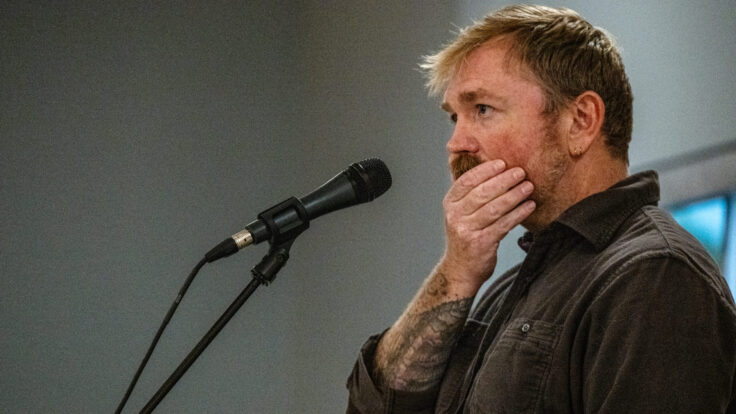
- Roe, Brother, Where Art Thou?: When last we checked in with beleaguered G.O.P. political consultant Jeff Roe, he and his firm Axiom were the target of a frivolous (but very MAGA) vengeance plot: For the sin of taking on Ron DeSantis as a client, Republican candidates who hire Axiom—the largest conservative political consulting firm in the country—are now considered disloyal to Donald Trump and Trumpworld. The victor in this reputational war of attrition might not be known until November 2024, when the Axiom clients vs. Trump-anointed candidate races will be decided at the ballot box. But the main front appears to be in Missouri, where Roe’s career began.
Back in the early 2000s, Roe made his name in and around the Ozarks as a consultant who could elevate the most conservative, fire-breathing Tea Party candidates past the primary stage to state office and beyond—think Sam Graves, Roy Blunt, Richard Mourdock, and Mike Huckabee. “I don’t know how you all view him now on the national scene, but the reputation he built in Missouri was as the Dark Lord of Republican politics, who always tried to work with the most conservative candidate in the room. So Axiom got to be known as primary specialists,” a well-placed Missouri G.O.P. insider told me.
Of course, these days, Axiom’s marquee 2016 client, Ted Cruz, now looks like a squishy moderate next to a Josh Hawley or Marjorie Taylor Greene—and the term “right-winger” itself is nearly synonymous with allegiance to Trump. And to hear this insider tell it, candidates in Missouri’s lower-level races—the state Senate seats, the open Congress seats—are now weighing the cost of doing business with Axiom. “I know people running for office this year who are really taking that into consideration,” he told me, summarizing the conversation in Missouri like this: “It’s like, ‘Hey, we’ve got plenty of other options. I know you love Axiom and used them in the past, but there’s just a stink on them right now. Maybe it’ll go away in four years, if Trump wins and then he’s termed out and he’s gone. But for now, maybe we use somebody else for our mail or our digital or whatever.’ ” —Tina Nguyen
|
| Now, Abby on the latest congressional kerfuffle… |
| Why Aren’t Hill Republicans Panicking? |
|
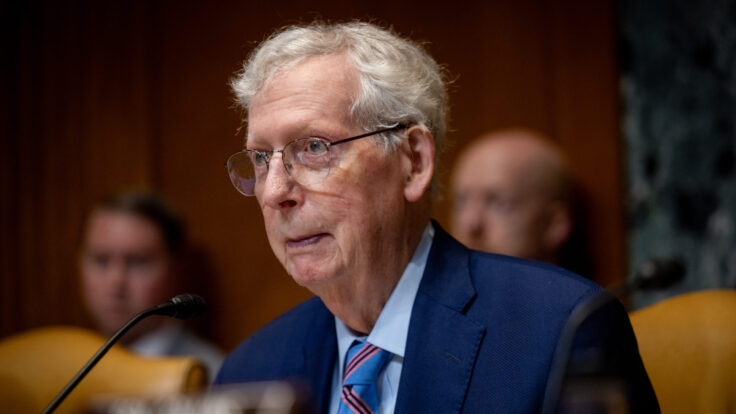
| It’s been a biblically bad few months for Hill Republicans, with too many setbacks to count: McCarthy’s defenestration, Ronna’s slow-mo ouster, McConnell’s freeze-up, disappointing November state elections, a failed immigration bill, lackluster fundraising, etcetera, etcetera… not to mention the endless infighting that makes weekly House conference meetings resemble a daycare center 10 minutes before nap time. So why, exactly, isn’t the party panicking?
When I posed this question to a handful of smart Republicans, most expressed confidence about November—and some even pushed back on the premise of the question. “This is all inside baseball,” a House G.O.P. operative assured me. Here’s why they say they’re not losing sleep at night:
- Biden’s polling: To the Republican mind, Biden’s polling and public image are both so terrible that they paper over all Republican political sins. “Not to sound like I’m making fun or making light of the president’s well-being, but it’s clear he’s struggling, and that doesn’t send reassurance that that’s the way to go this fall,” said the same House G.O.P. operative. Almost every single Republican I spoke with expressed this sentiment—and they’re not wrong, some Democrats tell me. “Both sides seem limited,” said an ex-House Democratic staffer.
But then there’s Democratic data guru Tom Bonier, who’s repeatedly warned against putting too much stock in polling, especially this early in the cycle. “Despite the fact that Republicans have performed quite badly, relative to historical benchmarks—because they haven’t lost all of the elections—we’re left with the nagging thought that maybe voters don’t care about any of this, maybe the structural disadvantages they are creating for themselves by raising less money, with extreme dysfunction at their institutions, maybe none of that matters,” he texted me. “When in reality, all of the evidence is that these things do matter. They are not entirely decisive to the point of making the party extinct, they are undoubtedly a national minority that can’t get out of their own way, can’t govern, can’t win much despite a president with awful approval ratings.”
- Republicans are day-trading: Ever since McCarthy’s ouster, of course, self-inflicted dysfunction has plagued the entire House G.O.P. conference. Under these circumstances, it’s hard to be introspective heading into November when a handful of key Republican players are currently scrambling to survive more immediate shitstorms.
Nevertheless, House Republicans have had two pretty good election cycles; the last truly painful cycle for House Republicans was six years ago. Given the flurry of Republican retirements over the last few terms, about 40 percent of the conference is now either a sophomore or younger—meaning they have no other experience beyond this style of governing and campaigning. The fear, of course, is that they just may not know any better.
|
 |
| Blue Munich |
| An insider’s dispatch from the annual Munich Security Conference: Yulia Navalnaya’s heart-stopping address, the ghosts of American delegations past, the feverish chatter surrounding Mike Johnson, Russia-Ukraine anxieties, and much more. |
|
|
|
| There were a lot of ghosts at this year’s Munich Security Conference. The proceedings opened with the news of Russian opposition leader Alexey Navalny’s death in a penal colony far above the Arctic Circle. His wife, Yulia Navalnaya, now widowed, was squeezed into a speaking slot right after Vice President Kamala Harris to address the notables gathered there: heads of state, defense departments, and foreign ministries; 47 spy chiefs; parliamentarians and four dozen members of the U.S. Congress; as well as diplomats, activists, journalists, think-tankers, and various hangers-on. Yulia’s speech astonished the conference. “How strong do you have to be?” mused Christoph Heusgen, Angela Merkel’s former national security adviser and now head of the M.S.C. “Your husband was just killed and you get up and kick Putin in the face?”
Yulia’s speech, Heusgen said, “was a Munich moment”—an iconic, historic speech that represents what the Munich Security Conference is all about. We were drinking and watching the legendary foosball tournament that usually closes out the conference in a hot and sweaty room where young (and uniformed) attendees competed against ministers and the like. Heusgen told me he wanted people to leave the conference with a good impression, like they had had a good time, but that felt harder than ever this year.
It was a gloomy conference this year, full of pessimism and angst and frustration. I saw people in tears, some over the death of Navalny, some over the prospect of Donald Trump returning to the White House. Ukraine had just lost Avdiivka—and, it would turn out, as many as 1,000 soldiers in a chaotic retreat from the city. The Ukrainian military was running out of munitions: Rep. Jason Crow, who had just returned from Kyiv, told me that the Ukrainian army would start running out of anti-aircraft shells in just two weeks, but that additional U.S. aid was still stalled in Congress, held up by MAGA-heads and those scared of their fury. Last year, the murmurs of worry about how long the U.S. would stay in the fight were leavened by hope that America would ultimately do the right thing. But this year, it felt like the bad guys were winning.
“If you feel like it’s all going downhill, that’s because it is,” Emily Haber, the recent German ambassador to Washington, told me when I ran into her just outside the Bayerischer Hof hotel. Haber had also served several stints in Moscow for the German foreign ministry. “It really feels like the Rubicon has been crossed,” she said when I asked her what she thought of Navalny’s death—murder—in prison. She looked as stunned and sad as the rest of us.
I asked her if she thought Putin timed the announcement of Navalny’s death to coincide exactly with the opening of the Munich forum. Sure, there were more important things driving Putin right now, like the so-called presidential election coming up next month, which has influenced a lot of the Kremlin’s decision-making for a good year. But was it really unconnected to Munich? After all, it was at this same conference where, in another “Munich moment” in 2007, Putin laid out his vision for the world he hated—one dominated by the United States—and his vision for the one he wanted, essentially a return to the Cold War.
Moreover, there seems to be some indication that Navalny had died the night before, and that the announcement was held until Friday morning. Putin—as Roman Dobrokhotov, head of investigative outfit The Insider, observed—loves these kinds of symmetries. “Considering that he is a psychopath and loves all kinds of symbols, you can’t rule out that Munich isn’t a coincidence,” he said. Haber had a similar assessment. “Of course,” she said of the timing. “This is where he told us, back in 2007, what was in store for us.”
I had asked Heusgen the same thing: Did Putin time the announcement of Alexey Navalny’s death to the opening of the Munich forum? “A lot of people are saying that, and I’m not sure we’re that important,” Heusgen demurred. “But the Russians used to love coming here until we shut them out” two years ago, after Russia invaded Ukraine. “[Russian Foreign Minister Sergey] Lavrov used to love coming here.” Furious at being shut out of Europe's most prestigious security conference, “the Russians have warned the Central Asian countries not to come,” Heusgen said. “They said they’d send back all their migrants if they did. That’s why there are no [representatives of] Central Asian countries here.” |
| The Ghost of Lindsey Graham Past |
|
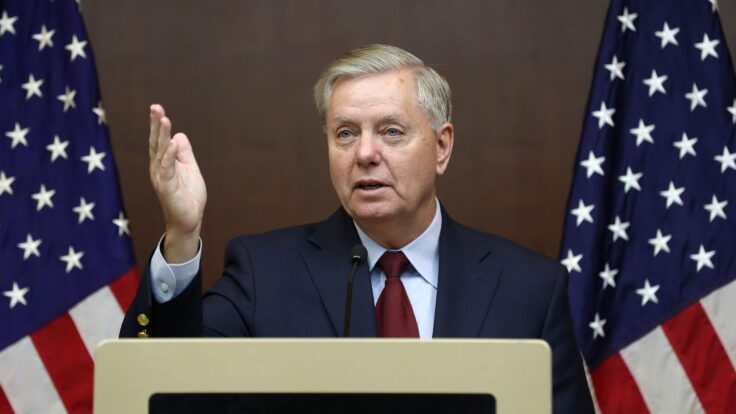
| And then there was the ghost of Lindsey Graham, for whom Munich has been a kind of annual debutante ball. Every year at Munich, he transformed: He was no longer just a senator from South Carolina, but an elder U.S. statesman. For decades, the late John McCain led a congressional delegation to Munich, along with his two amigos, Graham and Connecticut senator Joe Lieberman. They had sat in the front row when Putin unloaded on the West in 2007 and hastily organized a press conference to rebut it. And at the end of the conference, on Saturday night, they would hold court at Trader Vic’s, an outpost of the famed California tiki bar in the basement of the Bayerischer Hof. But then Lieberman lost his seat, McCain died, and it was just Graham leading the gaggle of U.S. senators and House members to Munich. What was once the McCain delegation had become the Graham delegation.
This year, however, the Graham delegation was Graham-less. After voting against Ukraine aid in the Senate and echoing Trump’s proposal to make Ukraine aid a loan, Graham backed out at the last moment and went instead to the border. There were other Republican legislators there who had voted against the aid, including J.D. Vance—universally reviled by the rest of the CODEL, it seemed—but it was Graham’s vote and his absence that were the most glaring and disappointing.
For decades, he had been a foreign policy hawk, much like his friend—and mentor—McCain. He had also been a staunch supporter of Ukraine, even as he tried to maintain a close relationship with Trump. And then, just before the South Carolina G.O.P. primary, when Ukraine needed his support the most, and before Trump had even been reelected, Graham folded. “He’s been playing Jekyll and Hyde for the last eight years and it seems Hyde finally won out,” said Tom Malinowski, a former congressman from New Jersey and veteran of the Graham delegation, who is now a fellow at the McCain Institute, named for his old friend. “I wish he’d come and explained it,” sighed Joe Lieberman when I caught him in the room reserved for the congressional delegation. “He’s like a brother.”
Others weren’t as kind. In private conversations, members of the delegation and of the administration were scathing, saying Graham was too scared to show his face now that he had betrayed the principles with which he’d always come to Munich. One member of Congress compared Graham’s sidling up to Trump—like he once had to McCain—to a pilot fish. “I don’t know, what’s more parasitic?” As for why Graham went from McCain acolyte to Trumpist, the member continued, “Susan Collins thinks it’s because Lindsey always needs a father figure.” Few people had spoken directly to Graham since he backed out at the last minute and Sheldon Whitehouse took over. What would one even say to a turncoat? Said another member of the CODEL, “Lindsey doesn’t know how to plug the huge hole in his heart.”
When I asked Heusgen what he thought of Graham’s absence, he said Graham was “afraid to come here” after voting against the aid to Ukraine. “He’s lost all credibility,” Heusgen sneered. |
|
|
| Graham knew better, everyone here agreed, but what about Speaker Mike Johnson? The whole conference—or at least the part of it focused on helping Ukraine live to fight another day—was waiting on the novice speaker, who by all accounts has no real clue what he’s doing, to decide the outcome of a war with world-historical ramifications. And as people waited, they speculated.
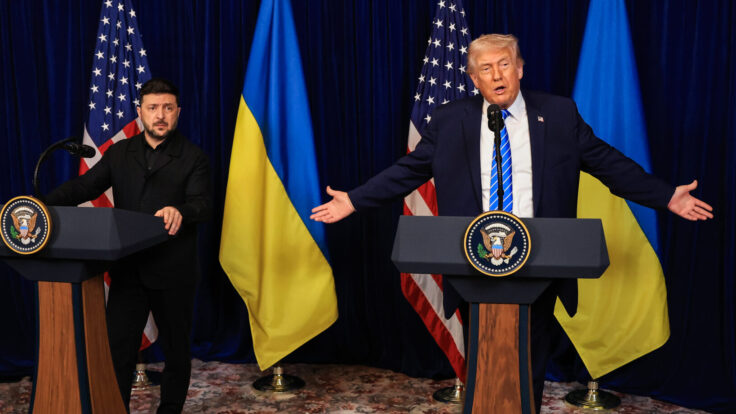
No one wanted to be defeatist, after all. “I’m not here to be a fatalist,” Senator Chris Murphy, co-architect of the failed bipartisan immigration/foreign aid bill, told me when I asked him if he thought Ukraine aid would get through the House. People talked about discharge petitions, and arcane parliamentary maneuvers that pro-Ukraine Democrats and Republicans could use to force the Senate-approved bill to the floor, even though that would require Republicans voting against their own rule and their own speaker. Maybe Democrats could cut a deal with Johnson, some mused, to save him from another motion to vacate, should MAGA come for him if he allows a vote on the Ukraine bill.
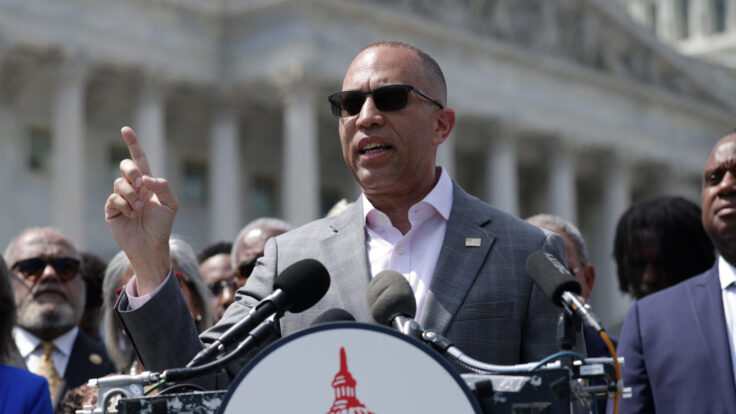
“I’ve heard more about a discharge petition in the last two days—not just from Americans, but from people around the world—than I have in my 11 years in Congress,” House Minority Leader Hakeem Jeffries told me, cool and bemused. “I’ve been clear: All options are on the table, but the easiest way to deal with this is you just have to put it to an up-or-down vote.” He went on, “You’re the one guy holding this up in the world. Not just in the Congress of the country, but in the world.”
I asked Jeffries if he thought the forces inside and outside Congress were opposed to Ukraine aid because President Biden wanted it, or because they liked Putin. “I think they like Putin,” Jeffries said. “I think it all stems from the puppet master-in-chief who likes Putin because Putin helped get him elected, and everything Trump cares about is me, me, me.”
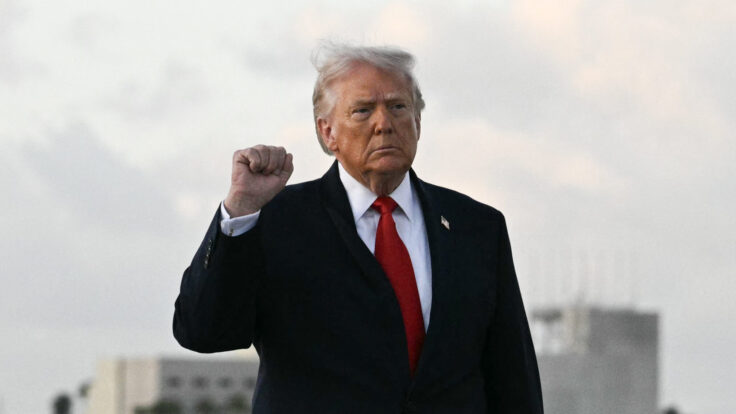
Trump, of course, was the other ghost at the conference. He hasn’t won yet but the Europeans, as one senior administration official complained, “are acting like he has.” The official spoke of his annoyance with endless European “hand-wringing,” but what I heard from the Europeans was anger and exasperation: at Trump, at Johnson, and Graham; at America, more broadly, for being such a wildly unreliable and volatile ally; exasperation that we could no longer be counted on to do the right thing and had to be coaxed and cajoled into it, seemingly every time. And the exasperation wasn’t just about European officialdom trying to learn what the fuck a discharge petition was. Two senior government officials—one French, one German—told me their children now follow American politics obsessively: swing counties, primaries, caucuses, polls. “Enough!” one of them said. “We’re not a colony!”
On Saturday, I was doing a remote television interview when, out of the corner of my eye, I noticed that, right next to me, NATO Secretary General Jens Stoltenberg was giving an interview, too. He was explaining, yet again, why NATO is important not just for protecting Europeans, but for Americans. After all, he said, the one and only time Article V of the NATO charter was invoked was after 9/11, when America’s NATO allies came together to defend America, suffering hundreds of casualties in Afghanistan for America’s sake.
When we were both done with our interviews, I asked Stoltenberg if he was getting tired of explaining to Americans why geopolitical vegetables were good for them. He laughed. “I’m trying the best I can,” he said. |
|
|
| That’s all from me this week, friends. I’ll see you back here next week. Until then, good night, tomorrow will be worse.
Julia |
|
|
|
| FOUR STORIES WE’RE TALKING ABOUT |
 |
|
 |
| World War Z |
| Exclusive polling on Biden’s Gen Z problem. |
| PETER HAMBY |
|
 |
|
 |
|
|
|

|
 |
|
|
|
Need help? Review our FAQs
page or contact
us for assistance. For brand partnerships, email ads@puck.news.
|
|
You received this email because you signed up to receive emails from Puck, or as part of your Puck account associated with . To stop receiving this newsletter and/or manage all your email preferences, click here.
|
|
Puck is published by Heat Media LLC. 227 W 17th St New York, NY 10011.
|
|
|
|