|
Welcome to Dry Powder. I’m William D. Cohan. It was nice seeing so many devoted Puck readers last night at Doubles for an event celebrating our C.O.O., Liz Gough. I hadn’t been to the subterranean haunt in the Sherry-Netherland since the 1990s, when I used to occasionally hang out there with my old classmate, the late John F. Kennedy Jr. I enjoyed meeting so many of you from the banking world and catching up with my friend Meredith Whitney, the unparalleled research analyst (and loyal Puck subscriber), among many others.
Today, I’ve got a tale of how artificial intelligence is starting to disrupt Wall Street—and a new player in the space that may reap a fortune from the transition. As my pal Scott Galloway has noted, A.I. is not about to replace bankers per se, but it is going to replace the bankers who aren’t using it.
But first…
|
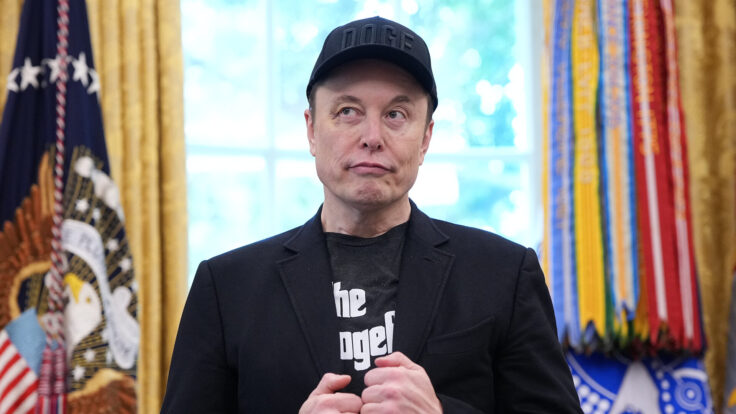
- The X debt comes home to roost: On Friday night, The Wall Street Journal published what appears to be a strategic leak suggesting that the syndicate of banks holding the $13 billion in debt from Elon Musk’s X deal are looking to market the loans, which have been held hostage on their balance sheets since October 2022, for something like 90 to 95 cents on the dollar. This leak was presumably designed to notify potential buyers that Morgan Stanley, Bank of America, and Barclays, among others, don’t want to sell the debt for less than 90 cents on the dollar. Of course, even if the debt could be sold at 90 cents, that 10 percent hit represents a meaningful principal loss of $1.3 billion, albeit spread across a handful of institutions.
The Twitter journey may have worked out indirectly for Musk. His cannibalized platform, which Kara Swisher has dubbed “the Nazi porn bar,” helped him worm his way into Trump’s embrace, alongside a nine-figure campaign check. His astonishing wealth has doubled in recent months, and now sits around $434 billion—making the $44 billion Twitter deal seem quaint by comparison. And yet, Twitter itself has apparently been a financial disappointment. “Our user growth is stagnant, revenue is unimpressive, and we’re barely breaking even,” Musk wrote to employees a month ago, according to the Journal. (Elon posted on X that he did not send any such email.)
Not surprisingly, the 2023 founding of xAI, Musk’s artificial intelligence shop, has made X more valuable, at least on paper. The private startup—whose chatbot, Grok, is now integrated into X—is said to be worth $50 billion already. Since X owns something like 12 percent of xAI, I’m told, that’s an extra $6 billion or more of value that’s suddenly accruing to X and giving lenders some confidence to go to market with their loans, and not be embarrassed by what they hear from buyers. We’ll see. Almost any other owner of X would have defaulted by now, assuming he or she were relying on the company’s cashflow to make the interest payments. But Musk has been paying the roughly $1.3 billion in annual interest himself, which is probably why the selling banks think the paper should trade at or near par.
Still, that 90 cents strikes me as wishful thinking. While the banks are intentionally warning potential buyers that they won’t be able to pick up the X debt on the cheap, it’s a safe bet that the company is no longer worth anything near the $44 billion Elon paid for it. It’s also more than likely that the $31 billion of equity invested in the deal—$24 billion of which came from Elon and the balance from Elon’s buddies such as Larry Ellison and Marc Andreessen—is long gone.
With the equity at zero, how much is the $13 billion of X debt worth? Is it 50 cents on the dollar, as I’m sure the distressed debt buyers in the market think, or the 90 to 95 cents that the banks leaking to the Journal are hoping for, with that dash of xAI? We’ll soon find out…
|
|
And now, to the main event…
|
|
|
|
Jon O’Herron, one of Lazard’s legendary partners, used to tell me that all you needed as an investment banker was “a yellow sheet of paper and a pencil.” Obviously, those days are long gone. Rogo, which just raised a new round, heralds a new dawn on Wall Street.
|
|
|
|
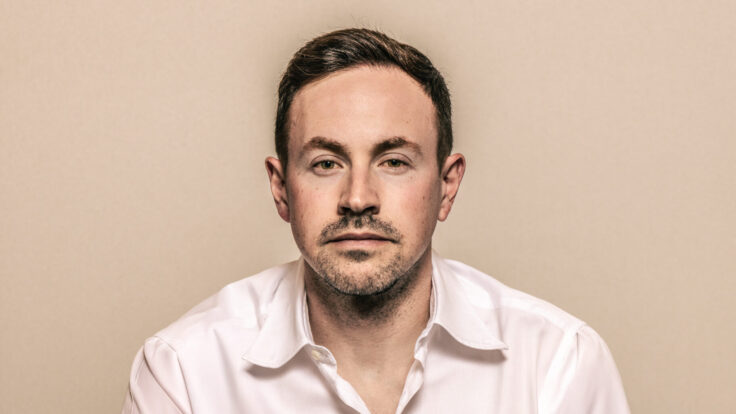
Back in August 2019, a young man named Gabe Stengel was visiting his friend Theo Jacobs in the Hamptons. Yes, yes, it’s all very collegial: Stengel happens to be the son of my friend Rick Stengel, the former Time editor, Snap advisor, and State Department undersecretary. Jacobs is the son of Ken Jacobs, then the C.E.O. of Lazard, my former firm. Anyway, Gabe was fresh off a quant trading summer internship between his junior and senior years at Princeton when he serendipitously ran into Peter Orszag, the former Obama-era budget director who had joined Lazard in May 2016 as a vice chairman of investment banking. They got to talking.
The young Stengel told Orszag that he’d been doing a computer science and quant trading internship, but he didn’t love it and was fascinated instead by the work his friends were doing in banking. Orszag said he was contemplating creating a new position at Lazard: a data translator who’d sit between the company’s investment bankers and its data scientists, bridging the gap between the two. “I thought, that sounds fascinating,” Gabe told me recently about his conversation with Orszag that summer afternoon, “and I’d love to be able to use my quantitative skills and learn about business.” He returned to Princeton for his senior year, working on his thesis about A.I. assistance for econometrics.
|
|
|
|
A MESSAGE FROM OUR SPONSOR
|
PERFORMANCE UNLEASHED
With a distinct sporting personality, the Range Rover Sport is a
peerless performer.
EXPLORE
|
|
|
|
A.I. hadn’t yet become widely recognized as the groundshifting new platform of our time, akin to the internet or mobile technology. Eventually, after proper interviewing, Stengel got and took that job at Lazard. “I probably worked double the hours for half of the pay,” he said. “But it was great because I got to learn both sides of it”—banking itself, and the tools that bankers needed to do their jobs more efficiently. He had a lot of ideas about how the firm could use A.I., but it was hard to get them implemented. He was fresh out of college, after all.
Over those 19 months or so, he kept returning to the idea of making investment banking more efficient, and giving bankers the tools to do it. “I spent an inordinate amount of time pulling financials and formatting it in a pretty way and sending it on,” he said, describing one of the main tasks of junior analysts in an investment bank—the largely thankless yeoman’s work that gobbles up huge amounts of time and leaves armies of young employees sleep deprived and burned out.
Meanwhile, he started experimenting with GPT-3, which OpenAI had just released. He was convinced there was a better way to do the grunt work of banking. So in 2021, Stengel decided to leave Lazard and join up with his Princeton thesis partner, John Willett, to start Rogo, an A.I. platform for financial institutions. (Rogo means I ask in Latin.) “When I was an investment banking analyst at Lazard, I looked up to the firms’ extraordinary dealmakers as examples of finance at its best,” Gabe would later write in a post on the Rogo blog. “I was mesmerized by how they effortlessly strategized with Fortune 100 C.E.O.s, discussed macro trends, and navigated the complexities of M&A. They lived, breathed, and moved markets. If I could have instantly had that insight and experience, or have had more time to focus on the fascinating work they were doing, I might never have left banking. What frustrated me about finance was never the long hours––they were expected––but how hard it was to be as smart and knowledgeable as the men and women I so deeply admired.”
Of course, Stengel suffered moments of self-doubt, common among young founders. But he persevered, reaching out to his friend Kevin Ryan, the former founder of DoubleClick and proprietor of a venture capital firm called AlleyCorp. They talked about his idea of making a chatbot for financial data. Ryan urged Gabe to talk to his partners about the idea. They talked and talked. “I was such a bad marketer back then,” he said. To describe Rogo, he was using the ponderous ‘natural language interface for financial econometrics,’” he said. “I didn’t quite have the spiel down.”
Eventually, though, Ryan decided to make a discreet bet. He told Gabe and John that he would give them $2 million at an $8 million valuation. “My jaw kind of dropped,” Gabe told me. “We got in the elevator, and we were like, ‘What is going on?’ Like, ‘Is this for real?’ Like, ‘Did we do something wrong?’ Like, it felt crazy, and it also just felt like there was no world in which I didn’t want to dive in and do it full time.”
Rogo has since raised two more rounds of financing: a $7 million seed round last February, adding Company Ventures, BoxGroup, and ScOp Ventures as investors; and then an $18.5 million round in October, led by blue-chippers Keith Rabois at Khosla Ventures, Eric Schmidt, and Jack Altman, brother of Sam. “The folks who got in at the $8 million valuation are definitely pleased,” he said, after declining to tell me the valuation upon which the Series A had been secured. Rogo plans to raise more money soon, Gabe said, at a valuation potentially well into the high nine figures.
Rogo can do in minutes what a junior banker would normally do in one long, sleep-deprived week: spit out company profiles in a nanosecond, take financial data from a variety of sources and put together any number of different comparative analyses, etcetera. And it can do in seconds many of the essential, but rote, tasks that often require teams of analysts. Needless to say, many of those on the lower rung of the investment banking pyramid are pining for the tool, if for no other reason than to be more efficient. “We got a piece of feedback yesterday from a junior analyst at a public independent bank who said, ‘This saved my life this week. It saved me 100 hours. And I had to borrow my friend’s account, because they haven’t rolled it out to everyone in my group yet.’” Gabe told me. “That’s what I love to hear.”
|
“It’s Not Like These Bankers Are Working Less, Right?”
|
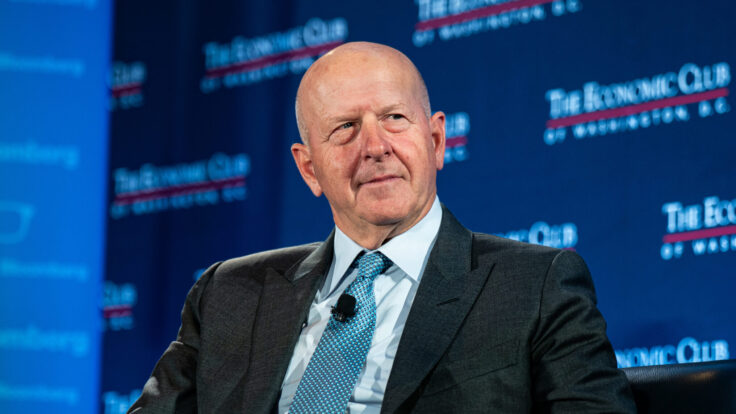
The late Jon O’Herron, one of Lazard’s legendary partners (who stopped speaking to me after I wrote my 2007 book about the firm), used to tell me that all you needed as an investment banker was “a yellow sheet of paper and a pencil.” Obviously, those days are long gone. David Solomon, the newly re-incentivized C.E.O. of Goldman Sachs, has also been talking about A.I.’s role in investment banking lately. (At last count, more than 11,000 of Goldman’s 44,000 employees are engineers.) Solomon told CNBC in May: “Productivity is the ability to take smart people and give them tools so they can do more, do more quickly, help our clients think about things in different ways.” Then, at the Cisco AI Summit in Palo Alto last week, Solomon made the bold prediction that A.I. could start drafting the bulk of S-1s, the document the S.E.C. requires as one of the first steps on the path to an I.P.O. (Solomon made similar points during a private event that we hosted together for Puck subscribers last winter.)
|
|
|
|
A MESSAGE FROM OUR SPONSOR
|
PERFORMANCE UNLEASHED
With a distinct sporting personality, the Range Rover Sport is a
peerless performer.
EXPLORE
|
|
|
As best as I can figure, firms such as Goldman, JPMorgan Chase, Guggenheim Partners, Moelis & Co., Wells Fargo, Apollo, GTCR, Tiger Global, and Lazard are all experimenting with A.I. to do many of the tasks (in minutes) that used to be done by individuals over a much longer period of time. The idea is to make work on Wall Street more efficient so bankers have more time to do the things that matter most—like provide high-quality advice to clients. (Of course, the A.I. output would have to be checked thoroughly, just as an analyst’s work would.)
Naturally, one wonders whether rapid advances in A.I. capabilities will improve the work-life balance of junior bankers—alleviating the multiyear hazing period that deters so many bright young people from Wall Street—or whether they’ll reduce the opportunities that constitute the finance career pipeline. “We’re replacing work, we’re not replacing people,” Gabe recently argued on Scott Galloway’s podcast. “Even five years ago, before Covid, you probably had investment banking analysts—after staying up all night creating a pitch deck, they would go print it out, bind the books, deliver the books to their managing directors’ and partners’ apartments. That would take a few hours. No one’s doing that anymore, because everything’s virtual. It’s not like these bankers are working less, right? They’re just filling up their time doing smarter, more interesting things.”
Gabe doesn’t expect Rogo to be able to provide the wisdom and bespoke advice that, say, Blair Effron or Peter Orszag can give the C.E.O. clients of Centerview Partners or Lazard. “But,” he said, “I think everyone is underrating how smart these tools are going to get, and underrating how creative they’re going to be and everything else about them.” He continued: “People have not really thought about what that means for Wall Street, what that means for these institutions. It’s going to transform what a bank looks like, what a hedge fund looks like, what Blackstone looks like five or 10 years from now.”
Gabe has made a believer out of Orszag, who, at the beginning of the month, added the title of chairman of the Lazard board of directors to his C.E.O. title. (Well done, Peter.) Lazard is using a bespoke version of Rogo, which sits inside its firewall, across its investment banking division, and is getting ready to roll Rogo out for its asset management business; it also uses a version of ChatGPT, called Lazard GPT. Orszag is quite fond of another A.I. tool as well: NotebookLM, a Google product, which lets you turn a written document into a podcast so you can listen to an analyst’s report, for instance, rather than read it.
Orszag told me that the idea he’d had for Gabe at Lazard was clearly ahead of its time, but that it’s now a banal reality. “The history of business is littered with enterprises that had a very successful operating model and a very successful business, but didn’t continue to innovate and didn’t see the transformational trends in time, and then saw a rapid change in their circumstances,” Orszag said. “One of the reasons why I think Lazard has been around for 176 years is our ability to continually evolve and adapt.”
Peter agrees with many leaders in the industry that A.I. won’t replace bankers ( quelle horreur), but rather the bankers who have access to A.I. and aren’t using it. He said tools such as Rogo and Lazard GPT will help Lazard management develop internal talent more quickly, as employees leverage the information these tools provide and use them to develop the all important skills a senior banker must have: the ability to cultivate clients, develop relationships, and provide C.E.O.s with valuable deal insights. “Personal, trusted relationships will give you insights that no tool is going to have,” Orszag said. “I don’t know exactly how the future will evolve, but I’ve spent some time thinking through what the possible consequences could be. And I think, if anything, those personal connections are going to be even more important if some of what a banker does gets commoditized, for lack of better phrasing.” In the meantime, he said, “We’re all in on A.I.”
|
|
|
|
Puck’s daily political newsletter from Washington—featuring Tara Palmeri, Julia Ioffe, Peter Hamby, Abby Livingston, John Heilemann, and Leigh Ann Caldwell—on what’s really happening in this town, from the White House to the Pentagon to Capitol Hill, K Street, and the campaign trail.
|
|
|
|
Puck senior political correspondent Tara Palmeri grapples with the aftermath of what may be the most chaotic and consequential presidential election cycle of our lifetime. With 15 years covering politics, Tara speaks with the smartest political minds to discuss what’s happening behind the scenes in Washington, D.C., from the campaign trail to the Capitol.
|
|
|
Need help? Review our FAQ page or contact us for assistance. For brand partnerships, email ads@puck.news.
You received this email because you signed up to receive emails from Puck, or as part of your Puck account associated with . To stop receiving this newsletter and/or manage all your email preferences, click here.
|
|
Puck is published by Heat Media LLC. 107 Greenwich St, New York, NY 10006
|
|
|
|