Welcome back to Wall Power. I hope you’re all enjoying the extended Thanksgiving
weekend with your families. I’m Marion Maneker.
🚨 If you’re still getting this newsletter forwarded to you, now would be the perfect time to subscribe. Puck is running
a year-end promotion (just use the code
HOLIDAY25) for 30 percent off your first year, which gives you access to not only Wall Power, but all of Puck’s incredible franchises. In my experience, many people sign up to read about the art world but become enthralled by our coverage of politics, media, fashion, or entertainment. I even got a nice note from an art-curious politics reader who suggested that we dip into his own collecting passion: political autographs and signed photographs. I’m all for it.
Tonight, news and notes from
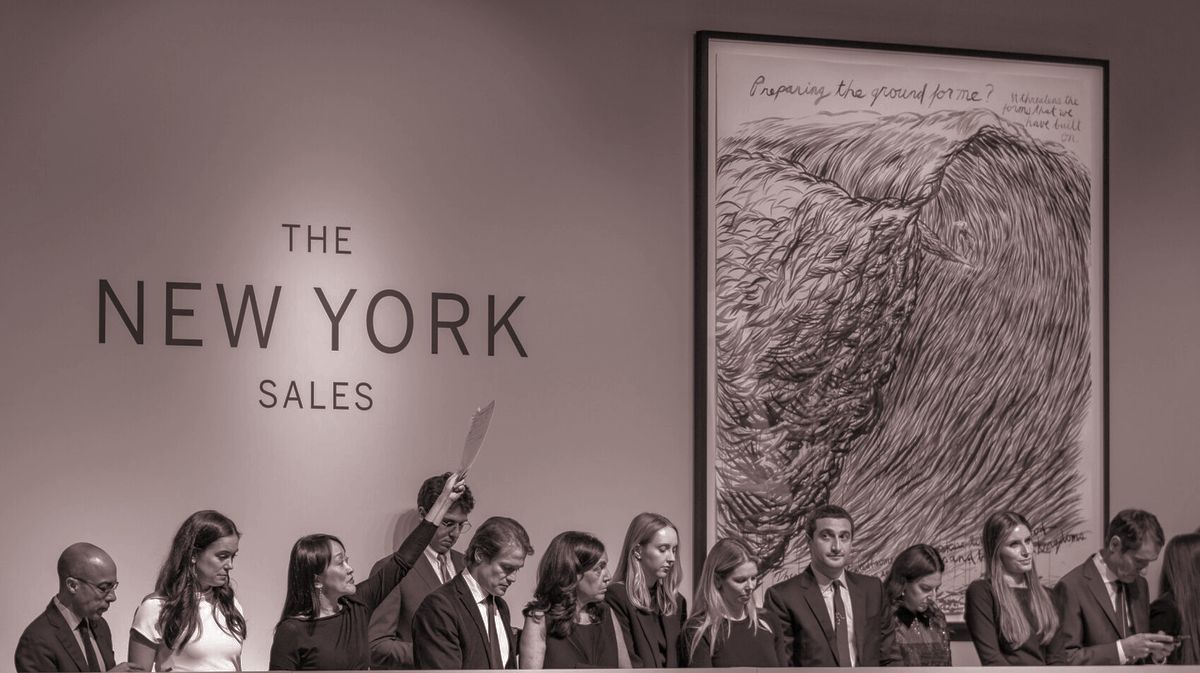
last week’s November sales. I’m still trying to make sense of what happened, but I’ve noticed a few trends worth recording before we publish the full data on those sales in next week’s Inner Circle email. (Upgrade your account here.)
But first… |
-
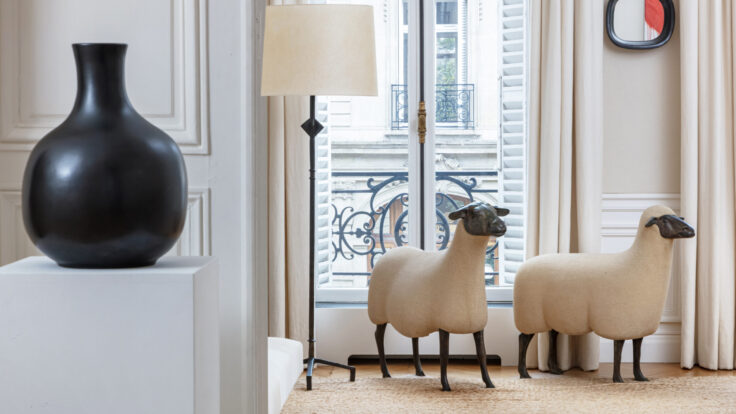
A Lalanne bubble?: Claude Reich expressed some frustration on Instagram this week when he learned that a small Claude Lalanne Choupatte, from 2013, achieved a price of $3.8 million in a Paris design sale
on Wednesday. A slightly larger Choupatte, made 10 years earlier, sold two months ago for just under $2.5 million in the Paulina Karpidas sale. The Choupattes are cabbages standing on chicken feet; previously, only the 4-foot-tall Grand Choupattes had made prices above
$3 million, with one selling for more than $5.2 million in 2023. Reich seemed unhappy not to have won the lot. The initial estimate was all of €500,000—clearly unrealistic given the sale of the Karpidas Choupatte, and generally reflecting the persistence of unrealistically low estimates for almost every Lalanne lot.
A 50 percent rise in price for comparable objects within two months is some cause for concern that the Lalanne market may be entering a bubble, just as more design
sales are slated for December in New York. With that in mind, I contacted Ben Brown, who has been dealing in Lalanne works for decades and recently co-curated a show of works by René Magritte and Les Lalanne at Di Donna gallery. “Collectors are just beginning to realise how important the Choupatte is in the oeuvre of Claude Lalanne,” Brown texted me. “There are relatively few, and, as shown in our show, the work is closely related to
the surrealism advocated by Alexander Iolas and Magritte.”
|
|
|
A MESSAGE FROM OUR PARTNER |
|
|
- Guido Reni achieves a record: French Old Masters expert Eric Turquin specializes in rediscovered old paintings. His latest effort at Artcurial, in Paris, was a depiction of David and Goliath from the artist Guido Reni, which made a record price of $14.2 million earlier this week. The painting is one of six
versions of the same image, with examples in the Louvre and a museum in Orléans. The Orléans version has the head of Goliath turned toward David. In the Artcurial image, their heads face in the same direction, creating a different emotional resonance.
Reni’s work has fallen in and out of favor on the market recently, according to data from ARTDAI. His previous record price of $3.6 million, achieved in 2008 for The Martyrdom of Saint Apollonia, charted a market arc of selling for
almost $350,000 in 1986 but returning to an auction price of $820,000 in 2022. Other Reni works have only held their nominal value over a similar period. An Allegory of Fortune, Holding a Crown sold in 1987, 1991, and 2019 for basically the same price—around $800,000. Meanwhile, a Bust of Christ (Salvator Mundi) lost a quarter of its market value between 2008 and 2015. Will this new auction record defy those precedents? It’s hard to tell. But the sale is a testimony to
Turquin’s reputation and ability to generate excitement. - An even bigger Old Masters discovery?: Christie’s issued an extensive press release to announce the discovery of a new Michelangelo drawing to be sold in New York this February with the very conservative estimate of $1.5 million. Of course, if the work is indeed by the painter of the Sistine Chapel, it will presumably sell for much more. The New York
Times got an early peek at the discovery by Giada Damen, a specialist in Christie’s Old Masters drawings department. The paper recounts how she received a query from the descendant of a Swiss diplomat who was a recognized collector of Old Masters drawings, and had owned a tiny
5-inch-square red-chalk drawing of a foot since the 18th century.
Damen thought she recognized the artist, but the discovery required extensive support from technical tests and scholarly opinion. Neither the Metropolitan Museum nor the Ashmolean Museum at Oxford would offer an opinion on the work’s authenticity, citing concerns about public institutions meddling in the art market.
Even so, Christie’s is relying on the absence of a museum veto to help validate their view of the
work’s authenticity. More to the point, the market has to decide whether their argument is reasonable and valid. That’s one reason for the low estimate. Another may be that, more than two years ago, Christie’s overshot with a $30 million estimate on this rediscovered drawing, which nevertheless made a very healthy $24 million.
- About that Daniel Weiss news at the Philadelphia Art Museum…: Last week was so busy, I didn’t get a chance to acknowledge the news from Philadelphia that the Art Museum board had appointed former C.E.O. of the Metropolitan Museum of Art Daniel H. Weiss as director and C.E.O. The announcement said Weiss would “guide the museum through at least 2028.” This is a huge step back for the board, which suddenly fired their previous director and engaged in a questionable public relations fight with her. It will be interesting to see what Weiss’s next moves are to heal the board’s self-inflicted wounds. The length of his tenure also suggests that he will have the opportunity to address the board’s dysfunction and the governance issues that seem to have gotten out of
control under the previous director’s leadership.
|
Now, let’s get to the main event… |
|
|
A look at the most fascinating market themes, in both positive and
negative directions, for artists whose sales during the marquee November auctions weren’t big enough to land on the radar of many industry observers. |
|
|
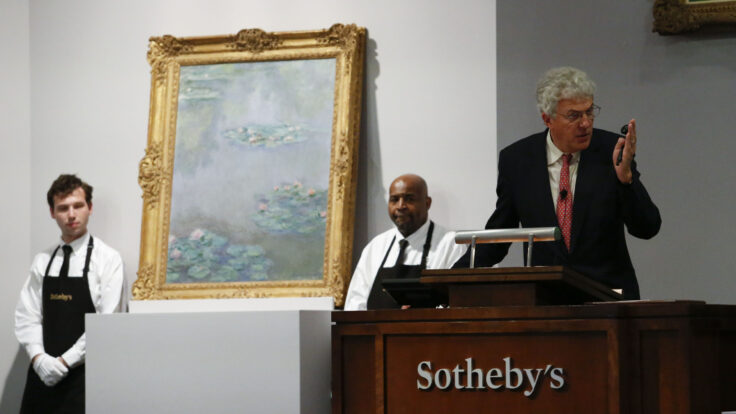
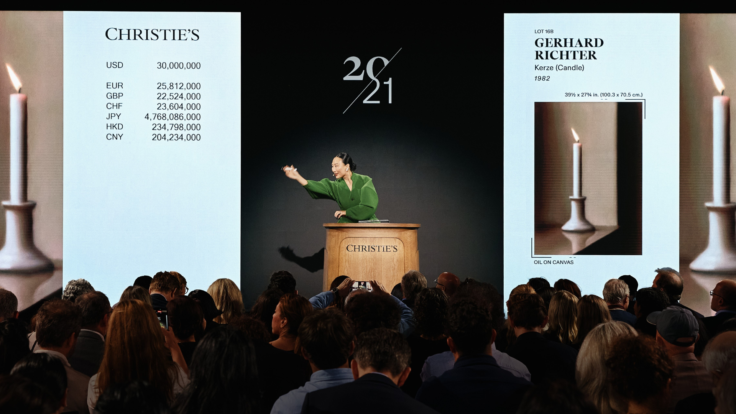
The marquee auction cycles, each May and November, are as important for the tone they
set in the art market as they are for the sales themselves. After all, the public prices that they yield inevitably guide the private market for the next six months, too. Next week, as the month comes to a close, I’ll share the overall totals and trends from the ARTDAI database—including the top 10 artists by market share and the individual works that most outperformed their estimates.
In the meantime, however, I’ve noticed a bunch of interesting market themes for artists whose
volumes won’t be big enough to register among the top 10. So today, I thought I would give you an indication of the under-the-radar artists who are seeing positive momentum in the markets this season, as well as those who seem to be falling out of favor.
For this exercise, I used a very simple criterion: If an artist had three or more lots in the New York sales (day or evening), I looked at the overall hammer ratio and made some judgments about the trend lines, replete with my reasoning
and caveats. The trends may be subtle, but these are artists whose market movements are worth acknowledging. |
Some of the clear winners of last week’s sales were contemporary artists, like the
93-year-old Colombian Olga de Amaral, who had almost $2.3 million in estimated value across seven works of art that hammered for a total of $4.9 million. Those sales included a significant jump in her top price to more than $3.1 million. Similarly, Dominican Republic–born, 44-year-old Firelei Báez saw three works offered at a combined low estimate of $530,000 sell for nearly three times that amount on the hammer, for a total of more than $2 million with fees.
Báez’s auction record now stands at more than $1 million, almost doubling her previous record set a year ago. |
|
|
A MESSAGE FROM OUR PARTNER |
|
|
Other contemporary artists did well this season, too. Elizabeth
Peyton had four works sell for a total of nearly $5.4 million, and two of them were bid well above the estimate range. Raymond Pettibon had four works sell for a combined hammer price of $2.6 million, or twice the combined estimates. Most of the market performance came from the collection of Marcel Brient, consigned to Sotheby’s, which sold for more than twice its $1 million estimate. Two of Pettibon’s other works performed well, but one was bought in
during the day sales. Mark Tansey had three works with competitive bidding that sold for a total of more than $14.5 million.
Despite the political backlash against diversity and inclusion, Black artists who came to prominence in recent years have continued to thrive on the auction market. Rashid Johnson had seven works sold for a combined premium price of $4 million. Three of them were sold at slight discounts to the estimates, two sold within the
estimate range, and two had aggressive bidders pursuing them. Ed Clark’s three works sold for more than double the estimates for a total of $1.2 million. One of Henry Taylor’s three works sold for twice the estimate; another was bid well into the estimate range, but a third was bought in. Three works by Simone Leigh sold for almost $1.7 million, one for more than twice the estimate. Ernie Barnes had three works sell for more
than $920,000, all of them at prices within or above the estimate range. Christopher Wool, Julian Schnabel, and Cindy Sherman saw their markets hold their own, though Sherman’s success came from the strong performance of only two of the six works on offer.
Among postwar artists, Agnes Martin had a very strong showing this season, with four of the five works offered exceeding the estimates—one for nearly three times the
low estimate. Collectively, Martin’s offered works sold for a combined total of more than $34 million. Seven out of the eight Joan Mitchell paintings found buyers, for a total of just over $35 million; two of them were bid to prices more than twice the estimate. Three out of four Isamu Noguchi works were sold for a combined total of $10.4 million, two of them for prices three times the low estimate. Ten out of 11 Tom Wesselmann works found buyers,
for a total of more than $6 million, and half of the sold works made prices above the estimate range. Two of three Adolph Gottlieb works sold above the estimates, for a total of more than $2 million. Meanwhile, Wayne Thiebaud, Hans Hofmann, Claes Oldenburg, David Smith, and Robert Rauschenberg all saw their markets hold their own against estimates.
Nineteenth century and modern artists,
especially surrealists, also had a great November in New York. Marc Chagall had 13 works offered, and though only nine of them achieved prices above the low estimate, one piece outperformed enough to bring the total to nearly $38 million. Max Ernst had nine works sell for almost $27 million, with three seeing bidding that doubled or tripled the low estimate, and only one work selling for a compromise price. Diego Giacometti had four works sell
for a total of $12.6 million, three of which saw bidding to more than twice the estimates.
Meanwhile, František Kupka had three works sell for a total of nearly $7.5 million, all within the estimate range. Salvador Dalí had five works sold for a total of almost $5.8 million—three of them at prices above the estimates. Óscar Domínguez had five works sold, three above the estimate range, for a total of $4.9 million. Wassily
Kandinsky saw four works sell for nearly $4.7 million, with one for nearly three times the estimate. Four of the five Victor Brauner lots were sold for prices above the estimates—one at nearly six times the estimate, for a total of nearly $1.8 million. All three of the Gertrude Abercrombie works offered last week sold above the estimates, for a total of more than $1.5 million. |
Now for the bad news. A number of artists were able to hold their own against the
estimates and post numbers that were in line with expectations. This group included artists as varied as Philip Guston, Richard Prince, Paul Signac, Morris Louis, Neo Rauch, Piet Mondrian, Richard Diebenkorn, René Magritte, Wifredo Lam, Roy Lichtenstein, Louis Fratino, Josef Albers,
Fernando Botero, and Fernand Léger. But other artists had much tougher times on the market.
The Catalan artist Joan Miró, who had 18 lots in the November sales at an aggregate estimate of almost $20.5 million, achieved a total hammer price below $18 million. Half of the lots sold at prices below the estimate, or failed to find a buyer. Nevertheless, four of them outperformed the estimates to bring the total to more than
$22 million with fees. Half of the eight Alberto Giacometti lots offered did not sell, though they were works on paper. But the four bronzes also struggled, with two selling for prices well below their estimates, for a total of nearly $9.3 million with fees.
Five of the 10 Auguste Rodin lots were sold for prices above their estimates, but three were bought in and two sold below the asking price. Barbara Hepworth fared a little better,
with three lots exceeding estimates, but the two works that disappointed dragged her overall performance below par. Of the eight Damien Hirst lots offered, only three sold. (Luckily, one of those was the most expensive lot.) The 12 George Condo works offered in these sales saw seven make prices at or above the estimate—but the nearly $6.4 million in sales didn’t meet the aggregate estimate level. Leonora Carrington was a surprise disappointment:
Only one of her four lots sold within the estimate range. And, unfortunately, her most expensive lot failed to find a buyer.
Finally, despite the Keith Haring Foundation’s continuing push to highlight the artist’s work, only two of the six Haring works on offer made prices within the estimate range. The total for the artist was an anemic $4.3 million—more proof that the data doesn’t always align with the narrative. |
That’s it for today. More on Sunday, and remember that Wednesday’s Inner Circle email
will give you a full breakdown of the data for the November sales.
Until then,
M |
|
|
The ultimate fashion industry bible, offering incisive reportage on all aspects of the business and its biggest
players. Anchored by preeminent fashion journalist Lauren Sherman, Line Sheet also features veteran reporter Rachel Strugatz, who delivers unparalleled intel on what’s happening in the beauty industry, and Sarah Shapiro, a longtime retail strategist who writes about e-commerce, brick-and-mortar, D.T.C., and more. |
|
|
Finally, a media podcast about what’s actually happening in the media—not the oversanitized,
legal-and-standards-approved version you read online. Join Dylan Byers, Puck’s veteran media reporter, and Julia Alexander, a longtime media analyst, as they sit down with TV personalities, moguls, pundits, and industry executives for raw, honest, sometimes salacious conversations about the business of media and its biggest egos. New episodes publish every Tuesday and Friday. |
|
|
Need help? Review our FAQ page or contact us for assistance. For brand partnerships, email ads@puck.news. You received this email
because you signed up to receive emails from Puck, or as part of your Puck account associated with {{customer.email}}. To stop receiving this newsletter and/or manage all your email preferences, click here. |
Puck is published by Heat Media LLC. 107 Greenwich St., New York, NY 10006 |
|
|
|