 |

|
|
Welcome to Dry Powder. I’m William D. Cohan.
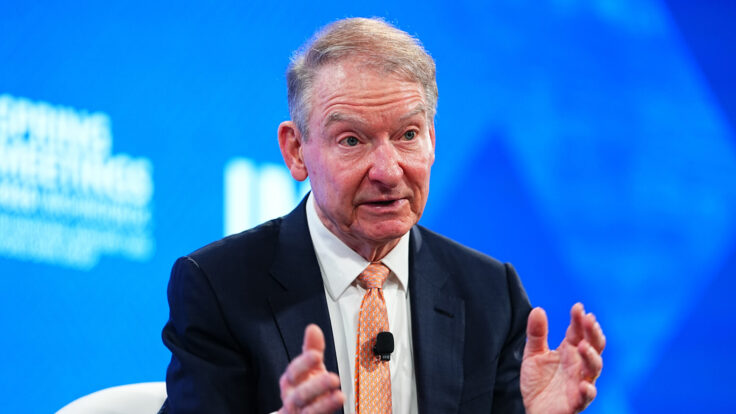
In today’s issue, a peek behind the scenes of the ostensibly dormant Paramount Global sales process, while the special committee—led by Charles Phillips, the former Morgan Stanley banker—gets to work evaluating the competing Apollo/Sony and Ellison/RedBird bids for the company.
But first, for the penny-pinchers here: a few notes on the Sotheby’s May sales from my new partner Marion Maneker. Please sign up for Wall Power, his excellent private on the art market, for exclusive information and insights—the sort of work you value most and can only get from Puck.
- Sotheby’s Monday blues: Let’s start with the good news: Sotheby’s, the global art auction powerhouse, made just over $267 million on Monday night, with very strong sell-through on the lots offered and only one lot withdrawn due to lack of interest. (In this case, the work was said to have been shopped around privately long enough to alienate potential bidders.) The lone withdrawal—even if the lot had been estimated at $6 million—was an encouraging sign that sellers’ expectations are getting back in line with buyers’ appetites.
The hammer ratio for the evening tells a different story, however. Calculated by dividing the aggregate hammer price of all the sold lots against the aggregate estimate, the hammer ratio shows us the strength of bidding, and measures whether the estimate level was too high or too low. At .94, the hammer ratio signals estimates are still too high.
Of course, you wouldn’t have needed an abacus to determine that something was off in the auction room on Monday night. Almost from the beginning of the evening, the Sotheby’s staff seemed somber. One bidder who spoke to me afterward pointed to the very thin bidding as the cause. On most lots, there was only a single bidder, possibly two. That doesn’t give the staff much to do but stand there and stare off into the distance.
The most obvious signal of the depressed market were the hammer prices of the top two lots, which came in below the estimate level. Francis Bacon’s portrait of his former lover George Dyer, from 1966, sold for a negotiated price of $27.7 million with fees, or 18 percent below the asking price (more if you include the expected fees). Speculation in my channels is that the buyer was Turkish collector Halit Cingillioglu—and Sotheby’s did say the work ended up in a very good collection, yada yada, which would fit the theory.
The other top lot, Howard Rachofsky’s bright yellow Lucio Fontana painting, came very close to the asking price of $20 million, but still got hammered down at $19.7 million after desultory bidding. The first bid, of $19.5 million, was presumably the third-party guarantor. The second bid, just a sliver more at $19.7 million, should have provoked a response. It didn’t. Clearly, the guarantor was happy to take their fee instead of taking home the painting.
The work with the third-highest estimate for the evening, at $18 million, was a Richard Diebenkorn painting from the famed and sought-after Ocean Park series. The painting, Ocean Park #126, had been purchased from the Zucker collection (the New York real estate family, not the former CNN chief) during their sale of nearly two dozen Diebenkorns six years ago. Presumably, the sellers had been encouraged by the sale of a Diebenkorn last season for a record $46.4 million… [Read More] —Marion Maneker
|
|
Plus, a few notes from yours truly…
- FTX faux pas: Loyal Dry Powder readers will recall that I’ve long advocated for an examiner to be hired to investigate what the hell happened at FTX. Not to furnish the S.B.F. version of events, or the John J. Ray III version of events, or the Sullivan & Cromwell version of events. Rather, a bona fide independent analysis of who did what to whom. It’s been a tortured path to get to such an investigation: On December 1, 2022, several weeks after FTX filed for bankruptcy, the U.S. Trustee requested the bankruptcy court appoint an examiner. On February 21, 2023, the court denied that request after the debtor opposed the motion, claiming it would be too expensive and time-consuming. The U.S. Trustee then appealed that decision, and on January 18, 2024, the U.S. Court of Appeals overturned the bankruptcy court ruling and agreed that an examiner could be hired and get to work. A small victory!
On March 20, Robert J. Cleary, a former U.S. Attorney, was selected as the examiner. His report is due on May 20—wicked fast, if he sticks to that timing. The report, of course, was meant to be public and unredacted. On May 1, though, Cleary asked the bankruptcy court to allow him to file his report “under seal,” with drafts of the report shared with the various FTX constituencies, giving them until May 28 to decide how much of the report to redact “to protect privileged information.”
My first thought: You’ve got to be kidding me. I don’t recall an examiner’s report ever being filed “under seal” and then “redacted,” in part. The whole idea of an examiner's report is to make public a thorough examination of what occurred. On May 14, a powerful group of “media intervenors,” comprised of Bloomberg, The New York Times, the Financial Times, and Dow Jones, the publisher of The Wall Street Journal, asked the bankruptcy court to stop the nonsense and make the examiner’s report fully public and available, per the original requirement of the examiner’s mandate. Couldn’t agree more with the “intervenors.” Let’s see what happens.
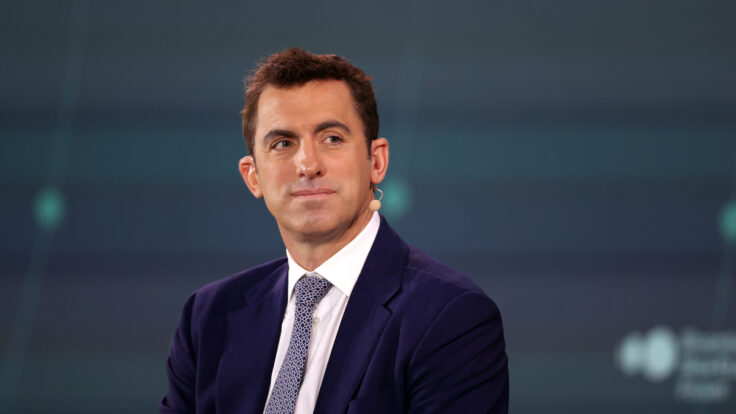
- Zaz’s debt hack: Meanwhile, our friend Zaz and his gimlet-eyed C.F.O., Gunnar Wiedenfels, are going to town on the WBD debt stack, as Gunnar alluded to in last week’s first-quarter earnings call. As you’ll remember, Gunnar referred to some $6 billion of WBD’s debt (out of about $40 billion of net debt) as a veritable asset, since the interest rates on the debt is so low, compared to what it could cost to refinance that debt today. Indeed, that debt is trading at a discount, and Zaz and Gunnar are keen to capture that discount, retire the debt for less than face value, and to lower its outstanding debt and its interest expense. (And hopefully give a boost to WBD’s flagging stock price.) A potential bonanza!
Yesterday, WBD announced that it will increase to $2.5 billion, from $1.75 billion, the cash tender offer it’s making on some of that debt stack to further prove to the doubters on Wall Street that the two men remain seriously focused on debt reduction (along with Zaz being seriously devoted to the Knicks during their playoff run). The tender closes June 7, so we’ll see what happens. But this will likely mean a reduction of WBD’s net debt into the $37 billion range, and a reduction of its interest expense by some $100 million a year.
|
|
And now for the main event…
|
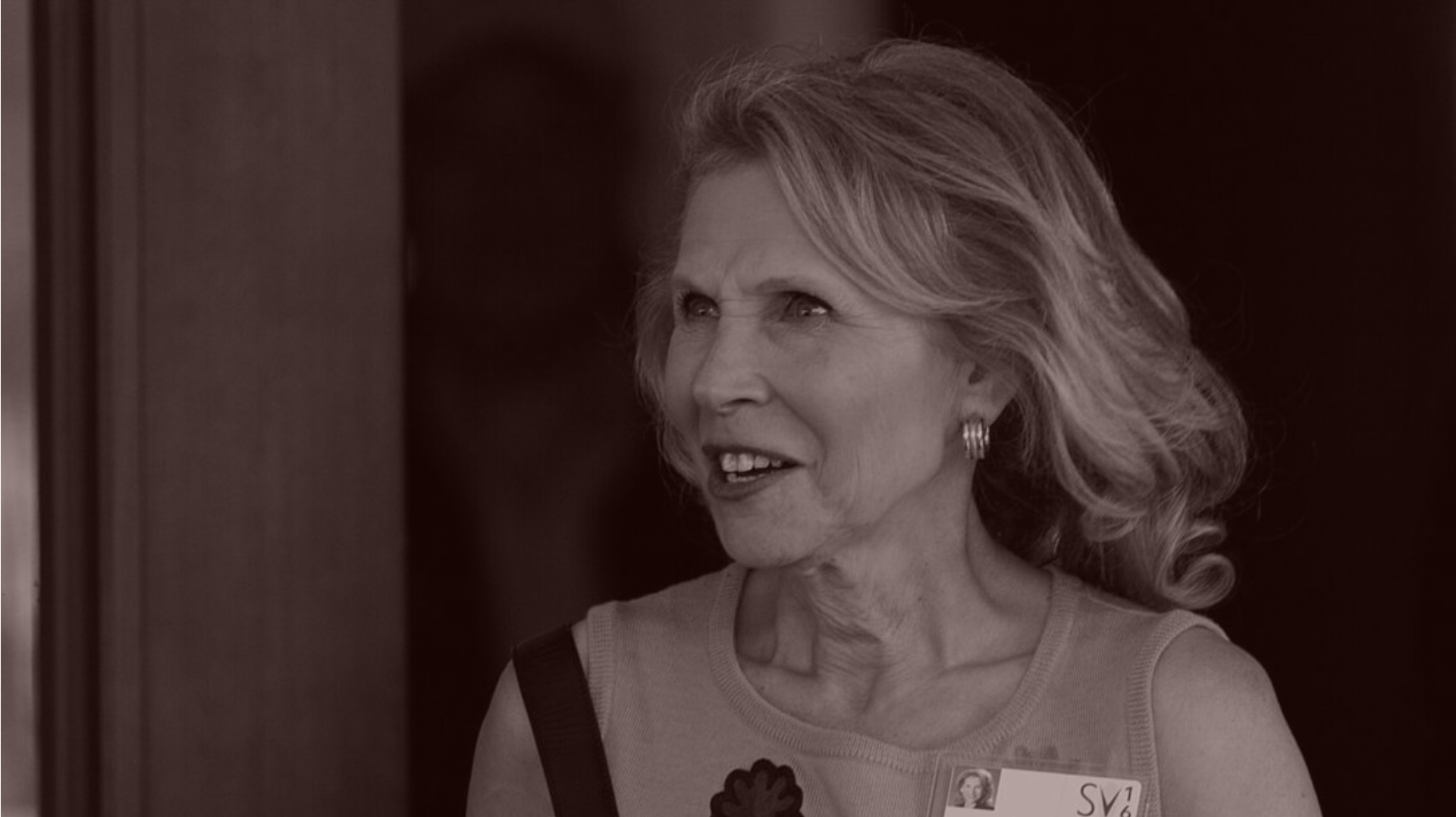 |
| Shari’s Ticking Clock |
| More news and notes from inside the Paramount quiet period. “We’re running out of things to delay this on,” shared one participant in the process. |
|
|
|
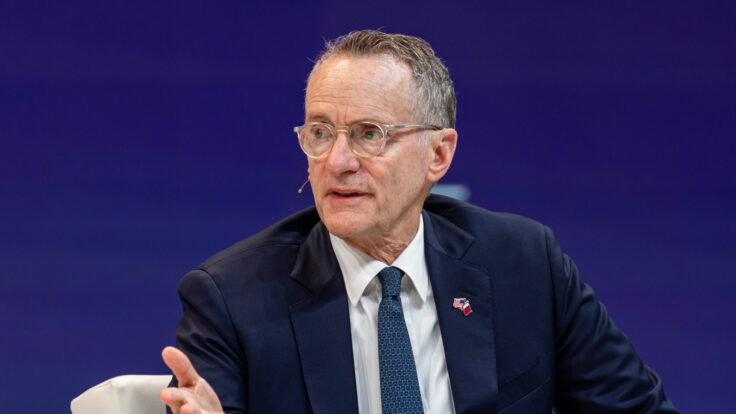
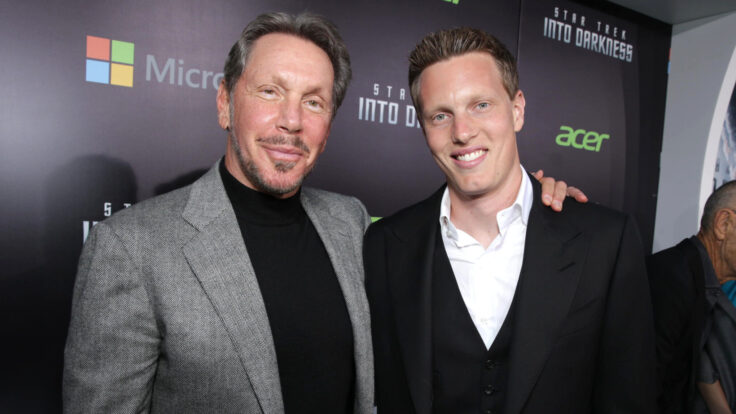
| If it seems like the Paramount Global sale process has gone quiet, think again. It’s during these moments when the real work of the special committee of the board of directors—led by Charles Phillips, the former Morgan Stanley banker and, perhaps conveniently, former Oracle executive—gets managed. This is also when the two final bidders, the teams at Sony/Apollo and at Ellison/RedBird, are doing their last rounds of financial, legal and environmental due diligence on Paramount, getting access to information well beyond what is in the public realm. And it’s when Paramount is doing its own due diligence on Skydance Media to decide whether the $5 billion purchase price that David Ellison and RedBird Capital have put on that production company is fair.
This is also when the special committee’s advisors, Blair Effron at Centerview Partners and Faiza Saeed at Cravath, go into overdrive evaluating the two proposals on behalf of the non-Redstone Paramount shareholders, and earn their substantial fees. So, don’t be fooled into thinking that nothing is going on in the Times Square corporate office; the hard work of evaluating the two deals is reaching its fever pitch, I’m told. “We’re running out of things to delay this on,” shared one participant in the process.
Relatedly, don’t be fooled by the fact that the special committee decided to let lapse the Ellison/RedBird exclusivity period. That was always going to be a mirage. Exclusivity in the context of the sale of publicly traded companies is pretty much a meaningless concept. If there is only one bidder, then it has exclusivity whether or not it is so designated. But if a second credible bidder shows up, then there is no way that the first bidder’s exclusivity can be maintained. The special committee has a fiduciary duty to all shareholders, particularly the non-Redstone shareholders, to evaluate both bids and to determine which one is fairer for shareholders.
I’m told that both bidders are still actively involved in negotiations with the special committee, refining their bids, and doing what they can to sweeten them—by raising the all-cash offer in the case of Sony/Apollo, for instance, or raising the cash offer to the Paramount non-voting shareholders in the case of Ellison/RedBird. I’m also told that both bidders are engaged in a “constructive dialogue” with the special committee and its advisors and the deliberations are ongoing. And yet the more time passes, the more challenges there seem to be for the Sony/Apollo bid. Perhaps this is one reason that CNBC’s David Faber recently reported that Sony, in particular, may be “rethinking” its bid, a report that caused the Paramount Global stock—a.k.a. The Roller Coaster—to tumble 8 percent on Tuesday afternoon. |
|
A MESSAGE FROM OUR SPONSOR
|

|
Join the world of Panerai and discover exquisite timepieces like the Luminor Marina, where every collection reflects Swiss watchmaking elevated by the relentless spirit of Panerai innovation.
|
|
|
| Can Apollo Stick the Landing? |
|
| Of course, each bid for Paramount Global has its problems, as everyone here already knows. While the Sony/Apollo deal has the benefit of being simple and all-cash—even though it’s unclear how the $12 billion for the equity value of the company will be divided among the A and B shareholders—Shari Redstone may be loath to turn her heirloom over to a private equity chop shop, allowing Sony to milk the studio and Apollo to slice up CBS, its local affiliates and some sad cable channels. Yes, there will be major tax consequences for carving up and selling assets with low tax bases, but if anyone can figure out how to minimize those consequences, it’s Apollo, and their tax attorneys at Paul Weiss. The good news of the Sony/Apollo deal for the special committee is that if it’s accepted, the shareholder lawsuits will be minimal, or merely annoying. The bad news for the Sony/Apollo deal is that Shari doesn’t like it, and she can use her controlling position to kill it off, no questions asked or answered.
But even if they can somehow win over Shari, then there are regulators in Washington. My sources in the Sony/Apollo world assure me they have the regulatory situation wired and not to worry. But I have my serious doubts. If Sony is going to end up as the majority owner of Paramount Global, or at least some of it, the structure raises issues about the foreign ownership of assets like CBS. (Maybe that’s part of the “rethinking.”) So let’s assume that Apollo ends up with that, not Sony, or that our friend Zaz ends up with it, as I proffered on Sunday—fine, perhaps that problem can be solved. But how about the problems of one of the Big Five Hollywood studios swallowing up another, leaving only the Big Four? Isn’t that the very same quandary Paramount Global faced when it tried to sell its book publishing division, Simon & Schuster, to Penguin Random House, only to lose at trial?
Then there is the law preventing ownership of TV stations that reach more than 39 percent of the population. My sources tell me that Apollo, which already owns a bunch of local television stations, could squeeze under the F.C.C. threshold if it were to buy the CBS stations by divesting a few stations where there is geographic overlap, perhaps in places such as Denver and Sacramento. The real problem, though, for Apollo is political. This F.C.C. does not seem to much like private equity as owners of local television stations; perhaps that would change under a second Trump administration, and maybe that is what Apollo is counting on. And what if Sony/Apollo decides to sell off the CBS stations? That won’t be so easy, either, unless the price is low—and that probably won’t appeal to the folks at Apollo, given the tax implications of a sale.
There also aren’t that many potential buyers, to be honest. Nexstar, by its own admission, is already up against the 39 percent cap, and the divestitures it would have to undertake to own the CBS stations would be complex and lengthy. Sinclair is more of a seller than a buyer at the moment. Yes, Tegna and Gray are logical buyers, but they will be able to play hardball on price if there aren’t more bidders for the stations. In sum, if Apollo doesn’t keep the stations, it will likely be a brutal sale process. So, yes, what appears to be a clean all-cash deal at first blush is really something far more complex and longitudinal—a deal that begets secondary deals and tertiary deals, something only lawyers and M&A bankers could love. |
|
|
|
|
| And what about Ellison/RedBird? I feel certain they are still fighting away trying to impress the special committee with the wisdom of its complex deal, which is probably just code for them doing everything they can think of to sweeten the cash consideration for Paramount’s non-voting shareholders. That means taking a bit away from Shari and giving more cash to the B shareholders. But there are limits, and rightly so, for how far the Ellison/RedBird team will reach for this deal.
Will it be enough to tamp down a shareholder revolt, if Shari still walks away with the sweetest deal? I don’t know. There’s obviously a lot of noise coming from the non-Redstone shareholders about this deal, and I suspect that David Ellison and Gerry Cardinale, at RedBird, are doing everything they can think of to level the playing field. There’s no question that the new Ellison/RedBird cash investment in Paramount makes them directly aligned with the Class B shareholders. After all, the Ellison/RedBird group doesn’t get a return on its money unless and until the Class B shareholders get a big return, too. But will it be enough to sway them to support the deal? Is it too much on the come? Just about every M&A deal has shareholder griping and shareholder lawsuits, which ultimately get settled. Perhaps it will be worth it to the special committee to go with Ellison/RedBird and roll the dice to see what happens in the Delaware courts.
The Ellison/RedBird deal also has the benefit of being much less threatening to regulators—no foreign ownership concern, zero reduction of a studio—as well as, apparently, a new management team that actually wants to operate the business, led by David Ellison and The Jeffs, Shell and Zucker. That might be just what the old dog needs, to be honest.
The Ellison/RedBird folks seem to think that under their management and ownership, what is now a $12.50 stock will, in the not too distant future, be a $30 to $40 stock. If that were to happen, then everyone will be very happy: both the new owners and the shareholders who decided to stick around to see if that happens. That’s the gamble for the existing shareholders. Should they stick around and see what Ellison/RedBird can do with this thing? Or do they bail as soon as they can, which would likely send the Paramount stock down toward zero?
As hopeful and as optimistic as I’m sure the Ellison/RedBird team is, at least at this moment, the fates often have a different outcome in mind. A company with the amount of debt and operating challenges that Paramount will still face, even after the Ellison/RedBird deal, could quickly find itself floundering as a public company. Obviously, it’s not directly comparable, but there was a lot of promise with the creation of Warner Bros. Discovery some two years ago, too, and that stock is down 65 percent, even if the WBD story is far from over.
The Ellison/Redbird deal, which will almost certainly come with the specter of shareholder lawsuits, does seem to have another virtue: As the picture of this bleak process is becoming clearer, it may be a real Goldilocks option. And that might make it the winner, in the end, depending on how much “rethinking” Sony is doing. After all, as I have previously noted, there is a real chance that the board will consider Door Number Three: allowing the three-headed monster of George Cheeks, Chris McCarthy, and Brian Robbins to run the company independently, keeping the Redstones in place. I know this is a possibility, it’s just not a very good one for anyone. Not for the Redstones, not for Mario Gabelli, the largest non-Redstone shareholder of the voting stock, or for John Rogers, another large shareholder of the voting stock. This is not investment advice, but it seems to me that nothing would tank the Paramount stock faster than the decision to jettison this expensive and exhausting process and to go it alone with the three co-C.E.O.s and their amorphous business plan. That would be the ultimate nightmare for Shari, and perhaps the ultimate gift to Gerry, waiting in the wings. |
|
|
|
| FOUR STORIES WE’RE TALKING ABOUT |
 |
|
 |
|
 |
| Putin’s Head Fake |
| On the Kharkiv inflection point and Kremlin musical chairs. |
| JULIA IOFFE |
|
 |
|
|
|
|
|
 |
|
|
|
Need help? Review our FAQs
page or contact
us for assistance. For brand partnerships, email ads@puck.news.
|
|
You received this email because you signed up to receive emails from Puck, or as part of your Puck account associated with . To stop receiving this newsletter and/or manage all your email preferences, click here.
|
|
Puck is published by Heat Media LLC. 227 W 17th St New York, NY 10011.
|
|
|
|