Hi, welcome back to The Best & The Brightest. I’m Peter Hamby.
Tonight, I’m back on the Platner beat—in particular, I’m focused on why so many Democrats were so tolerant of this alleged rapist and Nazi body-art advocate despite his many levels of anti-electability. Yes, the guy finally just dropped out, but would the Dems have been this patient with a woman or man of color? In a state that wasn’t as lily-white as Maine? This topic of debate within the party forms the basis of tonight’s issue.
Meanwhile, my partners Leigh Ann Caldwell and
Marianna Sotomayor have a ton of juicy news and dish from the Hill on the Republicans’ shutdown fears, more McConnell proof-of-life anxiety, and the latest instructive polling for both parties.
Also mentioned in this issue: John Thune, Donald Trump, Andy Beshear, Andy Barr, Charles Booker, Cheri Bustos, Joe Biden,
Kamala Harris, Chuck Schumer, Janet Mills, Susan Collins, Chris Hayes, Zohran Mamdani, A.O.C., Herbie Ziskend, Bakari Sellers, Wes Moore, Raphael Warnock, Abdul El-Sayed, Tré Easton, and many more. |
|
|
|

| Leigh Ann Caldwell
|
|
- Shutdown chatter:
Senate Republicans are increasingly worried about a new potential nightmare on their near-term horizon: the specter that Democrats will force a preelection government shutdown by refusing to vote for a short-term funding bill in September. And, naturally, Republicans fear that voters will punish them in November for the mess. Senate Majority Leader John Thune has been discussing this dystopian possibility with some of his members; the topic was also broached in a
member policy meeting before the senators fled town for the July Fourth recess.
In the meantime, they’re considering strategies that would lay responsibility and blame on Democrats. One novel concept that has emerged from these conversations is the possibility of putting forward a bipartisan “End Government Shutdowns” bill. Of course, the bill won’t actually end government shutdowns. But it would force Dems to take a vote on where they stand.
Anyway, no strategy is set,
and a government shutdown at the end of the September 30 fiscal year actually isn’t inevitable at this point: Two Democrats I spoke to said there’s little interest from Dems in reprising a shutdown, as they did over the Affordable Care Act subsidies last fall and the murder of two U.S. citizens by ICE in the winter. Democrats note that it’s President Trump who might provoke a shutdown if he decides to make outlandish demands, like he did previously with
his anti-weaponization fund, or refuses to sign any funding bill into law, as he did with the bipartisan housing bill after the SAVE Act wasn’t passed. Still, you can’t stop people from worrying.
|
|
|
|

| Marianna Sotomayor
|
|
- McConnell’s AWOL
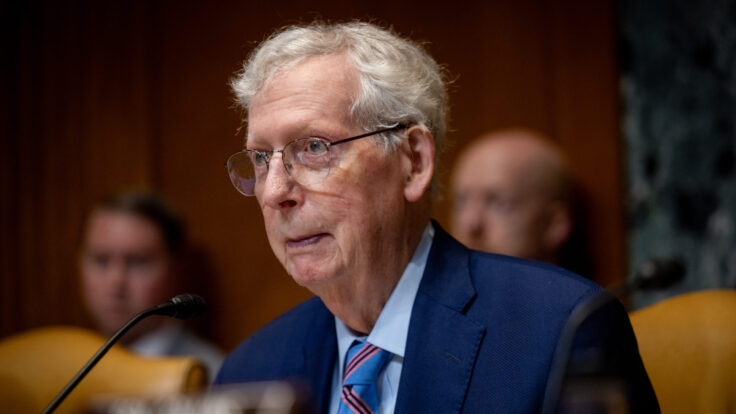
politics: Despite the fact that several Republicans said yesterday that they had spoken to Sen. Mitch McConnell, who hasn’t been seen in almost a month following his cardiac arrest, many on the internet are still demanding proof of life—including Kentucky Gov. Andy Beshear. The Democratic governor sent a
letter to McConnell’s office on Wednesday “requesting the Senator provide an update on his current health status” and warning that “allowing speculation to continue in the media is not fair to the Senator or Kentuckians.”
Beshear has made it no secret over the years that he does not like the 2024 law that hamstrung his ability to appoint a senator if a vacancy
were to occur. If McConnell were to resign before September 8, the law directs Beshear to call for a special election instead. Any vacancy after that date would just leave the seat open until voters choose G.O.P. Rep. Andy Barr or former Democratic Rep. Charles Booker to succeed McConnell in November’s elections.
|
|
|
|
|
| Marianna Sotomayor
|
|
- Give peace a chance: A
new Morning Consult–Next American Era poll sent exclusively to Puck found that a majority of Americans, including both progressives and MAGA Republicans, are yearning for Congress to stop pursuing ideological agendas and instead focus on passing bills in a bipartisan manner. While it’s no surprise that voters want results—primaries have shown a strong anti-Washington bias—the poll found that a majority of the 2,000 or so respondents agreed with the moderate approach across 12 issues. Has our
hyper-polarization prompted a reversion to the middle?
Neither party notched a majority of respondents’ trust on any issue, which shows that both parties have an opportunity to gain voters’ trust if they embrace moderate positions. That’s easier said than done, of course, as former Democratic Rep. Cheri Bustos would know. Bustos, who now leads Next American Era, said in a statement that the results should “urge leaders on both sides of the aisle to listen to the vast
majority of Americans” who say “it’s time to stop the fighting.”
|
|
|
|
The left’s ongoing Platner nightmare reveals all too many of the Democrats’ blind spots—not
only offering limitless chances to a white dude with personal issues and Nazi ink, but pinning so many national political hopes on the non-diverse, Berniecratic state of Maine. |
|
|
|
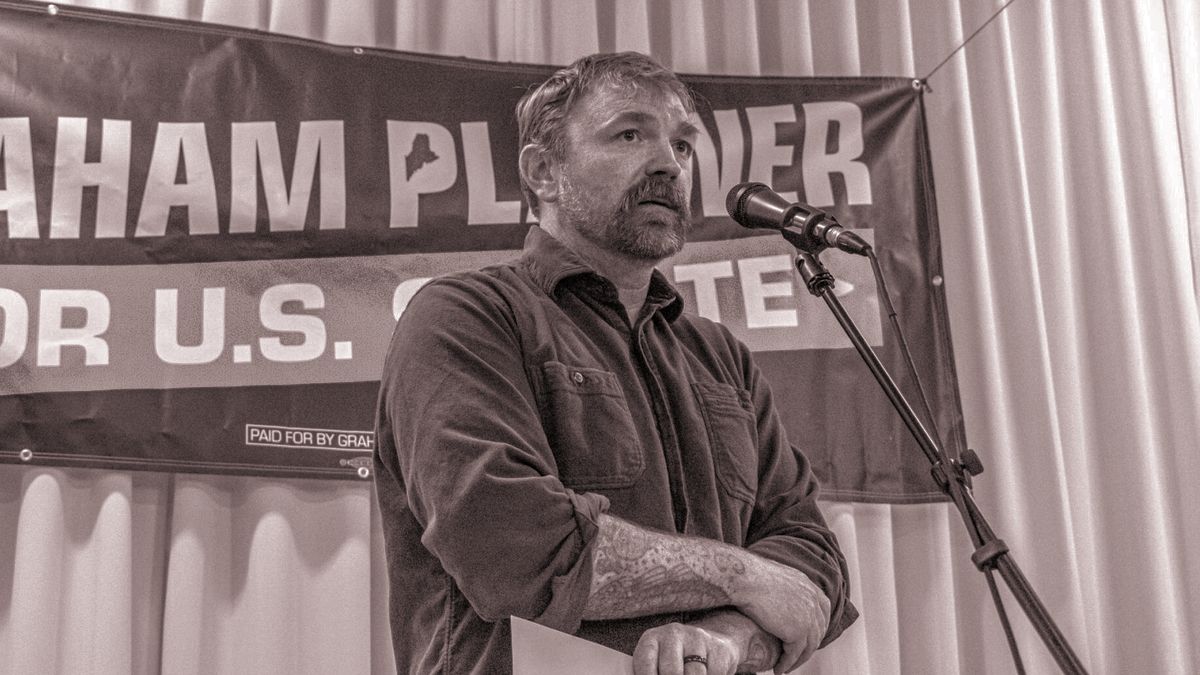
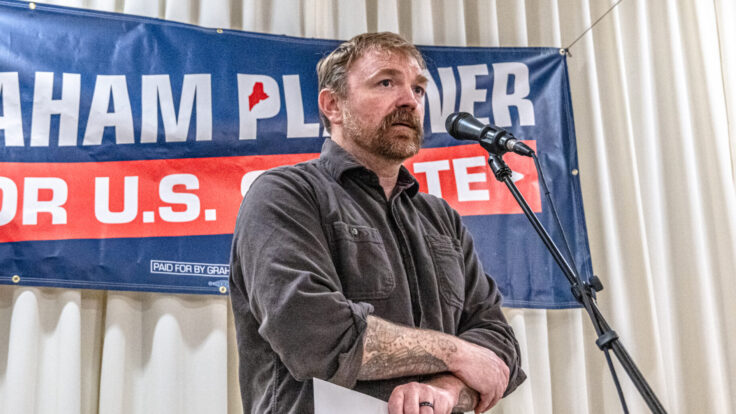
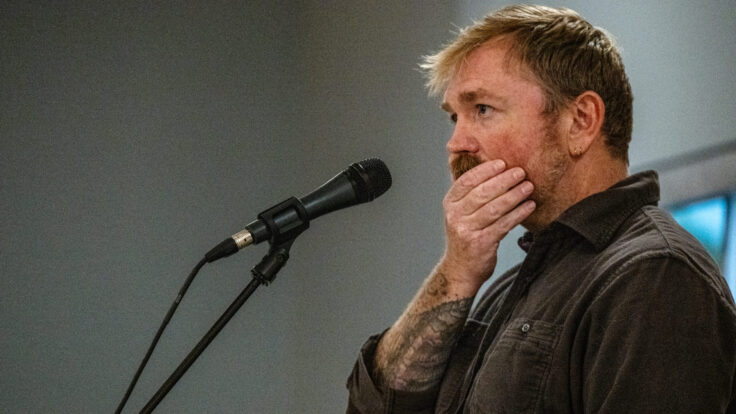
By the time you’re reading this, Graham Platner will have finally abandoned his calamitous campaign for Maine’s open Senate seat. In a selfie video Wednesday evening, Platner announced that he was suspending campaign operations, while still demanding a say in who should replace him on the ballot—even as he faces a serious rape allegation and an endless trail of scandals that might’ve single-handedly derailed Democrats’ chances of taking back the Senate in November. “The arrogance and privilege of this guy,” said Quentin Fulks, the former deputy campaign manager for Joe Biden and Kamala Harris.
But even before all the controversies—the Nazi tattoo, the drinking, the Reddit racism, the penchant for lying, the accusations of assault and rape—Platner was a pain in the neck for the Democratic Party. His very decision to run for Senate as a combat veteran and self-styled working man—propped up by a group of left-wing political consultants who attended elite private colleges—was an affront to Chuck Schumer and party establishmentarians
in Washington who preferred Gov. Janet Mills, a safer choice, for the seat.
But when Platner took off, thrilling Mainers and national fans alike with his cool videos and rugged populism, Mills gave up on the race. That suddenly left Democrats nervous that control of the Senate would now depend on a first-time candidate with a hazy past running against battle-tested Republican Susan Collins. Washington Democrats only grew more frustrated as the
long-rumored scandals started to pile up and Platner kept charging ahead.
The Marine Corps vet remained defiant, chalking up his bad decisions to PTSD and excessive boozing that was now in his past—though he was still posting on Reddit in 2021 and sexting with women outside of his relationship as recently as 2023. He apologized for his behavior, but also took messaging cues from his movement leader, Bernie Sanders, claiming that all the bad headlines were really just
attacks from “the establishment” and big donors hell-bent on silencing the revolution. Platner kept assuring his credulous fans that there was nothing more to come, even when it got awkward—like when Chris Hayes had to sheepishly ask Platner in June whether there were any dick pics floating around that might surface during the campaign. “I’m not worried about it,” Platner said, his eyes darting off camera.
But even as they were under siege, Platner’s team somehow got
cockier. His ambitious young strategist Morris Katz, who helped elect Zohran Mamdani in New York, had already attacked the “assholes in D.C.” who didn’t want Platner to run. In June, after The Wall Street Journal and New York Times published detailed stories of Platner’s sorry behavior with women, Katz reposted a Bulwark piece arguing that “the knives are out” for him and his progressive consulting firm, Fight Agency. “Best not miss,”
Katz posted on X. His campaign was basically daring reporters, Gary Hart–style, to chase down more.
Maybe it was his gruff voice or his blue-collar patina, but Platner possessed some kind of special voodoo that made too many progressives stifle their own principles, and even their baseline political instincts. In the end, though, reporters—and more than a few suspicious women in progressive politics and media—viewed him with appropriate skepticism, and they did
not miss. The Times, CNN, Politico, the Journal—and yes, conservative muckrakers like the Free Beacon, which revealed that it was Platner’s father, not the V.A., who financed his house with a $200,000 mortgage loan—did their jobs. (Platner has denied allegations of rape and assault.)
Platner’s campaign went kaput this week, after an ex-girlfriend told Politico and CNN that the candidate had drunkenly raped her, without a condom. Platner denied the worst parts, but still began the tortuous process of unwinding his campaign so that Democrats could try to salvage their chances of knocking off Collins. As one frustrated Capitol Hill Democrat told me today, before he dropped out: “He’s holding the race hostage.” |
The Democrats who were always leery of Platner are basking in schadenfreude now. Yes, much of that sentiment
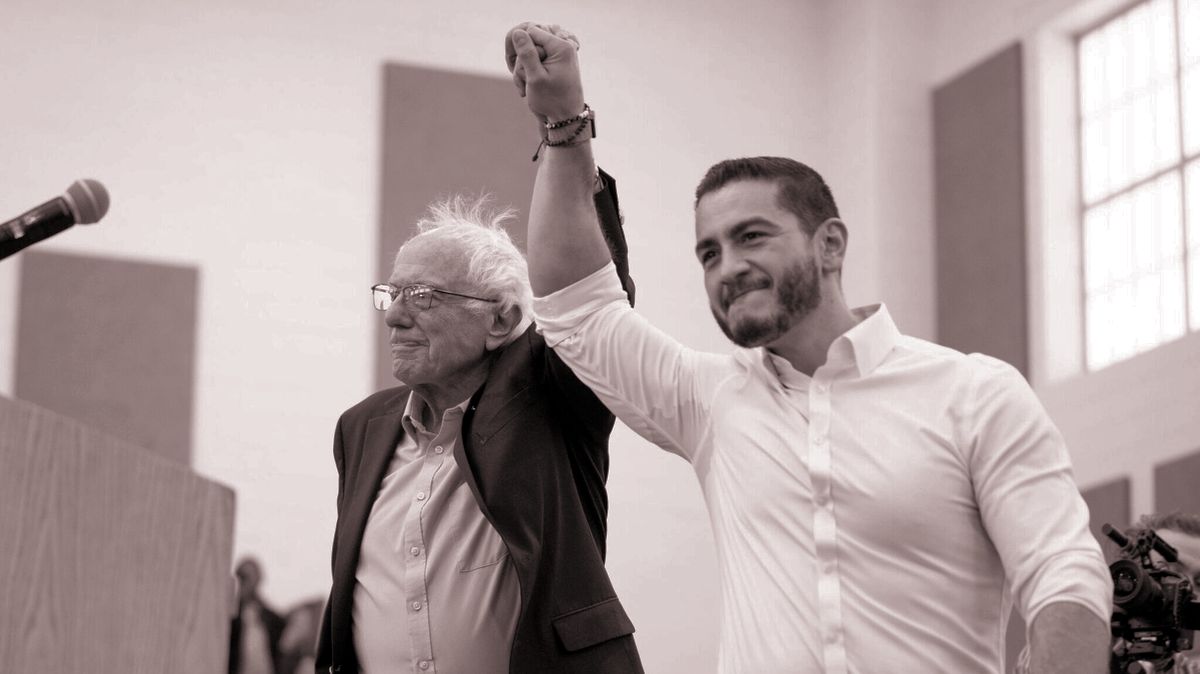
is coming from centrists who are concerned about winning primaries around the country this year and reining in the Bernie left; Sanders, after all, helped recruit many of those leftist insurgents, including Platner. And he was late to the game in calling for Platner to drop out, offering only a brief statement after the rape allegation surfaced on Monday.
For some, it was a reminder that Sanders and his D.S.A. disciples tend to view personal and private matters as pesky and annoying
distractions from the economic crusades that define politics. “Class issues are so much more important to that crowd,” said Herbie Ziskend, the White House deputy communications director under Biden.
Identity politics, race, gender, religion—those currents still pulse through the larger Democratic coalition, as well as the activist groups waging pressure campaigns on issues like abortion, gun control, and immigration. But those aren’t major priorities on the populist
left, where Platner was seen as a “working-class prophet,” Ziskend said. “The excuses that Platner’s supporters have made for his behavior during the campaign would be out of bounds in any other political context,” he added. Ziskend pointed to Alexandria Ocasio-Cortez, who avoided getting involved in the Maine race entirely, perhaps wary of Platner’s rumored history with women. Ocasio-Cortez also has a watchful eye on the 2028 presidential race and the need to grow her
Democratic support beyond just the class-struggle left. “She has been shrewd,” Ziskend said.
Meanwhile, Platner’s refusal to drop out of the race immediately after the Politico story dropped on Monday, and his attempts to influence the process of choosing his successor, arewere absolutely galling to Democrats who seeaw a scandalized white man demanding grace when no such grace would be afforded to a nonwhite politician, man or woman. Double standards abound. “The Nazi tattoo should have been
enough, but no one cared and they just let it go,” Fulks told me.
Maine’s population is almost 94 percent white, with a voting base that’s older and more educated than other states, making it an ideal launchpad for a candidate in the mold of Sanders, who struggled in two presidential campaigns to appeal to voters of color. Bakari Sellers, the CNN analyst and former South Carolina state legislator, rolled his eyes at the notion of Platner winning a race anywhere outside of
New England. “There is some level of irony in the purity politics of the Bernie left, or the far left, when it comes to policy points but not necessarily character,” Sellers said. “In Platner’s case, there is this push to appeal to this fetished version of a white male voter above all else. Can you imagine if Raphael Warnock or Wes Moore were facing the same kind of issues? I guarantee you they would not get the benefit of the doubt from that corner of the
party.”
Platner and his team had been more insulated from the kind of coalitional pressures inside the national Democratic Party that might have punished him earlier in a different state, said Tré Easton, a Capitol Hill veteran and vice president for public affairs at the centrist Searchlight Institute. “Anywhere else, the party would laugh this guy out of the room,” he said. Certainly, women in Maine were becoming a political problem for Platner. Well over half of the
state’s electorate in Maine is female, and Platner was noticeably underperforming among women voters compared to Democratic nominees in other states like Texas, Ohio, North Carolina, and Iowa, according to a series of New York Times/Siena polls released last week. But Easton told me that Platner’s problems would be even worse in states with more voters of color—an obvious red flag for Bernie-style socialists who have held up Platner as a future national leader.
Would Platner have
been able to catch fire anywhere else, especially the South and Midwest? “The way that liberals and leftists alike have bear-hugged this obviously flawed candidate is absolutely remarkable,” Easton told me. “Platner’s people should ask themselves why this person who faced so many problems in the past 20 months was able to withstand them,” Easton said. He pointed to Abdul El-Sayed, the Bernie-endorsed frontrunner in Michigan’s Democratic Senate primary, who was
interviewed in this newsletter yesterday. El-Sayed, of course, is a non-white candidate in a diverse state with a larger voting base. “He would have been toast,” Easton insisted.
In retrospect, it was probably futile to hang so many of the party’s hopes on a monolithic state with fewer than a million registered voters. “I think part of the reason why Platner was
such an important project to the left is because Maine is a place where you don’t have to navigate all the very real coalition issues in the Democratic Party writ large—race and gender dynamics and all sorts of things,” Easton said. “If you are not honest about the limitations that presents for your candidate, then you’re going to be limited in how far your project can go.” |
|
|
|
Need help? Review our
FAQ page or contact us for assistance. For brand partnerships, email ads@puck.news.
You received this email because you signed up to receive emails from Puck, or as part of your Puck account associated with {{customer.email}}. To stop receiving this newsletter and/or manage all your email preferences, click here.
|
Puck is published by Heat Media LLC. 107 Greenwich St., New York, NY 10006 |
|
|
|
|