 |
|
Happy Wednesday, and welcome back to Dry Powder.
|
|
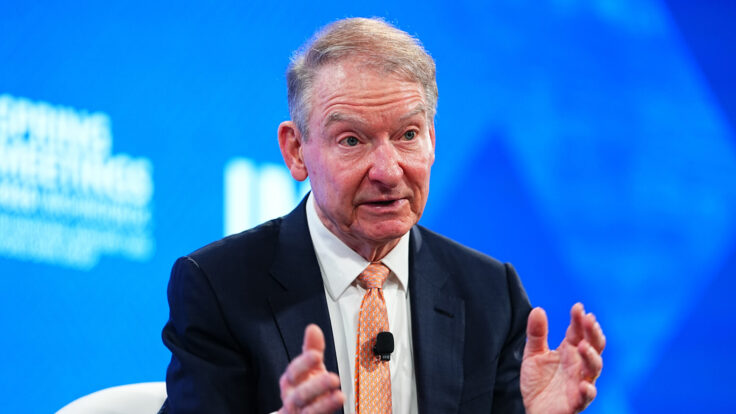
One year ago, I had a conversation with my friend Dan Yergin, a Pulitzer Prize winner and vice-chairman of S&P Global, about a set of looming international challenges. Today, I’m sharing my latest dialogue with Dan, this time focused on the shockingly critical role that one raw material—copper, of all things—is set to play in everything from global finance to the environmental crisis, to the economic wars to come.
|
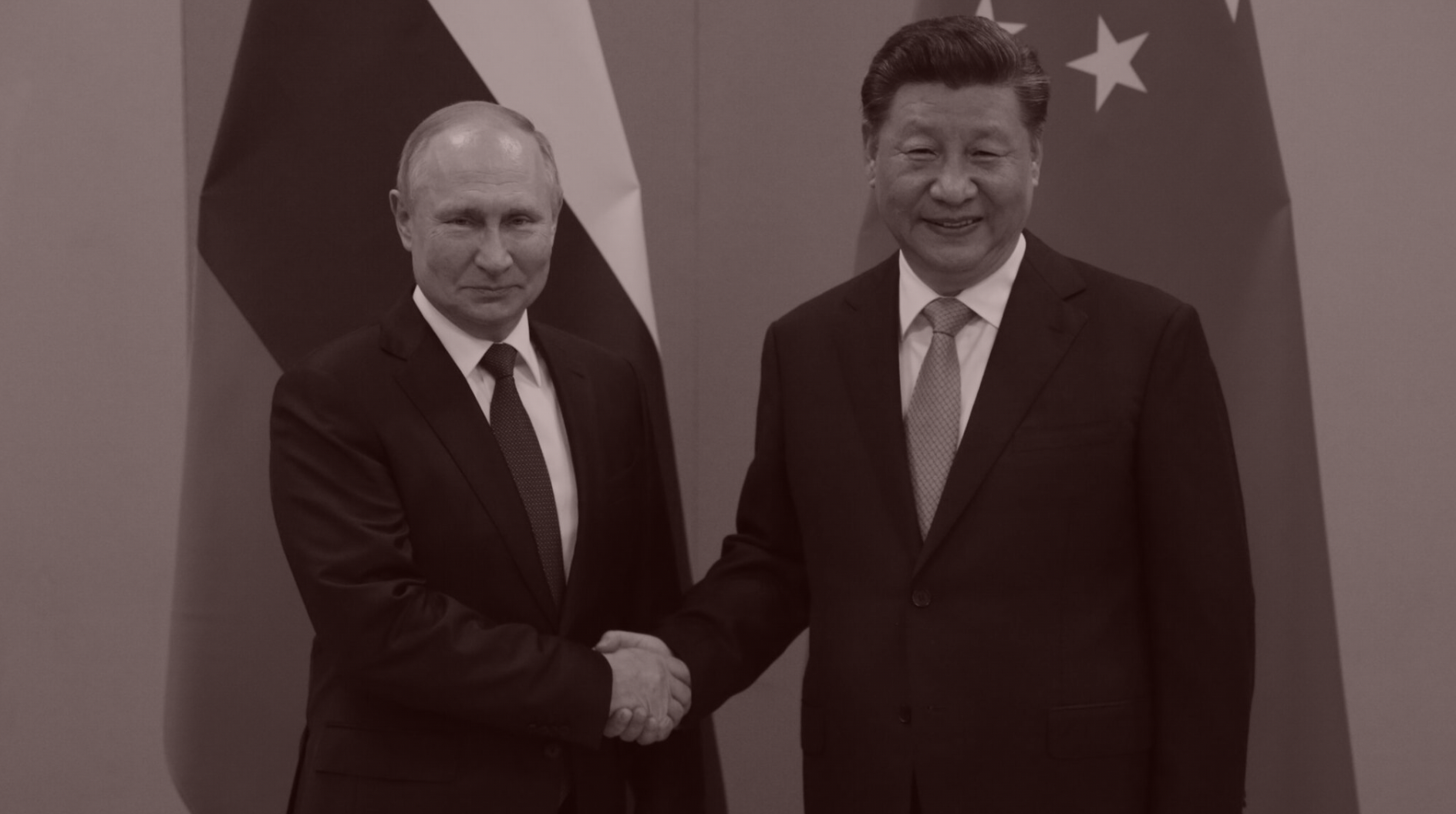 |
| The Putin-Xi Economic War Games |
| Daniel Yergin, the renowned energy expert, on Xi, Putin, American diplomacy, and avoiding a “Lehman-style” economic catastrophe in Europe. |
|
|
|
| A year ago, back before Puck was even a thing, I chatted with my friend Dan Yergin, one of the world’s leading authorities on our collective energy transformation as well as the author of The New Map: Energy, Climate and the Clash of Nations, in which he argues that shovels, for mining rare commodities, will one day be more important than drilling rigs. He is also a Pulitzer Prize winner, of course, for his fourth book, The Prize, and a vice-chairman of S&P Global, the data behemoth. He’s a busy man, and prophetic. When we spoke last September, Dan predicted a series of developments then still on the horizon: supply-chain troubles with electric cars, Europe’s energy crisis, and Joe Biden’s climate reduction goals, among others.
One year later, we had coffee at my house in Nantucket and chatted about a new set of clear and present dangers: the U.S.’s economic war with China; Vladimir Putin’s European machinations; and the race to penetrate markets in Africa, Asia, and Latin America. But before we even got to any of that, Yergin was focused on, of all things, copper. So much so, in fact, that I was reminded of that famous scene in The Graduate during which Benjamin Braddock’s family friend lectures him poolside at the cocktail party, “One word: plastics.” After all, Yergin and his colleagues at S&P Global have just completed an intensive eight-month study of copper and the role it will play in the evolution of energy consumption by increasing the use of electricity and decreasing the use of fossil-fuels. The problem is that in order to meet the world’s 2050 net-zero emission targets, according to Yergin, the demand for copper—the “metal of electrification”—is on a flight path to greatly exceed global supply. And that could mean higher prices for copper.
While the price of copper is down some 26 percent off its March highs, demand for products that rely heavily on copper—electric cars, windmills, solar panels, cellular phones, batteries—will probably push the price of the metal higher again. “An electric car has two-and-a-half times more copper in it than a conventional car,” Yergin explained. Or as the S&P report states, the “technologies critical to the energy transition… all require much more copper than conventional fossil-based counterparts.”
In order to meet the 2050 emission targets set by the Biden administration, Yergin told me that world copper production will have to double. And that, thanks in part to the war in Ukraine, puts the United States smack in the middle of what he called the “superimposing of a geopolitical crisis on top of an energy crisis.” Some 38 percent of the world’s copper production comes from two countries, Chile and Peru, which have recently elected presidents who want to put new restrictions on mining. But the “biggest contribution” that Chile could make to help solve the climate crisis, Yergin said, was not to reduce its own emissions—it is a “tiny part of global emissions”—but rather to ensure that there is a steady growth in the supply of copper around the world. “Because you're not going to be able to build all the electric cars you want if you don't have the copper,” he continued. “The price, even with a government subsidy, will get more expensive. What you're going to have now with the automobile industry is everybody's going to be rushing to the same side of the ship at the same time. Normally when that happens, funny things happen with the markets.”
Then there is China, which “holds a preeminent position,” according to the S&P report, in copper smelting (with a 47 percent share of the market), copper refining (with a 42 percent market share), copper usage (with a 54 percent market share), and copper production, “making it the epicenter of world copper” at the very moment when Nancy Pelosi’s recent visit to Taiwan put yet another strain on the U.S.-China relationship beyond all the damage that Donald Trump’s antics did. A new unfavorable dynamic is rapidly emerging between the 2050 zero-emission targets on the one hand and the rising political tensions between the United States and China. “Do they stay separate or not?” he wondered rhetorically. |
| “They’re Going to Strangle its Economy” |
|
| Yergin is firm about the fact that Pelosi’s visit to Taiwan (followed closely by two other congressional delegations) inflamed an already tense relationship. “What's happened in Taiwan the last few days between China and Taiwan is the opening of a new era,” he said. “In The New Map, I write about the 1996 Taiwan crisis, where the U.S. Navy stepped in to show the Chinese that they needed to build a navy. Now they've built a navy and it has more ships than the U.S. Navy. I think this has really raised the stakes.”
China, he continued, cannot allow people to think that it was intimidated by Pelosi’s visit. “They've demonstrated that they have the potential to strangle Taiwan without invading,” he said. “They're going to strangle its economy. And the fact that they sent these missiles over Taiwanese territory into Japanese waters raises the stakes for everybody.” He contended that the better approach to Taiwan is one of “strategic ambiguity,” not the full-on confrontational approach of Pelosi’s visit.
He questioned the logic of reinvigorating tensions between countries in the face of the “economic wars” that have emerged over such crucial raw materials as oil, computer chips, copper, cobalt and other minerals. “You can't open a new mine in the United States because you can't get it permitted, despite what's in the new Inflation Reduction bill,” Yergin continued. “So you have a high degree of dependence. If you look at a map of Latin America, where a lot of minerals come from, the entire map is red. They all have left-wing or very left-wing governments, which are hostile to investment. And you need investment.” Meanwhile the Chinese, who already have a “strong position” in Africa, are building an equally “strong position” in Latin America. All these countries are sending the same message, he explained: “We don't want to choose between the United States and China because we have an important economic strategic relationship with the United States. But China is our most important market.” The same goes for the ASEAN countries, Yergin continued. “The size of their trade with China is now much bigger than their trade with the United States. You just go down the list. And you see this is a really, very complicated, geopolitical and geoeconomic situation. These factors all come together.” |
|
|
| Yergin believes that these geopolitical and geoeconomic crises will grow even more complicated in December, after the European Union bans the importation of Russian crude oil. He thinks Putin has opened a second front in the Ukraine war via an economic war in Europe. “It’s an energy war,” he said, “where his aim is to create economic hardship [that] will lead to social turmoil and populist parties coming to power… His ultimate aim is to fracture the [European] coalition as soon as he can.” He noted that Putin has already won a political victory in Italy, where Mario Draghi left office a month after a visit to Kyiv in a show of solidarity with the Ukrainian people. He said that Europeans are “desperate” to fill their supply of natural gas before the winter and Putin is equally determined to try to prevent them from doing so. Russia was supplying some 38 percent of Europe’s natural gas needs but Putin has reduced that supply by 70 percent. That decision hasn’t hurt Putin economically, yet. “What they’re losing in volume, they make up for in price,” Yergin said.
He said Russia is still “demonstrating” that it’s an “energy superpower,” although he thinks that will begin to change in two to three years, chiefly because it is not investing in new technology and has alienated one of its largest customers, Europe. “Russia is headed to economic dependency on China,” he continued. “Putin has in a couple of months basically demolished what he spent 22 years building, which was Russia being integrated into and benefiting from being part of the global economy. That’s over now.” But, he’s quick to point out, only about 35 of the world’s 195 or so countries have put Russia in the penalty box. “It’s not a pariah in the other 150 or so,” he said, adding that many Asian, Latin American, and African countries are staying out of the debate. He noted that Recep Erdogan, in Turkey, just met with Putin in Sochi to discuss “expanding economic relationships” and cited the view of India’s foreign minister that India has had a “good relationship” with Russia for decades. The Indian view, Yergin said, paraphrasing the minister, is essentially, “We’re not taking sides here. We care about food, fuel and fertilizer.” Russia, after all, is now the second largest supplier of oil to India, after Iraq, of all places, with Saudi Arabia in third. The other big market for Russian oil, of course, is China. Putin and Xi Jinping refer to themselves as best friends. “It’s important not to delude oneself into thinking the world is united on this,” Yergin said.
As for the price of oil at the pump for American consumers, Yergin said it’s a battle between the Kremlin and the Federal Reserve. He thinks the media has made too much of the recent decline in gasoline prices, which ultimately will be determined by the supply of oil and the demand for it (obviously). To wit, if we’re in a Fed-induced recession that will reduce consumer demand, as people have less money to spend on high-priced gasoline. But if the Kremlin continues to curtail supply, the price of gasoline will again start moving back up. “So much is really contingent on what happens in the world,” he continued. “What happens with G.D.P.? What happens with the war? What happens in East Asia with Taiwan? But when I look at the basic fundamentals, I see very tight markets for supply. And I see inventories are very low.” He said the situation with oil prices will continue to be “very precarious.” He cited the statement by Germany’s economic minister, a member of the Green party, that a “Lehman-style” economic contagion is still possible because whatever hurts Germany’s large manufacturing sector—the economic powerhouse of Europe—could infect other European economies and flow through the rest of the world. “I don't think there's a lot of awareness of just how serious the situation is in Europe right now,” he said. |
|
|
| As we did a year ago, Dan and I also discussed the prospects of hydrogen as a viable source of alternative fuel. “Three or four years ago, if I'd given a talk and somebody stood up in the back of the room and said, ‘What about hydrogen?’ Then I would say, ‘What about hydrogen?’” Yergin said. “Well, it's gone from being a question in the back of the room to becoming a huge focus now of investment. Hydrogen has the capacity to play a big role in the energy transition. The E.U. in some scenarios has 25 percent of their energy coming from hydrogen in 2050.” The problem is getting hydrogen to be available at scale. There’s a “hydrogen business” today, Yergen said, but it’s not an “energy business.” There needs to be a lot more investment made in the industry to make hydrogen available on a commercially global scale. “Almost every major energy company, and other industrial companies, is looking at trying to figure out how to get to scale it and make it competitive and particularly to replace natural gas for heating,” he concluded. “A lot of money will go into it and I think we'll know the answer to that in three or four years. But certainly there’s a lot of momentum behind it now.”
Now more than ever, given the interconnectivity of the world’s markets and supply chains, there is a greater need for effective international diplomacy. Unless we’re willing to make sacrifices, such as reducing our dependence on fossil fuels and imported commodities—something Americans don’t usually cotton to—we are going to have to figure out a way to get along better with other nations, rather than inflame the tensions that have long existed between us. In America, bringing on a new supply of raw materials is a very difficult proposition given the challenging permitting process. “There’s going to be a race with China,” Yergin said. “China sees the electric car as a way to leapfrog into the global automobile market. In fact, Chinese electric cars are appearing in Europe. And I was just told by somebody in Moscow that you're starting to see Chinese cars sold in Moscow instead of German cars. And so China's going to be competing really hard, and China has a strategic focus on these minerals, where the state-owned enterprises and the government are aligned. And they're not thinking about investors, they are thinking about controlling supply.” |
|
|
|
| FOUR STORIES WE'RE TALKING ABOUT |
 |
|
 |
|
 |
| Elon's G.O.P. Alliance |
| Musk’s confab with Kevin McCarthy in Wyoming raises questions about his new political allies. |
| TEDDY SCHLEIFER & TINA NGUYEN |
|
 |
| Trump's Secret Stash |
| News of the ex-president’s unsecured intel is triggering national security P.T.S.D. |
| JULIA IOFFE |
|
|
|

|
|
|
| You received this message because you signed up to receive emails from Puck
Was this email forwarded to you?
Sign up for Puck here
Sent to
Unsubscribe
Interested in exploring our newsletter offerings?
Manage your preferences
Puck is published by Heat Media LLC
227 W 17th St
New York, NY 10011
For support, just reply to this e-mail
For brand partnerships, email ads@puck.news |
|
|