 |
 |
|
Hello, and welcome back to Tomorrow Will Be Worse!
|
|
Last week, I began both my letters to you with thoughts about Elon Musk, who, god bless him, can’t stop having his own thoughts about Russia’s war in Ukraine. America is a fine country where a man can really dream, especially a man who makes a few billion dollars. That’s when he starts to dream that the money itself is proof positive that he must be smart enough to figure out everything else in the world.
And so Musk continues trotting out his ideas—most recently that Crimea is as Russian as Hawaii is American, which isn’t too far off, since both were colonized as part of an expansive imperialist project, and history shows that it’s all too easy to get comfortable using that thing you stole.
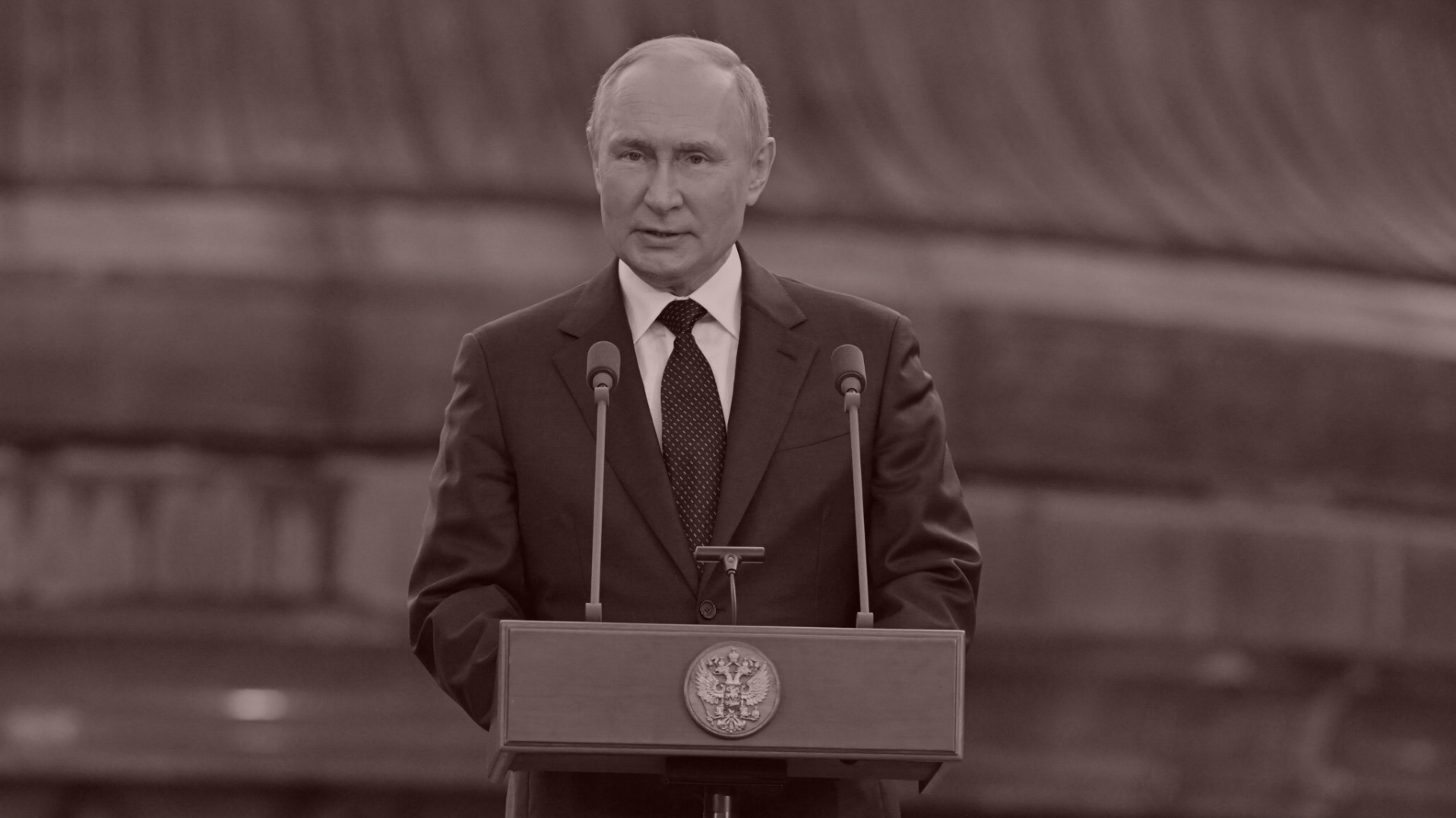
The problem, as Russia guru Fiona Hill has pointed out and as has been documented here and elsewhere, is that Musk is simply acting as a messenger for the Kremlin. Vladimir Putin, well-trained in understanding how to find the hook that will get someone to work for him, has clearly figured that Musk is not unlike Donald Trump and other insecure arrivistes: they like feeling important and like it when important people are talking to them, world leaders consulting them about how to end wars and make peace, precisely the sort of Big Ideas with which Silicon Valley loves to wrastle.
But is that what’s happening here? No. What’s happening here, when you shake it all out, is that Musk, who thinks of himself as an original and iconoclastic thinker who doesn’t bow to authority, is acting as a carrier pigeon for a dictator purposely bombing civilians. In the process, he is translating and normalizing Putin’s message to a segment of the American public that is already skeptical of Ukraine and authoritarian-curious. He is adding nothing of his own except his imprimatur and legitimacy to ideas that are not his.
And what do we call someone who does that?
A useful idiot.
|
 |
| Putin’s New Tools of Terror |
| Russia, which sees itself as an unjustly deposed military superpower reclaiming its rightful place on the world stage, views Iran as a small regional power that can be used as it sees fit. Ironic, then, that Russia has turned to a junior partner for basic weapons as it runs out of its own. |
|
|
|
| Over the summer, reports began to surface that Russia was purchasing drones from Iran. The Shaheds, as these U.A.V.’s are called, have primitive navigation systems and are more missiles than drones, crashing into their targets and exploding rather than delivering a payload and returning home, thus earning them the nickname of “kamikaze” or suicide drones. In June, Russian military officials were said to be touring Iranian facilities, inspecting the goods. In late August, Russia began receiving its first deliveries. Then, on Monday, October 17, dozens of Shaheds, looking like sinister paper planes, rained down on Kyiv, destroying buildings, terrorizing the city, and killing four people, including a young pregnant woman and her husband.
Ever since the Ukrainian attack that severely damaged Vladimir Putin’s prized Kerch bridge to Crimea, this has clearly been the strategy: to bring the war to as much of Ukraine’s population as possible and to paralyze the country’s infrastructure ahead of the winter. Today, Volodymyr Zelensky announced that one third of Ukraine’s power stations have already been destroyed—in just the past week. Now the Ukrainian government is warning its citizens that they have to start preparing for a winter without heat, water, and other essentials. This is Russia taking the battle to Ukrainian civilians, trying to exhaust the population and to push them into submission. Now, the Kremlin has new tools in its terror arsenal: the Shahed drone as well as short-range missiles, which Iran has promised to supply Moscow. |
| ADVERTISEMENT |
 |
| They say everything’s bigger in Texas. At Chevron, we’re exploring how renewable fuels from peanuts can make a big impact on reaching a lower carbon future. We’re working with Texas A&M AgriLife to develop non-food grade peanuts with greater oil content that can adapt to drier climates, offering farmers a profitable dryland or limited irrigation crop option. The innovative initiative will help support Chevron’s efforts to increase our renewable fuel production capacity to 100,000 barrels per day by 2030. Because we believe the fuels of the future are everywhere, and we’re looking into some unexpected sources, like peanuts, to find them. |
|
|
| The greater involvement of Iran marks an interesting shift in the war. We are now approaching the nine-month mark and both sides have used up a lot of ammunition. While Ukraine is now largely supplied by the West for munitions, said military analyst Michael Kofman, “Russia has been fighting alone.” And now, “Russia has significantly depleted its arsenal of long-range precision guided weapons. They’ve also expended a lot of their drone systems, which were a laggard in their military-industrial complex, many of which had only recently entered serial production.” Iran, meanwhile, has plenty of the kinds of cheap, simple drones and munitions that Russia needs to maintain its campaign of terror on Ukrainian cities.
It is also a new turn in the Russian-Iranian relationship, which has always been a fraught one. “It is a complicated relationship because there are both shared interests and contradictory interests, and a fair amount of disrespect and distrust on both sides,” said Jon Alterman, of the Center for Strategic and International Studies. “Some of this dates back to Russia’s imperial history but is papered over by a shared disdain for American hegemony.” In places like Syria, where Iran and Russia were part of a coalition holding up the regime of Bashar al Assad, Alterman explained, the alliance was far more rocky than it seemed on the surface: “It was just two fairly unprincipled actors who found common cause and not more than that.”
Russia, which sees itself as an unjustly deposed superpower reclaiming its rightful place on the world stage, views Iran as a small regional power that can be used as it sees fit. After all, traditionally, it has been Russia that supplies Iran with weapons, like complex air defense systems and fighter jets. That’s as clear a demonstration of the power dynamic, at least as far as Moscow envisions it, as you can get. And even though Russia is turning to Iran for relatively simple weapons—and ones that don’t seem to work too well at that—and though it is not getting them for free, it still has to turn for help to a country it very much sees as a junior partner. Given the image that Russia was projecting before thundering into Ukraine, it’s a hell of a look to be asking Iran for help after running out of basics less than a year in, all while losing to a country it so condescends to that it doesn’t even think it’s a real country.
Here’s another surprising aspect of this weapons deal. All this while, as the West sanctioned and isolated Russia, we were waiting for China to come to Moscow’s aid. But it hasn’t. For a while, China walked a very fine line of not trying to keep both the White House and the Kremlin at bay. But in recent months, Xi Jinping has started to sour on Putin and his war, which has brought such volatility and instability to the world. Though he hasn’t chucked Putin overboard just yet, it’s clear that this isn’t what Xi signed up for back in February when Putin promised him a blitzkrieg to Kyiv. So when it is Iran that steps up to help, it highlights another quiet but important absence. |
| ADVERTISEMENT |
 |
|
|
| One more thing to note here. As Alterman pointed out, Iran doesn’t really want Russia as a partner. It wants China. “If the Iranians had their druthers, their allies would be the Chinese not the Russians,” Alterman explained. “They see China as a stronger, more admirable country with a stronger economy.” I can’t help but glance into the future, a few years ahead, and wonder what will happen to the Russian weapons export market. Russia and the U.S. were always neck-and-neck in the running for the distinction of being the world’s biggest weapons dealer. With it came money and a lot of geopolitical power and prestige.
As the war in Ukraine drags on—and all signs point to a drawn-out conflict—it’s hard not to see how Russia’s export industry doesn’t suffer. As more and more equipment gets chewed up in the war, factories will inevitably become overwhelmed by orders from the Ministry of Defense for the front, displacing all outside clients. And this, in turn, creates an opening for China to snap up old Russian clients, especially those who never much liked being a Russian client to begin with—even if they may not, in the end, like being beholden to China either. Still, it is yet another way that Russia is failing to bolster its standing in the world, which was, according to Putin, the whole point of this misadventure to begin with. |
|
|
| That’s all for now, folks. I’ll see you back here tomorrow for more excellent coverage from my fantabulous colleague Tina Nguyen. Until then, good night. Tomorrow will be worse.
Julia |
|
|
|
| FOUR STORIES WE’RE TALKING ABOUT |
 |
| Biden’s Blessing |
| Will Team Biden throw its juice behind a Silicon Valley-inflected outside political group? |
| TEDDY SCHLEIFER & TARA PALMERI |
|
 |
| Putin’s Waterboy |
| Peter and Julia dissect Musk’s Putin fixation. |
| PETER HAMBY & JULIA IOFFE |
|
 |
|
 |
|
|
|

|
|
|
| You received this message because you signed up to receive emails from Puck
Was this email forwarded to you?
Sign up for Puck here
Sent to
Unsubscribe
Interested in exploring our newsletter offerings?
Manage your preferences
Puck is published by Heat Media LLC
227 W 17th St
New York, NY 10011
For support, just reply to this e-mail
For brand partnerships, email ads@puck.news |
|
|