 |
 |
|
Welcome back to The Stratosphere.
|
|
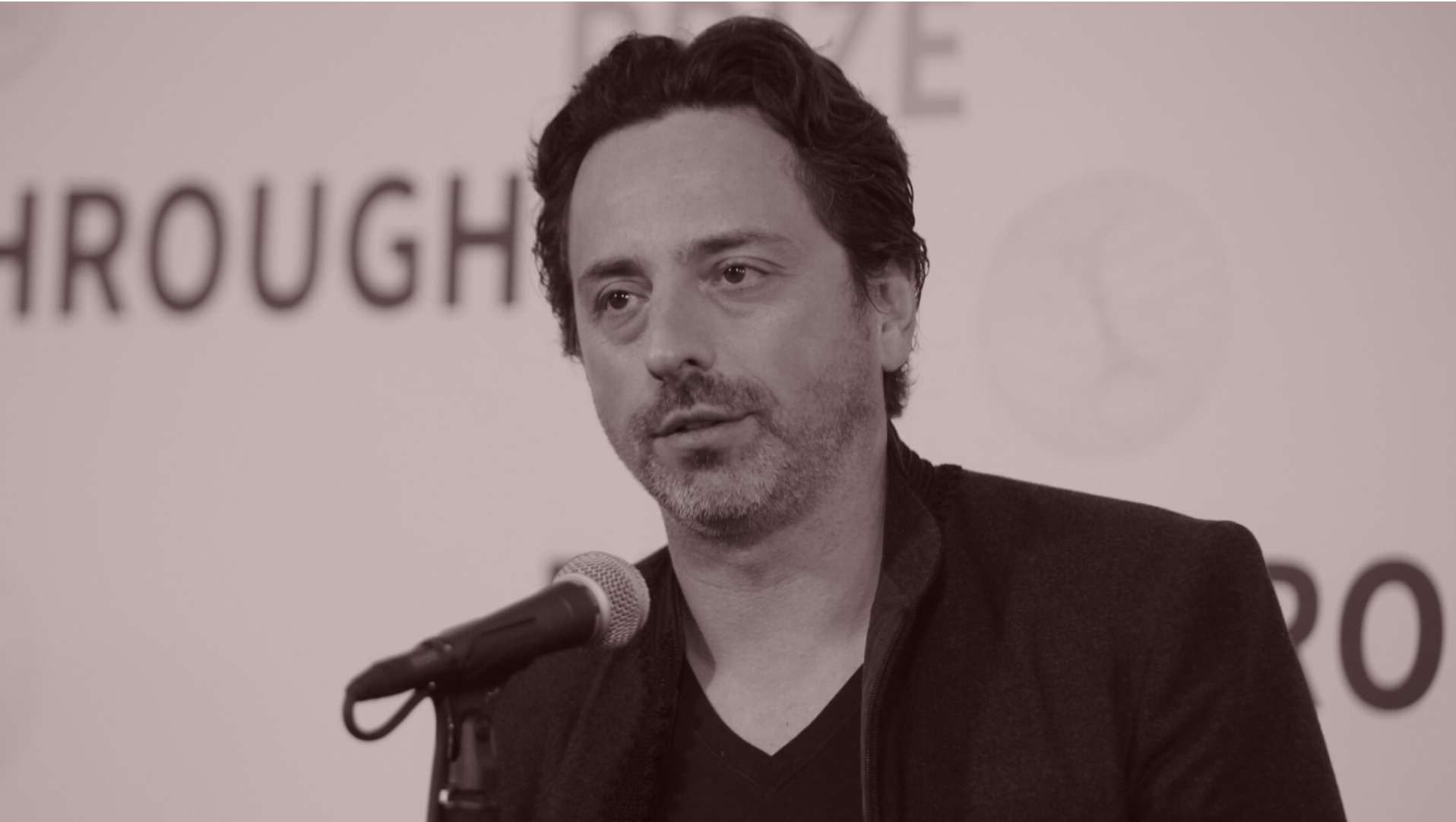
Today, a dive into the black boxes that are billionaire family offices, and that specifically of Google co-founder Sergey Brin. I’d love to report on more intriguing family offices—reply to this email with any ideas or tips.
And as a reminder, if you have a friend or a colleague who might learn something from these weekly notes, they can subscribe here.
|
But first, four quick nuggets to share:
- Stacey Abrams, a favorite of the Silicon Valley donor set and the Democratic candidate for governor in Georgia, is traipsing through the Bay Area this week for five fundraising events, according to invites I’ve seen. The events begin tomorrow afternoon and end with a Friday breakfast in Marin hosted by longtime Democratic mega-donor Steve Silberstein and featuring Jennifer Siebel Newsom, the wife of California's governor.
- I wrote earlier this year about Sam Bankman-Fried spreading his money around the media world, trying to finance effective-altruist coverage. A great new piece in Vox buried some news in a parenthetical disclosure of all places: S.B.F. recently invested in the publication with a “project grant” for the site’s EA-aligned coverage.
- Bijan Sabet, the Spark Capital co-founder and Democratic fundraiser who we reported earlier this year was the leading contender to become Joe Biden’s ambassador to the Czech Republic, succeeded in the sweepstakes and was named by Biden last week. Now, can he get confirmed for Prague this year before the G.O.P. possibly takes the Senate and Washington grinds to a halt?
- Lastly, I can report there is a metric ton of interest (and trepidation) from rival wealth managers in the white smoke emanating from Andreesseen Horowitz about them possibly getting into the wealth management business. First ICONIQ doing venture, Sequoia starting Heritage, and now this? The lines between wealth management and venture capital—and frankly between all parts of global finance—continue to blur.
Now, speaking of wealth management… |
 |
| Sergey Brin’s $100B Private Fiefdom |
| Bayshore, the family office at the center of Sergey Brin’s ongoing divorce, is a sprawling $100 billion entity with interests as disparate as Parkinson’s research, disaster relief, and superyacht management. Its real central interest, though, has been Sergey’s privacy—until now. |
|
|
|
| Of all the surprises offered up in last month’s explosive, disputed Wall Street Journal investigation into the allegedly overlapping private lives of Elon Musk, Nicole Shanahan, and Sergey Brin—the purported “liaison” at Art Basel, the “rupture” and the bended-knee apology—the most revealing detail is Brin’s decision to dump his holdings in Musk’s companies. Not because it is market-making news: Brin holds less than 5 percent of Tesla’s stock, doesn’t sit on any of Elon’s boards, and may not have followed through with the divestment, anyway. Indeed, the Journal didn’t even mention the name of the immense entity that would have engineered those transactions and is now being thrust into the public eye: Bayshore Global Management.
But Bayshore has a fascinating story, in part because it is so private. Despite its estimated $100 billion in assets under advisement—greater than the endowments managed by Harvard and Yale combined—Bayshore has no website featuring its investment strategies, ultra-experienced security personnel, executive chefs, or yacht captains. There is no florid Silicon Valley-inspired mission statement describing how it is changing the world. Instead, the organization at the center of one of the industry’s most epic feuds and divorces is cloaked in secrecy—or in the delightful argot of the U.H.N.W., client discretion—which is, by design, the central value proposition of the entire family-office industry.
Bayshore, named after a strip of South Bay where Google is headquartered, was started about two years after Google’s 2004 I.P.O. Family offices typically sprout up after a company sells or goes public: a founder realizes that their private wealth-management adviser is perfectly kind and capable but isn’t ready to give them the full, undivided attention that befits their billions of dollars in assets, and so the wealth holder moves to diversify their newfound liquidity into everything from impact investing to Tahoe chalets. |
| ADVERTISEMENT |
 |
| Facebook is taking action to keep its platform safe
We spent $16 billion to enhance safety and security across our platforms over the past 6 years. That’s enough to build 7 pro stadiums.
And it's just one example of the work we’re doing to create safer connections.
Learn more about our work ahead. |
|
|
| Brin originally worked with Rob Fetherstonhaugh, an adviser to many wealthy families, before he was poached by the billionaire Canadian Desmarais family. Seven years ago, Brin hired a venture capitalist named George Pavlov to run the trains. (Fetherstonhaugh and his team continue to advise the Brin family office, I’m told.) Pavlov, who bears a bespectacled resemblance to James Murdoch, oversees everything from the investment strategies, to the philanthropic gestures to, yes, the reputation management of Brin during this current tabloid drama. Pavlov has an interesting job even during normal times.
For starters, Bayshore is huge. Some family offices—like Musk’s Excession, which is managed by his fixer, Jared Birchall—are actually surprisingly small. They keep overhead low by outsourcing investment activities to external C.I.O.s and use software products to manage other processes. Bayshore, on the other hand, is thought to have somewhere between 50 and 100 staff, making it among the biggest family offices in the U.S.alongside entities like the late Paul Allen’s Vulcan, Laurene Powell Jobs’s Emerson Collective, and Bill Gates’s Cascade Investments (Admittedly, the variance between these entities shows how the term “family office” has lost some meaning.)
Like Gates’s investment shop, Brin’s family office is also becoming an unlikely post-scandal media fixation. The divorce talks between Brin and Shanahan are ongoing, and Bayshore ultimately hires the lawyers who are managing the divorce proceedings for Brin and who are negotiating with Shanahan’s team. Bayshore can no longer cling to privacy, of course, because this divorce is now also playing out in the court of public opinion. Shanahan hired star litigator Bryan Freedman, who has threatened defamation lawsuits. Most people have interpreted those fighting words as threatening the Journal. But if you read his statement closely, it remains just as possible, if not likelier, that Freedman is actually threatening Brin and Bayshore, who Freedman could try to tie up in discovery, perhaps as a negotiation tactic in the Shanahan-Brin divorce.
Discretion worked out well for Sergey and Bayshore for years—until, overnight, it didn’t. Nowadays, Sergey’s life is suddenly tabloid fodder, with his Nobu dinners with “mystery blondes” meriting headlines in The Daily Mail. It is Bayshore’s job to figure this out. After all, the family office is not just a combatant in this feud, but is also the terrain upon which the entire divorce is being waged. Because at the end of the day, Bayshore controls the bounty that is at the core of the legal and P.R. wars: the money. |
|
|
| Family offices are often overlooked as one of the least sexy corners of global finance—less prestigious than the big banks, less adrenaline-inducing than venture, less remunerative than private equity, and less splashy than hedge funds. Television producers make shows about Bobby Axelrod, not Jared Birchall. Liar’s Poker and Barbarians at the Gate were not set in a family office, either. You’d think that the chance to be an attaché to one of the world’s biggest celebrities would be an irresistible recruiting pitch. The reality, according to people I talk to in the industry, is that these jobs come with limited career mobility, less financial upside, and as much managing up to your billionaire principal as it does actual finance.
But as it continues to make up the plumbing of our financial system, the family office business has become a huge industry, valued at around $6 trillion, now bigger than the $4 trillion hedge fund business. And yet with so much extraordinary client discretion, it can almost feel like this $6 trillion industry doesn’t exist at all.
There are now around 10,000 family offices, each of which essentially has two reasons for existence. First, their primary purpose is to divvy up a war chest across a diversified portfolio (real estate, fixed income, alts, etc.) and to choose the best managers to maximize risk-adjusted returns. Far more thrilling, and exhausting, than that basic asset-allocation work, or the related work in tax and compliance, is the second part of the job: buying, selling and coordinating the yachts, the planes and the estates; hiring and managing all personal office staff, be it physical or cyber security for the parents or daycare and chefs for the kids; executing the philanthropic and political plans that come out of the family bank account; and, of course, devising the many L.L.C.s that endeavor to keep all of these activities out of the press.
Bayshore, historically, has been good at that. The other day I was getting lunch with a limited partner who often invests alongside these family offices, so I asked what they thought about Bayshore. The first words out of this person’s mouth were about how secretive Bayshore was. A friend they used to talk with all the time went into a top job at Bayshore, and then suddenly, they stopped being responsive to my source’s notes and entreaties, something they chalked up to the secrecy of Brin’s shop.
OK, sure. But how much do you know about Koop LLC, the family office of Brin’s co-founder Larry Page? Or Ekahi Aloha LLC, the family office of Marc Benioff? Try Googling those shops. Website or not, I actually find Bayshore to be remarkably public, if you know where to look, or at least public enough to actually offer a rare, scrutable window into the entire family-office industry. It is part of family-office culture for the principals to only wink-wink at who they work for; you’ll often find family-office executives just saying publicly that they work for a “Private Client” or a “UHNW Family.” There is no such caution at Bayshore, at least online, as employees list their roles and sometimes overshare what they work on. All you need to do is peruse LinkedIn, where some Bayshore employees, present and former, are charmingly explicit about all they do, painting a revealing portrait of how these opaque, powerful institutions work in practice. “Orchestrating and protecting the interests of the principals was paramount,” as one employee described his work on LinkedIn.
As for the family office’s primary remit—managing Brin’s financial affairs—Bayshore has a particularly close relationship with bankers at Morgan Stanley and also with the staff at Page’s family office, a person familiar with Bayshore operations told me. About $85 billion of Brin’s worth is still held in Google stock in various forms, according to Bloomberg, but Bayshore, like other family offices, spreads the love across all the standard asset classes. In private equity, according to a different person familiar with the firm, Bayshore likes to do lots of long-term direct investing and recoils from L.P. stakes in funds that have ten-year fund cycles. “The investment problems are quite complex for these guys—just because of the scale. There’s not that many great managers out there. So who do you write checks to?” one person close to several Silicon Valley family offices told me. Investing in venture capital funds doesn’t put enough money to work, this person said, which encourages some family offices to just dump wads of cash into real estate, index funds, and anything else that can actually move enough dough.
Another interesting bit of innovative financial wizardry is a move that Pavlov and now C.I.O. Marie Young made in late 2020. Taking a page from the family office of Ray Dalio, Bayshore opened up a branch of its operations in Singapore. Some saw this as a potentially creative workaround for tax purposes, depending on how exactly the move to the famous tax haven was structured, but it also gives Bayshore better access to investment opportunities in Asia. Working out of the Singapore branch is the family office’s new Global Head of Climate Change, a unique position among family offices. Every one of these is different. “I’ve seen family offices that only care about investments, that don’t really care about creating social change,” remarked one top Silicon Valley wealth manager. “[If] you have seen one family office, you really have just seen one.” |
| ADVERTISEMENT |
 |
|
|
| It is the second part of family offices’ remit—the non-investment stuff, the homes, the ships, the security, and especially the philanthropy, that I actually find more interesting. Family offices often work hand-in-glove with foundations, and Sergey has no foundation staff, so Bayshore essentially coordinates Sergey’s charitable work. Along with a team that one person familiar with the situation described as “quite lean,” Pavlov oversees the Brin Foundation, which has about $4 billion in assets on its own.
Brin’s principal charitable cause for decades has been to support research into Parkinson’s, which has afflicted his mother for more than 20 years and which could afflict him, too, given that Brin carries the genetic variation likely to cause the neurodegenerative disease. Last year, Brin’s foundation donated a whopping, and yet barely-announced, $130 million to a research program they’ve been coordinating through the Michael J. Fox Foundation. “Sergey is committed to helping to conquer this disease that we all live with,” wrote the program’s lead researcher that year.
Pavlov, in a rare 2019 interview at the Milken conference, laid out his vision for the role he saw for Brin’s philanthropy. He described having been “shocked” at how little philanthropies coordinate with one another, and now advocates for consultants to bring donors together and help them “collude.” Donors should get more money out more quickly, he said, although he argued there are relatively few institutions that, say, can take big $200 million checks that make a dent in donors’ net worths. Pavlov also highlighted the role philanthropists can play in filling gaps where governments can’t respond nimbly enough, and encouraging governments to change. “We have to figure out how to make our priority number one their priority number one, instead of number eight. And the only way you do that is you take risk, and show you can do things differently,” he said.
That last point explains one of the more ambitious projects that has come out of Bayshore over the last few years, and one that is quietly undergoing some drama. An increasingly large part of the work of Brin’s family office in recent years has been the incubation of a disaster-relief organization called Global Support and Development (GSD). GSD essentially tries to serve as an immediate, quick-strike humanitarian group that can respond to disaster zones within hours before less-nimble government agencies and N.G.O.s can descend on the scene days later.
GSD was started as part of the family office in 2015 but was spun out in 2019 into its own, small 501c3, funded that year with an initial $7.5 million from Brin. Founded by Grant Dawson, a former naval lieutenant and a longtime member of Brin’s security detail, GSD was staffed with aides and contract consultants with experience in pararescue operations, disaster relief, maritime affairs and professional swimming and diving. Yet ultimately, according to California governance documents I looked at and first revealed by The Daily Beast, Brin controls the organization.
Early last year, in a lawsuit that hasn’t been reported, a contractor sued Bayshore in the first litigation ever publicly filed against the family office on any matter. The contractor, an intensive-care nurse who worked in medical-administrative services for the nonprofit, alleged that she had a consensual relationship with Dawson that eventually went south, and that Dawson professionally retaliated against her, ultimately pulling a promised full-time job at GSD. Dawson and Bayshore disputed her complaint in Santa Clara County Court, arguing that she was an underperformer and that no retaliation happened. After mediation, the two sides last summer settled the case out of court. Terms weren’t disclosed. In September, two months after the settlement, Dawson left GSD, and earlier this year he started his own separate disaster-relief organization, Pacific Response Group, with at least two other employees from GSD. (None of the parties involved, or their lawyers, returned requests for comment.)
A few weeks ago, after going almost a year without publicly unveiling a permanent leader, the nonprofit finally named a successor to Dawson, Michael Court. With the C.E.O. change, GSD is now trying to move on and become a less-niche nonprofit: In the fall, GSD is sending out its first permanent humanitarian vessel, called M/V Dawn, into the Caribbean. The vessel, measuring 80 meters long and with the capacity to transport 60 emergency-responders to a part of the world battered each season by hurricanes and other extreme weather events, is being eagerly anticipated by Caribbean officials. |
|
|
| For all of this ambition, sophistication and scale, it is obvious that Bayshore is about to have some uncomfortable, unusual months in the public eye. The Brin-Shanahan divorce proceedings could reveal new elements of how Bayshore and other U.H.N.W. family offices operate. Bryan Freedman’s dual mandate—to represent Shanahan’s interests in the divorce, but also to protect her reputation as a budding philanthropist in Democratic politics and reproductive justice—incentivizes him to fight hard and leave no stone unturned in an increasingly public war. Bayshore itself could very well be a target.
For Brin’s part, the severing of their philanthropic interests in the divorce is likely to be more graceful than his disunion from Anne Wojcicki. Anne and Sergey had a joint charitable foundation together, The Brin Wojcicki Foundation, which eventually dispersed their corpus to each of their own separate foundations in what surely was a complicated, heavily-billed legal arrangement. Shanahan’s and Brin’s work isn’t as legally intertwined.
Still, there is an awkward coda to this whole mess, which further underscores Bayshore’s omnipresence in this saga. As she works through the divorce, I know that Shanahan is still relying on at least some people who are technically Bayshore staff to coordinate her own affairs—even though her interests today are, in some ways at least, at diametric odds with those of Brin. |
|
|
|
| FOUR STORIES WE'RE TALKING ABOUT |
 |
| Netflix's Talent Squeeze |
| Netflix’s behind-the-scenes negotiation with SAG-AFTRA is putting Disney in a bind. |
| ERIQ GARDNER |
|
 |
|
 |
| $5K for The Boss? |
| Matt and Lucas Shaw investigate a controversial concert ticketing system. |
| MATTHEW BELLONI |
|
 |
| The MAGA Incubator |
| A conversation with Tina Nguyen on the past, present and future of the far right. |
| BARATUNDE THURSTON |
|
|
|

|
|
|
| You received this message because you signed up to receive emails from Puck
Was this email forwarded to you?
Sign up for Puck here
Sent to
Unsubscribe
Interested in exploring our newsletter offerings?
Manage your preferences
Puck is published by Heat Media LLC
227 W 17th St
New York, NY 10011
For support, just reply to this e-mail
For brand partnerships, email ads@puck.news |
|
|