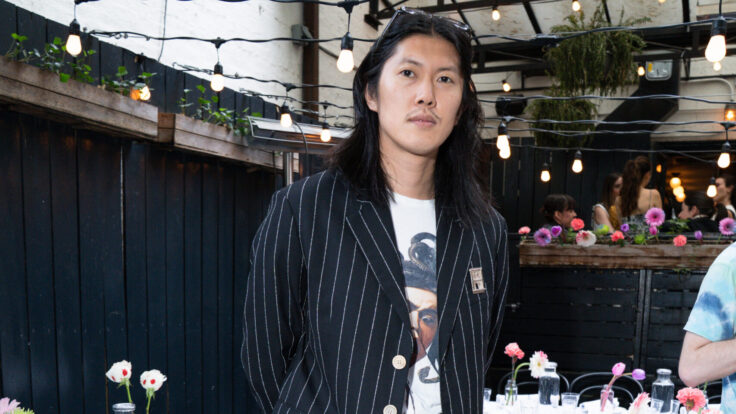
Welcome back to Wall Power. I’m Marion Maneker.
Tonight,
we’re going to take one last tour of Manhattan’s galleries before everyone closes up shop for the summer. There’s still a lot of excellent art worth seeing in New York: a stunning Magritte show; a surprising look at two groundbreaking abstract expressionists from before they even discovered abstraction; and a Hawaii-born Japanese artist whose ceramics are becoming all the rage, but whose bronze sculptures are even more impressive. Plus, Julie Davich has some results
from this week’s rare books sales and, of course, that Birkin bag. I mean, the Birkin bag. |
|
|
A MESSAGE FROM OUR SPONSOR |
ALWAYS CONTEMPORARY
With a bold silhouette that conveys movement even at standstill, the Range
Rover Sport is striking from every angle.
EXPLORE |
|
|

| Julie Brener Davich
|
|
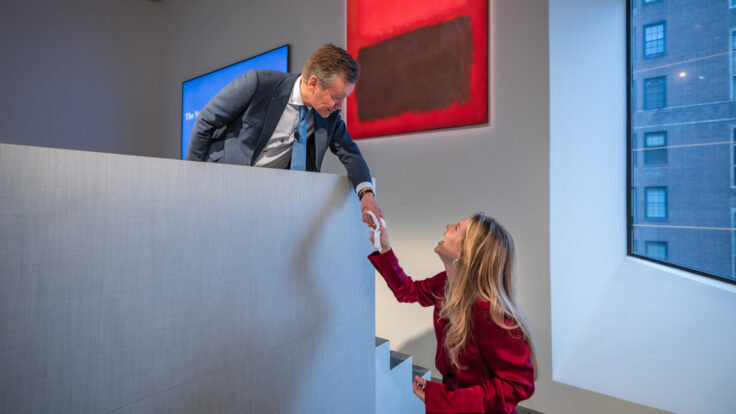
Auctioneer Aurélie Vandevoorde selling the Original Birkin in Paris. Photo: Courtesy
of Sotheby’s |
- The Birkin that broke
the bank: In case you’ve been on a silent retreat in some remote ashram, Sotheby’s Paris auctioned the original Birkin prototype, which once belonged to Jane Birkin, yesterday for €8.6 million ($10.1 million) with fees. It took 10 minutes of bidding, with nine different potential buyers vying for it. As my partner Lauren Sherman reported, that included Away co-founder Jen Rubio, and despite some chatter that Lauren
Sánchez-Bezos was among those preparing a bid, a source close to Sánchez-Bezos asserted that she did not participate in the auction. (Our Lauren was told Rubio intended to donate the bag to the Met’s Costume Institute.)
In the end, the winning buyer was Valuence, the Japanese online luxury resale conglomerate that generated ¥81.4 billion in sales (about $550 million) last year. The company, while largely unknown to consumers outside of Asia, has been
credited with helping to drive the lucrative and mature secondary market for luxury in Japan. According to the company’s announcement, the bag will not be resold; instead, it seems likely to be used for marketing purposes. They’re planning a press unveiling when the bag arrives in Japan, and will release an exhibition schedule in due course. Is a $10 million bag going to
significantly impact the fortunes of the challenged luxury resale market? It’s unclear, but I can already envision the lines of people hoping to take selfies with the Birkin in front of a Valuence logo.
The intensity of demand for the bag was evident by the pitched tenor of the auction: Three bidders were still in at €4.8 million, and the final two jumped increments to get from €5 million to €6 million in an attempt to shake off their rival. Even 1stDibs chief commercial officer
Matthew Rubinger, who helped forge the auction handbag category at Heritage Auctions in Dallas and later at Christie’s in Hong Kong, was shocked at the price—he told me he never imagined it would go past €3 million.
Rubinger predicts that the headline-grabbing event will drive collecting for Hermès in general, and Birkins in particular. “It’s a major milestone in the market,” he said. “This gives legitimacy to handbags as a serious collecting category.” In other words,
rarity, provenance, and historical importance will become more important factors in the market, and the sale will also change the conversation around insuring, caring for, and bequeathing handbags. “Everyone will point to this moment as when the shift happened,” he added. - Galileo updates & an Isaac Newton surprise: A slightly more scholarly collectible—an exceptionally rare and recently rediscovered first edition of Galileo’s
first book, Dialogo in perpuosito de la stella Nuova, from 1605—sold at Christie’s London on Wednesday for £1.1 million, a world auction record for any printed book by Galileo. The price was more than double the estimate of £500,000, but as a veteran of the books and manuscripts market told me, it’s a “black tulip” in the category and still inexpensive, even at that price. From the same collection, a rare first edition of Pliny the Elder’s Natural History, from
1469, made £882,000 on an estimate of £400,000.
Altogether, Christie’s sale achieved £4.5 million against an estimate of £3.2 million, with a little less than half of that coming from just those two lots, and 75 percent of 128 lots finding buyers. The big surprise was Isaac Newton’s Philosophiae naturalis principia mathematica, from 1687, which achieved £352,800, more than four times its estimate of £80,000, despite the fact that it was not in
good condition.
Elsewhere in the books and manuscripts world, the London dealer Peter Harrington Rare Books revealed to Antiques Trade Gazette that it acquired the two top lots in Christie’s Maurice Sendak auction last month, on behalf of a private U.K. collector: William Blake’s Songs of Experience, from 1794, for $1.9 million, and Songs of Innocence, from 1789, for $1.3 million. Both were estimated at $1 million. These are
rare, early copies from before the two works were combined and sold together as one volume. The dealer opened a location on Manhattan’s Upper East Side this past spring, and owner Pom Harrington told me that the U.S. is central to his enterprise, contributing 40 percent of customers and $20 million in business every year. “It felt like the natural next chapter,” he said.
|
|
|
Now, let’s get to the main event… |
|
|
The art world may have decamped to the Greek Isles or the South of
France, but there’s still plenty of exceptional work to enjoy in Manhattan’s galleries. Herewith, a survey of a few gems you might have overlooked… |
|
|
Early one morning this week, I stopped by the home of an art advisor who happens to
also be a neighbor. As we sat on her front porch sipping coffee—yes, I live in what sometimes seems like a small Midwestern town just 15 miles from Midtown Manhattan—she asked me what shows she should see now that her client work has slowed down. I rattled off half a dozen that I loved, and also ran down some of the galleries I’d intended to visit during the last two months of market tumult but just never got around to. I was scheduled to have lunch with a Christie’s executive that day, but
realized, as I spoke, that there was nothing preventing me from crossing those shows off my list in one last afternoon of gallery-going.
Much of the art world flees the city for summer vacation in mid-July, taking advantage of trips to Basel or London to tack on a few additional weeks visiting art resorts, like Château La Coste, or lounging on boats in the Mediterranean. But Puck never sleeps. So I put on my walking shoes to finally see the highly recommended René
Magritte show at Luxembourg + Co., Arne Glimcher’s fascinating Gottlieb/Rothko show at 125 Newbury, the Toshiko Takaezu show at James Cohan, and the second half of the Salman Toor show at Luhring Augustine. |
My first stop was the Fuller Building on 57th Street, once the hub of the art world, to
see Luxembourg + Co.’s René Magritte: The Phantom Landscape. The show gathered 14 works, mostly oil paintings and a few gouaches, that grapple with the idea of a landscape, rather than landscape in and of itself. Nothing with Magritte is simple: As a surrealist, he was interested more in ideas than in realization, as we saw at the Met’s recent show of Caspar
David Friedrich landscapes. |
|
|
A MESSAGE FROM OUR SPONSOR |
ALWAYS CONTEMPORARY
With a bold silhouette that conveys movement even at standstill, the Range
Rover Sport is striking from every angle.
EXPLORE |
|
|
Divided into three rooms—one in which landscapes appeared as pictures within
pictures, another with four very different ways of depicting the sky, and finally, a room of bodies painted as elements of landscapes—the show reminded me of the intense intellectual effort behind much of Magritte’s work. In an era where the artist’s more obvious and one-note images are becoming astonishingly expensive, it was refreshing to see work by Magritte that you can go
back to again and again, always finding something new.
There were even a few Easter eggs, for lack of a more fitting term, like the painting that gave the show its title, Le paysage fantôme (The Ghost Landscape), from 1928—a portrait of Magritte’s wife with the word “montagne,” or mountain, painted in sign-perfect script across her face. This painting, which I would not have guessed was by Magritte had I seen it elsewhere, immediately brought to mind the work of
a number of contemporary artists ranging from Ed Ruscha to Rudolf Stingel to John Baldessari, Ewa Juszkiewicz, or Urs Fischer. Indeed, the show included a new work by Laure Prouvost, HERE THE SKY/WOULD TAKE OVER THIS ROOM, from 2025, with digital letters wrapped around a sky-facing window. While entirely different from Magritte’s painting, it fit right in. |
One of the galleries that made the Fuller Building a famous hub so many years ago was
Pace, founded by Arne Glimcher and now helmed by his son Marc. Arne is still astonishingly active at 87, and for the past three years his pet project has been 125 Newbury, an homage to his beginnings as a gallerist in Boston’s Back Bay. Here, he mounts shows on topics that interest him.
Given Arne’s success and 65-year tenure in the art world, if he’s interested in it, you probably should be too. To wit: For the next two weeks, Glimcher’s
show, Gottlieb/Rothko: The Realist Years, takes us back to a very different New York, during the Depression, when artists gathered in the city’s automats nursing cups of cheap coffee as they argued about ideas of modern art. As the Picasso museum in Paris recently
showed with their great Jackson Pollock: The Early Years (1934-1947), the abstract expressionists spent the period working through the implications of European innovation in painting. |
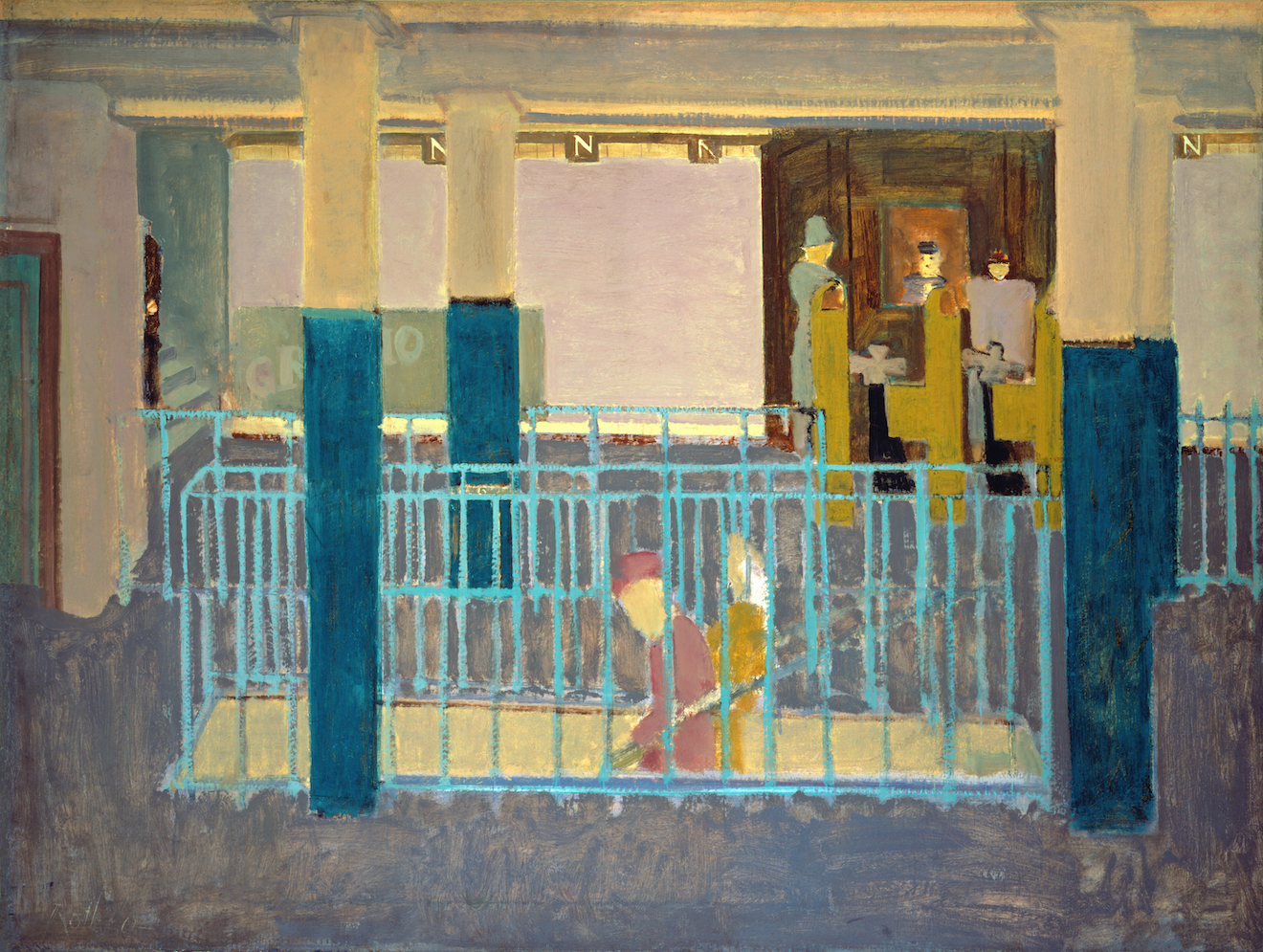
Mark Rothko, Entrance to Subway {Subway Station/Subway Scene} (1938). Photo:
Courtesy of Kate Rothko Prizel & Christopher Rothko/ARS, New York |
Glimcher’s Gottlieb/Rothko shows two American friends grappling with realism
before either discovered abstraction in a big way. Glimcher is having fun with this show, which is a bit of a reprise of one he mounted at Pace almost 25 years ago called Mark Rothko: The Realist Years. If you saw the great Rothko retrospective at the Fondation Louis Vuitton a couple of years ago, you’ll recognize a few of the paintings here. But seeing them juxtaposed with Gottlieb’s work added to the excitement, and Gottlieb certainly benefits from being included. We get a number of
portraits and nudes that each painter made, including paired self-portraits and scenes from mass transit. There’s even a pair of drawings each artist made of the other, seated in the same chair and holding the same mandolin, which neither of them played. Compare and contrast! |
|
|
There are also some Rothko portraits that will stick with you, especially
Portrait (Untitled) from 1939, which depicts a skinny man in front of an open window lost in thought. The figure, the colors, and the way Rothko paints his subject backlit against the sky all left a lasting impression on me. |
Just down the street from 125 Newbury is James Cohan’s gallery, where
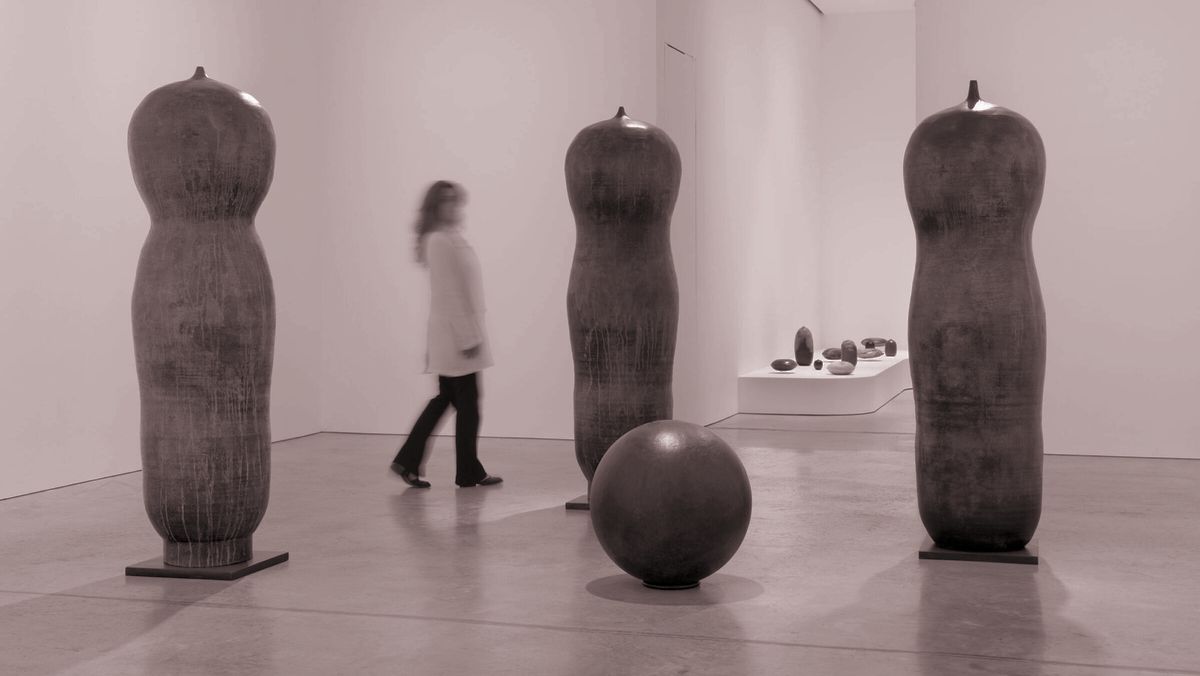
he’s holding a group show on the second floor to celebrate the gallery’s 25th anniversary. But his ground floor space is dedicated to the Hawaiian artist Toshiko Takaezu, who died in 2011 at the age of 88, via an exhibition called Bronzes. The market has been snapping up Takaezu’s ceramic works since a
museum retrospective began making its way around the country—from the Cranbrook Art Museum, where she studied in the 1950s, to the MFA in Houston, where it closed in May. That show will reopen at the University of Wisconsin in September and end up in Hawaii, at the Honolulu Museum of Art, in early 2026.
I’m embarrassed to say that I missed my chance to see it
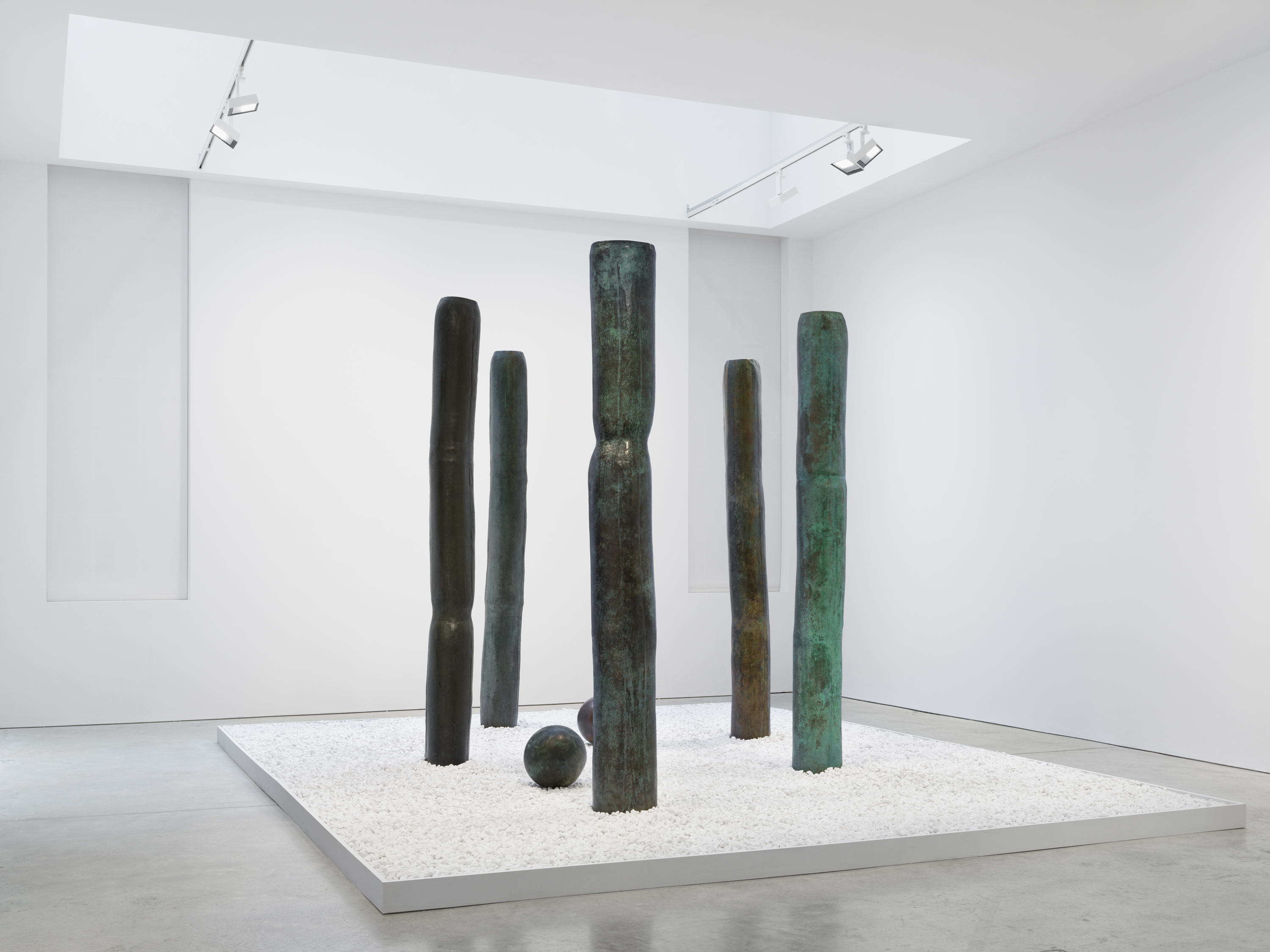
last year when it was at the Noguchi Museum in Queens. (It’s a hike from the subway.) I’ve regretted it ever since. So the Cohan show was a valuable consolation: It contains a number of Takaezu’s strangely comforting ceramics, many of them closed forms or river stones, as well as a handful of bronzes that are monumental without being bombastic.
|
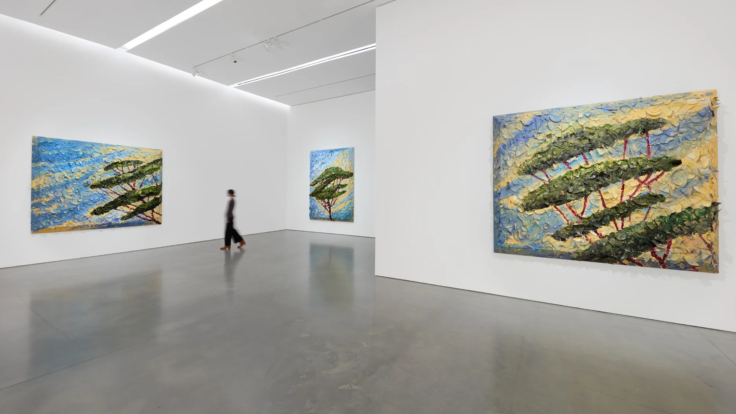
Toshiko Takaezu, installation view of Bronzes, James Cohan, New York.
Photo: Dan Bradica/Courtesy of James Cohan |
A block or two away from Cohan’s gallery is Luhring Augustine’s White Street space in
Tribeca, where the gallery is featuring the second half of their Salman Toor show, Wish Maker, featuring works on paper. The other half is in Chelsea, where the gallery is showing new Toor paintings in New York for the first time in five years, since the Pakistani artist was featured at the Whitney Museum. Both shows have been causing a
stir, though the paintings didn’t excite me when I saw them earlier in the spring. But Toor’s enduring popularity may be easier to grasp in the works on paper, which I found more charming and playful than the more “formal” work; his casual scenes are filled with small but surprising images, suggesting everyday narratives that seem more relaxed and informal, and even a little startling. Somehow I felt like I was a bit closer to getting the joke.
This isn’t everything I saw yesterday. But it
is enough to get you started if you’re in town this weekend and want to catch a few shows before they close. My one big, almost-by-chance discovery was the newish show at The Drawing Center: In the Medium of Life: The Drawings of Beauford Delaney. But that one deserves its own newsletter, which I hope to have for you next week. |
Until then, enjoy your weekend. I’ll try to do the same.
M |
|
|
The industry's go-to source for unflinching reporting on the trillion-dollar business of artificial intelligence -
perhaps the single most important technology of our time. Ian Krietzberg, the powerhouse journalist behind The Deep View, delivers twice-weekly insights into the latest dealmaking and breakthroughs in A.I., and how the intersecting worlds of finance, entertainment, media, and politics are being transformed in its wake. |
|
|
Finally, a media podcast about what’s actually happening in the media—not the oversanitized,
legal-and-standards-approved version you read online. Join Dylan Byers, Puck’s veteran media reporter, as he sits down with TV personalities, moguls, pundits, and industry executives for raw, honest, sometimes salacious conversations about the business of media and its biggest egos. New episodes publish every Tuesday and Friday. |
|
|
Need help? Review our FAQ page or contact us for assistance. For brand partnerships, email ads@puck.news. You received this email because you signed up to receive emails from Puck, or as part of your Puck account associated with {{customer.email}}. To stop receiving this newsletter and/or manage all your email preferences, click here. |
Puck is published by Heat Media LLC. 107 Greenwich St, New York, NY 10006
|
|
|
|




_01JZXFKMNKYS0ZWBWXCAXDGD9D.jpg)