{{ 'now' | timezone: 'America/New_York' | date: '%b %d, %Y' }} |
|
|
|
Hi, and welcome back to Line Sheet. I spent my last day in Paris before summer break in limitless
meetings at La Réserve, where the white Charvets are plentiful and you can’t turn your head without running into a toile print. But we all know that the real real-life runway to watch this week was in Sun Valley, where the billionaires and their families gathered to compare Kelly sizes and cut deals. In this issue, you’ll find my final verdict on what people wore—and why. For more on the business of the annual Allen & Co. conference—like Jeff Bezos’s
plan to build data centers in space—follow Puck’s Dylan Byers, who is reporting on the ground.
Meanwhile, Malique “Malique@puck.news” Morris is back with the numbers from Thursday’s auction of 195
pieces from Martin Margiela’s personal archives, and news of layoffs at Spanx. Malique reflects on what went down in fashion this past week, from J.Crew’s new brand president to Net-a-Porter’s latest battle.
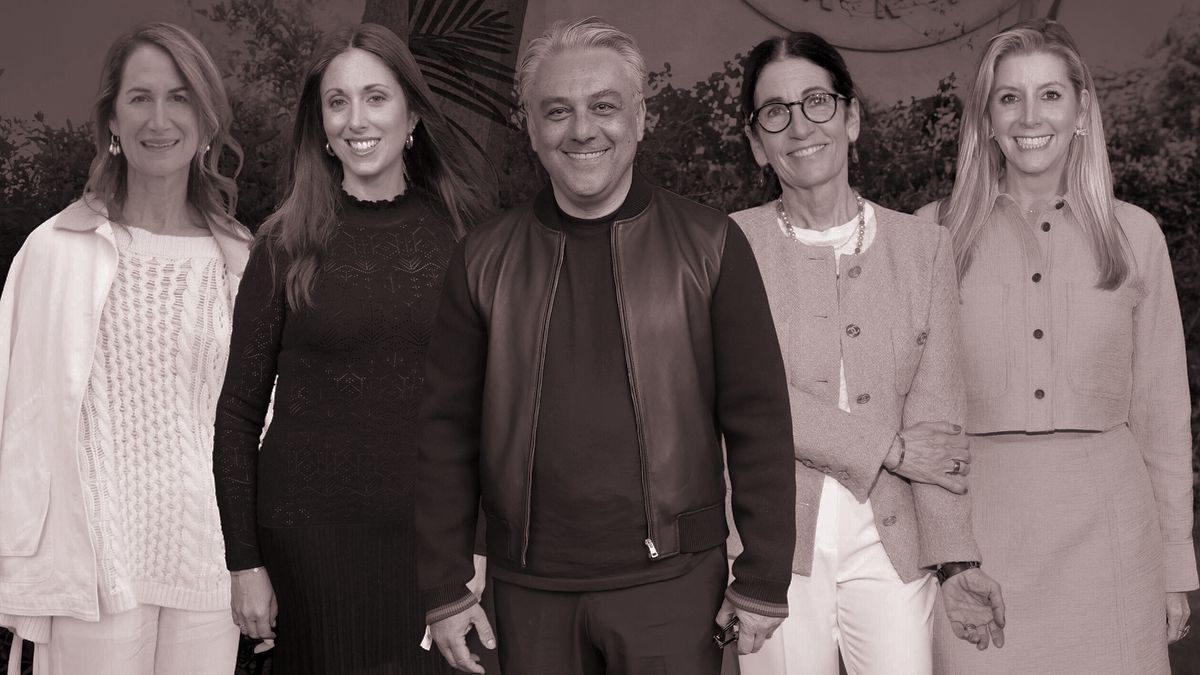
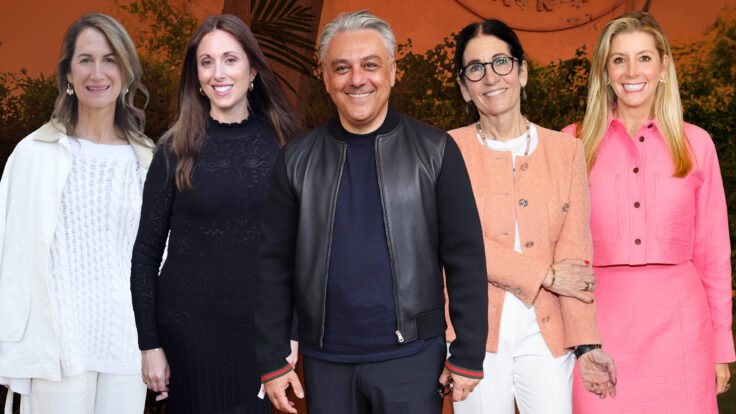
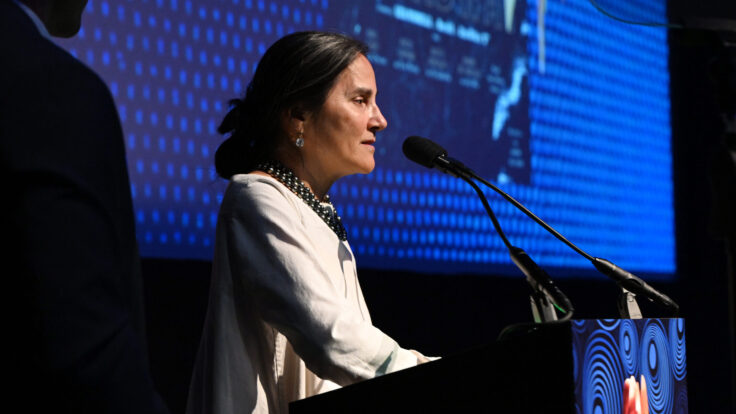
Also mentioned in this issue: Mark Zuckerberg, Lauren Sánchez, Sara Blakely, Bob Iger, Luca de Meo, Glenn Martens, Pierpaolo
Piccioli, Hermès, Michael Eisner, Alexandre Arnault, Tabis, Diane von Furstenberg, Wendi Murdoch, Stacey Bendet, Jones Road, Dana Walden, Richard Dickson, Bobbi Brown, Jen Rubio, Libby Wadle, Michael Kliger, and more. |
|
|
|
A MESSAGE FROM OUR SPONSOR |
The duty-free era is over. The EU ended its de minimis exemption July 1, the US did in 2025, and the UK is next. In the
US and EU, every parcel now carries duties - and in the EU, liability sits with you, not your customer. Swap's new report breaks down what changed in each market. Inside: |
• Why de minimis ended and what it means for your margins • How customs liability is shifting from customer to merchant • What DDP vs. DDU means for cart abandonment and returns • How to recalculate landed costs before the EU's November data rules |
|
|
|
Three Things You Should
Know…
|
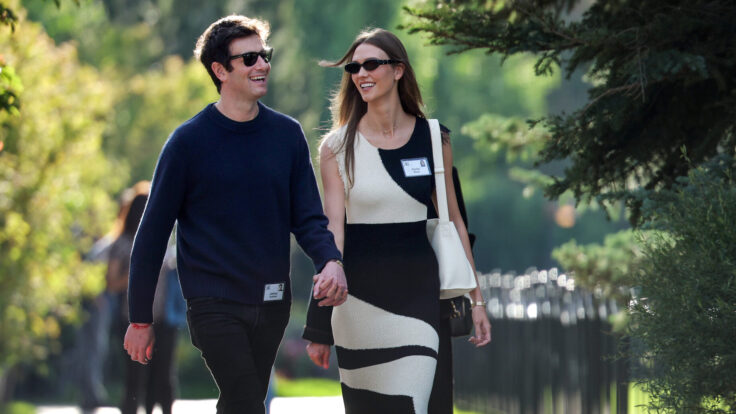
- Who wore it vest?: There’s nothing more revealing about luxury consumer spending habits than the walk up to the lodge at the annual Allen & Co. conference, which is wrapping up in Sun Valley, Idaho. This year, I’m told that while Lauren Sánchez appeared as goofy as ever—nothing fits, but she does look pretty!—most of the women have blessedly moved out of their quiet luxury era, and instead opted for color and prints from non-obvious brands. Unfortunately,
all the men are still wearing head-to-toe navy, which is sort of a passé approach at this point. (Alas, I wished that they’d paid attention to the black-and-white-heavy Ralph Lauren show in Milan…) Anyway, herewith, my annual awards:
|
Top row, from left: Former Disney C.E.O. Michael Eisner; Eisner; Meta C.E.O. Mark Zuckerberg; former Disney
C.E.O. Bob Iger. Bottom row, from left: Moët Hennessy deputy C.E.O. Alexandre Arnault; Disney president Dana Walden; fashion designer Diane von Furstenberg and former Away C.E.O. Jen Rubio; entrepreneur Wendi Murdoch. Photos: Kevin Dietsch/Getty Images; David Paul Morris/Bloomberg/Getty Images |
-
Greatest sweater program: Michael Eisner in soft red, and then forest green, v-necks. I’m inspired!
Best moment for a brand publicist: Mark Zuckerberg in Loewe shorts. They were snazzy, he is silly, and every fashion publication will pick it up.
Most disappointing turnout: I expect more of Bob Iger, who is fit and typically looks very put together. The proportions of his clothes were just very off this
season, and I worry he has stopped working with a stylist or personal shopper because he thinks he doesn’t need one in his new life, and that’s simply not true.
The watch to watch: LVMH heir, Moët Hennessy deputy C.E.O., and lover of America Alexandre Arnault wore an F.P. Journe Automatique Réserve in “18K 6N pink gold with the white gold dial (ref. AN),” according to the horological Instagram account
Young Brando. What does this mean? It was the first automatic watch made by F.P. Journe—the most important independent watch brand in the world—and revered among true collectors. It was both a historic and modern choice, and indicates that Arnault has a pretty deep knowledge of niche timepieces. (Also, the founder refuses to be acquired, so don’t get any ideas.) Dimepiece
queen Brynn Wallner notes that the watch is an “excellent talking point for Sun Valley.”
Greatest tacky bag: Disney president Dana Walden likes shopping and dressing up, but she’s not sitting front row at Dior. (Actually, that’s not a bad idea…) Anyway, I love that she carried a white Celine mini luggage tote—at once a throwback
to the Phoebe years, a nod to the white accessories trend, and a reflection of the general brand heat around current creative director Michael Rider’s new interpretation of it all.
The only one on the promenade wearing Matthieu’s Chanel: Away co-founder and former C.E.O. Jen Rubio is a clotheshorse, with plans to open her own multibrand store in Manhattan next year, and obviously I noticed her looks more than others because she
has fashion person–adjacent taste. While strolling with Diane von Furstenberg up to the lodge, she wore a Prada top and skirt, a leather jacket from The Row, and a necklace by Beck, and carried an Hermès Bolide.
The real one: Wendi Murdoch honestly always, always looks great. She has a personal style, and you can tell she just wears what she likes—which is what you should do if you have a lot of money and a bit of power. I did miss
Stacey Bendet this year, though.
|
|
|
|
A MESSAGE FROM OUR SPONSOR |
The duty-free era is over. The EU ended its de minimis exemption July 1, the US did in 2025, and the UK is next. In the
US and EU, every parcel now carries duties - and in the EU, liability sits with you, not your customer. Swap's new report breaks down what changed in each market. Inside: |
• Why de minimis ended and what it means for your margins • How customs liability is shifting from customer to merchant • What DDP vs. DDU means for cart abandonment and returns • How to recalculate landed costs before the EU's November data rules |
|
|
|

| Malique Morris
|
|
- Too much Margiela
is not enough: The mystique surrounding reclusive designer Martin Margiela translated into cash this week as bidders dropped absolutely bonkers prices—€364,000 for a graffitied Tabi from 1991?—during an auction of 195 items from his personal archive in Paris at Maurice Auction House, in partnership with Kerry Taylor Auctions. The sale drew some 1,500 bidders, I’m told, many of them from Japan, South Korea, and China. They bought everything, driving sales
to €1.3 million.
The collection struck a balance between Margiela lore and oddities—archival pieces alongside antiques, including a white-painted rotary phone. Someone spent €117,000 on a 1992 patchwork sweater made of socks. A 2002 Hermès by Margiela dark brown Initial bag fetched €44,200. One bidder dropped €24,700 for the privilege of taking home one of the designer’s dossiers from 1987. Go figure.
It’s worth asking whether all of this froth has any relation to the desirability
of current Margiela. Everyone who thinks they’re a fashion person has a pair of Tabis. (I’ve personally opted out in fear of looking like a poser.) But there’s no denying the brand’s hero product has reached cultural saturation. Glenn Martens is one of the industry’s most inventive and erudite designers, but his first few collections have yet to earn universal acclaim. I doubt Martin Margiela intended it, but there’s a scenario in which an auction house that persuades an
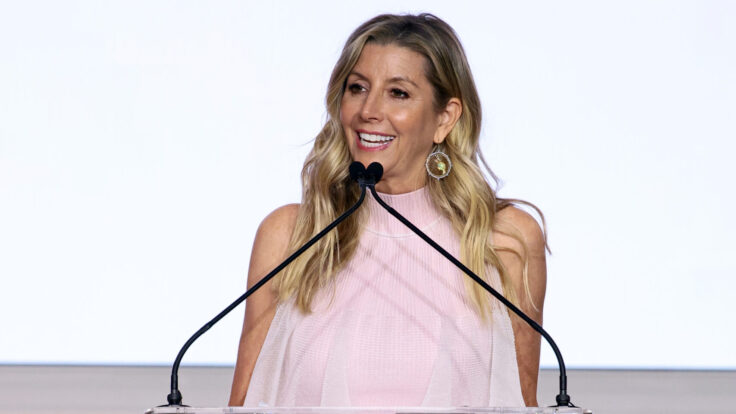
international buyer to spend six figures for a pair of painted Tabis prompts both new and longtime customers to reconsider what the house offers today. Otherwise what, exactly, is all this mythology for? - Spanx chaos, continued: On Thursday, Spanx laid off employees in at least two departments, according to internal sources, marking the modern shapewear company’s second round of cuts this year. Executives told affected employees, “We’ve gone
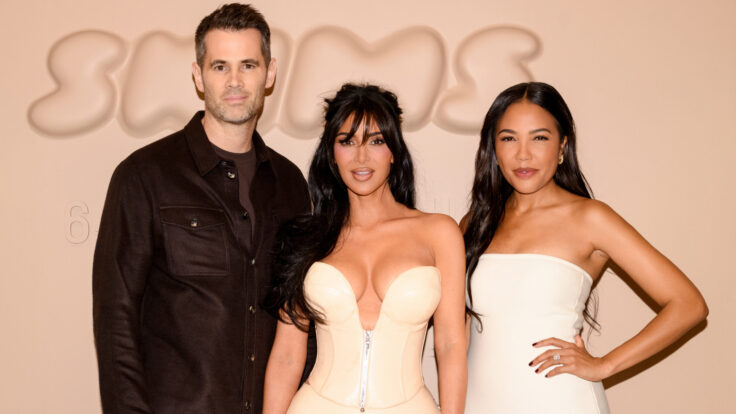
through the business as a whole and assessed where we can be leaner based on the work we have now and in the future.” The cuts come as Blackstone’s $1.2 billion wager on Spanx continues to sour, squeezed by the Kardashian-backed Skims and ongoing executive churn.
Back in January, Spanx eliminated roughly 30 positions, citing declines in sales and profits during 2025. As I reported yesterday, the company’s EBITDA is on track to reach just $14 million this year, down from around $80 million in 2021 and potentially as high as $100 million in 2022.
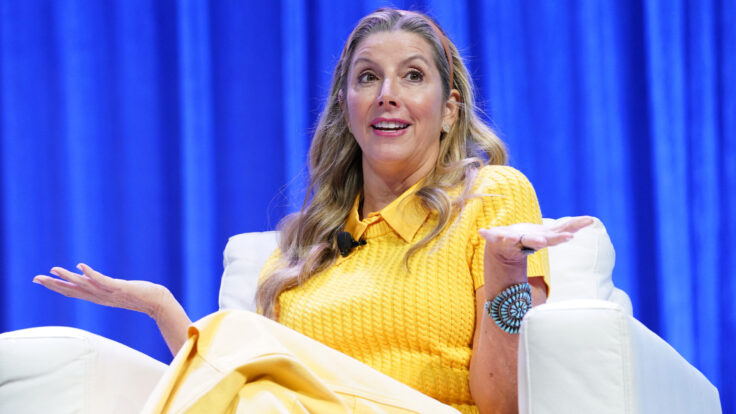
Given the trajectory of the business—a rare startup whose brand name came to stand for the category itself and earned founder Sara Blakely a torrent of praise, including a 2011 New Yorker profile—the next chapter is going to be fascinating. Stay tuned. (Spanx didn’t respond to a request for comment.)
|
|
|
|
And now, the week that was in fashion… |
|
|
|
For all the star power of the just-concluded Couture week, the industry is finding out that
fixing brands is far harder than replacing executives. |
|
|
|
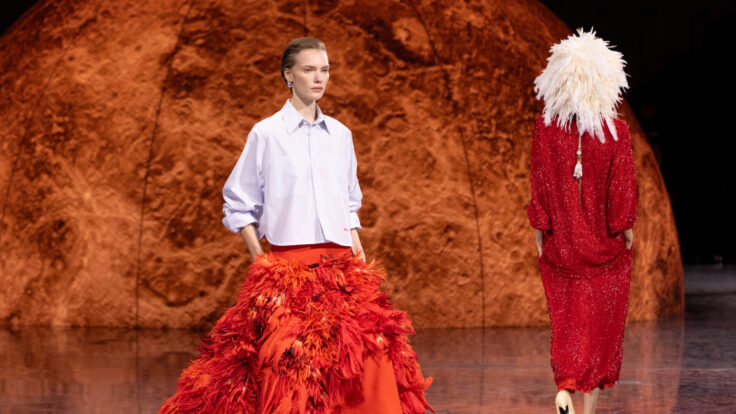
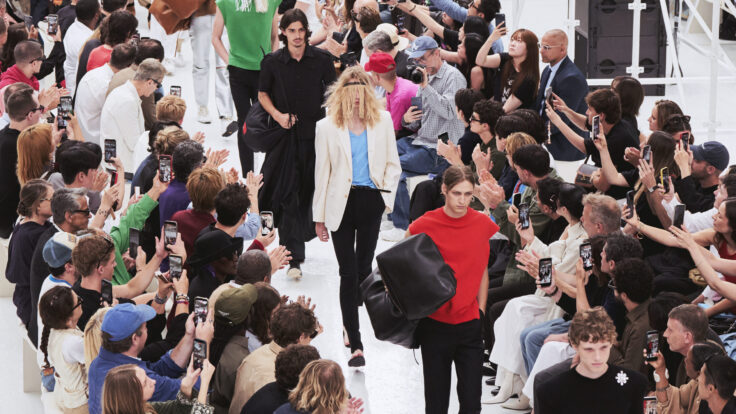
Nothing during Couture week felt more consequential than Balenciaga, where Pierpaolo
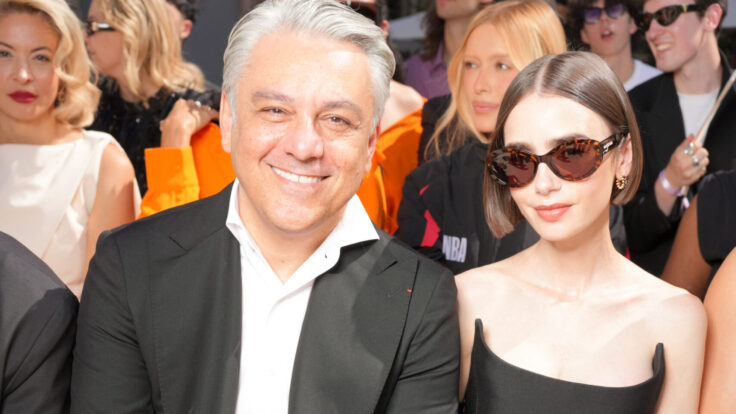
Piccioli debuted his straightforward elegance at one of Kering’s least-defined brands. The real star, however, was Luca de Meo. As Lauren wrote this week, the Kering C.E.O. has approached the luxury group—whose stock is down 18 percent this year—with little sentimentality. During Kering’s investor
day in April, de Meo declared, “All the brands must be profitable, otherwise, I will eject them from the system.”
That bluntness has rankled Kering lifers accustomed to a more hands-off steward of creativity. But the former Renault C.E.O. has also moved quickly. This week, Kering handed Gucci’s beauty license from Coty to L’Oréal for the next 50 years—a reminder that decisiveness can be an asset when a company is vulnerable. We’ll see how much progress he’s made when Kering reports
first-half earnings on July 29.
His approach underscores a broader shift in fashion. Companies are increasingly recruiting executives from outside the industry to challenge its entrenched habits. Gap Inc.'s Richard Dickson spent most of his career at Mattel, interrupted only by a four-year stint at Jones Apparel Group. The best outsiders treat fashion as a business without stripping away the emotional pull that gives great brands so much of their value. |
|
|
|
J.Crew will soon onboard its own version of an interloper with new brand president Kathleen Van Nest
Pierce, who spent 19 years at Estée Lauder and was most recently global president of Dyson’s beauty division. Beauty is adjacent to fashion, but it plays by different rules. Pricing is clearer, and the path from storytelling to sales isn’t as fraught. Pierce becomes the first dedicated president for the flagship J.Crew brand since Libby Wadle left in 2017 to run Madewell (before taking over the entire group in 2020). She inherits a daunting to-do list: She’ll have to
right-size the women’s business, improve product quality, and turn the newly conjoined men’s and women’s marketing strategy into stronger full-price sales across categories. (J.Crew declined to comment.)
Jones Road finds itself at a similar crossroads. Cody Plofker, the brand’s C.E.O. and founder Bobbi Brown’s son, announced
on LinkedIn he is stepping down. Alongside his mother, Plofker helped build Jones Road into an extraordinary $200 million-a-year, mostly D.T.C. business that's outpacing growth at Brown’s namesake label, which she left in 2016. More notable than his departure might be his candor about the decision. “Professionally, I'd rather be building funnels and running ads
than managing people and dealing with various B.S. that comes with being C.E.O. I haven't gotten to do the fun stuff in a while,” he wrote. Either way, Plofker will remain on the board and presumably look forward to a multigenerational wealth outcome whenever the family decides to either sell secondary stock, or market some or all of the business. Given his age and pedigree, it also sounds like he wants to one day build from scratch again.
He also admitted something many startup leaders
never do. “I know the business will be better served by an experienced C.E.O. who has a different skillset than mine and a renewed passion for the business,” Plofker wrote. “I have no shame in saying that even though I helped us get here, I am not the right person for the next phase.” |
One reason that brands resist private equity outcomes, however, is that they fear what can happen when the
wrong professional manager takes over. Hopefully Jones Road’s succession is smoother than Spanx’s. I wrote yesterday that Spanx, the shapewear pioneer, has cycled through executives for the last eight months. Cricket Whitton, who spent seven years at Spanx before becoming C.E.O. in 2024, left last October to “spend more time with her family”—though insiders speculate tensions with Blackstone, which bought Spanx for $1.2 billion in 2021, also contributed.
Tom
Nolan arrived from Kendra Scott last November as interim C.E.O. He unveiled a sweeping plan to bridge Spanx’s Gen Z digital presence with its older Millennial and Gen X customer base. But Nolan’s ultimate ambition seemed to be to turn the company into a licensing outfit, a strategy that may have aligned with Blackstone’s goal of growing annual sales from $400 million in 2021 to $500 million. Alas, the plan ended abruptly when Nolan jumped ship in April to become C.E.O. of… a tire
company.
His replacement, Robert Trauber, who previously ran California boho womenswear brand Johnny Was, has floated another unorthodox idea. I’m told he has discussed putting Spanx into TJ Maxx, Ross, and Marshalls. Like licensing, it’s a volume play. It also risks further eroding brand equity just as Spanx continues to lose ground to Skims, while squeezing already paper-thin margins at a business whose profits have fallen by more than half over the last five years.
From what I’ve heard, vice president of sales Zorte Maaloo—whom Nolan recruited from Kendra Scott to replace former Nike executive Megan Keough—also lacks the team needed to develop a strategy that reinvigorates sales and brand value. (Spanx didn’t respond to a request for comment.)
Turnarounds rarely move as quickly or elegantly as new C.E.O.s promise. It’s been more than a year since Mytheresa acquired Yoox Net-a-Porter from Richemont and formed the
clunkily named LuxExperience. Net-a-Porter is now led by Heather Kaminetsky, whom LuxExperience C.E.O. Michael Kliger recruited from Mytheresa after four years as its North American president. She had previously served as Net-a-Porter’s vice president of global marketing from 2013 to 2016. As I reported last month, Kaminetsky has
already eliminated at least 100 likely underperforming brands while concentrating on the company’s highest-spending customers.
What she has not solved is labor unrest. Employees at Net-a-Porter’s London distribution center staged a two-day strike this week after their union rejected a compensation offer it says falls short of the U.K.’s living wage. “Our priority remains that we recognize the vital contribution of our employees and remain open to engaging in constructive dialogue with
union representatives as we navigate the next steps in this process, whilst ensuring we protect the long-term sustainability of our business,” a LuxExperience spokesperson said.
Management doesn’t have much room to maneuver. Combined adjusted EBITDA for Net-a-Porter and Mr Porter fell 75 percent in the fiscal third quarter ended in March, and LuxExperience is shifting much of Net-a-Porter’s inventory to its warehouse in Italy. The U.K. remains one of Net-a-Porter’s largest markets, making
the strike difficult to ignore. Yet meaningful wage increases would put even more pressure on an already weakened business. That’s quite an impasse, but it’s one that arises in more turnarounds than you’d think. In fashion, as we continue to learn, even a great leader can’t fix everything. |
Enjoy the weekend,
Lauren
P.S.: We use affiliate links because we are a business. We may
make a couple bucks off them. |
|
|
|
Puck fashion correspondent Lauren Sherman and a rotating cast of industry insiders take you deep behind the scenes of this
multitrillion-dollar biz, from creative director switcheroos to M&A drama, D.T.C. downfalls, and magazine mishaps. Fashion People is an extension of Line Sheet, Lauren’s private email for Puck, where she tracks what’s happening beyond the press releases in fashion, beauty, and media. New episodes publish every Tuesday and Friday. |
|
|
|
An essential, insider-friendly Hollywood tip sheet from Matthew Belloni, who spent 14 years in the trenches at The
Hollywood Reporter and five before that practicing entertainment law. What I’m Hearing also features veteran Hollywood journalist Kim Masters, as well as a special companion email from Eriq Gardner, focused on entertainment law, and weekly box office analysis from Scott Mendelson. |
|
|
|
Need help? Review our
FAQ page or contact us for assistance. For brand partnerships, email ads@puck.news.
You received this email because you signed up to receive emails from Puck, or as part of your Puck account associated with {{customer.email}}. To stop receiving this newsletter and/or manage all your email preferences, click here. |
Puck is published by Heat Media LLC. 107 Greenwich St., New York, NY 10006 |
|
|
|
|