Welcome back to Wall Power. I’m Marion Maneker.
A show at David
Zwirner highlighting the history of print studio Universal Limited Art Editions offered me the chance to explore the business of prints and multiples—a topic I’ve found fascinating for some time but, admittedly, knew little about. So I spoke to Zwirner’s director of prints, Elleree Erdos, and Two Palms Press founder David Lasry to get a better sense of how it all works. I’m hoping to learn more in time for the IFPDA (International Fine Prints and
Drawings Association) Print Fair, which will open in New York on April 9. I’ll get into it all below the fold.
Also mentioned in this issue: Agnes Gund, Eli Broad, Helen Frankenthaler, Jasper Johns, Larry Rivers, Frank O’Hara, Tatyana Grosman, Kiki
Smith, Lisa Yuskavage, Alexandra Slattery, Dana Schutz, Mickalene Thomas, Amy Sillman, Derek Walcott, and many more…
Let’s get started… |
- Case for the Gund Twombly: A comment from a Twombly expert in Tuesday’s newsletter really stirred up a hornet’s nest. I got a number of texts, mostly from art advisors, with strong opinions on Agnes Gund’s untitled 1961 “Roma” painting and its $40 million estimate. The issue with the painting isn’t its quality, but its size relative to the price.
Obviously, Gund’s provenance is likely to be quite valuable. There’s also talk of a recent
high-value sale on the private market for a work twice as wide from the same year for somewhere between $50 million and $100 million. If it sold close to $100 million, that’s evidence of a strong Twombly market. Of course, anyone who’s going to spend $40 million plus fees on a Twombly is likely to have advisors who will get a bead on the number for the bigger picture. There’s also a comparable work, which was bought by Eli Broad and is now at the Broad museum, that traded for a
significant premium above similar works when it was auctioned in 2005. That work is now off the market, and reduces by one the number of Twomblys of this quality that might ever become available. - Is a flight to quality a flight to whiteness?: I couldn’t help but notice the introductory paragraph to a New York Times story about five shows to see in Los Angeles next week. After a gratuitous swipe at the art market as being “overinflated by speculation and the unsustainable growth of the ultracontemporary artist sector,” the writer rightly says that the market, under such conditions, usually experiences a flight to quality. Then, without offering any evidence, the author writes: “Coinciding with the Frieze Los Angeles art fair, many prominent galleries are interpreting ‘flight to quality’
as a return trip to whiteness, to maleness and toward artists that are middle-aged, senior or dead.”
I’m heading to L.A. next week, so I’ll have a chance to see for myself. But judging from what I’ve seen in galleries these last few months, and from conversations I’ve had with directors about how their “woke” programs are selling in the age of Trump 2.0, I’m having trouble seeing any basis for the writer’s claim. I’d love to hear your thoughts on this. - Christie’s Irene Roosevelt Aitken collection makes almost $29 million: The sale of Irene Roosevelt Aitken’s art collection might have seemed like an event for a different time and place. It was led by two 18th century portraits that each sold for $889,000, plus a fair amount of French and English furniture, along with decorative objects like Meissen porcelain figures and gilt bronzes that don’t seem to fit today’s fashion. But the five
sales nevertheless had a high sell-through rate, at 96 percent, and a solid hammer ratio that Christie’s press team is giving at 1.72, including buyer’s premium. Subtract the 27 percent fees that should have applied to all of these works, and we’re left with a very healthy 1.42 hammer ratio. In other words, Christie’s got the estimates right, but this is also evidence that these categories—once left for dead—may be seeing new life.
|
Now, let’s look at the world of prints… |
|
|
The market for prints and editions is being reborn as big galleries like Zwirner
and Gladstone get involved. For artists, it’s an opportunity to step out of the studio. But for indie printmakers, who face high up-front costs, the economics can be complicated. |
|
|
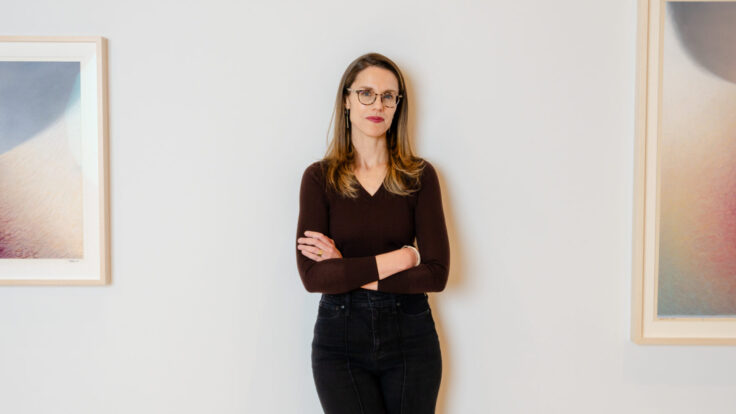
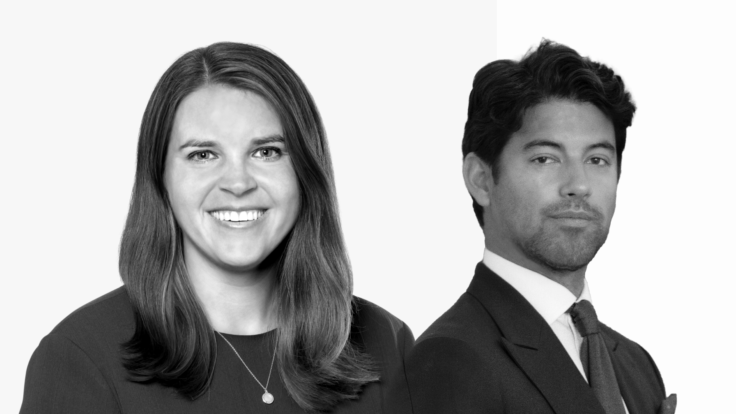
I first met Elleree Erdos, David Zwirner’s dark-haired, diminutive director of
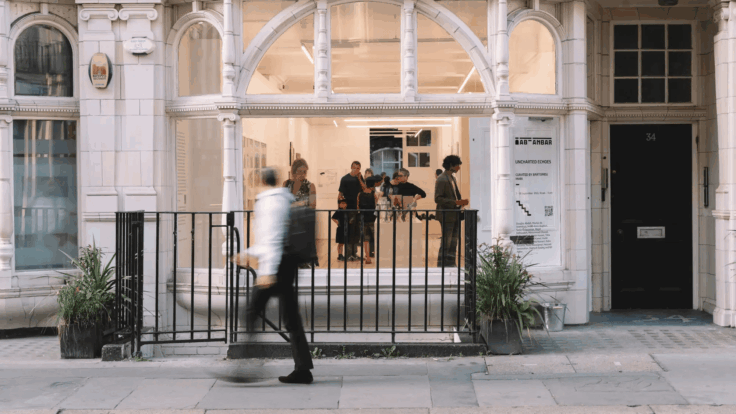
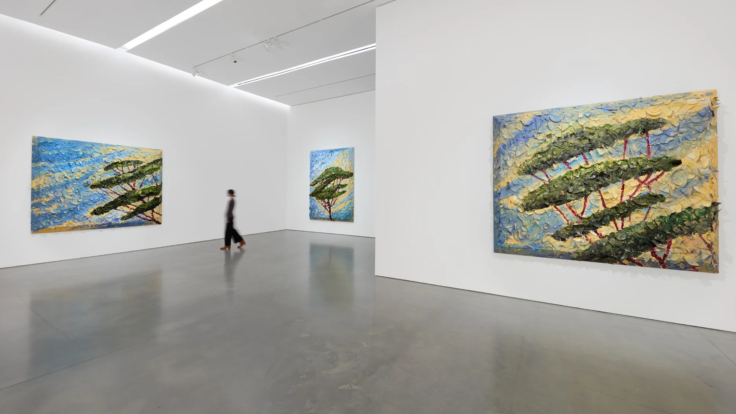
prints and editions, in her light-filled office tucked at the end of a hallway in Zwirner’s 20th Street headquarters last summer. I had been curious for some time about the prints and editions market, which has been experiencing a bit of a renaissance recently as more of the big galleries get involved. Then, earlier this year, I was reminded of those conversations when Zwirner hosted Breakthrough: Prints from
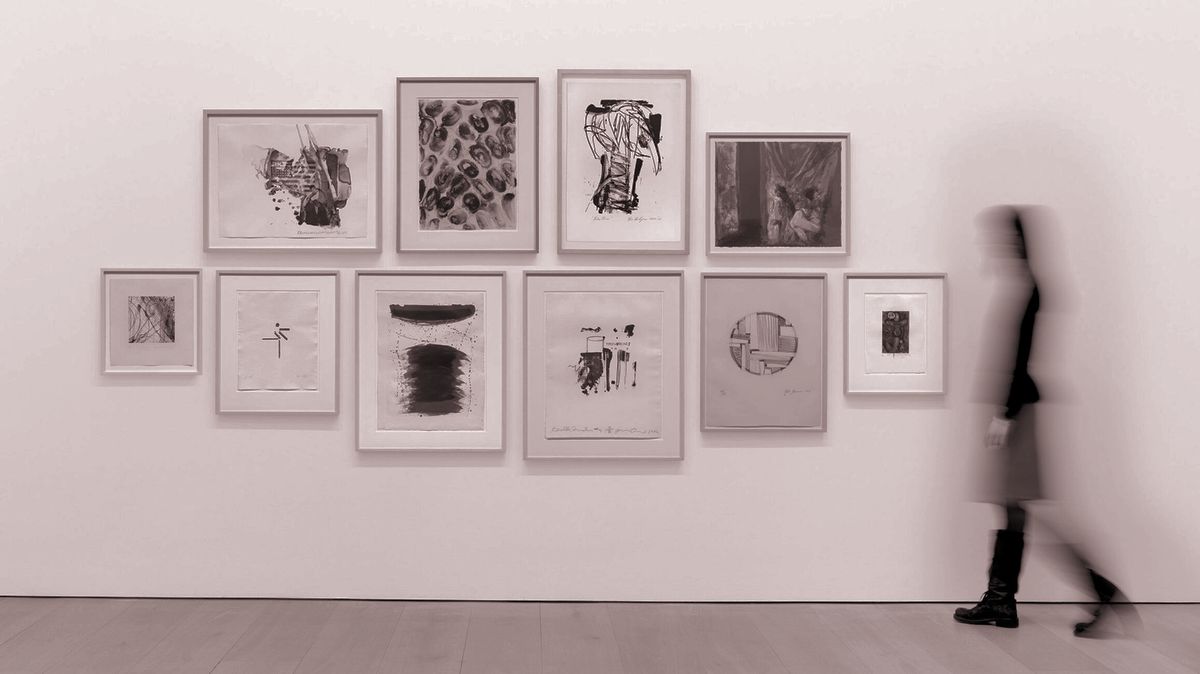
ULAE—an exhibition from Universal Limited Art Editions. The Long Island publisher worked with some of the artists I’ve been writing about these past few weeks, like Helen Frankenthaler and Jasper Johns. If you’re free tomorrow, there’s one last day to catch the
show, at the gallery’s 21st Street location.
If you can’t make it, I won’t torture you too much with what you’re missing. But there are some fascinating works by Frankenthaler, including the mesmerizing Bronze Smoke, from 1978, along with prints by Lee Bontecou, Marisol, and Robert Rauschenberg. The show also features the 1957 portfolio of lithographs that served as the original collaboration, between artist Larry
Rivers and poet Frank O’Hara, that launched ULAE under the direction of Tatyana Grosman. The publisher would evolve under Bill Goldston, adding new artists and working with different equipment and techniques, always experimenting to keep the artists engaged while attracting new ones like Carroll Dunham, Kiki Smith, and Lisa Yuskavage.
One picture
in the show drives home an important point about the appeal of artists and printers working together: the camaraderie and egalitarianism. The image features a dozen people crowded around a table. The dishes are gone. Only a scattering of mostly empty glasses, a few coffee cups, and some large pitchers of what could be iced tea remain. The caption tells us that the staff and printers, including Grosman and Goldston, are having lunch. Without it, you’d be hard-pressed to know they’re working with
a famous artist: Jasper Johns, who was an obsessive printmaker throughout his career and had a long association with ULAE. The artist is also seated at the table, but not at the head or in a position of honor. He’s squeezed into a corner, hunched over with his elbows on the table, almost hiding. |
The ULAE show got me thinking about the economics of printmaking again. So I called Erdos to ask
for a tutorial. That’s when I learned many of my assumptions were wrong.
From the outside, prints look like a great opportunity for artists to test the market—to take successful images and make them more accessible by producing them in multiples and selling them at much lower prices than paintings. Although some of that is undoubtedly true, reproducing images is merely one aspect of printmaking. The world of prints and multiples allows artists to engage with experts in their craft and
explore creative possibilities. “The print world is very warm and collaborative,” Erdos told me. “Everyone wants everyone to learn. The whole printmaking ecosystem is very welcoming.”
Her role is to help Zwirner’s artists—and artists who are not part of the Zwirner stable—find the right creative outlet with the right shop. Rather than being market-driven, the impetus for printmaking is often an artist’s need for a change of pace. A palate cleanser, if you will. “A great time for an artist
to work on a print,” she told me, “is right after they’ve completed a big body of work.” Indeed, the collaborative nature of printmaking gets artists out of their studio and into a more social environment, where they can experiment and “see what clicks.” Erdos says the output can be quite different from what the artist went in expecting.
That’s where a publisher like her comes in. For the artists who are not part of the Zwirner machine, Erdos takes some of the risk away by putting up the
money first and allowing the artists and their galleries to access printmaking without potential financial loss. “We work really collaboratively with galleries,” she said of the artists Zwirner doesn’t represent. “We publish, but then give them access to a certain number of prints.” |
Of course, there are many artists, in Zwirner’s orbit and beyond, who are invited to collaborate
with print shops that publish their own editions. That’s where things can get wild. After speaking to Erdos, I got in touch with David Lasry of Two Palms Press, a SoHo-based studio that works with artists like Dana Schutz, Mickalene Thomas, and Amy Sillman. Two Palms just finished a suite of 32 etchings by Peter Doig in editions of 28, inspired
by poems that Derek Walcott wrote in response to Doig’s own paintings. That ouroboros was recently the subject of a New Yorker slice-of-life scene that captured Doig signing the etchings in a London warehouse.
Before I had a chance to get on a Zoom with Lasry; his wife, Evelyn; and their head of sales,
Alexandra Slattery, Lasry sent me a thousand-word disquisition on the printmaking business that answered all of my questions, as well as many I had not even begun to pose. “We work by invitation,” he explained at the outset, trying to get at the distinction between print studios that are publishers in their own right, like Two Palms, and shops that have expertise in their craft but cannot—or don’t want to—take the risks of publishing and distributing their own
prints. “We are not contract printers. We pay for the production and co-own the projects with the artists. Most often we don’t know what we are going to make in advance.”
Sanguine to the vagaries of his business, Lasry explained that the costs of distributing through art fairs, which can run as much as $100,000 per event, are often not covered by the sales of their modestly priced artworks. A decade and a half ago, they went through a really rough patch, but they’ve mostly climbed out of
it and benefited from the pandemic boom in art buying. Outlets like Artsy have been a boon to their business and account for about a third of their sales. Art-curious buyers are more likely to spend a few thousand dollars online than tens of thousands—and, of course, the internet is more accessible than any art fair.
Lasry is also encouraged by major galleries like Zwirner getting into the printmaking business. Hauser & Wirth publishes prints by their own artists, and Gagosian sells
prints and editions created by their artists for other publishers. Pace has Pace Prints, though that is now a separately owned publisher. Lasry told me Gladstone has recently hired a director who will focus on prints.
Even though Lasry says sales have cycled down since the pandemic spree, he isn’t willing to make work in response to the market. “Our business—if you can even call it that—has always been guided by a somewhat romantic premise: that printmaking offers artists a chance to
discover something new,” he wrote. “Ideally, we help them make work they can’t produce in their own studios, using processes they haven’t tried before, and often something we ourselves haven’t attempted.”
He continued: “Our position has always been artist-first, not market-first. Markets chase liquidity and return; artists chase possibility. Perhaps naively, we think that if you make something really interesting to look at and think about, it will do well in the marketplace.” |
What a place to end. Have a great weekend, everyone.
M |
|
|
Finally, a media podcast about what’s actually happening in the media—not the oversanitized,
legal-and-standards-approved version you read online. Join Dylan Byers, Puck’s veteran media reporter, and Julia Alexander, a longtime media analyst, as they sit down with TV personalities, moguls, pundits, and industry executives for raw, honest, sometimes salacious conversations about the business of media and its biggest egos. New episodes publish every Tuesday and Friday. |
|
|
The ultimate fashion industry bible, offering incisive reportage on all aspects of the business and its biggest
players. Anchored by preeminent fashion journalist Lauren Sherman, Line Sheet also features veteran reporter Rachel Strugatz, who delivers unparalleled intel on what’s happening in the beauty industry, and Sarah Shapiro, a longtime retail strategist who writes about e-commerce, brick-and-mortar, D.T.C., and more. |
|
|
Need help? Review our FAQ page or contact us for assistance. For brand partnerships, email ads@puck.news. You received this email because you
signed up to receive emails from Puck, or as part of your Puck account associated with {{customer.email}}. To stop receiving this newsletter and/or manage all your email preferences, click here. |
Puck is published by Heat Media LLC. 107 Greenwich St., New York, NY 10006 |
|
|
|