{{ 'now' | timezone: 'America/New_York' | date: '%b %d, %Y' }} |
|
|
|
Welcome to The Hidden Layer. I’m Ian Krietzberg, looking, as I often do, with a
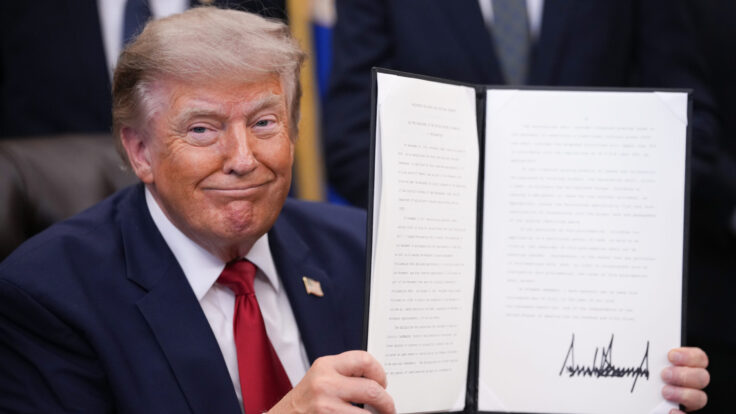
raised eyebrow in the direction of the White House. Last night, Trump signed a pair of executive orders aimed at accelerating the quantum computing industry—good news for companies like IBM, which have made quantum a major focus of their longer-term strategy. But it’s also a harbinger
of the next technology waiting in the wings. Trust me, the quantum era is coming.
In the meantime, we’re living through what I’ve termed the “messy middle” for A.I. adoption—a multitrillion-dollar quagmire for politicians of both parties, perhaps best exemplified by the NY-12 primary, where former technologist Alex Bores is trying to beat back a flood of Silicon Valley super PAC money. (As you’ll see, he
has his supporters, too.)
In today’s issue, a very timely report on the hydra of pro-safety PACs that have sprung up in opposition to industry accelerationists like Marc Andreessen. Plus, news and notes on Bernie’s new A.I. bill, Google’s talent hemorrhage, and SpaceX’s debt plans.
Also mentioned in this issue:
Benjamin Horowitz, Brad Carson, Noam Shazeer, John Jumper, Josh Vlasto, Chris Lehane, Demis Hassabis, Greg Brockman, Chris Larsen, Sacha Haworth, Molly White, Christian Montez, Daniel Ziegler, Chris Stewart, Michael Cohen,
Shaunna Thomas, Alyssa Cass, Kevin Hern, Tyler Johnston, more. |
Two Things You Should
Know…
|
- Sanders’s
golden stake: Sen. Bernie Sanders has finally released the full, official text of his bill to nationalize artificial intelligence. As expected, the centerpiece is a requirement that “the largest A.I. companies” fork over half their equity (and commensurate board representation) to the government. And yet the law would also seem to
extend well beyond the frontier model labs: It defines “applicable” companies as those “engaged in activities” related to A.I. services, data centers, compute infrastructure, and advanced robotics. Any designated company with more than $200 million in annual revenue would be subjected to this one-time stock seizure, which would seed a new sovereign wealth fund managed by an independent commission. That same commission would leverage its voting shares in the relevant companies
to block corporate decisions that might be harmful to the American public, and push for those that might be beneficial.
The bill would also require companies managing both A.I. and non-A.I. businesses to cleave their operations in order to ensure that the equity stakes would be specific to the appropriate entity. Sanders said that the total size of the fund, based on today’s valuations, would be around $7 trillion, though it’s unclear how he arrived at that number. According to the bill,
a 5 percent annual dividend would provide a direct payment to “everyone in America.” Nice work, Bernie.
In a statement heralding the bill, Sanders evoked the Alaska Permanent Fund, the state’s oil- and gas-based public wealth fund. The difference, of course, is that today’s top A.I. labs are currently losing billions of
dollars. In an industry that is more focused on valuations than profitability, it may be a while before there’s much wealth to share. - Industry moves: While the talent wars have certainly eased up since Meta’s feverish hiring spree, human capital remains one of the hotter commodities in A.I.—and Google just lost a few major players. First to go was Noam Shazeer, a longtime engineer and one of the lead authors on Google’s groundbreaking
“Attention Is All You Need” paper, from 2017. Shazeer left Google to start Character.AI in 2021, then returned to the company to lead its work on Gemini in 2024—part of a $2.7 billion acqui-hire. This time, he’s going to a competitor. “It was a difficult decision to move on,” Shazeer said in an X post announcing that he’s trading jerseys for OpenAI. Two days later,
John Jumper, a Google DeepMind director who shared a 2024 Nobel Prize with Demis Hassabis for their work on AlphaFold, said that he, too, was joining the opposition: Anthropic.
|
|
|
|
A MESSAGE FROM OUR SPONSOR |
Become a more intelligent enterprise Imagine your entire company working in
perfect sync. Strategy, operations, tech, and AI – all connected. At PwC, we design the solutions that can help you get there. |
|
|
|
Quote of the Week: A
Pirate’s Life for Mark
|
“The growing popularity of transparency obligations, from the E.U. A.I. Act to bills introduced in
Congress and elsewhere, suggests that what we train on will be public sooner rather than later. The fact that we train on pirated sites such as Anna’s Archive is likely to be viewed negatively by policymakers, rights-holders, and other stakeholders.”
—Christian Montez, a former product risk manager at Meta, in a recently
unsealed court document revealing that, yes, Meta trained its Llama model on pirated content. |
- On Monday, Google announced a research partnership with A24 in conjunction with a $75 million investment in the studio. Google’s statement doesn’t mention the term “A.I.,” which is surely a strategic choice; instead, it says that the partnership is intended to ensure “the tools of the future are shaped by the creators
who use them.”
- Odyssey, a world model company I profiled in March, last week completed a $310 million Series B at a $1.45 billion valuation. Congrats, Oliver and Jeff.
- Just days after going public, SpaceX announced a bond sale—in the form of senior unsecured notes—in a Monday
regulatory filing. In that same filing, SpaceX claimed a current cash hoard of roughly $100 billion.
|
And now for the main event… |
|
|
|
Whatever happens on primary night, the A.I. dark money battle over Alex Bores is merely the
opening of a broader industry proxy war—with hundreds of millions of dollars ready to deploy into 2028. |
|
|
|
As the last trickle of primary voters hit the polls on Tuesday night, a handful of very interested
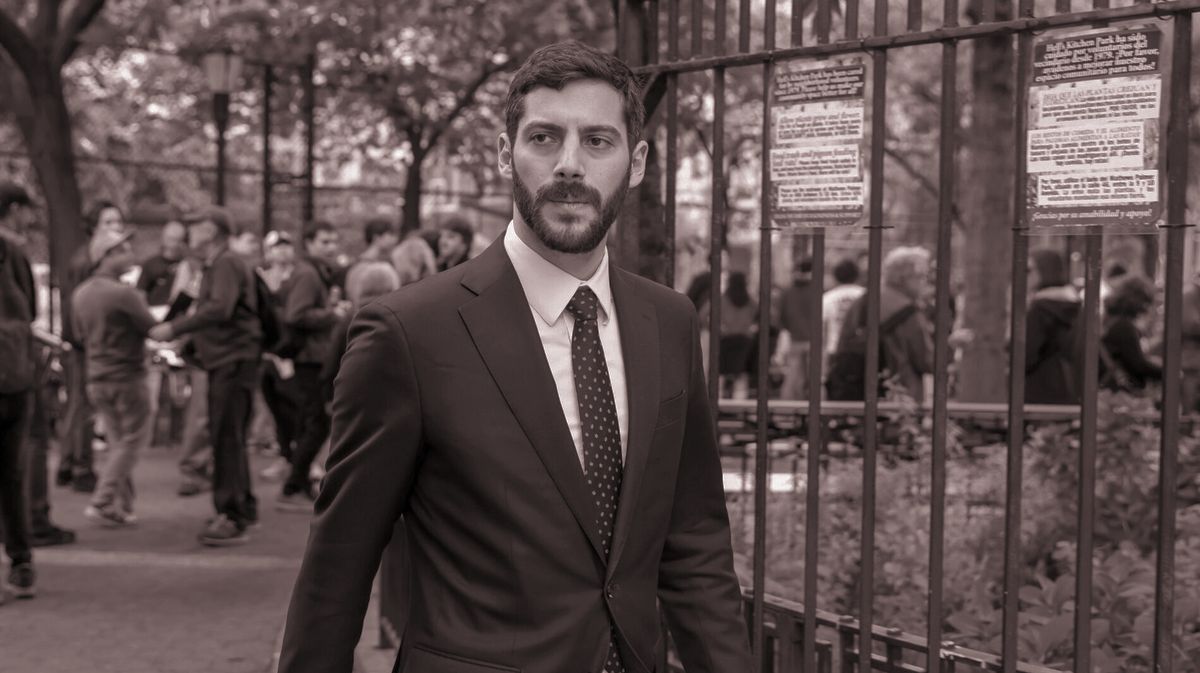
outside parties will be closely observing the results in central Manhattan, where congressional hopeful Alex Bores has faced down a veritable flood of Silicon Valley spending. Bores, of course, is the New York assemblyman responsible for the Raise Act, the state’s landmark A.I. safety bill, which has subsequently made him public enemy number one for Leading the Future—the pro-A.I. super PAC fueled by some $25 million from OpenAI co-founder Greg Brockman and his
wife, Anna; as well as $100 million from a16z and its co-founders, Marc Andreessen and Ben Horowitz. As of March 31, the group had around
$51 million in cash on hand—at least $8 million of which had gone toward taking out Bores.
But a funny thing happened on the way to the polls. While the a16z guys were buying advertising
that painted Bores as an enemy of U.S. innovation and a China crony, a number of pro-safety A.I. researchers and tech investors rose up to support him. The first of these opposition PACs to emerge was Dream NYC, a group dedicated to both combating Leading the Future and getting Bores elected. The super PAC, established in November, has been primarily funded by
individual contributions from Daniel Ziegler, a researcher at Anthropic, who has donated nearly $800,000—more than half of which arrived in May. It has also received a few hundred thousand in funding from an OpenAI researcher and a Jane Street trader.
Public First Action, helmed by former U.S. Reps. Brad Carson and Chris Stewart, followed a few weeks later. “We exist because L.T.F. announced their intention to destroy people who supported A.I. sanity,” Carson said in a May X
post. “Our job is to keep the debate free from intimidation.” The group, a 501(c)(4) “dark money” organization that does not reveal its donors, received $20 million from Anthropic in February. Other than that, the only donation listed in its
regulatory filings is a $500,000 contribution from Michael Cohen, an A.I. safety researcher from U.C. Berkeley. Anthropic declined a request for comment, but a source familiar with its political strategy clarified that its donation was restricted so that the money could not be used for election activity. |
|
|
|
A MESSAGE FROM OUR SPONSOR |
Become a more intelligent enterprise Imagine your entire company working in
perfect sync. Strategy, operations, tech, and AI – all connected. At PwC, we design the solutions that can help you get there. |
|
|
|
Then, in April, tech billionaire Chris Larsen
self-funded the You Can Push Back PAC, which is focused on commonsense A.I. guardrails specifically to protect kids, to the tune of $3.5 million. And last week, yet another new PAC threw its hat in the ring: the Guardrails Alliance. Shaunna Thomas, one of the
co-founders, described Guardrails as “the people’s response to [Leading the Future’s] checkbook.” They’ve raised $5 million so far from individuals and labor unions.
According to data analyzed by Transformer, those four PACs have collectively spent $18 million in the Bores
primary, compared to the $8 million from Think Big, an arm of Leading the Future. Some $12.2 million, in particular, came from an arm of Public First. (“Any claim that we oppose regulation is flat wrong. The public record clearly shows that support for Alex Bores from Anthropic and its allies began well before Leading the Future entered the race,” Leading the Future announced in a statement late last week. Alyssa Cass, a spokesperson for Bores, told me: “The tactics and the
messaging that Leading the Future has used has served to unite everyone else.”)
Manhattan is currently ground zero for this fight, but You Can Push Back, Public First, and Leading the Future are all active elsewhere, and Guardrails plans to get involved “in any competitive Democratic primary where Leading the Future or its allies are spending.” Interestingly, there is occasional
alignment between Public First and L.T.F.—both have supported Oklahoma Rep. Kevin Hern in his race for Senate, for instance. Meanwhile, You Can Push Back is already pouring money into Colorado in anticipation of future investment from L.T.F., which has
spent millions supporting candidates in Illinois, Georgia, and Utah. As we’ve already seen countless times before, everything that touches A.I. is expensive. |
In many ways, this is a familiar playbook, emulating tactics pioneered by Fairshake, the pro-crypto super
PAC, in previous election cycles. The pro-A.I. effort features some familiar faces, too. Former Schumer aide Josh Vlasto, a longtime advisor and spokesperson for Fairshake, now co-leads Leading the Future. Longtime Democratic operative Chris Lehane, who used to work with Coinbase and helped get Fairshake off the ground, is now OpenAI’s head policy honcho. Fairshake, like L.T.F., was also heavily funded by Andreessen Horowitz. Molly
White, the independent A.I. researcher behind the Tech Influence Watch site, told me that L.T.F.’s goal with Bores is to identify races where “they can essentially make an example of a candidate who either genuinely is opposed to their goals and agenda, or can be presented as opposed to their goals and agenda.”
But even though the playbook is familiar, the context isn’t. The same opposition PACs that turned the Bores race into a flashpoint for A.I. spending, tech influence, and
regulation never really formed up against the crypto industry, White said. She added that “A.I. is a more galvanizing issue for voters.”
One Democratic strategist I spoke with confirmed that a lot of campaigns are watching closely to see where Bores lands, something that will surely impact how candidates discuss A.I. moving forward. Tyler Johnston, the founder of A.I. safety advocacy nonprofit The Midas Project, said that if Bores wins, “strategists will start to be more
willing to endorse regulation, and if Bores loses, they’ll probably see the industry PAC as scarier.” White agreed, adding that the presence of the opposition PACs, combined with the sheer fiscal might of L.T.F., makes this one an “unusual race” and is likely inspiring a fair amount of caution among candidates.
But Sacha Haworth, the executive director of the Tech Oversight Project, thinks it doesn’t matter whether Bores wins or loses his
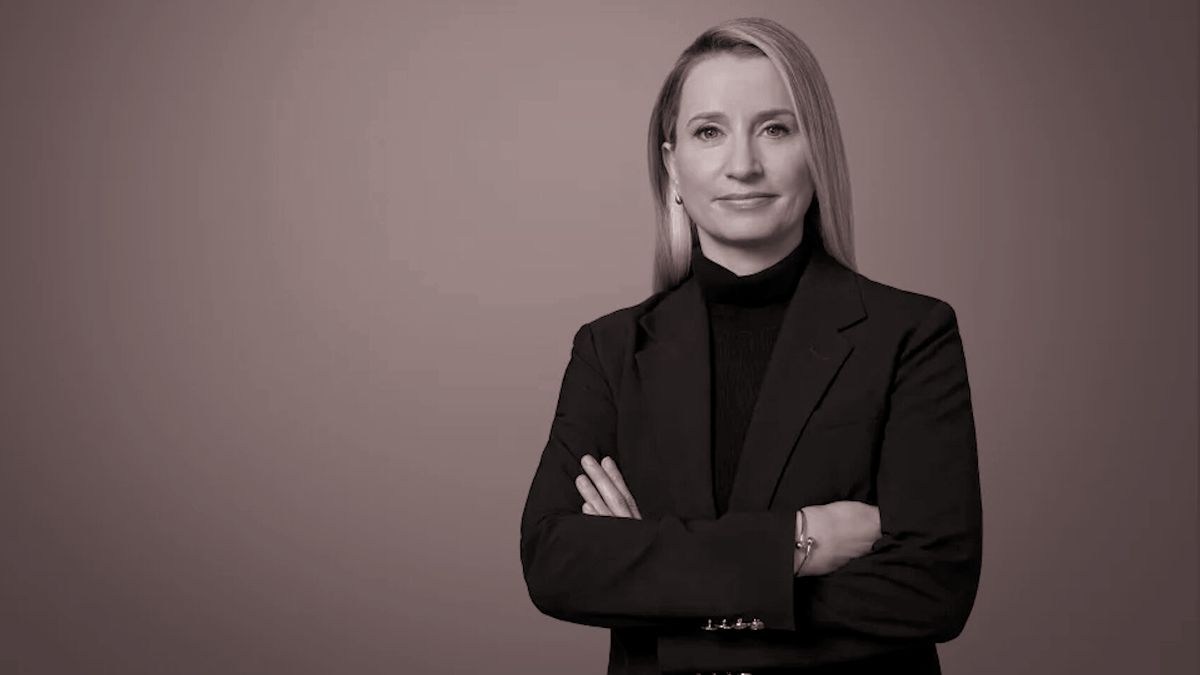
primary. “The end result has been that nobody wants to publicly associate themselves with Big Tech A.I. super PACs, with Leading the Future,” she told me, pointing to OpenAI’s own recent efforts to publicly distance itself from the organization. She argued that this race was much bigger than Bores and New York; given the launch of the Guardrails Alliance, which is funded by both tech workers and labor unions, “the pushback is a manifestation of what Americans are asking their leaders to do
across the country.”
As we move toward midterms in November, Haworth expects more and more politicians and candidates alike to distance themselves from Big Tech A.I. dollars—publicly, at least—“because their money is actually toxic.” And if the House turns blue in November, she expects we’ll see a widespread “demand for accountability,” something that might manifest itself in oversight hearings “to uncover what sort of influence they may have had without our knowledge in governance over
their own products and their own industry.” For now, though, we wait. |
That’s all for today. I’ll see you on Thursday.
Ian |
|
|
|
Need help? Review our
FAQ page or contact us for assistance. For brand partnerships, email ads@puck.news.
You received this email because you signed up to receive emails from Puck, or as part of your Puck account associated with {{customer.email}}. To stop receiving this newsletter and/or manage all your email preferences, click here. |
Puck is published by Heat Media LLC. 107 Greenwich St., New York, NY 10006 |
|
|
|
|