{{ 'now' | timezone: 'America/New_York' | date: '%b %d, %Y' }} |
|
|
Welcome to Dry Powder. I’m Bill Cohan.
A long time ago, in a galaxy far,
far away, I worked on the team of Comcast bankers that helped the company buy AT&T Broadband. At $72 billion, it was the largest M&A transaction ever. It also put on full display Brian Roberts’s willingness to take bold and creative steps to achieve what he perceived to be Comcast’s goals—in that case, vastly increasing its cable footprint. Now might be the moment for another bold move from downtown Philadelphia. Will Brian step up and compete with the Ellisons
for control of Warner Bros. Discovery so that Comcast doesn’t get left behind in the streaming wars? That’s the very question ricocheting around Wall Street, and the one I’m exploring today.
But first… |
|
|

| Ian Krietzberg
|
|
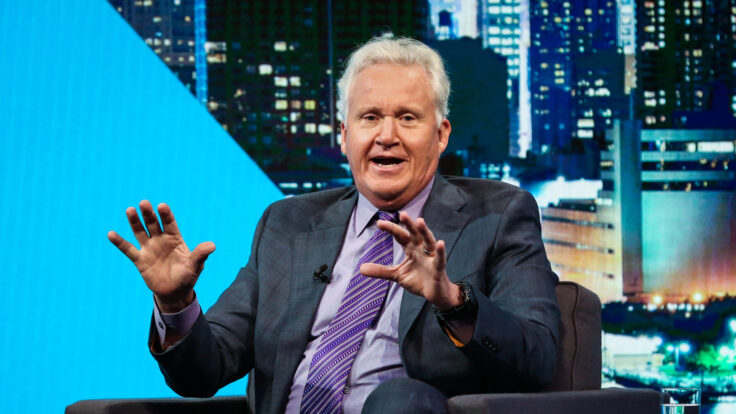
- OpenAI’s for-profit era
begins: Yesterday morning, OpenAI announced that it had officially made the transition into a for-profit entity. As part of that, the company has entered into a new agreement with Microsoft, whose investment in OpenAI is now valued at $135 billion, or about 27 percent of the company. Some aspects of the old agreement have been
enshrined and clarified, including the fate of Microsoft’s exclusive I.P. rights to research, which will remain intact through 2030, or until OpenAI achieves artificial general intelligence, whichever comes first. (OpenAI will need the confirmation of an “independent expert panel” to determine whether the company has actually achieved A.G.I., at which point Microsoft’s revenue share with the company would also be severed.) The agreement also noted that OpenAI will purchase an additional
$250 billion of Azure cloud services, and that Microsoft is losing its right of first refusal to be OpenAI’s cloud/compute provider.
Meanwhile, OpenAI’s surviving nonprofit arm, renamed the OpenAI Foundation, now holds a 26 percent stake in the new corporation, valued at $130 billion. Bret Taylor, chair of the OpenAI board of directors, noted that the nonprofit remains in control of the for-profit company even though it’s a smaller stakeholder than Microsoft. “We believe
that the world’s most powerful technology must be developed in a way that reflects the world’s collective interests,” Taylor wrote. As I’ve noted before, hundreds of billions of dollars were contingent on this transition, including a $22.5 billion tranche of funding that SoftBank
approved just a few days ago. Somewhere, a bunch of investors are breathing a sigh of relief that the wave of petitions, open letters,
nonprofit campaigns, lawsuits, and an investigation by California’s attorney general failed—at least for now—to interrupt the company’s lucrative metamorphosis.
|
|
|

| Eriq Gardner
|
|
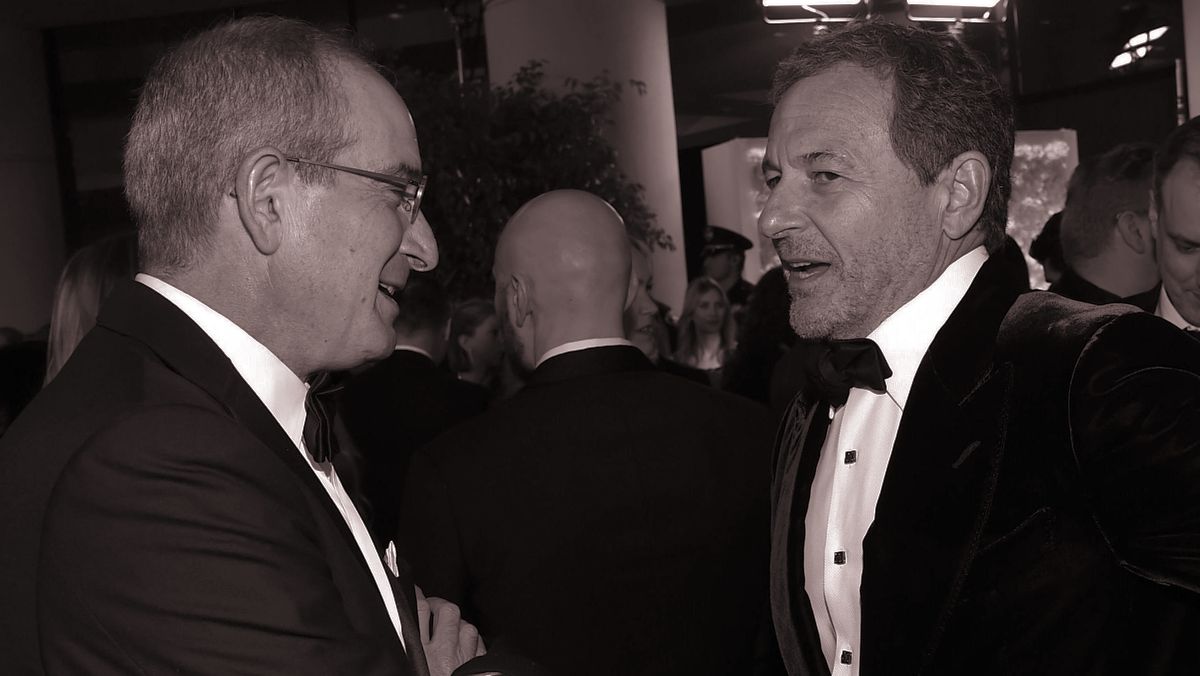
- Iger’s shutdown timing:
Fresh on the heels of my report last night, Disney announced this morning that they had closed the acquisition of FuboTV. You’ll recall that the deal had been on pause since April, when the Department of Justice opened an inquiry into Disney’s decision to buy a controlling stake in the streamer. Like all major transactions, the Disney-Fubo deal had been submitted for antitrust review under the Hart–Scott–Rodino Act. But unlike most deals, it didn’t sail through after the 30-day waiting
period.
Instead, the D.O.J. issued a rare “second request” for documents, placing the deal in a bucket of transactions subject to deeper scrutiny. The two sides then entered a voluntary timing agreement—effectively pressing pause on the closing. Under normal circumstances, the D.O.J. might have sought another extension. But thanks to the standoff on Capitol Hill, many Antitrust Division staffers have been furloughed, meaning deadlines could lapse with regulators quite literally
out of office. In short, Bob Iger got lucky.
And maybe the fortune continues. Disney’s other pending acquisition—of the NFL’s media assets—also sits before the D.O.J. That transaction would further cement ESPN’s grip on the sports broadcasting market. There’s been some idle chatter that the Trump administration might try to meddle with the review as payback for the league’s choice of Bad Bunny as the Super Bowl halftime performer. (Never mind
that this season’s championship airs on NBC…) But government intervention requires government workers, and right now, many of them are home, perhaps watching the new ESPN streaming service.
|
|
|
Now on to the main event… |
|
|
A new analyst note highlights a heightened sense around Wall Street that Comcast co-C.E.O.
Brian Roberts doesn’t merely want WBD, but also truly needs the company—and has a real shot at the asset. |
|
|
Brian Roberts, the Comcast co-C.E.O. and chairman, has long been the consummate deal
guy—building the company into a $100 billion behemoth through all kinds of inventive and transformative M&A. Some 25 years ago, I worked on the team that advised Brian on his $72 billion acquisition of AT&T Broadband. He later bought NBCU from GE for around $30 billion—the steal of the century—and picked up Sky for around $40 billion.
Of course, his reputation has also been defined by a mastery of dark arts and sharp elbows in the paint. He tried hard to spoil Rupert
Murdoch’s sale of the non-sports-and-news assets of 21st Century Fox to Disney, forcing his frenemy Bob Iger to jack up his bid to a price that has not aged well. Iger couldn’t have been entirely caught off guard by the love tap: In 2004, just a few years after Brian sealed the deal for AT&T Broadband, he’d made a hostile and ultimately unsuccessful $54 billion bid for Disney. By contrast, the two men had also just concluded a rather statesmanlike
process that led to Disney getting full control of Hulu and Comcast pocketing around $9 billion for its one-third stake in the streamer. Now Brian is in the process of spinning off Versant, Comcast’s collection of linear TV channels, into its own publicly traded company.
Despite this moxie, the streaming wars have not been especially kind to Comcast. Peacock is largely domestic, with some 40 million or so subscribers globally, putting it behind the likes of Netflix, Amazon Prime, Disney+,
HBO Max, and Paramount+. And that’s been tough on the Comcast stock, which is down 30 percent in the past five years while the S&P 500 is up nearly 100 percent during the same time. That’s partly why many on Wall Street think Brian can’t afford to sit out the battle for WBD, which C.E.O. David Zaslav recently brought to market amid its own spinoff process, after an escalating series of bids from the new skylords of media: the Ellison family and
their Paramount Skydance. Roberts doesn’t want NBCU to become the orphaned company in the streaming wars, which could very well happen if the Ellisons succeed in getting WBD and combine Paramount+ and HBO Max into a streaming giant with more than 200 million subscribers. No package of NFL, NBA, MLB, or Olympics rights can compete with that.
At the same time, the conventional wisdom around the industry has been that Brian has no choice but to sit this one out. After all,
Donald Trump has had nothing but disdain for the soon-to-be-bequeathed MSNBC. Unsurprisingly, the beef got personal: In April, Trump wrote on Truth Social that Brian and Comcast “are a disgrace to the integrity of Broadcasting!!!” (Three exclamation points…) It didn’t seem like Trump was likely to sit on his hands for any of Brian’s major acquisition attempts.
But Brian has been making some moves on the chessboard. First, Comcast appeared on the
list of corporate donors to Trump’s gaudy, ~$300 million ballroom addition to the White House, even as the destruction of the East Wing infuriated the company’s most popular cable TV channel. (As Stephanie Ruhle noted on air: “Ain’t no company out there writing a check just for goodwill.”) Both Rachel Maddow and Lawrence O’Donnell joined the chorus of criticism against Comcast. Around the same time, my partner Matt Belloni
reported that NBCU will be poaching the lucrative talents of Taylor Sheridan from Paramount. Is this a paean to Sheridan’s spotless creative oeuvre? Sure. Is it also an attempt, paired with the ballroom donation, to virtue signal toward the MAGA base? Maybe.
Meanwhile, our friend Rich Greenfield at LightShed
Partners thinks the signs are pointing to Brian revving up to join the WBD fray. In a note published on Monday, Rich laid out his plan for how Comcast could make a competitive run at WBD and thwart the Ellisons in the process. |
The Rich
Theory of the Case
|
It’s a little out there, so bear with me. For starters, he recommends that Comcast stop the Versant
spinoff and then merge all of NBCU, including Versant, into WBD via a Reverse Morris Trust transaction—which, of course, was the same structure that Zaz used to gain control of WarnerMedia from AT&T in April 2022. As part of the transaction, he recommended that the Roberts family give up its 33.3 percent voting stake in the combined NBCU/WBD, and bring the family’s control in line with its 1 percent economic ownership interest.
Rich thinks this gesture would make the NBCU/WBD combination
more palatable to Trump for a simple reason: Brian could prove that he no longer has control of the media assets, such as MSNBC—and now, CNN—that Trump hates so much. In the end, under Rich’s scenario, Comcast’s shareholders would own 80 percent of NBCU/WBD, with WBD’s shareholders owning the rest. To help get the deal done, Rich recommended that Zaz become C.E.O. of the combined company—I’m not sure Comcast co-C.E.O. Mike Cavanagh would love that detail, but I’m told
he wasn’t wild about running NBCU—with Brian ascending to the chairman of the board. (To maintain governing control, in the Rich thought exercise, Comcast would appoint a majority of the board of directors of NBCU/WBD.) “We believe it’s time for Comcast chairman and co-C.E.O. Brian Roberts to make a bold move to change the narrative around Comcast,” he wrote.
Rich then played a little fantasy football H.R. He recommended that NBCU chair Donna Langley take
the reins of the combined TV and film studios. (Plenty of people in town think she could be C.E.O.) Meanwhile, he smartly left the talented HBO C.E.O. Casey Bloys in his seat while putting WBD executive JB Perrette over the combined streaming services. Mark Lazarus, who would be
boomeranging back from the Versant adventure in this scenario, would command the combined company’s linear TV assets. In perhaps the most batshit element of this scheme, Rich suggested combining the news operations of NBC and CNN under its own Bari Weiss–adjacent figure: Erika Kirk, the widow of Charlie. “Sure, at first blush it sounds crazy, but Trump loves a deal, and Brian Roberts needs to think big and differently,” Rich wrote. (In a
subsequent piece today, Rich tweaked his basic idea, suggesting that both NBCU and WBD continue with the spinoffs of their linear TV assets and then merge, while also leaving behind NBC affiliate TV stations at Comcast.) |
Rich also has a plan for how Comcast can beat Paramount Skydance on the economics. As part of the Reverse Morris Trust deal, Rich wrote, Comcast would spin off NBCU into WBD without any debt. Then, in anticipation of closing, the combined company would take on $50 billion of new debt on top of WBD’s existing $30 billion of net debt in order to pay a $20-a-share dividend to WBD shareholders. The combination of the $20-a-share dividend, plus their 20 percent equity stake in the combined NBCU/WBD, would yield roughly $25 a share in value to WBD
shareholders, putting the deal in a position to compete with the Ellisons, whose third rejected offer for WBD was $23.50. The Ellisons are also offering a mix of cash and stock to WBD shareholders. So if Brian pulls the trigger here, the relevant question will be: Which cash and stock mix is worth more?
Yes, $80 billion is a lot of debt. But Rich figures that the combined EBITDA of the company will be around $15 billion in 2026 and 2027, with some $3 billion in realized “synergies” by
2027, giving the company $18 billion in EBITDA to manage the $80 billion in debt—a leverage ratio of 3.5x. “Definitely higher leverage than Brian Roberts and Team Comcast have been comfortable with in the past, but again, they need to do something bold,” he wrote.
Rich concedes that Larry Ellison, with a net worth of $350 billion, can easily have Paramount Skydance outbid anything that Comcast puts together, including this wacky proposal. But with Zaz being offered a
C.E.O.-like role under both the Ellison and Greenfield scenarios, he should be indifferent between the bids and simply recommend the one that offers more value to WBD shareholders. After all, there isn’t much difference between a WBD joined together with NBCU and one combined with Paramount Skydance. (Although, for what it’s worth, Rich does suggest that the Warners assets would benefit NBCU’s thriving theme park business. Perhaps that would be a tiebreaker, all things considered.) |
When I texted Rich to probe his magical thinking a bit more, he responded that he thinks this combination
would unlock more value for Brian at both the remaining Comcast level and at the NBCU/WBD level. “The current investor pitch is not working, and it gets worse if PSKY owns WBD,” he wrote. “It’s all about legacy,” he added, implying that said legacy isn’t looking too great at the moment, and will be worse if Comcast sits this one out. “Comcast shares are down 21 percent YTD, 30 percent over the past year, and effectively flat over the past decade,” Rich wrote in his note. “Worse yet, the
stock’s conglomerate structure has it trading at a discount to both its cable/telco and media peers.”
I phoned up a media wise man, a keen observer of the industry for some 40 years. He was skeptical that Brian would pursue the path Rich laid out and give up voting control of NBCU, or let Zaz run NBCU/WBD, even if it were for only a few years. (Zaz is 65.) “I don’t think Brian has any interest in giving up control, even though I agree he’s in a highly disadvantaged position without a
dance partner here,” he said. “And he certainly doesn’t want to hand the reins to Zaslav.”
This person was also skeptical that anyone will be able to outbid the Ellisons given their financial wherewithal and proximity to the White House. “I don’t think he’d be tied up in the way that Trump would look to tie up Comcast,” he said. He did allow that Amazon might be a serious competitor to the Ellisons if Jeff Bezos were to jump in. (Wolfe Research analyst
Peter Supino has also identified Amazon as a valid stalking horse.) With a valuation of nearly $2.5 trillion, he said, Amazon “certainly has the market capitalization and access to cash where this doesn’t become the overwhelming transaction that it would be for everybody else.”
In the end, this person surmised that Comcast might bid for WBD along with Amazon. He could also see Brian joining the fray to force the winning bidder to pay more, just as he did a few years back
with Disney. But he thought the more likely scenario would be for Brian to let the auction for WBD play out, with Comcast on the sidelines, and then figure out a way to merge Peacock into the combined Paramount+/HBO Max, or the combined Prime Video/HBO Max, to try to keep from being orphaned—a version of today’s Rich Greenfield’s plan.
Scott Galloway, the bestselling author and podcast impresario, was similarly skeptical of the likelihood of Comcast
bidding for WBD. Speaking on the Pivot podcast recently, he argued that a Comcast deal for WBD didn’t make economic sense. “I doubt Comcast is anywhere,” he said. “Comcast is like, ‘Well, call us if you’d take 11 bucks a share, because that’s what we would need to pay for this thing to be able to explain to our shareholders in an earnings call why we can’t justify anything above that.’ David Ellison’s criteria are different because he’s the son of a guy making $90 billion in a day.”
I
don’t know about that. There’s still a long way to go here. If Brian follows the Greenfield scenario—or even a variation that has Versant being spun out and the slimmed-down NBCU merging with Zaz’s Streaming & Studios business—he could be a viable competitor to the Ellisons. And Comcast’s stock is probably undervalued as a currency these days compared to the Paramount Skydance stock. (This is not investment advice.) Meanwhile, my partner Eriq Gardner
argues that Comcast’s regulatory path may not be as tough as conventional wisdom would have it; he figures Brian could prevail over any challenge to a deal in court.
It’s also worth noting that, according to a Paramount Skydance 8-K filed last week, Skydance Media lost $115 million in the first six months of 2025, compared to a loss of $42 million in the first six
months of 2024. This thing is still wide open. |
|
|
Join Puck’s chief political columnist, John Heilemann, as he roams the corridors of power and influence in America on this
twice-weekly interview show, taking you beyond the headlines with the people who shape our culture: icons and up-and-comers, incumbents and insurgents, moguls and machers in the overlapping worlds of politics, entertainment, tech, business, sports, media, and beyond. The conversations are rich and revealing, unrehearsed and unexpected… and reliably impolitic. A Puck-Audacy joint, new episodes drop every Wednesday and Friday. |
|
|
Puck’s daily political newsletter from Washington on what’s really happening in this town, from the White House to the Pentagon
to Capitol Hill, K Street, and the campaign trail. |
|
|
Need help? Review our
FAQ page or contact us for assistance. For brand partnerships, email ads@puck.news.
You received this email because you signed up to receive emails from Puck, or as part of your Puck account associated with {{customer.email}}. To stop receiving this newsletter and/or manage all your email preferences, click here. |
Puck is published by Heat Media LLC. 107 Greenwich St., New York, NY 10006 |
|
|
|