 |
 |
|
Happy Wednesday.
|
|
Welcome back to Dry Powder, my biweekly private email about what’s really happening on Wall Street. In tonight’s edition, the untold story of why Elon’s instantly underwater leveraged buyout of Twitter will require his banks to sell the company’s debt at a discount, siphon its free cash flow into interest payments, and provide distressed debt investors with an opportunity to walk away with the whole damn thing.
|
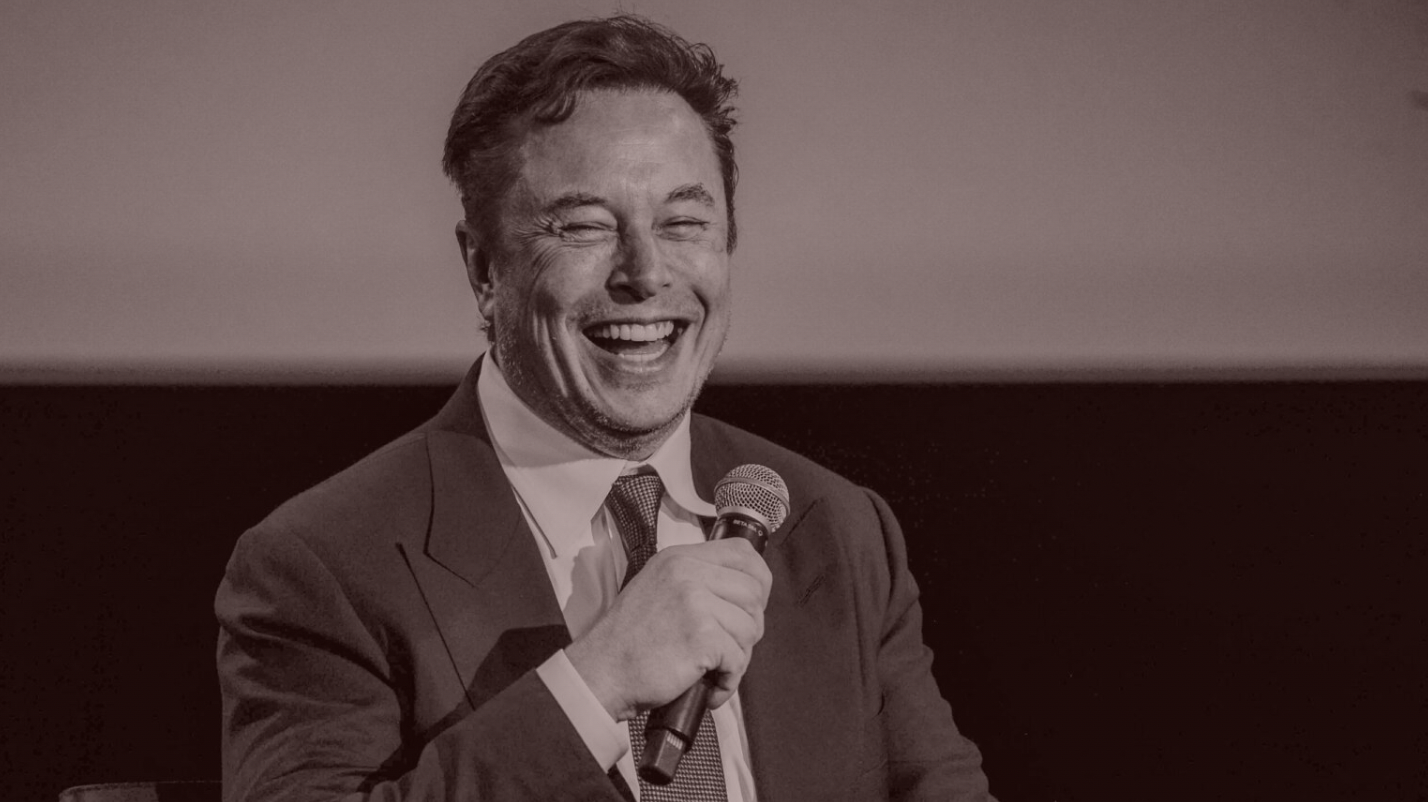 |
| The Elon Financial Mindfuck |
| So Elon is buying Twitter… great. Now he just needs to figure out how to prevent the banks from issuing the company’s distressed debt at a discount to loan-to-own sharks (Apollo? DoubleLine?) who can wipe him out and maybe even one day take over the company. |
|
|
|
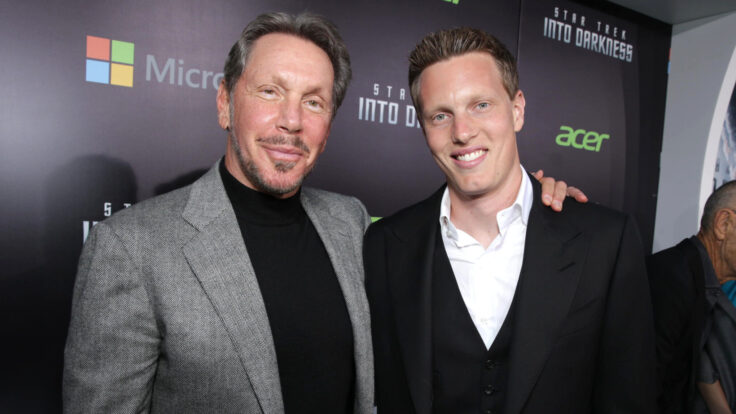
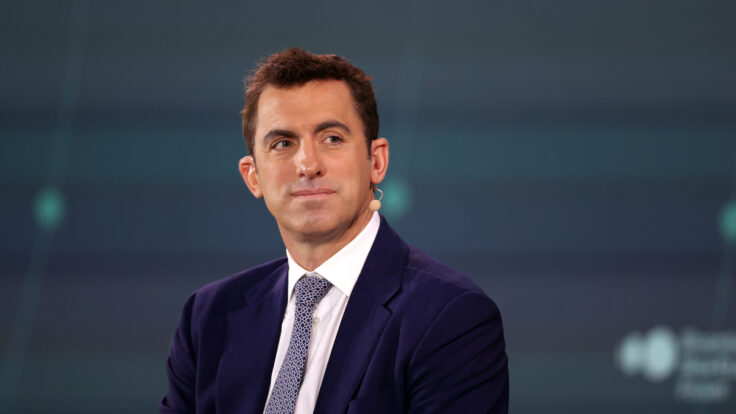
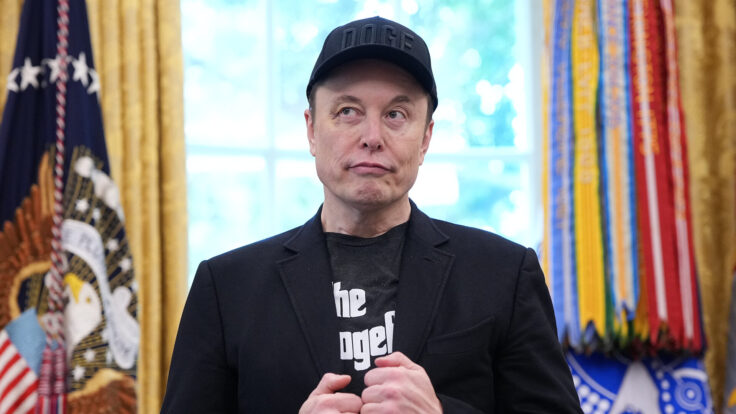
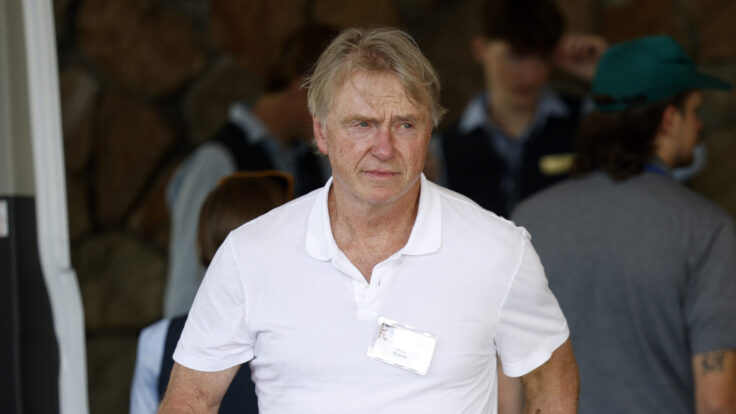
| Where we last left the Twitter saga, our reluctant hero Elon Musk had essentially made the difficult decision that he’d be better off forking over another $20 billion of his own cash rather than continue to fight Twitter in court and still end up paying a fine in the billions of dollars—perhaps double-digit billions—and have only a bunch of lawsuits to show for it. Let’s face it, Elon is past the point of good choices, while his banks, led by Morgan Stanley and Bank of America, are presumably rueing the day they ever got involved in this disaster of a deal. His co-investors, who back in May agreed to pony up some $7.1 billion, can’t be happy either. Sure, Larry Ellison is probably rich enough not to care if he loses his $1 billion. But Marc Andreessen, at a16z, is a fiduciary for his investors and is on the hook for $400 million. He needs to care.
Obviously, the original sin of the deal stems from Elon’s decision to pay $44 billion for Twitter, or 44x for Twitter’s approximately $1 billion in EBITDA. After he altered the capital structure on the deal—to remove a layer of subordinated debt and replace it with more of his own equity—he left himself with a deal that has $13 billion of senior secured debt and $31 billion of equity, $24 billion of which is coming from Elon and $7 billion of which was to come from his buddies. And right now, despite the media narrative and endless think pieces about how this is all just a fait accompli, that $13 billion of committed secured financing is shaping up to be an insidious stick of dynamite that could blow up the whole deal.
The group of banks that committed to the deal back in April is comprised of some of Wall Street’s heaviest hitters: Morgan Stanley and Bank of America, of course, but also Barclays, MUFG, BNP Paribas, Mizuho, and Société Générale, among others. They pledged their capital to Elon back in April, in a very different interest-rate environment than the current one. And not to put too fine a point on it, but the banks are fucked. They committed contractually to the financing and received fees for that commitment. That basically means there are no outs, unless they want to get sued by both Elon Musk and Twitter for welching on their agreement.
That may seem like a better outcome than losing billions of dollars by either selling or holding the debt, but I don’t believe reneging is a realistic option for the banks, both reputationally or legally. That leaves them committed to providing Elon with $13 billion of senior secured debt at a 13x debt-to-EBITDA multiple—an overleveraged disaster, despite the fact, ironically, that no leveraged buyout in history has had more equity in it, and few have had as high a percentage of equity of the overall purchase price.
In this structure, basically all of Twitter’s free cash flow of around $1 billion in a given year will go to pay interest on the two tranches of senior secured debt—and that’s being generous because it assumes the interest rate on the debt remains in the range of 7.5 percent, when it surely could be much higher. But, of course, if it were to be higher—if for instance Elon agreed to modify his original deal terms with the banks—then even more of Twitter’s free cash flow would go to pay the banks’ annual interest.
Anyway, it really doesn’t matter if they agree to a higher coupon because, barring some strategic pivot that uncorks significant new revenue and profits, there isn’t the cash flow at Twitter to cover it. All of which likely means that to avoid a payment default after the deal closes, Elon and his equity bros are going to have to cough up the difference between what the banks are owed and what Twitter can pay out of its free cash flow. If they don’t, then all hell could break loose. |
|
|
| Following this thinking through to its logical conclusion provides some unpleasant options for Elon Musk’s ownership of Twitter. With a lower coupon on the debt, the banks will have to discount it dramatically to get it out the door—I’m hearing estimates of a 50 percent discount these days from my Wall Street banker friends—and eat something like a $6 billion loss on a $13 billion loan. Yikes.
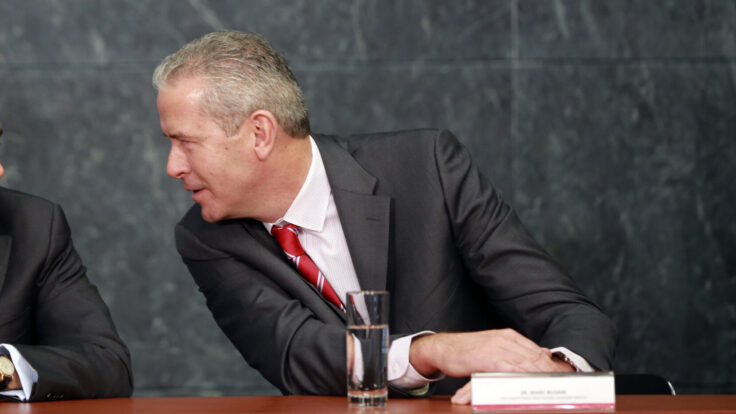
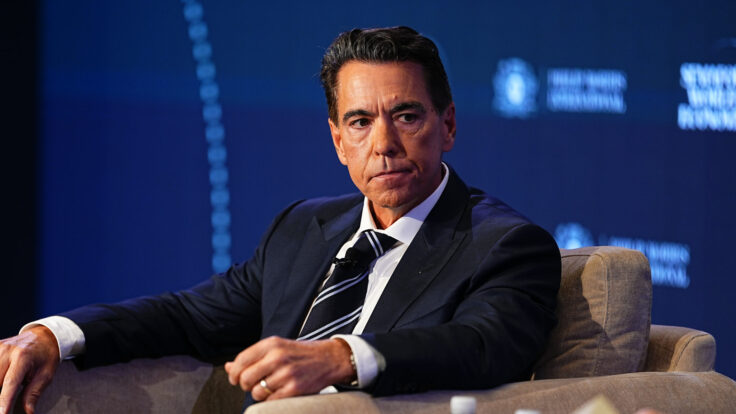
But it only gets worse. What if the banks are able to sell the debt at 50 cents on the dollar? What kind of people on Wall Street buy debt at such a large discount? Why, our old friends at places like Apollo Global Management, Jeffrey Gundlach’s DoubleLine, and other loan-to-own debt vultures. (Once again, Apollo C.E.O. Marc Rowan is at the center of the Wall Street universe.) This is just another strategy in a portfolio of strategies designed to make money. It’s how Apollo once upon a time took control of Aleris, an aluminum company, and how Apollo’s Berry Plastics bought Pliant, another packaging-products company.
If the debt falls into the hands of distressed debt buyers, then Elon and his equity partners have a whole new set of problems. Investors who pay 50 cents on the dollar for debt are entitled to 100 cents on the dollar. If they aren’t paid 100 cents on the dollar, or if an interest payment is missed, or if there is any other kind of payment or technical default, then the distressed debt investor may be entitled to accelerate the payment on the entire debt or to foreclose on their security—the assets of Twitter. In other words, any slip up on the payment front and Twitter’s creditors—not Elon Musk—will be the ones calling the shots at Twitter and controlling the company. They can put Twitter into an involuntary bankruptcy. And guess what? They will not hesitate to do so because that’s what distressed investors do.
Of course, the world’s richest man could just buy out the debt held by the Apollos of the world in order to make them whole, or allow them a sufficient profit so that he can keep control of Twitter. They’d certainly be happy with that, and might even decide to buy the debt at a discount and hope that Elon decides he has no choice but to buy them out at a big profit. But that would mean more money out of Elon’s pocket, which is looking more and more inevitable. |
| ADVERTISEMENT |
 |
| The metaverse will help farmers adapt to unpredictable conditions.
In the metaverse, farmers will plan yield layouts, adapt to climate needs and monitor the health of their soil with AR technology.
The result? Abundant yields during harvest.
The metaverse may be virtual, but the impact will be real.
See how Meta is helping build the metaverse. |
|
|
|
|
| Again, following the logic here, if the Twitter debt is worth only 50 cents on the dollar at the moment because of a combination of Twitter’s cash flow, the radically altered interest-rate landscape for leveraged loans, and the pesky reality of a secured loan that is 13x EBITDA, then the Twitter equity underneath that debt—the $31 billion—is technically worthless already, even before the deal closes. If the debt of Twitter is not worth par, or 100 cents on the dollar, then by the logic of distressed investing and bankruptcy proceedings, the equity is pretty much toast. Right now, the market is telling Elon’s Wall Street banks that Twitter is actually worth around $7 billion, or 7x EBITDA, not the 44x EBITDA that he agreed to pay, since it’s at that price that the banks can sell the Twitter bank debt and it’s at that price that the buyers of the bank debt will buy it. Something is worth only what someone will pay for it. And as soon as Elon buys Twitter for $44 billion, the market is saying it’s really only worth the price at which the banks can sell its senior secured debt, or $7 billion.
To be fair, I am sure Elon has presented his banks with financial projections that show a ramping up of EBITDA under his ownership of the company and that a discounted cash flow analysis shows a higher value. And he might just make that happen one day. But, at the moment, the market is saying Twitter senior secured bank debt will trade at around 50 cents on the dollar, leaving Elon with only one choice: He has to buy the banks down. He has to reduce the leverage on Twitter from 13x EBITDA to something much more in line with what the financial markets are broadcasting.
Let’s say, for the sake of argument, that’s 7x EBITDA. Elon has to buy $6 billion of the bank’s $13 billion commitment, to reduce the debt down to $7 billion so that the bank debt trades at par, or at 100 cents on the dollar. He can either do that now, before the deal closes, or after the deal closes. He cannot let Apollo or its ilk buy that bank debt for 50 cents on the dollar because then it will wreak havoc on him for years, and possibly end up allowing one of those places to own Twitter in the end anyway. The only way Elon can preserve his optionality on Twitter at this point is to buy back the bank’s debt, or enough of it so that the balance of what the banks are holding can be sold off closer to par. He wouldn’t be doing that for the benefit of his banks—they are fucked, as we’ve already established. Rather, he would be doing it for his own benefit, since it’s the only way he has a chance of preserving his and his investors’ $31 billion.
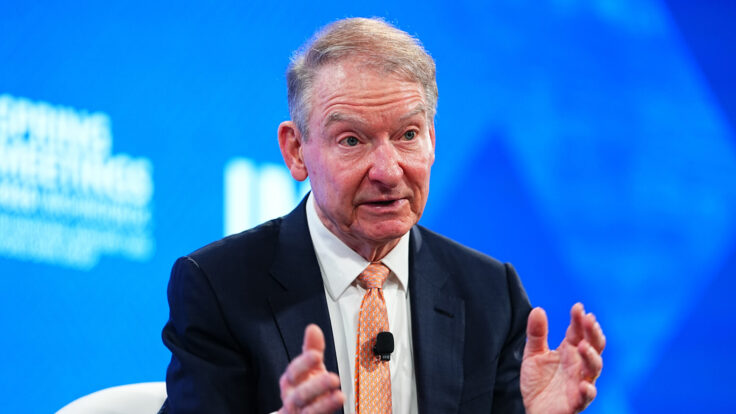
None of this had to happen, it goes without saying. It’s the worst version of the worst kind of Prisoner's Dilemma. For instance, my one-time friend Prince Alwaleed bin Talal, the Saudi billionaire, could have cashed out his roughly $1.9 billion position in Twitter at $54.20 a share along with Twitter’s other big shareholders, such as Fidelity, Vanguard, and BlackRock. But instead he decided to roll over his equity stake into Elon’s Twitter fantasy. He’s probably quite miserable about that decision right now. He could have been a hero and walked off with $54.20 in cash for each of his about 35 million shares. Instead, barring some Twitter miracle, he’ll likely lose most of it, and that’s before the deal closes. Similarly, a16z’s $400 million is heading for rough waters. For Elon’s banks and his equity partners, the Twitter deal has become an unmitigated disaster.
There have been plenty of disastrous deals in Wall Street history: AOL’s purchase of TimeWarner; Daimler-Benz’s acquisition of Chrysler; the mergers of Sears and K-Mart. There have also been ridiculously stupid leveraged buyouts, such as KKR’s purchase of RJR Nabisco and TXU, or Robert Campeau’s acquisitions and then merger of Allied Stores and Federated Department Stores. But Elon’s acquisition of Twitter may turn out to be the worst of them all. Barring some miracle turnaround plan for Twitter conceived of by the supreme ubermensch himself, he and his fellow investors are likely to lose pretty much every one of the $31 billion in equity they have yet to invest in this ill-conceived lunacy of a deal. It’s going to be quite a show. |
| ADVERTISEMENT |
 |
|
|
|
|
|
| FOUR STORIES WE'RE TALKING ABOUT |
 |
| General Armageddon |
| A profile of the man running Putin’s latest terror campaign. |
| JULIA IOFFE |
|
 |
|
 |
|
 |
| Elon’s $13B Nightmare |
| Bill Cohan and Peter identify the dynamite stick in Musk’s Twitter deal. |
| PETER HAMBY & BILL COHAN |
|
|
|

|
|
|
| You received this message because you signed up to receive emails from Puck
Was this email forwarded to you?
Sign up for Puck here
Sent to
Unsubscribe
Interested in exploring our newsletter offerings?
Manage your preferences
Puck is published by Heat Media LLC
227 W 17th St
New York, NY 10011
For support, just reply to this e-mail
For brand partnerships, email ads@puck.news |
|
|