Welcome back to Wall Power. I’m Marion Maneker.
Melissa
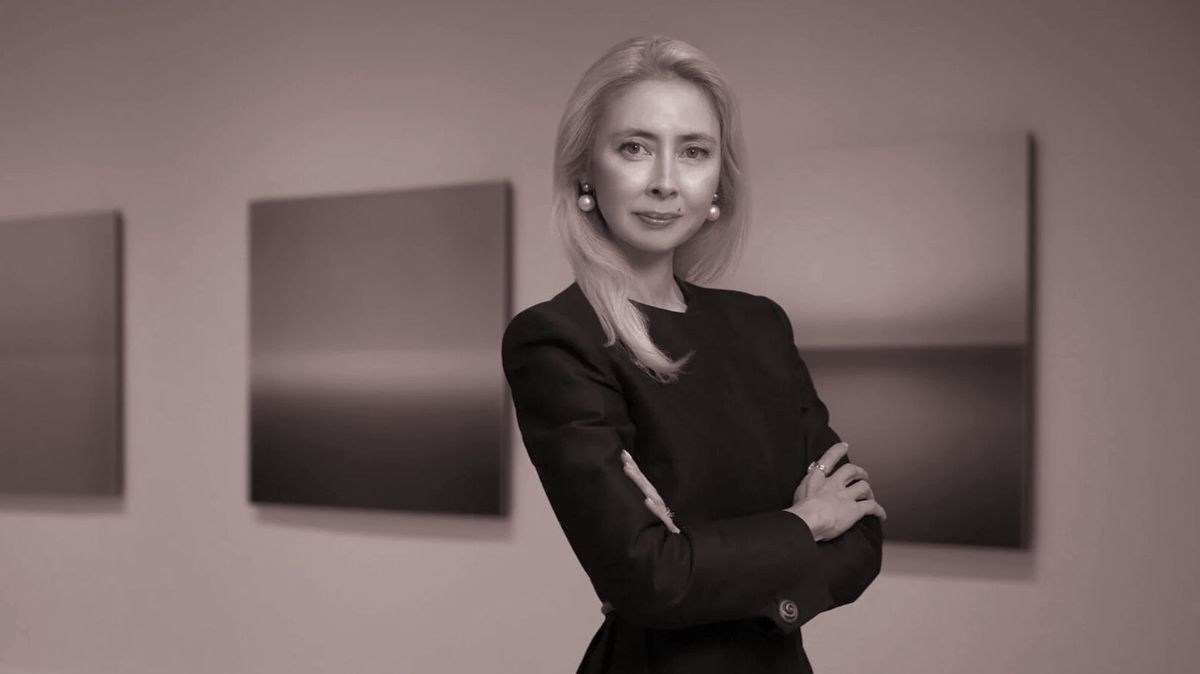
Chiu will become the new director of New York’s Guggenheim museum this September, but we don’t have to wait until then to hear from her: Tonight, Dan Duray shares his interview with Chiu, who was formerly the director of the Hirshhorn Museum in Washington, D.C.
Up top, news and notes on the long-running battle over Robert Indiana’s art and legacy, which has finally been resolved with a $102 million court verdict. Plus: Art Basel wants galleries
to go old-school by holding back work so collectors won’t know about it unless they visit the booths in Basel in June. And Larry Gagosian’s new flagship gallery has opened, with a sneaky nod to his traditional opening ritual. Finally, I have a very late update on the Lalanne Rhinoceros buyer.
Also mentioned in this issue: Ken Griffin, Anne Schlumberger, Michael McKenzie, Luke Nikas,
Marcel Duchamp, Arturo Schwarz, Robert Rauschenberg, Marina Abramović, Maurizio Cattelan, and more…
|
-
The $102 million “Love” victory: On Thursday, the long-running saga of Robert Indiana’s final years ended with a federal jury awarding $102 million to the Morgan Art Foundation in its suit against caretaker Michael McKenzie. The suit, first filed the day before the 89-year-old artist’s death in 2018, contends that McKenzie had isolated Indiana and created thousands of versions of his works in violation of agreements between Indiana and the
foundation. This week, a jury awarded the foundation $2 million for copyright infringement; $6.2 million for trademark infringement; $89 million for tortious interference; and $5 million in punitive damages against McKenzie. The foundation’s lawyer, Luke Nikas, will now have to secure those payments, but he told me on Friday that he plans to hold McKenzie “accountable in every way.” More importantly, the fate of 2,500 works McKenzie made without authorization is now settled.
“This cleans up the market and provides clarity,” Nikas said. “Can’t get any clearer than this.”
|
|
|
|
A MESSAGE FROM OUR SPONSOR
|
Color That Moves With You
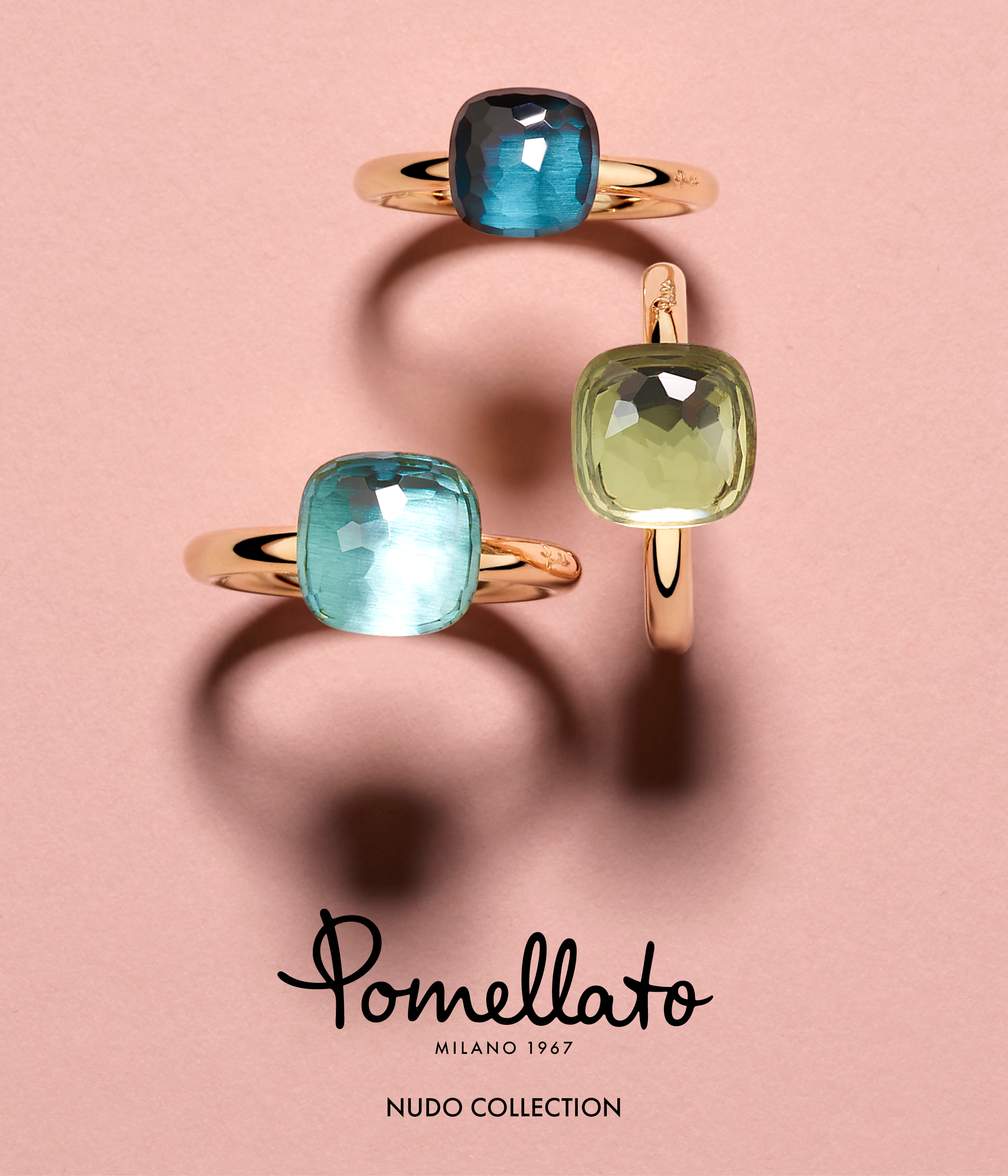
When a single stone captures a spectrum of emotion, the appeal of Nudo is
clear. Marking its 25th anniversary, Pomellato’s iconic design evolves with a fresh expression of color. Each gem is thoughtfully paired to create balance and depth. Designed to reflect the rhythm of modern life, Nudo is effortless, versatile, and distinctly personal. Free in spirit and easy to wear, it invites layering, stacking, and everyday expression.
|
|
|
|
-
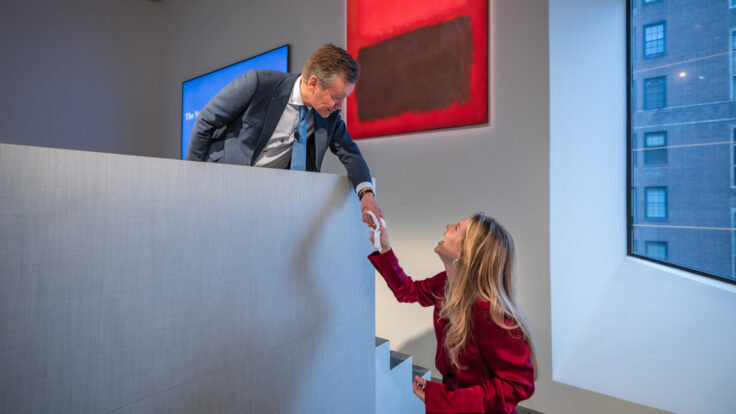
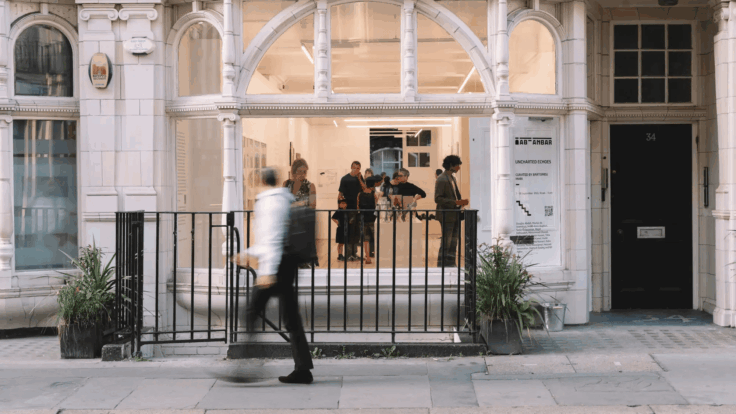
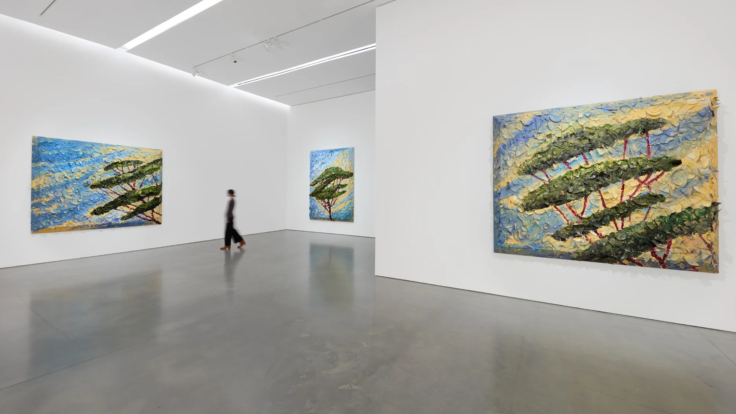
Gagosian goes to ground (floor): That same afternoon, I stopped by Gagosian’s new street-level space at 980 Madison, where the gallery has had its headquarters for nearly 40 years. You might think moving down six floors would have little effect on the gallery’s presence, but there’s something about being right on the corner of 76th and Madison that gives this iteration of Gagosian’s flagship a very different, more approachable feel. It reminds you that Gagosian has another space just
two blocks away at 75th and Park. And, of course, the Breuer Building is only another block south on Madison. When I tried to see if one could glimpse the Breuer from the window of the gallery’s new lobby, the Gagosian folks nonchalantly suggested they had never bothered to look—they didn’t seem interested in acknowledging the value of being a short walk from another blue-chip venue.Gone, of course, is the skylit main viewing space that Gagosian cherished. In its place, there’s a
high-ceilinged flexible room with a temporary wall—which can be removed to create one large space—and private viewing rooms a level below. The inaugural show consists of two exhibitions. On one side of the wall is a gathering of Marcel Duchamp’s most important readymades, created in an edition of eight with the help of gallerist Arturo Schwarz in 1964, including the last remaining bicycle wheel not in a museum collection. On the other side are six early
Robert Rauschenberg works, including a blueprint photogram and sculptures that are some of the artist’s earliest surviving pieces, all from the Cy Twombly Foundation. An astute Gagosian watcher pointed out that Larry Gagosian has opened all of his gallery spaces with shows of Cy Twombly’s work; consciously or unconsciously, the 81-year-old had found a way to incorporate Twombly into the christening of this new space.
- Basel Exclusive lite: Also on Thursday, Art Basel announced a new program called Basel Exclusive, in which participating galleries “will reserve one work or a selection of significant works to be unveiled publicly for the first time at the fair’s VIP opening.” It’s entirely voluntary, and meant to address concerns about the original Art Basel’s declining primacy on the art fair calendar. One proposal is to prevent galleries from sending clients P.D.F.s of their “packing
list” for the fair—so collectors and art advisors would have to be physically present in Basel’s Messeplatz to know what works are on offer—in hopes that the fair might regain some of the glamour and exclusivity it’s lost to Art Basel’s own competing fair in Paris. In truth, however, the new program doesn’t really address the problem. It simply encourages galleries to hold back some items to generate interest—which is what several of the biggest galleries are doing already.
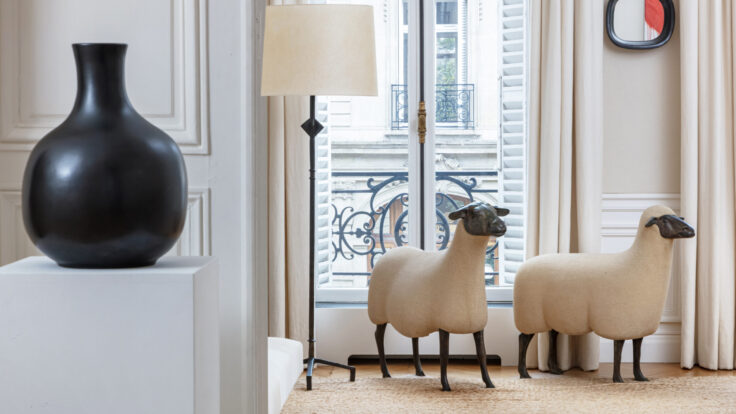
- One last note about the Lalanne rhino bar…: In Friday’s newsletter, I said it was received wisdom in the art world that Ken Griffin had bought Anne Schlumberger’s rhinoceros bar for $31 million last December. I’m now told by persons I trust to actually know that Griffin was not the buyer. That’s a good thing. And a reminder that the Lalanne market is quite deep.
|
Now, let’s take a minute to get to know Melissa Chiu…
|
|
|
|
Melissa Chiu, the new director of New York’s Guggenheim Museum, opens up about generating
an audience beyond Instagram, raising money from all corners of the globe, and working with—not against—that famous building.
|
|
|
|
Earlier this month, the art world was caught off guard by news that Melissa Chiu
would be stepping down as director of the Hirshhorn Museum and Sculpture Garden in Washington, D.C., to become the director of the Solomon R. Guggenheim Museum in New York. The appointment was a surprise because Mariët Westermann had only been named director of the museum in 2023, replacing long-serving Richard Armstrong. But it was decided that Westermann would become C.E.O. of the foundation that oversees all the Guggenheim museums—in New York, Venice, Bilbao,
and eventually, Abu Dhabi. That created the need for the new position of a director focused on programming and fundraising for the all-important Manhattan museum.
Chiu, who had previously served as director of the Asia Society Museum in New York, will be returning to the city after an extraordinarily successful run expanding the Hirshhorn’s board, raising $250 million, and renovating the museum’s sculpture garden. I spoke to her about her new role and her plans for the Upper East Side’s
all-important institution. As always, the following has been lightly edited for length and clarity.
|
Dan Duray: Congratulations on the new position. You’re taking
control of the artistic vision, programming, daily operations, and finances of the flagship museum. That’s a lot of jobs.
Melissa Chiu: I’m excited for it all. All of those elements are responsibilities of any museum director in this country, and it ranges from the artistic direction to implementation and making it happen, which includes figuring out audiences, figuring out how to finance these things. So it’s not dissimilar from the
role in other places.
|
|
|
|
A MESSAGE FROM OUR SPONSOR
|
Elevate your everyday with Nudo
Pomellato’s Nudo rings celebrate color, form, and individuality. The
brand’s signature “naked” setting rests on rounded shanks with delicate diamond pavé that catch the light and move with you. Versatile and effortless, each ring encourages mixing, matching, and layering, turning everyday wear into a personal expression of style, color, and contemporary elegance.
|
|
|
|
I read an interview with you where you were talking about the Hirshhorn’s Gordon Bunshaft
building and how it necessitates creativity. You said you “couldn’t fight the building.” Now you’re working with perhaps the most unique building in the museum landscape.
It’s true that it really provides one of the most unique viewing experiences for art.
One of the things that I did here at the Hirshhorn when I first arrived was to sit down with the whole team—everything from the curatorial team to visitor services—and think about that experience of what it’s like to be in the museum and view art, and the possibilities and also limitations of the physical space. So I’m ready to listen to those who inhabit the building on an everyday basis first, and then to figure out where we can go from there.
But the team at the Guggenheim has already
staged everything from the Marina Abramović full-activation performances through to Maurizio Cattelan’s suspended sculptures. It’s not as if the team has not already been thinking about all of these questions for many decades, so I’m interested to hear from them.
Do you think it’s possible that there are some artists that just couldn’t really work in that space?
There might be artists who would
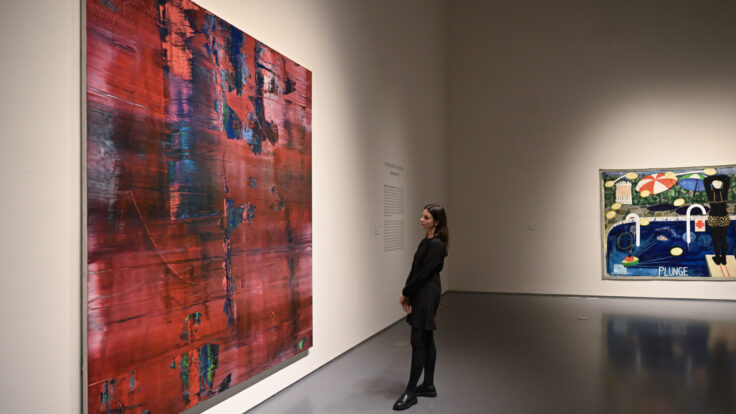
think about their work and maybe say, “Actually, my work was conceived for a very particular space, and this is not it.” I could imagine that, as more work today is site-specific. And the great thing about the Guggenheim is it does also have more conventional, white cube spaces, so while we often think of the Guggenheim in terms of the rotunda, there are other options as well.
I would also say that it lends itself to a very particular other kind of view. There’s nothing like a great show
where you look across, and you see multi-levels at the same time. So it does lend itself to a very different view from other museums, and I think the question is, how can you make the most of that?
Another important part of your job is fundraising. The former director of the Whitney Museum, Adam Weinberg, told the Times that he sees the Guggenheim as
“financially struggling.” You have a track record raising $250 million over 12 years at the Hirshhorn. Do you have any perspective on how the Guggenheim has gotten itself into this situation, and do you have any early ideas for going about fixing that
deficit?
I don’t think I can speak to things that came before. My main priority is to focus first on community building, because I think that the Guggenheim already has a great community around it, and it has a huge international reach. One of the things that I have spent a lot of time doing at the Hirshhorn is really figuring out how we could be both a national and international museum, and it was through building local, national, and
international audiences and supporters for the work.
Do you see the possibility of doing fundraisers for the Guggenheim New York in Abu Dhabi, for example?
It could be. We have to see. The thing with the Guggenheim is that it has an international reputation and reach already, and so it wouldn’t be out of the question to bring those existing supporters together. There are also, I know, already a number of groups at the Guggenheim
that are devoted to building collections—global collections—and to support major acquisitions from that region, for example. That means that there’s a desire and will to have works by those artists in the collection, and so that would be an obvious community to look at if it was going to be a special event outside of New York.
|
I also want to ask you about building audiences. In 2017, the Hirshhorn put on
Yayoi Kusama: Infinity Mirrors, which exploded on Instagram. Did you think that was going to happen?
I had some idea, but I don’t think we had any idea that it would be what it ended up being. It was a real phenomenon for us when we first presented it, and then it had the same effect everywhere it traveled to, from Seattle to L.A. to Toronto to Cleveland to
Atlanta. It was a testament to a moment of recognition for Kusama’s work, and for her installation practice, where her painting practice had already been well recognized in other shows. And it did coalesce around a moment when Instagram took off, and people wanted those selfies. It was a very particular moment, and it would be hard to re-create today.
|
|
|
|
Museums in some ways struggle with the criteria for success. The number of visitors who come to see
the exhibition or the museum writ large is an important measure of some success. It’s not the only one, but it is one that is, in some ways, easier to measure than other qualitative criteria. Which is not to say that it’s the only reason to do an exhibition. We’re always looking for artists who have something significant to say about the world at this moment in time.
The one thing I’d say about some of the less conventional projects I’ve done is that I’ve become much more interested in
thinking about the work that we do from an art-historical perspective, and translating that for an audience. The museum and the four walls of the gallery are one way of doing that, but there are many other ways. And it was really here at the Hirshhorn, part of the Smithsonian, where I was able to experiment more than elsewhere, perhaps because we know that most of our visitors are first-time visitors to a modern art museum.
That’s a fascinating
statistic.
Close to a million visitors a year from all over America. It’s a very different proposition, I would say, than other museums. We think about the shows we do and how we present them in very different ways. There are many in the art world who would say we need to focus only on one particular way of presenting art in a very particular methodology and genre. I’m more interested in meeting visitors where they are.
What are
the main demographic contrasts with the Guggenheim?
I would have to study the visitor demographics, but I do know from having worked in New York at Asia Society that most of the visitors in New York are New Yorkers. Guggenheim is probably a higher percentage of tourists than at other New York institutions. Most tourists would go to the Met, Guggenheim, MoMA, and Whitney, and then others might also go to the New Museum. But the visitors here in
D.C. are quite different from other cities, because it’s very national and international.
Do you remember the first time you visited the Guggenheim New York, or do you have any personal exhibitions that really resonated with you, in terms of your personal history with the institution?
Yes. I was born in Australia and visited New York for the first time when I was, I think, 18? And I went to the Guggenheim and looked up in awe at
the rotunda, and it’s such an amazing thing. I’m so honored by the appointment. It’s a dream of an 18-year-old kid.
|
Thanks, Dan. I’m looking forward to seeing what Melissa is able to accomplish here in New York. In
the meantime, I’ll be back on Tuesday.
M
|
|
|
|
Puck founding partner Matt Belloni takes you inside the business of Hollywood, using exclusive reporting and insight
to explain the backstories on everything from Marvel movies to the streaming wars.
|
|
|
|
Unique and privileged insight into the private conversations taking place inside boardrooms and corner offices up and
down Wall Street, relayed by best-selling author, journalist, and former M&A senior banker William D. Cohan.
|
|
|
|
Need help? Review our FAQ page or contact us for assistance. For brand partnerships, email ads@puck.news.
You received this email because you
signed up to receive emails from Puck, or as part of your Puck account associated with {{customer.email}}. To stop receiving this newsletter and/or manage all your email preferences, click here.
|
Puck is published by Heat Media LLC. 107 Greenwich St., New York, NY 10006
|
|
|
|
|