 |
 |
|
Happy Wednesday, and welcome back to Dry Powder.
|
|
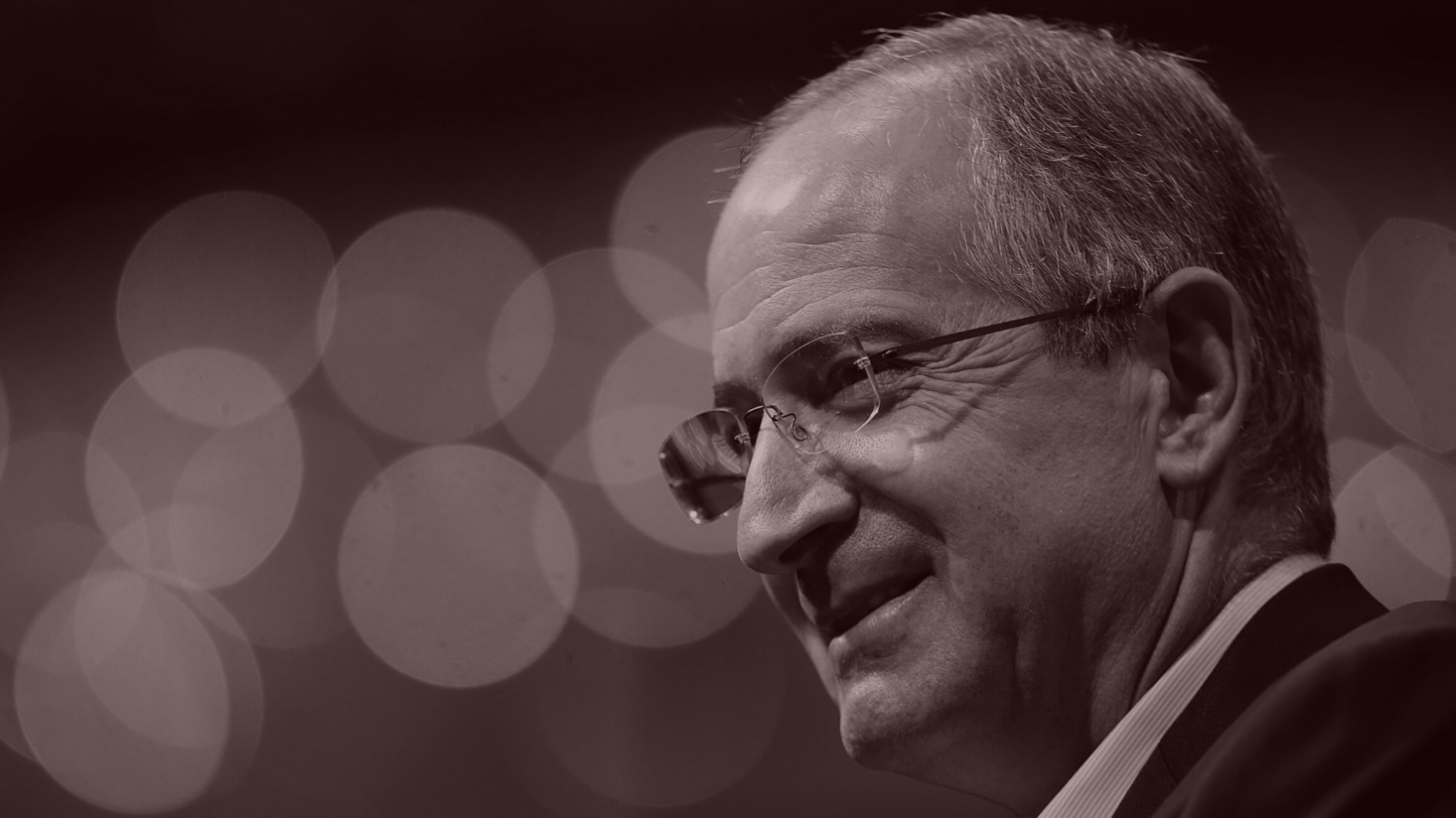
At the age of 63, Brian Roberts likely has another decade or so at the helm of Comcast before he decides to hang up his cleats. Roberts, of course, is an inveterate dealmaker, and the odds that he sits on the sidelines while his competitors hunt large M&A game is slim to none. As fate would have it, a possible mega-deal might already be coming into view. In today’s issue, I look at how Roberts’s past might foreshadow the media deal of the century, and consult with cable pioneer Tom Rogers about the strategic considerations likely running through his mind.
|
 |
| The Next Media Deal of the Century? |
| Tom Rogers, the cable legend, envisions an ambitious and elegant hypothetical: What if Brian Roberts and David Zaslav cook up a merger to compete with Apple and Amazon? |
|
|
|
| Like several other media moguls, such as Lachlan Murdoch and Roy Disney, Comcast C.E.O. Brian Roberts had the good fortune of being born into the right family at the right time. His late father, Ralph Roberts, was the founder of Comcast and served as its C.E.O. for 46 years. But it was Brian, with help and advice from his father, who turned the regional cable company into a national media powerhouse through a series of large and astute acquisitions.
There was the landmark $72 billion acquisition, in 2001, of AT&T Broadband, the phone company’s cable business, at the time one of the largest M&A deals in history. It was an audacious and, at first, unfriendly deal, especially since AT&T Broadband was a subsidiary of AT&T and most decidedly not for sale when Roberts approached Michael Armstrong about buying the business. In the end, Roberts wore Armstrong down and put pressure on the AT&T management and board of directors to sell him the business by making public his generous offer for the subsidiary. (Along with many others, I worked on the deal as a M&A banker when I was at JPMorgan Chase.)
Roberts used the same technique—persistence, mixed with tenacity—to convince Jeff Immelt, the C.E.O. of GE, to sell him a majority stake in NBCUniversal in 2009 for around $25 billion (and the balance of the company a few years later). Brian had been on Jeff for years to sell him the business, after Comcast lost out to GE in the auction to buy Universal from Vivendi, in 2003. GE then married Universal with NBC to create NBCU. (GE got its hands on NBC in 1986 after GE bought RCA, which owned NBC along with a bunch of other disparate businesses.)
Brian bromanced Jeff on the golf course and over many a dinner to try to get him to sell NBCU to Comcast. Finally the time came, in 2009, after GE nearly went down the tubes in the aftermath of the financial crisis and it was looking to raise cash fast during a stressful financial period. Jeff turned to Brian, without an auction, and the two men and their teams got the deal done over a period of a few months. The two acquisitions—AT&T Broadband and NBCU—are still considered among the best media deals ever done and helped to make Comcast what it is today, a premiere media company with a market value of around $175 billion, even though Comcast’s stock is down some 26 percent so far this year. (In 2016, Comcast added DreamWorks Animation for nearly $4 billion.)
Brian is a deal shark, and he has missed on things, too. In 2004, some five years before he made the deal for NBCU, he launched a hostile stock offer for Disney for total consideration of around $66 billion, including the assumption of Disney’s debt. “This is a very exciting moment,” Brian said at the time in a conference call with investors and Wall Street analysts, adding that the combination of the two companies “would create one of the world’s premier entertainment and communications companies, and, we believe, restore the Disney brand to prominence and the company to growth.” But the approach failed. Comcast shareholders hated the deal and dumped Comcast stock, driving its price down into a near-death spiral, reducing materially the value of the offer for Disney, effectively scotching it. It was a rare and very public blunder for him. |
| ADVERTISEMENT |
 |
| The metaverse may be virtual, but the impact will be real
In the metaverse, biology students will have a larger-than-life view of microscopic organisms—transforming what is possible for science education, research and medical breakthroughs.
Learn how Meta is helping build the metaverse. |
|
|
| There were other failures too. Comcast tried to buy TimeWarner Cable, the cable business that TimeWarner spun off in 2009. But Comcast abandoned the $45 billion deal in 2015 after federal regulators worried that Comcast was becoming too dominant in the U.S. cable business. Comcast also failed in its effort to beat out Disney in the battle to buy 21st Century Fox from the Murdochs. Comcast offered $65 billion for Fox but Disney ended up offering around $71 billion, or 10 percent more, to win the day. Part of the appeal of Fox for Comcast was its 39 percent ownership stake in Sky plc, the British cable network. In the end, at the urging of Steve Burke, the C.E.O. of NBCU, Roberts focused his acquisition efforts on Sky, dropping his bid for Fox. In 2018, Comcast bought Sky for around $40 billion, beating out the Murdochs for the balance of the company it didn’t already own.
But Wall Street has never embraced the Sky deal and it is still very much a work in progress for Comcast. “Comcast still hasn’t said why they bought it, nor what they plan to do with it beyond simply running it as is,” media analyst Craig Moffett, of MoffettNathanson, said of the deal in 2020. “…Nor have they articulated any vision for why they wanted to own Sky, beyond simply arguing that it is a better business than most people think.” (In the most recent quarter, Sky’s revenue fell nearly 14 percent year-over-year and the service lost more than 200,000 subscribers.)
I’ve also been able to independently confirm what John Malone told CNBC, in May 2021—that Comcast was at the table, in competition with Discovery Communications, in the process that led to AT&T selling TimeWarner to Discovery. “There’s no question” Brian wanted to acquire WarnerMedia, Malone told CNBC. But, in the end, he continued, AT&T decided it would be easier from a regulatory perspective to work with Discovery, rather than Comcast, allowing David Zaslav to proceed with the creation of Warner Bros. Discovery. More recently, as my partner Dylan Byers first reported, Roberts approached Electronic Arts C.E.O. Andrew Wilson about merging his gaming company into a spun-off NBCU. The Roberts family would have taken majority control of the combined entity, but the deal fell apart.
So what’s an inveterate dealmaker like Brian Roberts to do now in order to compete better with the array of media giants that surround Comcast? Brian is 63 years old and probably has another decade, or more, at the helm of the company before he decides to hang up his cleats. And he’s not the type to just let Comcast sit tight while his competitors, which include some of the world’s largest and most well-capitalized corporations, implement their ambitions.
There has been much talk about Comcast possibly buying the newly renamed Paramount Global, the combination between CBS and Viacom that is controlled by Shari Redstone, the matriarch of the Redstone family. But even though that would be a relatively modest acquisition for Comcast, at around $16 billion these days, the deal is problematic, since Comcast would then own both NBC and CBS, a prospect that would obviously never get regulatory approval, forcing Brian to get rid of one of the two. What would be the point of that?
To try to get a better sense of what Brian’s next big strategic move might be, I turned to cable pioneer Tom Rogers. Rogers is a media legend. When he was senior counsel to the House Subcommittee on Telecommunications, Consumer Protection and Finance, he helped draft the Cable Franchise Policy and Communications Act of 1984, which established the federal regulatory framework for the cable industry. In 1987, he joined NBC, as president of NBC Cable, to launch NBC into the cable-channel business. Along with Zaslav and Bob Wright, the longtime C.E.O. of NBC, and of course Jack Welch, he helped create both CNBC and MSNBC, as well as a range of other cable channels such as National Geographic, TruTV and the Independent Film Channel.
The fact that NBC is a player today in cable television is due largely to the partnership at GE forged between Rogers, Wright, and Zaz. Rogers also served as co-chairman of the board of A&E Television Networks and The History Channel. He’s a member of the Broadcasting and Cable Hall of Fame. He’s a former chairman and C.E.O. of Primedia and spent 11 years as the president and C.E.O. of Tivo. Since May 2020, he’s been the executive chairman of Engine Media, Inc., a small publicly traded gaming and media company. Naturally, I was curious to hear what Rogers had to say. |
| The Next Deal of the Century? |
|
| Comcast’s relatively poor second-quarter earnings report served as the backdrop for my conversation with Rogers. It was the first time in the company’s history that its cable subscriber growth stalled out. Comcast had the same number of cable subscribers—32.16 million—at the end of the second quarter as it did at the end of the first quarter. Comcast did get a boost from NBCU, particularly its Universal theme-park business, which is second only to Disney’s and had a revenue increase of 65 percent from a year earlier as the pandemic restrictions eased, and from its Universal movie studio, which had a hit with Jurassic World: Dominion. Still, the quarter showed that both Sky and Peacock+, NBCU’s streaming service, continued to struggle. Comcast reaffirmed its guidance that Peacock+, with a steady 13 million subscribers, will have a negative EBITDA in 2022 of $2.5 billion. Yikes.
So what to do? Rogers’ idea, which makes a lot of sense to me, is that at some point in the nearish future, Brian and Zaz need to put their heads together on a combination of NBCU and Warner Bros. Discovery. It would be a blockbuster deal, of course—with a headline valuation of around $150 billion, or more—and which could give Brian a controlling position in one of the nation’s largest cable operators and perhaps in one of the largest media companies, each of which would trade publicly and reap the multiples awarded to the best of the pure plays in their respective industries. |
| ADVERTISEMENT |
 |
|
|
| What prompted the thought was that, at the moment anyway, it seems the market was attributing little value to Comcast for NBC and Sky. “One way to look at that is that they are deeply undervalued,” Rogers said of NBC and Sky. “The other way to look at it is, well, maybe this thing shouldn’t be a combined company because you’re never going to get the value that way.” (For what it’s worth, several leading Wall Street media analysts, including my friends Jonathan Chaplin and Rich Greenfield, share Rogers’s view that Comcast needs to unlock value for shareholders in this way or in a similar way.)
Rogers shared the thought that the timing is not quite right now for Brian to suggest the deal with Zaz. He said that a better moment would come after the next two quarters or so, should Warner Bros. Discovery endure operational and financial growing pains. Zaz has promised that Warner Bros. Discovery’s EBITDA will be $14 billion in 2023. That’s increasingly looking like a very tall order. WBD has not made public its trailing 12 months EBITDA—there are some estimates out there of around $7.5 billion—but it has said that its pro forma 2021 EBITDA should be in the range of $10.85 billion. We’ll know more about how WBD is faring when it releases its second quarter earnings tomorrow. (Some expect that tomorrow might also be a bit of a WBD reset.)
If WBD is no longer on track for the $14 billion of EBITDA in 2023, that could further damage WBD’s equity value, now around $40 billion, and down 38 percent so far this year. Rogers’s thinking is that if WBD stumbles, there could be an opening for Brian to make a deal with Zaz. He quickly adds, “I love David, so I’m not rooting for this,” but if the $14 billion in EBITDA for WBD proves elusive for 2023, and the $55 billion in WBD debt continues to loom large, a deal might look good for both sides.
There are also time limitations on when a deal for WBD could happen: generally speaking, according to the rules governing a reverse Morris Trust structure—which was how the WarnerMedia-Discovery deal was designed—WBD would have to wait two years before doing a new deal of some sort. Still, the deal, should it happen, would give Zaz a whole bunch more assets to play with, make him even more powerful in media circles, and give him more cash flow to help pay down his debt. It would also presumably have the support of Zaz’s mentor, Malone, who in the same May 2021 CNBC interview said he had already spoken to Brian about a potential hook-up with WBD down the road since NBCU was a “pickle out of the jar.” (Both Jennifer Khoury, the chief communications officer at Comcast, and Nathaniel Brown, who has the same position at WBD, declined to comment.)
Assuming that Roberts would try to structure it in such a way that Comcast would end up with 51 percent stake of a combined NBCU-WBD, it might just be appealing for Comcast. Brian loves to control a joint-venture if he can, just as he did with GE and NBCU. He might also be willing to accept a less-than-control position, if the economics make sense. Once upon a time—pre-pandemic—the consensus seemed to be that NBCU was worth around $100 billion, with an annual EBITDA of around $9 billion annually. These days, NBCU’s “adjusted” EBITDA for the last 12 months is $6.1 billion. Who knows what it’s worth these days, but probably closer to $75 billion than $100 billion. A combined NBCU-WBD, when it’s hitting on all cylinders, could have more than $20 billion in EBITDA putting it at or near the front of the pack along with Disney’s pre-pandemic financial performance. The combination of the two businesses could be an elegant, if somewhat complex, way for two ambitious men to be able to compete long-term against Disney, Apple, and Amazon. |
| “They Might Have to Sell Something” |
|
| Rogers also points out wisely that since Malone, at Liberty, and the Newhouses, at Advance, both relinquished their voting control over Discovery as part of the merger with WarnerMedia, it could be easier for Brian to get a deal done with Zaz by combining NBCU and WBD. “They’re in it for an economic play now,” Rogers said of Malone and the Newhouses. (Of course both the Newhouses and Malone remain big shareholders in WBD and have seats on the WBD board of directors.) There would be other hurdles, too. Could the combined NBCU/WBD own both CNN and NBC? Could it own both Universal Studio and Warner Brothers? Would there be other assets that would have to be divested to satisfy the regulators? “Putting all those assets under one roof, yeah, they might have to sell something to get it done,” Rogers said.
But the once-in-a-lifetime opportunity for Brian and Zaz to create a monster competitor might prove irresistible to both men, at some point before too long. “I imagine that David would welcome a fix,” Rogers continued. “And obviously if he could run it, he would really welcome it. But if it buttresses his economics and he’s got a deal with Brian, I think he’d do it.”
It’s fun to speculate about these deals. It’s what M&A bankers on Wall Street do all day long when they are not actually executing the deals that are happening. It's how they prove to the Brian Roberts and the David Zaslavs of the world that they are clever and can see around corners—and therefore are worth hiring when the time is right to pursue such strategic moves. But that doesn’t mean they are going to happen, or are even being contemplated.
But when a very smart and very experienced media executive like Tom Rogers suggests an idea like the combination of NBCU with Warner Bros. Discovery, it’s worth contemplating and taking seriously, at least until circumstances change to make it no longer logical or economically feasible. Ditto when the same seed was planted by the powerful Malone just as WBD was being created. At the moment anyway, with Brian Roberts out of most options for NBCU and for the Zaz enterprise seemingly struggling a bit with its earnings prospects and a $55 billion debt overhang, this is a damn smart idea whose time might be approaching. |
|
|
|
| FOUR STORIES WE'RE TALKING ABOUT |
 |
| Pelosi's Cold War |
| Notes on the speaker's Taipei visit and the paradox waylaying the Griner negotiations. |
| JULIA IOFFE |
|
 |
| The Plepler Riddle |
| Black Bird might be the breakout show of the summer, so why is it so hard to find? |
| JULIA ALEXANDER |
|
 |
| Nancy’s Napa Bacchanal |
| On the coming Pelosi-sized hole in Dems' fundraising and Thiel's G.O.P. shadow project. |
| TEDDY SCHLEIFER |
|
 |
| The Legend of Beto |
| Is O’Rourke a generationally talented politician or a lovable martyr who lights money on fire? |
| TARA PALMERI |
|
|
|

|
|
|
| You received this message because you signed up to receive emails from Puck
Was this email forwarded to you?
Sign up for Puck here
Sent to
Unsubscribe
Interested in exploring our newsletter offerings?
Manage your preferences
Puck is published by Heat Media LLC
227 W 17th St
New York, NY 10011
For support, just reply to this e-mail
For brand partnerships, email ads@puck.news |
|
|