Welcome back to Wall Power, coming to you after Mrs. Wallpower and I
raced to get to Los Angeles ahead of the bomb cyclone. I’m Marion Maneker, wishing you luck if you’re still in the path of the storm.
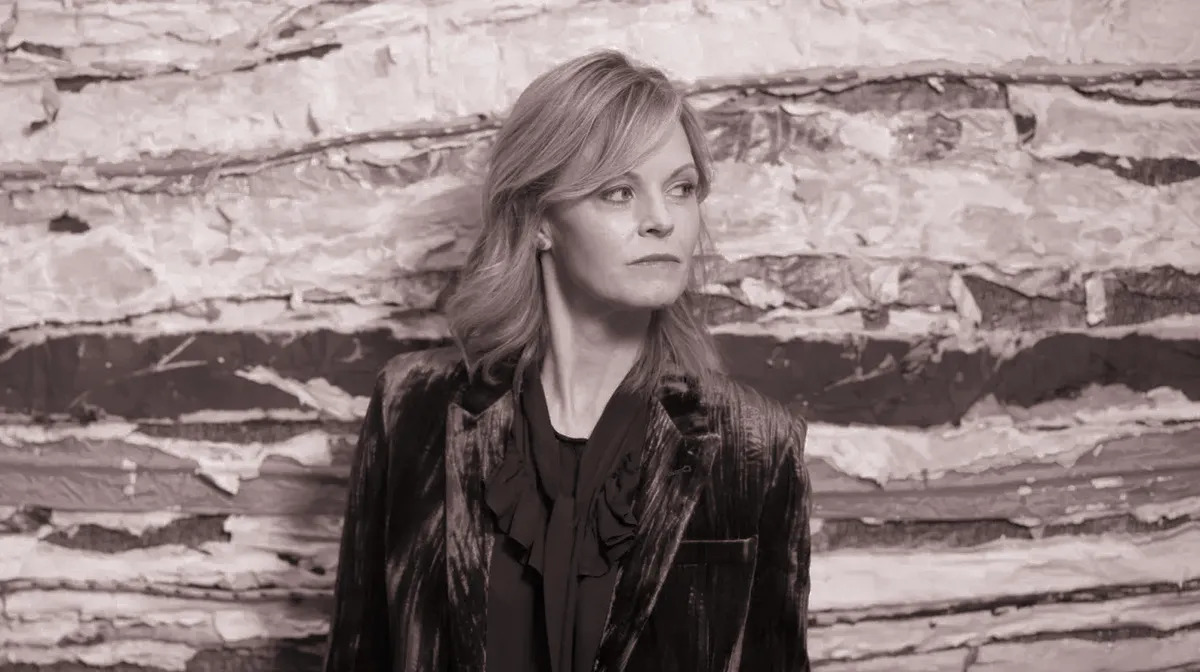
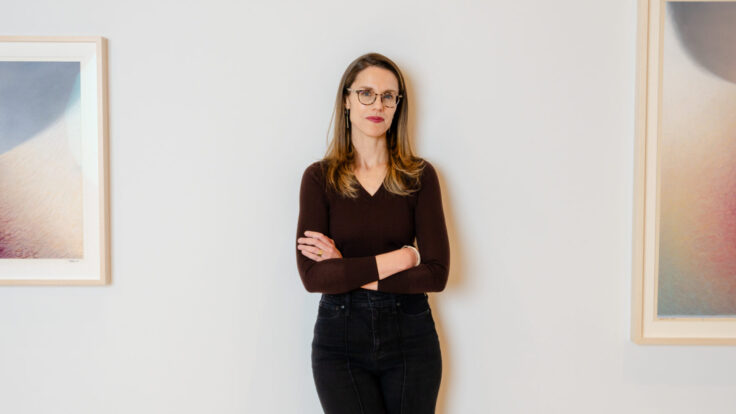
And though I’m physically out west for Frieze, tonight’s newsletter is taking you to Chicago to hear from Virginia Shore, the curator of the Obama Presidential Center. Art plays a unique, central role in Barack and Michelle Obama’s vision for their new Chicago institution, which opens in
June. Our friend Dan Duray spoke to Shore about whose work she commissioned for the O.P.C. and why.
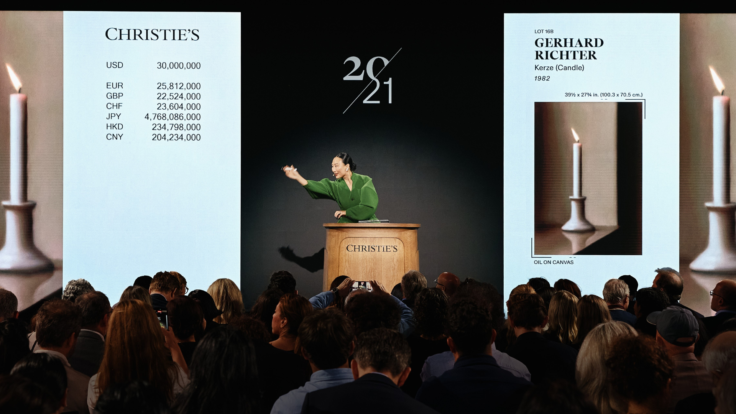
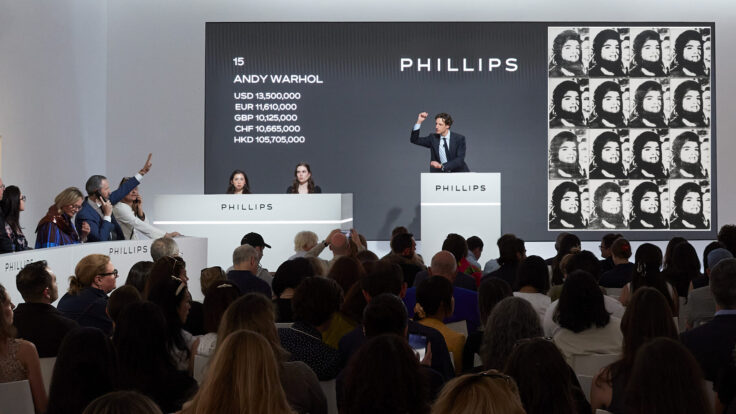
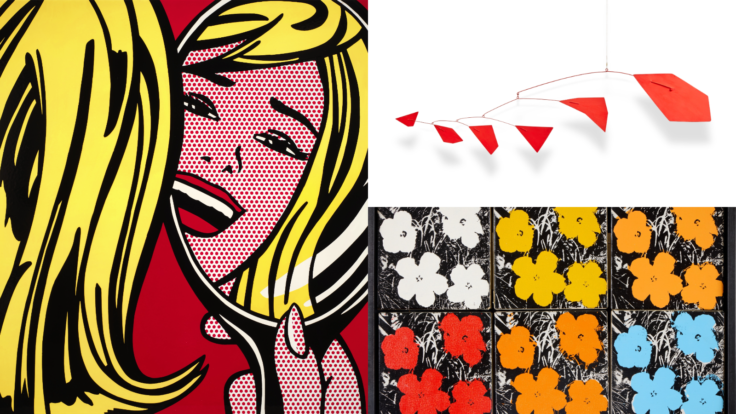
Also, I’ve got a brief look at the collection of Barbara Jakobson—the MoMA trustee and fearless champion for a generation of artists and designers—which is being offered this week at Christie’s. And I’ll introduce you to some of the lots I found interesting in the house’s Post-War to Present sale.
I should have a full Frieze report on Friday, but if
you’re here in L.A. and you see me, say hello. Don’t hold back, especially if you think I got something wrong or there’s something I should know about. Those of you who aren’t into the whole confrontation thing can still text me on SMS or WhatsApp at 1.917.825.1391, or just reply to this email.
Speaking of which, if you’re not a subscriber yet, fix that here.
Mentioned in this issue:
Virginia Shore, Barack Obama, Michelle Obama, Barbara Jakobson, Jeff Koons, Robert Rauschenberg, Nick Cave, Thelma Golden, Kehinde Wiley, Amy Sherald, Cy Twombly, Jasper Johns, Richard Prince, Maya Lin, Carrie Mae Weems, and
more…
Now, let’s go to Barbara’s townhouse… |
-
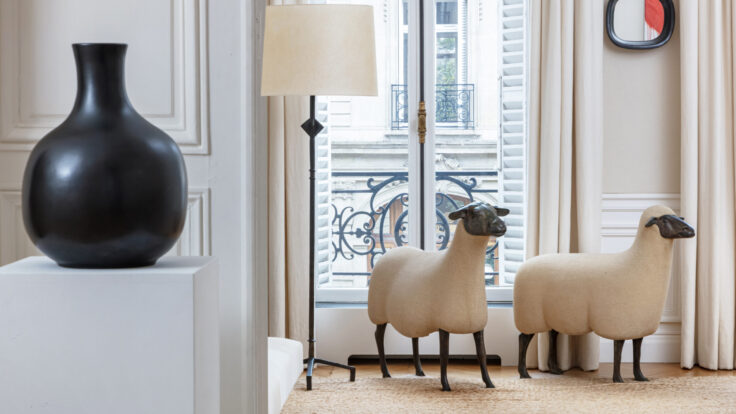
Half a century on the Upper East Side: It now seems kind of quaint to think that the wife of a mere stockbroker could be a trustee of MoMA, but such was the upwardly mobile life of Barbara Jakobson, who died last August at the age of 92. Jakobson grew up on Brooklyn’s Eastern Parkway, not far from the Brooklyn Museum; studied art history at Smith; and eventually befriended Leo Castelli and a generation of downtown artists looking for uptown access, particularly to
museums. The townhouse she and her husband bought in 1965—which she kept long after their divorce—was the venue she used to make those connections, as well as a showcase of her enthusiasms. “She filled it from top to bottom with everything that made her vision come to life,” her daughter Jenna Torres told me last week on a call from the townhouse.
Jakobson collected a wide range of artists, designers, and photographers and never felt bound by loyalty to any one group. She
was friends with Robert Rauschenberg, Jasper Johns, and Brice Marden, but she also collected the work of artists like Julian Schnabel and Kenny Scharf, and designers like Vladimir Kagan and Gio Ponti. She also wasn’t afraid to start over and rethink her own aesthetic. Once, “she made a decision that she wanted
to get back down to the studs and start over,” said her other daughter, Maggie Wheeler, the actress whom you might remember as Janice on Friends. “And that was a very bold and radical choice.”
“I feel like my mother was deeply intuitive,” Jenna chimed back in. She could foresee what would become popular, commit to it, evangelize for it, and then get rid of it—“Okay, now everybody’s got that. I’m moving on to something new,” as Jenna described the
mentality. In 2005, Jakobson had a big sale in which she divested herself of the Vladimir Kagan sofa that had defined her living room. Fran Lebowitz supposedly told her to sell the Schnabel and keep the Kagan. Jakobson listened to Lebowitz, at least somewhat—she apparently sold the Kagan and the Schnabel, because there is no Schnabel in the sale of the contents of Jakobson’s townhouse. But there is one of an edition of three of Jeff Koons’s Winter
Bears, a polychrome wood sculpture of the type that happens to be very much to the market’s taste right now. That work is estimated at a very healthy $3.8 million and makes up the bulk of the collection’s $6 million estimate. There are a number of other less expensive works like a $300,000 Ed Ruscha, a $500,000 Josef Albers, and a handful of Diane Arbus photographs starting at $40,000. There’s also a big
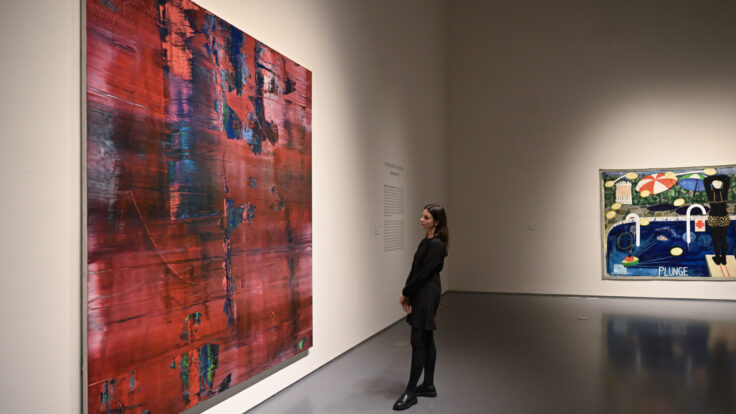
Mike Bidlo Picasso pastiche from his surrealist period that would be a steal at the $40,000 estimate. - Christie’s Post-War to Present: Since we can’t seem to have a newsletter without speaking of Cy Twombly, the Post-War to Present sale has a set of six
lithographs from his Roman Notes series (out of a relatively large edition of 100—plus 10 artist’s proofs), estimated at $700,000, which are on view in their prominent showcase at the foot of the gallery stairs. Another gold
Olga de Amaral, from Elaine Wynn’s estate, is on offer for $400,000, alongside this jewel-toned work estimated slightly lower at $350,000. A great Richard Prince car hood (with David Hammons overtones) is
estimated at $250,000.
A Charles Bell photorealist pinball machine is estimated at $200,000, and Sotheby’s has one too, on offer the next day. Both come on the heels of last November’s record-setting sale of a Bell
pinball painting, sold for just above $800,000. (The previous record for the artist was $770,000, for yet another pinball work, set in 2007.) Meanwhile, Steven Parrino’s Sinsational Sinthia is coming back to the market with an estimate of $200,000, which is nothing compared to the nearly $570,000 it made just four years ago.
I personally liked this Robert Rauschenberg, Apple-Run (Shiner),
estimated at $150,000; a smattering of very different abstract works by Etel Adnan, estimated at $100,000; Fever Pitch, a very good Julia Jo, estimated at $30,000; and this Gloria
Klein, estimated at $15,000, which outshines any of the works currently on view at Anat Ebgi gallery until the end of the week.
|
|
|
The Obama Presidential Center won’t open until June, but its curator, Virginia
Shore, has been commissioning art for more than seven years in preparation for the big day. Here she explains the ethos and ambition of the center’s unprecedented collection. |
|
|
This summer, the opening of the Obama Presidential Center, on the South Side of Chicago, promises
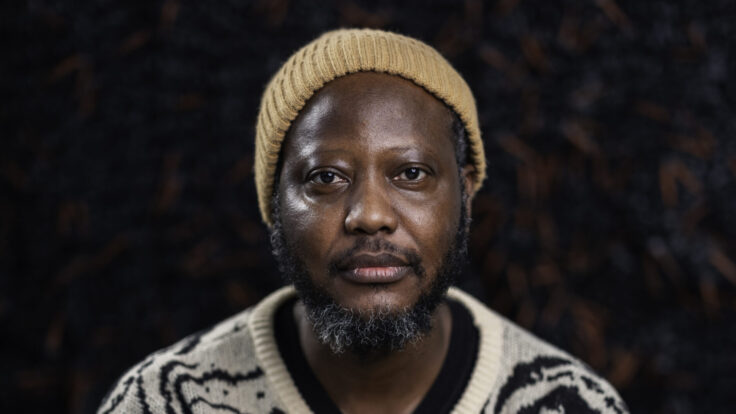
to obliterate previous expectations for a presidential library. In the nine years since he left office, Barack Obama has positioned himself more as a cultural influencer than a politician—seemingly wielding greater power over Spotify mixes and March Madness brackets than electoral outcomes. His library will reflect a life beyond politics, boasting commissions by more than 25 artists—among them Maya Lin, Julie Mehretu, Nick Cave,
Jenny Holzer, Spencer Finch, Lindsay Adams, Jack Pierson, Kiki Smith, and Theaster Gates.
It takes a village of art pros to land such commissions for a project this large, including an established art advisor. That’s where Virginia Shore comes in. For the past seven years, Shore has been consulting and curating for the O.P.C., upon the recommendation of Thelma Golden, an
Obama Foundation board member and the director of the Studio Museum in Harlem. Between 2000 and 2018, Shore was chief curator at the State Department, commissioning 79 works for U.S. embassies and consulates worldwide. (The program, as Puck’s Julia Ioffe wrote recently, is now under quite different management.) I caught up with Shore to hear more
about what to expect from the center when it opens in June. As always, this interview has been edited and condensed for clarity. |
Dan Duray: What’s the general ethos for the art of the Obama
Presidential Center?
Virginia Shore: This represents a complete reimagining of historic and existing presidential centers. It will be a vibrant, inclusive space for all, and a destination that fosters hope. The center brings to life a core belief of the Obamas: that ordinary people, working together, can do extraordinary things. In fact, the museum’s design draws on the image of four hands coming together. Ultimately, our goal is to
promote connection, cross-cultural dialogue, diversity, and exchange.
Why bother having art at a presidential library at all?
Several of the U.S. presidential libraries include art, but most often showcasing gifts of art and artifacts received during the president’s tenure. What will differentiate the O.P.C. is that it will include commissioned, site-specific work by contemporary artists who share a commitment to art as a civic and
ethical practice. O.P.C. is the first presidential center that foregrounds community as an integral part of its mission. This is reflected in every aspect of its 19-acre footprint, which includes a playground, basketball court, auditorium, restaurant and cafe, sledding hill, wooded areas, and a new branch of the Chicago Public Library.
What qualities do you seek in an artist to make them eligible for a commission? What connects them all?
The
underlying connector here is that all of the commissioned artists are civically engaged at their core. The O.P.C. artists utilize the aesthetic experience as a conduit for social transformation, creating works that function as vital responses to contemporary global conditions. Carrie Mae Weems, for example, layers photography with jazz soundscapes, centering Black stories and resilience against erasure. Witnessing Nick Cave and Marie Watt
collaborate to create Land, Sky, a multimedia sculpture that binds personal histories to shared futures, has been another great example of this ethos. Same with Tyanna Buie, whose work Be the Change! reflects her youth’s civic engagement through bold, hopeful visuals. |
Were there guiding principles or some sort of written guide to what kind of art and artists
should be chosen?
There were no rigid guidelines; the Obamas set the tone by championing commissions that reflect the focus of the center—to inspire and remind us all that we can be changemakers. The goal is not to illustrate a singular story of the Obama presidency, but to create an environment where multiple histories, cultural traditions, and ways of knowing coexist. The resulting commissions reflect a commitment to artistic rigor in addition to emphasizing
public engagement and collective empowerment. We prioritized fearless creativity.
How involved are the Obamas in this process?
Very involved. Ultimately, every commissioned artist was considered and confirmed by President Obama. I proposed artists, spaces, and concepts grounded in existing examples of each artist’s work, supported by renderings, biographies, and relevant articles that demonstrated how their practice could be translated into a
site-specific commission. The proposals also considered how each commission would exist in dialogue with others across the center, always prioritizing the artist’s voice and its alignment with the Obamas’ values and the broader objectives of the center. Four of the commissioned artists were preordained even if their concepts and placement were not.
Have the Obamas visited any artist studios?
Yes. They have an incredible curiosity about artists and
how they work. They love seeing where ideas take shape, whether that’s in formal museum settings or behind the scenes in creative spaces. The artists worked with us, and we worked with them. Every commission was a collaboration.
Your latest release says O.P.C. will feature more than 25 artists, more than the original 20. Has the library expanded as you’ve begun to work on it?
The art program expanded, and I’ll never forget the meeting when it truly
took shape. Several of the O.P.C. teams and the museum director were gathered around a table with Mrs. Obama when she spoke about her vision for the center as a living, breathing, cultural and educational hub for kids, students, families, and the community. There was this palpable energy in the room as she described bringing in not only visual artists, but also educators, performers, chefs, musicians, conservators, and everyone who contributes to cultural life. She spoke about kids from the
South Side coming to the center and discovering not just art on the walls, but the people behind it: artist-educators, curators, conservators, guards, even stage technicians.
It was one of those moments when the purpose of the project expanded before our eyes. Her insistence on accessibility and inclusion redefined what the Obama Presidential Center’s arts program would be: a showcase for art, but also a launchpad for the next generation of creators and a catalyst for imagination. It’s a
professional pinnacle that also feels personal; it’s about embedding hope and dialogue into every corner of this campus, making culture a democratic force that says to Chicago and the world: “You are seen, you are valued, and this is your space.”
The Art section on the library’s website begins: “From the White House to the Obama Presidential Center, President and Mrs. Obama have used the arts as a tool to inspire, empower, and connect people from around the world.” How did they do
this in the White House?
They took the White House art collection to a whole new level under their administration. They worked closely with the Committee for the Preservation of the White House and the White House Historical Association, as well as their interior designer, Michael Smith, to add diversity and bring in more 20th and 21st century art. They used the White House as a cultural platform, inviting artists, musicians,
writers, and performers to participate in public programs. These initiatives emphasized access, cultural diversity, and the arts as a means of civic connection, particularly by elevating voices and histories that had not always been centered in that space. A few of the artists included in the White House during their presidency were Alma Thomas, Anni Albers, Kerry James Marshall, Glenn Ligon, Jacob Lawrence,
Lucy Lewis, Maria Poveka Martinez, Susan Rothenberg, Robert Rauschenberg, and Mark Rothko. |
Barack and Michelle Obama famously had their official portraits done by Kehinde Wiley and
Amy Sherald, respectively, which made both artists household names overnight. Do you have galleries pitching you on artists for the fame that might emerge from such an association?
As people began to learn more about our commissioned arts program, there has been tremendous enthusiasm about proactively and organically engaging in our offerings. We expect to continue these conversations after we open.
Have any of the artists you’ve approached said
no?
No.
The library is set to open this June. Is all the art done? Are you sweating anything?
Several of the commissions are complete, and the remaining are in process. All will be installed before opening! The installations began in November of 2025 and will roll through April of this year. We cannot wait to welcome the public. |
Thank you, Dan. That was interesting. Looking forward to seeing some or many of you this week in
Los Angeles. The rest of you will hear from me again on Tuesday.
Until then,
M |
|
|
Finally, a media podcast about what’s actually happening in the media—not the oversanitized,
legal-and-standards-approved version you read online. Join Dylan Byers, Puck’s veteran media reporter, and Julia Alexander, a longtime media analyst, as they sit down with TV personalities, moguls, pundits, and industry executives for raw, honest, sometimes salacious conversations about the business of media and its biggest egos. New episodes publish every Tuesday and Friday. |
|
|
The ultimate fashion industry bible, offering incisive reportage on all aspects of the business and its biggest
players. Anchored by preeminent fashion journalist Lauren Sherman, Line Sheet also features veteran reporter Rachel Strugatz, who delivers unparalleled intel on what’s happening in the beauty industry, and Sarah Shapiro, a longtime retail strategist who writes about e-commerce, brick-and-mortar, D.T.C., and more. |
|
|
Need help? Review our FAQ page or contact us for assistance. For brand partnerships, email ads@puck.news. You received this email because you
signed up to receive emails from Puck, or as part of your Puck account associated with {{customer.email}}. To stop receiving this newsletter and/or manage all your email preferences, click here. |
Puck is published by Heat Media LLC. 107 Greenwich St., New York, NY 10006 |
|
|
|