{{ 'now' | timezone: 'America/New_York' | date: '%b %d, %Y' }} |
|
|
|
🌞 Greetings from Sun Valley, and welcome back to In the Room. I’m en route to Seattle,
as I didn’t get the invite to the Murdochs’ big Fox retreat in Montana this weekend. It was great seeing so many of you, and thanks for taking the time to venture beyond the Duck Pond. Safe travels on the Gulfstream, enjoy Camp in Sicily, and I’ll see you in September at the U.S. Open.
For those curious about the programming at the Lodge, highlights included Jared Kushner, Naftali Bennett, and Yousef Al Otaiba talking
about the future of the Middle East, and a discussion on neurological innovations with Science Corporation founder Max Hodak and professors from Stanford and the University of Washington. And for the Belloni crowd: Taylor Sheridan and Brian Grazer talked Hollywood with Anderson Cooper. (Taylor, one source said, “was hugely entertaining.”) For the Cohan and/or Krietzberg crowd: I
noted earlier this week that Bezos shared some mind-bending space infrastructure visions.
In tonight’s issue, the inimitable Julia Alexander explains how news publishers can pull away from search engines, reorient their business models, and redefine success in the post-Google Zero
age. Plus, a scoop from me on Jeff Zucker’s forthcoming I.P.O.
🎙️ Plus, on the latest episode of The Grill Room, Julia and I dug into The New York Times’s pivot to a video-first model, which was confirmed this week by executive editor Joe Kahn. We discussed what it means for the Times’s business and marketing strategy, what happens to newsroom culture when a star system takes hold, and what the move portends for journalism writ
large. Follow The Grill Room on Apple, Spotify, or wherever you prefer to listen.
Also mentioned in this issue:
Bari Weiss, Ted Sarandos, Gavin Newsom, Gerry Cardinale, Evan Shapiro, Mike Peralta, Ellen Pollock, Adam Mosseri, Matt Brittin, Emma Tucker, Peter Kafka, Marco Bassetti, Jamie Dimon, David Ellison, Pui-Wing Tam, Tim Noah,
Rose Horowitch, Neal Mohan, Connor Hayes, Kamala Harris, Greg Peters, and more. |
-
Scoop: Zucker eyes I.P.O.: Jeff Zucker and Marco Bassetti have officially closed their merger of RedBird IMI’s All3Media and Banijay Entertainment, forming the world’s largest independent production company. I am told by sources familiar that their goal is to go public in the U.S. by the end of next year.
The new Banijay Entertainment will have an impressive balance sheet: $5 billion in revenue and $800 million in EBITDA, which is more
than double Lionsgate’s. That makes it worth roughly $10 billion, based on a conservative 12x multiple for a pure-play content business, and higher still if it trades in line with Lionsgate’s 14–15x multiple. As you know, David Ellison bought Paramount for less.
That’s a big get for the former CNN chief, who will serve as chairman of Banijay and whose RedBird IMI fund owns 50 percent of the business. The RedBird IMI portfolio now includes EverWonder Studio, Media Res, and
Front Office Sports—though, alas, not The Telegraph. I still suspect that Jeff would want back into the news business if he were given the right opportunity, either at the investor level or as an operator. (It’s almost painful to watch Ellison and Gerry Cardinale search for a white-knight TV exec to help Bari Weiss run CBS News–CNN when they’ve already got one in the building.) Anyway, in three short years, he’s managed to build a formidable
shingle—all the more so if he and Marco succeed in taking it public.
|
|
|
|

| Lauren Sherman
|
|
- Who wore it
vest?: There’s nothing more revealing about luxury consumer spending habits than the walk up to the lodge at the annual Allen & Co. conference, which is wrapping up in Sun Valley, Idaho. This year, I’m told that while Lauren Sánchez appeared as goofy as ever—nothing fits, but she does look pretty!—most of the women have blessedly moved out of their quiet luxury era, and instead opted for color and prints from non-obvious brands. Unfortunately, all the men are still
wearing head-to-toe navy, which is sort of a passé approach at this point. (Alas, I wished that they’d paid attention to the black-and-white-heavy Ralph Lauren show in Milan…) Anyway, herewith, my annual awards:
|
Top row, from left: Former Disney C.E.O. Michael Eisner; Eisner; Meta C.E.O. Mark
Zuckerberg; former Disney C.E.O. Bob Iger. Bottom row, from left: Moët Hennessy deputy C.E.O. Alexandre Arnault; Disney president Dana Walden; Fashion designer Diane von Furstenberg and former Away C.E.O. Jen Rubio; entrepreneur Wendi Murdoch. Photos: Kevin Dietsch/Getty Images; David Paul Morris/Bloomberg/Getty Images |
- Greatest sweater
program: Michael Eisner in soft red, and then forest green, v-necks. I’m inspired!
Best moment for a brand publicist: Mark Zuckerberg in Loewe shorts. They were snazzy, he is silly, and every fashion publication will pick it up.
Most disappointing turnout: I expect more of Bob Iger, who is fit and typically looks very put together. The proportions of his clothes were just very off this season, and I worry he
has stopped working with a stylist or personal shopper because he thinks he doesn’t need one in his new life, and that’s simply not true.
The watch to watch: LVMH heir, Moët Hennessy deputy C.E.O., and lover of America Alexandre Arnault wore an F.P. Journe Automatique Réserve in “18K 6N pink gold with the white gold dial (ref. AN),” according to the horological Instagram account Young Brando. What does this mean? It was the first automatic watch made by F.P. Journe—the most important independent watch brand in the world—and revered among true collectors. It was both a historic and modern choice, and indicates that Arnault has a pretty deep knowledge of niche timepieces. (Also, the founder refuses to be acquired, so don’t get any ideas.) Dimepiece queen
Brynn Wallner notes that the watch is an “excellent talking point for Sun Valley.”
Greatest tacky bag: Disney president Dana Walden likes shopping and dressing up, but she’s not sitting front row at Dior. (Actually, that’s not a bad idea…) Anyway, I love that she carried a white Celine mini luggage tote—at once a throwback to the Phoebe years, a nod to the white accessories trend, and a reflection of the
general brand heat around current creative director Michael Rider’s new interpretation of it all.
The only one on the promenade wearing Matthieu’s Chanel: Away co-founder and former C.E.O. Jen Rubio is a clotheshorse, with plans to open her own multibrand store in Manhattan next year, and obviously I noticed her looks more than others because she has fashion person–adjacent taste. While strolling with Diane von Furstenberg up to
the lodge, she wore a Prada top and skirt, a leather jacket from The Row, and a necklace by Beck, and carried an Hermès Bolide.
The real one: Wendi Murdoch honestly always, always looks great. She has a personal style, and you can tell she just wears what she likes—which is what you should do if you have a lot of money and a bit of power. I did miss Stacey Bendet this year, though.
|
|
|
|
- Paramount promises: Speaking of Ellison, there’s been a lot of focus this week on the $80 billion debt load he’ll inherit after closing the Warner Bros. deal—the resistance from state A.G.s and the U.K. culture secretary notwithstanding. Obviously, thousands of employees are going to lose their jobs. But, as some media execs reminded me this week at
Konditorei, the most effective way to cut costs is really through content spend. Of course, David has been out there promising to make more films. But something has to give, and his ops team is likely making those decisions now.
- What’s eating Netflix?: Are Ted Sarandos and Greg Peters in panic mode? The Netflix co-C.E.O.s seem to be throwing all manner of ideas against the wall recently as they seek to stem
declining engagement and fend off YouTube and other rivals. We’ll know more about Netflix’s direction after next week’s earnings call. Until then, I encourage you to read my partners Matt Belloni and Julia Alexander in discussion on the Netflix anxiety attack.
- Times change: New York Times
business editor Ellen Pollock will step down from the position this fall and take a new role at the paper, Times sources told me, confirming a report from Breaker’s Lachlan Cartwright. Tech editor Pui-Wing Tam is said to be among the top internal candidates to replace Pollock, but no one is a lock, and the Times will also consider external candidates.
Change here is long overdue. Even as the
Times expands its empire across all manner of beats and verticals, it has long ceded business coverage to the Journal, the FT, and others. And while they have much to be proud of, the competition has only intensified since Emma Tucker reenergized the Journal. (Indeed, Jamie Dimon seemed to be speaking for the entire business community when he told Emma that, while he reads the Times’s A section cover to cover, the
business section “isn’t so great.”) Anyway, I’ll be watching this one closely. - And finally…: The Atlantic has an “end-ism” fetish. Thanks to Tim Noah for calling it out in the wake of its latest grand-scale obituary on the act of reading books.
|
And now, over to Julia on a similar topic… |
|
|
|
Search is dead, A.I. is ripping your site, and no one under the age of 30 is
reading. But if you’ve got topical authority, telegenic talent, and a decent relationship with the bots, there may yet be a way out of this, dear publisher. |
|
|
|
On his podcast this week, Peter Kafka asked New
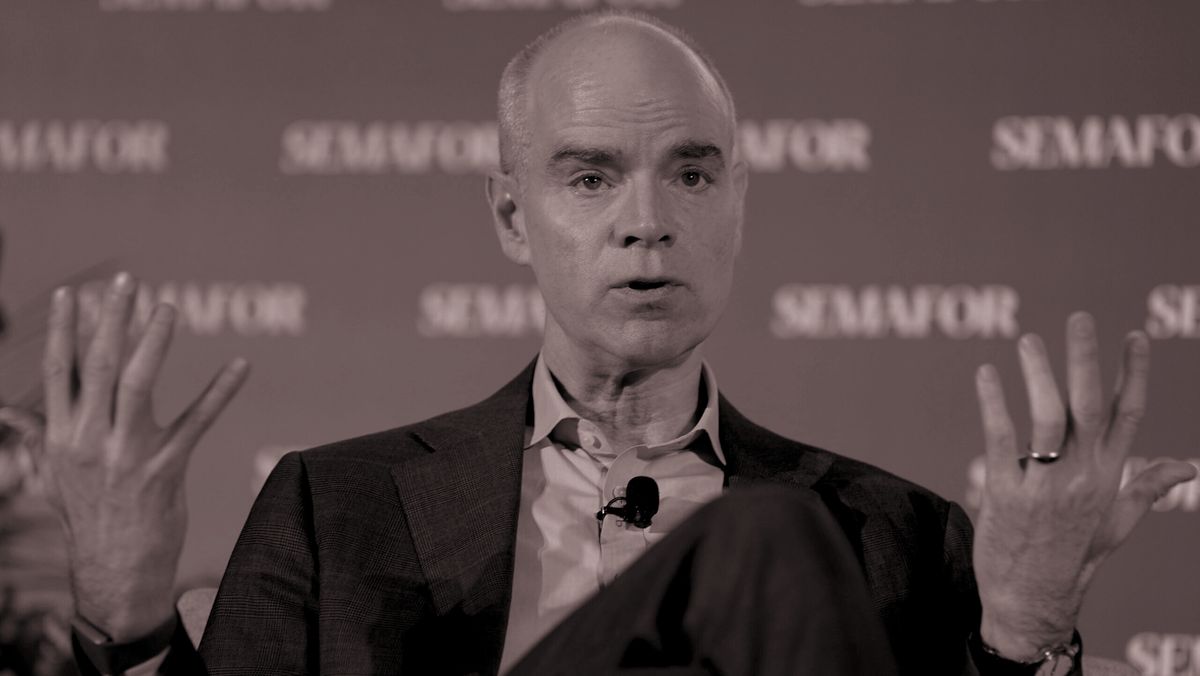
York Times executive editor Joe Kahn about the recent flood of shortform vertical video appearing on both the Times homepage and its social handles. Kahn described the initiative as “long-arc work,” meant to establish the brand as a source of quality journalism across visual platforms, and to reach new audiences, even if they aren’t quite ready to be monetized. “I believe strongly that as people get more exposed to high-quality reporting and information on their
feeds in the form that they want, they’ll want more of that,” he said. “The idea that we can just continue to refine the text form as people’s viewing habits shift, I think is kind of head in the sand.”
Kahn is a particularly calm and well-mannered character, but his comments touched a lot of nerves as publishers begin to perceive an event horizon built around the proliferation of A.I., the video-first habits of forthcoming generations, and a post-platform ecosystem. We live in a world
where homepages are vestigial or, worse, anachronistic. In some publishing circles, there’s a genuine debate over the once-unfathomable notion of opting out of Google. (On September 15, Cloudflare, which hosts roughly a fifth of the world’s websites, will change its default settings to block any crawler that scrapes for both search indexing and A.I. training.) Rose Horowitch’s provocative Atlantic cover story this week wondered aloud, with typical Vassar-inflected,
Criterion Collection–clutching dread, whether Gen Z wants to read anything at all.
But these are merely the familiar existentialist cries of an industry confronting the twin shocks of platform and preference shifts. All is not lost: Text continues to eat the majority of time that people spend with editorial brands, which is exactly why advertisers still want those eyeballs. And the old referral-driven
discoverability model isn’t dead—the smart play, as Kahn articulated to Peter, is to redefine discoverability before it hits zero. |
Wait,
Is the Medium the Message?
|
After generations of vertical integration followed by an era of disintermediation, news and
affinity brands are learning to get comfortable with ambient discoverability—or presence built through podcasts, video, and newsletters that live entirely off their platforms and aren’t designed to convert audiences back to the homepage. That may sound like giving Neal Mohan more business at a time when YouTube is already a dominant monopoly. But it’s a short-term play for a long-term audience—one that the Times is already making through many of its next-gen
products, all aimed at younger users who have never scrolled a news site 10 times a day or, obviously, held a physical paper in their hands. Popcast, Interesting Times, The Interview, and the like all do the trick. It’s a bet that repeated, familiar exposure pays off once a young adult begins their news-brand journey in earnest.
On a superficial level, it appears that most young people don’t care about news at all. (Yes, you were weird in high school
and stood out, but you knew that already.) According to a recent Pew report, only about a quarter of people under 30 say they ever go looking for news, a habit that becomes far more common as people age. (The good news is that foreign-policy interest is climbing among younger generations—ask Gavin Newsom or Kamala Harris about the questions they field from Gen Zers on the Israel-Palestine conflict.) Meanwhile, fully 81 percent of teens report getting their news
from influencers, according to a recent study from the American Press Institute. Kahn and his video team know this and are hoping to capitalize.
Of course, ambient discoverability means surrendering control to somebody else’s product roadmap. Adam Mosseri is giving Instagram’s 3 billion monthly users more say over what they see, and Threads, under Connor Hayes—who just took the platform past 500 million monthly users, roughly on par with X—has
deliberately deprioritized news and politics. But Matt Brittin, who ran Google’s EMEA business for a decade before taking over as director general of the BBC, has made meeting younger audiences on their own turf the organization’s central bet. As a result, the BBC has become YouTube’s most-watched media company over the past year, per analyst Evan Shapiro: BBC Studios is up 60 percent in watch time since 2025, with an average of 13.3 minutes per video—longer
than any other media company. What if the issue isn’t actually that younger people don’t care about the news, so much as they don’t like receiving it in its current format? |
None of this really amounts to a new “pivot to video.” That earlier industry-wide
delusion assumed that video was supplementary—a side bet funded by platform partnerships, staffed with expensive teams, and never prioritized as a serious business. BuzzFeed exploded a watermelon with rubber bands on Facebook Live (the platform’s biggest viral hit on Live at the time, with more than 800,000 concurrent viewers); The Dodo tossed curated cute-animal content into the never-ending sea of cute-animal content and hoped it would float; etcetera. Most of it was garbage, and
all of it was susceptible to an algo tweak. This time, the bet isn’t that video content is supplementary, but rather inevitable.
If played correctly, there’s a world of opportunity for publishers and creators in areas they didn’t consider before. For instance, as attention migrates from the smartphone back to the television set, platforms that once buttered their bread with low-quality, user-generated video—TikTok,
Facebook, YouTube—are trying to capture more attention and viewing time, while also leaning on premium brands to sell CTV ad dollars against. The publishers that succeed in this new era will have algorithm authority—or a preferred standing inside A.I. chatbots’ and social platforms’ recommendation systems. This can come in the form of a licensing deal or an innovative partnership, like Cloudflare’s Monetization Gateway program that lets publishers charge A.I. crawlers per request in
real time rather than negotiate a one-off contract.
Then there’s the third, almost galaxy-brainish method: building trust with the machines via topical depth and clean, structured content—the kind of authority a chatbot’s answer implicitly leans on. This isn’t exactly monetizable at present, but it’s going to be the baseline for any publisher who survives the current age. Less than 30 percent of people who use A.I. for news trust its accuracy, which presents a long-term problem for the
frontier labs. Future’s chief revenue officer, Mike Peralta, put it best when asked at Cannes what his company has learned about showing up in answer engines: “Authority and trust” are what actually earn a citation now.
The lesson is, of course, deceptively simple: start building a brand that people recognize regardless of where they encounter it. But it’s also a frightening proposition for many brands that lost their identity during the swirl of the platform era, when
they tried to be everything to everyone in the name of homepage traffic. But there’s never been a better moment for publishers to experiment with their own long-arc work, as Kahn would say. What’s the worst that can happen when there’s nothing left to lose? We all know the Times is going to make it, but it can’t be the only one. |
|
|
|
A professional-grade rundown on the business of sports from John Ourand, the industry’s preeminent journalist,
covering the leagues, players, agencies, media deals, and the egos fueling it all. Plus, the latest intel from Eriq Gardner on the sports legal beat. |
|
|
|
Join Puck’s chief political columnist, John Heilemann, as he roams the corridors of power and influence in America on
this twice-weekly interview show, taking you beyond the headlines with the people who shape our culture: icons and up-and-comers, incumbents and insurgents, moguls and machers in the overlapping worlds of politics, entertainment, tech, business, sports, media, and beyond. The conversations are rich and revealing, unrehearsed and unexpected… and reliably impolitic. A Puck-Audacy joint, new episodes drop every Wednesday and Friday. |
|
|
|
|
|
MATTHEW BELLONI & JULIA ALEXANDER |
|
|
|
Need help? Review our FAQ page or contact us for assistance. For brand partnerships, email ads@puck.news. You received this email because you
signed up to receive emails from Puck, or as part of your Puck account associated with {{customer.email}}. To stop receiving this newsletter and/or manage all your email preferences, click here. |
Puck is published by Heat Media LLC. 107 Greenwich St., New York, NY 10006 |
|
|
|
|