{{ 'now' | timezone: 'America/New_York' | date: '%b %d, %Y' }} |
|
|
|
Greetings from Los Angeles, and welcome back to In the Room.
The New York Times—and others—have started raising the curtain on the new, highly anticipated Maggie Haberman and Jonathan Swan magnum opus, which is set to publish on Tuesday. (A.G. and Dolnick are hosting a party for the co-authors at the Times building the following night.) There are plenty of new Trump revelations in there, of course, but the top talker for the media crowd is
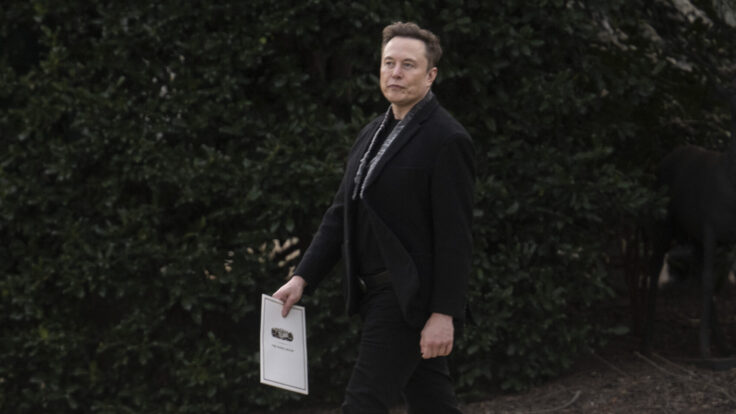
Jeff Bezos bitching to the president about The Washington Post: “The people there are terrible,” Bezos reportedly told the president during a dinner after the 2024 election. “They don’t listen. My other companies, they listen.”
In tonight’s edition, the highlights from my recent conversation with Mark Lazarus, the Versant Media C.E.O.
endeavoring to transform a portfolio of postprime cable brands into a truly diversified media business—or, at the very least, a New York Times Co. news-and-affinity mashup clone, albeit with the boost of a high-margin cable cashflow generator. Mark seems particularly keen on how service platforms like Fandango and GolfNow can complement MS NOW, CNBC, and the rest of his assets. Do you buy the thesis?
🎙️ Plus, on the latest episode of The Grill Room, Julia and I recapped another
gigantic week in media: Lachlan Murdoch’s $22 billion move on Roku, Jay Penske scooping up the Vox Media scraps, and the tortured hunt for a new number two to run CNN and CBS News with Bari Weiss. Follow The Grill Room on Apple,
Spotify, or wherever you prefer to listen. Also mentioned in this issue: Jay Penske, The Verge, Eater, SB Nation, Ryan Pauley, PMX, James
Murdoch, Fox Nation, Tubi, and more. |
-
Penske’s Vox scraps: As anticipated, Jay Penske will inherit the Vox Media assets that James Murdoch did not want to acquire. This trash heap includes The Verge, Eater, Punch, SB Nation, Thrillist, Popsugar, and The Dodo, all brands that have diminishing value but can neatly integrate into Penske’s
ever-expanding portfolio of postprime titles. Penske’s approach, as you know, is less about editorial reinvention than operational consolidation. He buys scaled properties with loyal audiences, preserves their identities, centralizes back-office functions, and then milks the synergies across advertising, licensing, events, and commerce.
It’s not a bad business strategy, just a totally depressing vision for creators. Ryan Pauley, who had been tapped to run this remainco at
Vox, will now take over as head of PMX, Penske’s newly named media unit. As I’ve been known to say, good luck to him!
|
|
|
|
A MESSAGE FROM OUR SPONSOR |
PEERLESS REFINEMENT With a powerful presence and an endless array of personalized touches, the Range Rover epitomizes modern luxury.
EXPLORE
|
|
|
|

| Julia Alexander
|
|
- The new mayor of
Roku City: Earlier this week, I dug into Lachlan Murdoch’s $22 billion acquisition of Roku, and explained why the deal was less a streaming play than a traditional cable strategy for managing through the non-traditional TV landscape. Roku can occupy a similar space domestically to Prime Video Channels—which drives more than a quarter of all new streaming
signups in the U.S., per Antenna—without requiring significant investment from Fox. Murdoch doesn’t want to spend tens of billions on streaming originals. Instead, Roku allows him to simply compete for advertisers with Netflix.
Through this deal, Fox is attempting to superscale connected TV advertising, which will account for 45 percent of all TV and video ad spend this year, at every step of someone’s viewing journey. It’s an unsurprising decision: Fox has always
prioritized ad revenue over prestige content. In 2020, the company acquired Tubi, a free, ad-supported service that hyper-targets demographics underserved by premium S.V.O.D.s. Then there’s Fox Nation, which leans on devoted Fox News fans, and Fox One, launched last year as a home for cord-cutting sports nuts. As Lachlan told analysts Monday, “We chose, and continue to choose, focus over scale for scale’s sake, deliberately sidestepping the arms race that defined—and challenged—the subscription
streaming industry.”
Now, with Roku in the portfolio, that discipline looks like it has paid off for the company. Hub Entertainment Research found last month that nearly 50 percent of U.S. consumers believe streamers are raising prices more frequently—up five points from 2025—while subscription fatigue continues to climb. Roku, as a bundler and distributor, purports to remedy exactly that frustration.
|
|
|
|
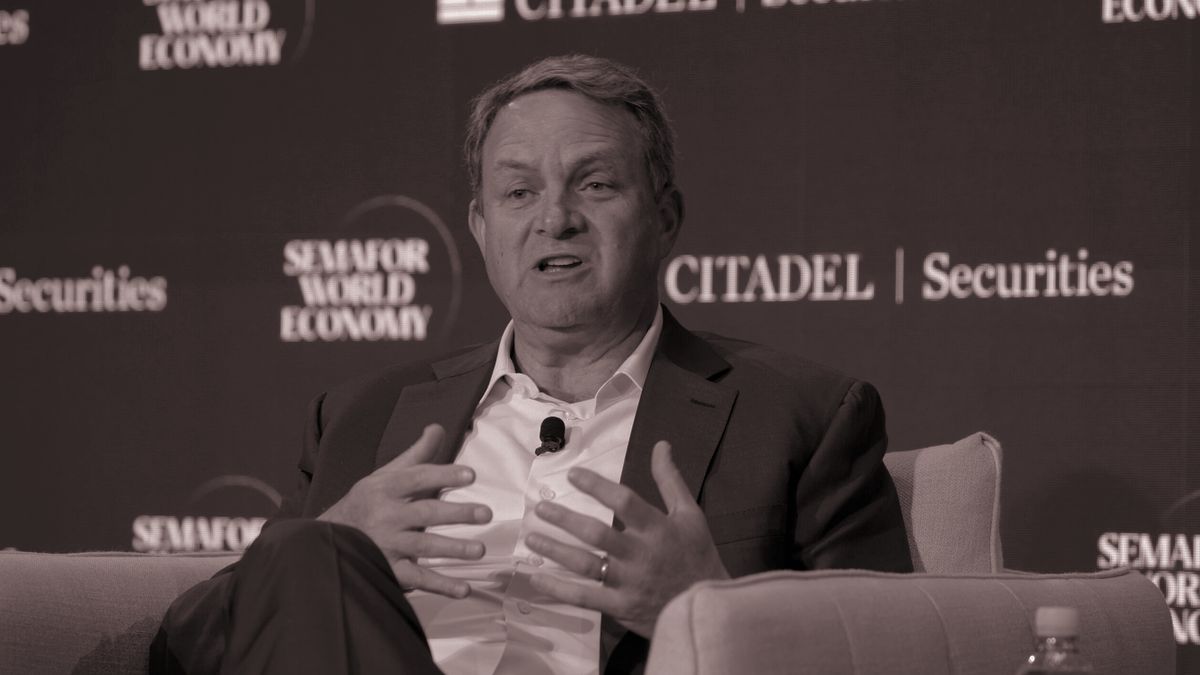
Six months post-Comcast spinoff, Versant C.E.O. Mark Lazarus is working to turn
the company’s portfolio of declining cable assets into a legit growth business. He’s got cash, and some time, but what’s the plan? |
|
|
|
Earlier this year, as faithful In the Room readers know, Comcast spun off most of its
profitable-but-declining cable assets, leaving MS NOW, CNBC, USA Network, and Golf Channel, among others, in the charge of veteran executive Mark Lazarus. I have long been bearish about this business, which has seemed destined to fall into the hands of private equity and a likely acquire-and-fire doom loop. (NBCUniversal, of course, retained its flagship broadcast network, movie studio, and streaming service, as well as the Bravo Housewives content firehose.) On more
than one occasion, I have referred to Versant as the redheaded stepchild of NBCU.
Mark has a different vision for the company. He knows that cable continues to throw off a lot of cash, despite losing viewers. And he believes that he can invest that capital into growing these businesses—diversifying their revenue streams, acquiring new assets, and bringing in new audiences. On a recent episode of The Grill Room, we discussed our opposing views as he pitched me on
Versant’s future. What follows are highlights from our conversation, condensed and lightly edited for clarity. |
Dylan Byers: You inherited a cable company that Comcast-NBCU spun
off as a declining asset, yet you talk about diversifying and growing it. What kind of business do you run today, and what do you want to be running in five years?
Mark Lazarus: Yes, we have a large linear cable business, which makes up near just about 80 percent of our revenue, but we are not exclusively a large cable business. We are also a platform business, which is made up mostly of GolfNow—which is akin to OpenTable for tee times—where we booked 40 million
tee times last year, and Fandango, which is a multifaceted business. We do have a large linear business. They are very strong—I would dare to say important, iconic—brands, and each serves a particular role that is important to viewers, advertisers, and distributors in its own unique way. |
|
|
|
A MESSAGE FROM OUR SPONSOR |
PEERLESS REFINEMENT With a powerful presence and an endless array of personalized touches, the Range Rover epitomizes modern luxury.
EXPLORE
|
|
|
|
These businesses spin out a lot of EBITDA and a lot of cashflow, and before, all of that EBITDA and
cashflow was being harvested and used for other things that we at NBCU and Comcast deemed to be important at that time. We invested in our theme parks, we invested in Peacock. But not a lot was reinvested back into any of these businesses. The thesis of the spin was, if we take these businesses and allow a new management team to focus and reinvest in them, we could reimagine this portfolio around strong vertical businesses centered by the linear brands.
The cable channels still
create value, but how do you actually turn this into a growth business, and where are the opportunities?
We look at our business in four verticals. We have our political news and opinion vertical, which is MS NOW, which will now invest in its digital footprint. We have personal business, business news, and retail investing around CNBC. We will also invest in a new, reimagined direct-to-consumer business—there is a growth opportunity that we see in providing tools and products for
the retail investor. Golf is our third vertical, and is really the model home for what we’re looking at for the other verticals. Twelve, 15 years ago, Golf Channel was 100 percent of our revenue and profit in our golf vertical. Over time, building out GolfNow and GolfPass, an underlying software business that we own, that business is now [only 50 percent] pay television.
Then the fourth growth vehicle is the general entertainment [and] sports area, really centered around what we believe
we can do with Fandango. There’s real upside opportunity. We have Fandango at Home, which is a rental and purchase platform for movies and TV series. We’re going to invest in a new interface for Fandango at Home and invest into an A.V.O.D. service—not only buying and renting movies and TV series, but also a free-with-advertising service, like Tubi or Pluto. We have a lot of content we own. Because of what we buy for our linear networks—but also what we do in the film industry with Fandango—we
have very strong relationships with all the studios. Fandango at Home is already on every connected TV and every operating system embedded in connected TVs. We have a big install base already, so we’re not starting from scratch. |
Right-wing media has fragmented, and Fox still dominates. Can a brand still thought of
primarily as a linear television network be a formidable force for the left in this media environment?
Fox News is definitely bigger than we are today, but we are the second-biggest business in the cable universe, and our ratings have gone up double digits over the past year. I think our audience continues to trust the folks on our air. The only job we have at any of our networks, truly, is to get more people to watch. We do that with meaning something to our audience, but also
trying to get people that aren’t necessarily watching us today to come in through our door. Yes, Fox is bigger than we are. Congratulations. They staked out one side. Our predecessors staked out another side. We also must transition and bring in some of these new voices that have fragmented our side, and we’ll do that as we continue to evolve this company.
Fox is now investing in creators’ work on YouTube and other platforms rather than licensing or acquiring them. Could you one
day invest in Democratic voices on outside platforms?
Yes, absolutely. And if you look at what we’ve done, if you look at the number of views that we have for MS NOW on YouTube, on TikTok, it’s like 1.6 or 1.8 billion views over the past year. That’s not the question you asked, but we see value in those platforms as a way to bring new people to our brand. We also will see value in those platforms as a place for us to find the next generation of talent, and hopefully then bring in
the next generation of audience, which we know is critical. You know, riding our current audience, we’re aging up. Television’s aging up. Whether it’s us or whether it’s Fox, it’s all aging up. We all need to find the next generation of audience and bring them to our linear service for important moments. And I think we have the vision to do that, and I think what you point out that our competitor is doing is a smart strategy, and one we will certainly look at.
And the advantage
you do have is this cashflow—money you can invest.
We have three core beliefs as a new public company: to maintain a strong balance sheet, which we have; to return capital to shareholders, which we’re doing through dividends and stock buybacks; and to reinvest into our businesses, which is what that cashflow will be used for. Having a strong balance sheet means something for us, but some of our competitors won’t have the luxury. They will have significant amounts of debt. We’ll
be able to reinvest into our businesses both organically and inorganically.
Everything goes right and the naysayers were wrong—in five years, what does the company look like, and how do the revenue streams break down?
The company is anchored in strong linear brands—the iconic brands we have—and maybe another brand. Who knows, if something comes along that makes sense? We’re in four verticals today. Might we be in five verticals in five years? Maybe. A revenue
stream that looks more like 50-50 across each of those verticals, not just two revenue streams. We’re going to look for businesses that have three, four, and five revenue streams, whether it’s subscription through the cable ecosystem, advertising through the TV ecosystem, subscription through the direct-to-consumer path, advertising through newsletters and other forms of media that we create off our brands, and then ticketing through events businesses. I think if we do our jobs right, these four
verticals will continue to evolve, and our platforms business with Fandango, GolfNow, and some of the other smaller digital pieces will continue to grow. |
|
|
|
Puck sports correspondent John Ourand and a rotating cast of industry insiders take you inside the executive suites
and owners boxes where the decisions that shape the entire sports business are made. You’ll hear interviews with players, network execs, and everyone in between. The Varsity is an extension of John’s private email for Puck by the same name. New episodes publish every Wednesday and Sunday. |
|
|
|
Unique and privileged insight into the private conversations taking place inside boardrooms and corner offices up and
down Wall Street, relayed by best-selling author, journalist, and former M&A senior banker William D. Cohan. |
|
|
|
Need help? Review our FAQ page or contact us for assistance. For brand partnerships, email ads@puck.news. You received this email because you
signed up to receive emails from Puck, or as part of your Puck account associated with {{customer.email}}. To stop receiving this newsletter and/or manage all your email preferences, click here. |
Puck is published by Heat Media LLC. 107 Greenwich St., New York, NY 10006 |
|
|
|
|