{{ 'now' | timezone: 'America/New_York' | date: '%b %d, %Y' }} |
|
|
Welcome back to The Hidden Layer. I’m Ian Krietzberg.
For some time now,
I’ve been hearing that data centers across the country are maxing out on their power supply, which raises an existential question for an industry gambling all of its chips—often literally—on expeditious growth. So today, I’m taking a close look at the data center power crunch, the impact on utility providers across the country, and what this all might mean for the boom (or bust) cycle for artificial intelligence.
Plus, news and notes on a last-minute effort by Republicans to resurrect the
preemption of state A.I. laws, and a $900 million funding round for a growing A.I. startup focused on cinematic-quality video generation.
Programming notes: Yesterday, I swung by The Powers That Be to chat with my partner Peter Hamby about the hard-charging anti-regulatory efforts coming out of Silicon Valley. I also joined CBS News’s
Errol Barnett to break down the realities of the A.I. bubble.
Also discussed in this issue: Satya Nadella, Ahmed Mohamed, Suman Kanuganti, Aaron Ruby, Steve Scalise, Ron DeSantis, Spencer Cox, Amit Jain, and many more…
Let’s get
into it… |
Two Things You Should
Know…
|
- Trump’s
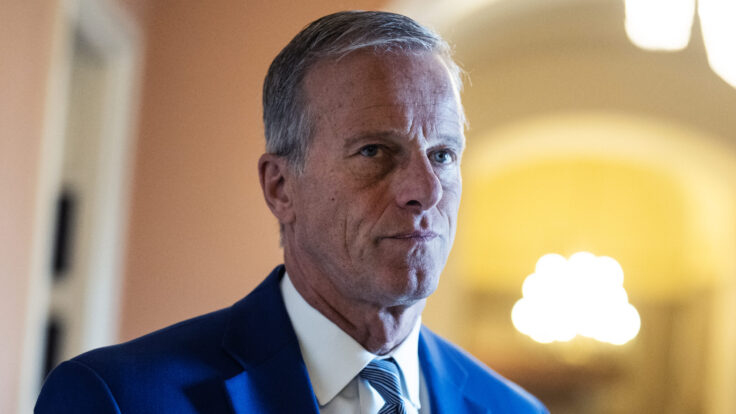
leaked executive order: The A.I. regulation moratorium war that I wrote about in July rapidly escalated this week. On Monday, House Majority Leader Steve Scalise told Punchbowl that Republicans were searching for a legislative
vehicle—sources pointed to the annual defense policy bill—where they could inject language that would essentially prevent states from passing laws that regulate artificial intelligence.
There was immediate blowback from within Scalise’s own party. Florida Gov. Ron DeSantis wrote on X that a preemption would essentially serve as “a subsidy to Big Tech,” and
listed concerns ranging from predatory applications to resource-sucking data centers. Utah Gov. Spencer Cox chimed in to say that “states must be able to regulate the tools of A.I. that could severely impact our kids, our families, our constitutional rights, and our security.”
President Trump, however, is pushing hard for a moratorium.
On Tuesday, he posted a message parroting the language of OpenAI, Google, Amazon, Meta, etcetera, warning that state overregulation “is threatening to undermine” the industry. And on Wednesday, a leaked draft of an A.I. executive order began making the rounds online and in D.C. circles. The draft E.O.
(read it here) aims to eliminate state laws that might obstruct the country’s attempts to “win” in A.I., in part, by charging the Justice Department with establishing an “A.I. litigation task force” to challenge any state A.I. legislation “on the grounds that such laws unconstitutionally regulate interstate commerce.”
The E.O. includes
potentially harsher penalties, too. In addition to the N.D.A.A. proposal floated by Scalise, the order would seek to restrict funding to states whose laws contradict the federal approach to A.I. “The president is empowered to instruct the agencies to look into these things,” Mackenzie Arnold, the head of U.S. policy at the Institute for Law and A.I., told me. “Whether they have the authority to execute on those objectives is another question.”
|
|
|
A MESSAGE FROM OUR SPONSOR |
McKinsey’s latest State of AI in 2025 report makes one
thing clear: the next wave of AI advantage will be won by leaders, not algorithms. High-performing organizations are three times more likely to have leaders who own and model AI usage, weaving it into strategy, culture, and execution. The question is no longer if AI delivers value—it’s how leaders will capture what’s
next. Read the report at McKinsey.com/StateofAI |
|
|
- Luma’s
$4B video generator: Luma AI, one of many A.I. startups working on advanced, cinematic-quality video generation models, announced yesterday that it had completed a $900 million Series C funding round that valued the company at “north of $4 billion.” Last year, Luma closed a Series B that valued the startup at around $200 million.
The new
round was led by Humain, a Saudi Arabian A.I. infrastructure company, and included “significant participation” from existing investors, such as Andreessen Horowitz. In yet another instance of the circularity that permeates the entire A.I. ecosystem, as part of the deal, Luma will “become a customer of Humain” as the company works to build a 2-gigawatt computing cluster in Saudi Arabia.
Amit Jain, the company’s C.E.O., told me that the world models he’s developing fall
into two main categories: media creation, and enhanced computer vision for applications like robotics. He wouldn’t share information regarding Luma’s current revenue numbers, saying instead that “we have very large partnerships now with studios in Hollywood, large holding companies from the advertising side of the world. It’s going pretty well.”
|
“There’s been a lot of talk about an A.I. bubble. From our vantage point, we see something very different. …
Our customers’ financing is up to them.”
—Nvidia C.E.O. Jensen Huang on an earnings call after yet another blowout quarter. Four unnamed customers were responsible for over 60 percent of Nvidia’s total revenue. The company’s stock was down 3 percent at today's closing bell.
And now for the main event… |
|
|
As A.I. hyperscalers and startups around the country scramble to build data center capacity,
the energy demands have become increasingly untenable for overburdened utility companies. |
|
|
Last week, Bloomberg
reported that two massive new data centers are sitting empty and unused in California—some nearly 100 megawatts of capacity going to waste. The local utility simply doesn’t have sufficient power to plug them in. Meanwhile, a
report published earlier this month from AEP Ohio, a large electric utility, explained that it had received requests to study 36 new data center sites—and that the necessary regional upgrades to bring them online wouldn’t be ready until the last quarter of 2031 at the earliest. Similar reports have emerged from
California, Arizona,
Illinois, and elsewhere.
Over the past year, reports like these have become increasingly common as A.I. hyperscalers and startups around the country scramble to build data center capacity. For overburdened utility companies, the energy demands have become increasingly untenable. Already, the
lack of adequate supply has fueled the industry’s push into nuclear energy and even outer space, and is quietly emerging as one of the field’s most pressing existential challenges. A Deloitte
report from earlier this year predicted that energy demands from data centers would rise fivefold by 2035, to around 176 gigawatts. In 2023, total U.S.
electrical capacity was around 1,200 gigawatts.
Naturally, strains across the energy grid are not uniform. Some states, like Ohio—by virtue of local laws and geographic amenities—have become hotbeds for data center development. According to one estimate, Ohio is home to more than 200 data centers, as co-locators such as Cologix and Vantage and hyperscalers including
Microsoft and Google—but mainly Amazon Web Services—have nestled into the terrain. A.W.S. invested $6 billion in data center infrastructure in the state in 2022, $7.8 billion in 2023, and $10 billion last year to build out “advanced cloud infrastructure and compute power.” |
|
|
A MESSAGE FROM OUR SPONSOR |
McKinsey’s latest State of AI in 2025 report makes one
thing clear: the next wave of AI advantage will be won by leaders, not algorithms. High-performing organizations are three times more likely to have leaders who own and model AI usage, weaving it into strategy, culture, and execution. The question is no longer if AI delivers value—it’s how leaders will capture what’s
next. Read the report at McKinsey.com/StateofAI |
|
|
When I asked an Amazon spokesperson whether the Ohio data centers are maxing out on available power, I was
told that all of the company’s Ohio data centers, including those currently operational and under construction, have “secured” power. This person added that most of this power is being drawn from the grid, but that the power demands at one site, in Hilliard, will be augmented by on-site fuel cells while transmission upgrades are completed. As to whether there will be sufficient energy for Amazon’s planned data centers, the spokesperson said that Amazon continues to invest in renewable
energy projects and work with local utilities to plan for growth. |
“Wasting Electricity on a Dead
Horse”
|
While some industry leaders have obfuscated the scope of the energy consumption problem, others have already
addressed it publicly. On a podcast recently, Microsoft C.E.O. Satya Nadella said that the “biggest issue we are now having is not a compute glut, but the power, and the ability to get the builds done fast enough close to power.” He continued: “If you can’t do that, you may have a bunch of chips sitting in inventory that I can’t plug in.” I asked Microsoft whether this
was a widespread issue, but the company declined to comment. Likewise, Oracle declined to comment; Google never returned a request for comment.
Ahmed Mohamed, a professor of electrical engineering at the City College of New York, told me that he expects “this pressure will likely intensify through 2026 as both data center growth and broader electrification continue to accelerate.” As large energy users approach and even exceed local grid capacity, he added, it will
surface broader challenges surrounding aging infrastructure and slow permitting. “The result can be localized congestion, higher costs, and reduced reliability margins, especially in fast-growing load pockets,” he said.
I asked Suman Kanuganti, the founder and C.E.O. of Personal AI, whether he’s seen evidence of the U.S. maxing out on available power. He responded that he believes it’s happening now, but that it’s actually a competitive opportunity for his company. After
all, Personal operates small language models, which are significantly more energy efficient and can produce more tokens per kilowatt-hour than larger rivals.
Still, Kanuganti said, the Silicon Valley attitude of “innovation at any cost” is not sustainable. The cloud, he noted, “is not designed for high-performance G.P.U.s,” and the power to operate both training and inference in the cloud at scale “doesn’t exist.” The endgame, he believes, will involve a shift into more efficient
edge computing (i.e., using local servers), while massive model training will remain cloud-based. He expects the market to “start pivoting away from just wasting money and electricity on a dead horse,” and start looking in a different direction. For him, that means combining S.L.M.s and L.L.M.s to serve the industry’s demands. |
One of the biggest challenges facing the utility companies was laid out in a recent report by Siemens, which
noted that “forecast inputs are often overestimated or unreliable due to developers’ optimistic projections.” AEP Ohio echoed this sentiment in a recent report, which said that rising data center energy demands have become “more disconnected from underlying economics.” In other words, the data centers
are not only hoovering up large quantities of power now, but the companies are requesting access to future power, requiring infrastructure that, in many cases, does not yet exist.
Aaron Ruby, a communications director at Dominion, the largest electricity company in Virginia, told me that the company has structures in place—up-front payments, mostly—to hopefully suss out real demand from overly optimistic speculation. They also have a proposal pending before the
state that would significantly increase the amount of up-front financial obligations from data center customers ($1.5 million per megawatt of requested capacity) and require new customers to enter into 14-year contracts with Dominion while paying for 85 percent of the power they’ve requested regardless of how much they end up using. AEP Ohio made a similar request to its Public Utilities Commission in May 2024, which was
approved a few months ago.
Dominion’s proposal reflects the fact that it expects data center power demands in Virginia to more than quadruple in the next 10 to 15 years. Ruby called the power demand from his current customers “unprecedented,” and said that roughly 80 percent of that demand is coming from data centers. To serve this total need, Dominion will
have to roughly double its generation capacity, vastly increase its transmission capacity, and continue building out new grid infrastructure, a process Ruby expects will “continue pretty much continuously for the next couple of decades, in order to serve all this growth.”
How might this impact normal people, who just want their toasters to work and televisions to turn on? Dr. Brandon Grainger, a professor of electrical engineering at the University of Pittsburgh, said
that he doesn’t expect data center demands to cause a country-wide blackout. Manufacturers, he said, perform “extensive system studies to make sure that nothing happens as a result of putting” data centers on the grid, and he underscored that utility businesses are “conservative” and focused on safety. But, he added, it’s going to take time for the utilities to get the grid ready to bring all these data centers online. Of course, by the time those lights finally start flickering on, the A.I.
industry might well look like a vastly different place. |
Jeff Bezos, the world’s third-wealthiest man and Bo Burnham’s muse, has
quietly launched a new startup called Project Prometheus (very subtle, Jeff), focused on developing A.I. tech for manufacturing, with a focus on computing, aerospace, and automotive. The project has reportedly secured $6.2 billion in funding and has around 100 employees. Bezos will serve as its co-C.E.O. [New York Times]
The European Commission has
seemingly bowed to some of the anti-regulatory pressure it faced since passing its landmark A.I. Act. The commission published a proposal yesterday that, if enacted, would streamline the act’s requirements and kick its more heavy-handed rules to 2026 or 2027. [Le Monde] |
That’s all for today. I’ll see you next week.
Ian |
|
|
Need help? Review our
FAQ page or contact us for assistance. For brand partnerships, email ads@puck.news.
You received this email because you signed up to receive emails from Puck, or as part of your Puck account associated with {{customer.email}}. To stop receiving this newsletter and/or manage all your email preferences, click here. |
Puck is published by Heat Media LLC. 107 Greenwich St., New York, NY 10006 |
|
|
|